
Guide
Pharmaceutical Continuous Manufacturing
Answer in brief
Pharmaceutical continuous manufacturing integrates material feeding and one or more processing steps into a continuously operating system. Product quality depends on stable mass flow, residence time behavior, process monitoring, and the ability to trace and divert affected material. It is not simply a batch process that runs longer.
By Editorial Team · Published July 14, 2026 · Updated July 26, 2026

Sponsored visibility
Featured videos for this topic
Paid placements are clearly marked and remain separate from the editorial related-video selection.


Gericke AG
Gericke: GFS Formulation Skid and Tablet Press
This video presents the Gericke Formulation Skid (GFS) combined with a tablet press, showing how pharmaceutical formulations move from blending through downstream processing in one controlled, scalable setup. The system runs semi-continuously or fully continuously and targets development, scale-up, and technology transfer.
Total reach: 3,732
This featured spot is open
Show your video here, in front of engineers who are researching this topic.
Continuous pharmaceutical manufacturing links material flow and product quality through time. A disturbance at a feeder does not affect one isolated batch. It travels through downstream operations according to the residence time distribution of the system.
What continuous operation changes
In a batch process, ingredients can be weighed before addition and the completed batch can be sampled as one defined lot. In continuous processing, composition depends on the instantaneous and averaged performance of each feeder.
The control strategy must detect changes, understand how they move through the line and identify material that may require diversion. Published research comparing batch and continuous pharmaceutical powder blending examines this shift in detail.
Engineering visual guide
How the system behaves
These conceptual diagrams connect the operating principle, equipment internals and engineering review points. They are explanatory and not fabrication drawings or a substitute for project-specific calculations.
Engineering infographic
System architecture and interfaces
Conceptual system architecture and interface map for Pharmaceutical Continuous Manufacturing; use it to structure an engineering review, not as a fabrication drawing or project-specific design.
Feeding is a critical unit operation
Peer-reviewed research on continuous powder feeding identifies it as central to content uniformity. Bulk density, cohesion, particle size, wall friction and refill behavior can all disturb mass flow. Loss-in-weight control can correct gradual deviation, but it cannot remove every short fluctuation or solve poor hopper flow.
Residence time and material traceability
Residence time distribution describes how long different portions of material remain in the process. It supports evaluation of startup, shutdown, feeder disturbance and process change. A broad distribution means affected material can remain in the line longer and mix with material entering later. FDA research on predictive residence time distribution models applies this concept to continuous powder blending.
Process monitoring and control
| Control layer | Purpose |
|---|---|
| Feed rate monitoring | Confirms component mass flow and detects drift or interruption. |
| Equipment state monitoring | Tracks speed, load, pressure and other indicators of stable operation. |
| Process analytical technology | Measures a relevant material or product attribute during operation. |
| Diversion logic | Separates material affected by a confirmed disturbance. |
| Data integrity | Preserves the records needed to reconstruct production and decisions. |
Partner with powderbulkvideos.com
Put your expertise beside the decisions engineers are making.
Connect a relevant company profile and technical video portfolio with clearly labelled visibility on this topic.
Material properties remain important
Continuous equipment does not make difficult powder behavior disappear. Cohesive material can bridge or adhere. Fine components can segregate. Refill can disturb feeder control. Development should connect material characterization with feeder selection, hopper design, blending and the intended operating range.
Engineering infographic
Engineering design workflow
Conceptual engineering design workflow for Pharmaceutical Continuous Manufacturing; use it to structure an engineering review, not as a fabrication drawing or project-specific design.
Lifecycle, change control and model maintenance
FDA and ICH Q13 describe scientific and regulatory considerations across development, implementation, operation and lifecycle management. Changes to raw material, equipment, control logic or operating range need an assessment of their effect on residence time, process dynamics and product quality.
Analytical models fall under the same discipline. Calibration data, reference methods and acceptance limits should remain controlled when raw materials or operating ranges change.
A measurement that continues to produce a number is not necessarily still suitable for its quality decision. Periodic comparison with an appropriate reference method confirms that the model remains fit for purpose.
Startup, shutdown and campaign boundaries
Continuous production still has defined boundaries. Material produced while feeders stabilize, equipment reaches its intended state or analytical signals become representative needs a documented disposition. The same applies during shutdown and after an interruption.
Residence time measurements support the location of these boundaries, while the control strategy defines when material can enter the accepted product stream.
A campaign can contain several lots when the manufacturer has a scientifically justified approach to traceability and sampling. Lot definition, material genealogy and diversion records must remain understandable to production, quality control and regulatory reviewers.
Sampling and continued verification
Sampling should complement process measurements rather than repeat them without purpose. Locations and frequency need to reflect process dynamics, measurement uncertainty and the ability of the control system to detect relevant variation. Continued process verification then evaluates whether feeder behavior, analytical models and equipment performance remain within the established state of control.
Engineering infographic
Verification and acceptance checklist
Conceptual verification and acceptance checklist for Pharmaceutical Continuous Manufacturing; use it to structure an engineering review, not as a fabrication drawing or project-specific design.
Implementation sequence
- Define product quality attributes and process risks.
- Characterize materials across expected variability.
- Establish stable unit operation ranges.
- Measure residence time behavior and disturbance propagation.
- Develop monitoring, control and diversion logic.
- Validate the integrated process and data system.
- Maintain the state of control through continued verification.
Frequently asked questions
How does continuous manufacturing differ from batch manufacturing in the way a "batch" is defined for regulatory purposes?
In batch manufacturing, a batch is defined by a fixed quantity of material processed together in one vessel or cycle. In continuous manufacturing, a batch is instead defined by criteria such as a quantity of output, a defined time interval, or a defined portion of the input material, since material moves through the line without a single discrete batch vessel.
What is ICH Q13, and why is it relevant to continuous manufacturing?
ICH Q13 is an internationally harmonized guideline finalized in 2022 that sets out scientific and regulatory expectations for continuous manufacturing of drug substances and drug products, covering topics such as control strategy design, equipment changes, and batch definition across different regulatory regions.
What is process analytical technology (PAT), and how does it support continuous manufacturing?
Process analytical technology refers to instruments and methods, such as near-infrared or Raman spectroscopy, used to measure material attributes during processing rather than after the fact. In continuous manufacturing, these measurements feed into control systems that can flag deviations and support real-time release strategies.
Why might regulators expect additional data when a facility switches an approved batch process to continuous manufacturing?
Switching an approved batch process to continuous manufacturing is generally treated as a significant change to the approved process, so regulators typically expect comparability data, updated control strategy documentation, and test results showing that the continuous process yields material meeting the same quality attributes as the original batch process.
Related content
Continue exploring
Move from this page to the companies, videos and technical topics that add useful context.
Companies
Videos
Gericke AG
Gericke: GFS Formulation Skid and Tablet Press
This video presents the Gericke Formulation Skid (GFS) combined with a tablet press, showing how pharmaceutical formulations move from blending through downstream processing in one controlled, scalable setup. The system runs semi-continuously or fully continuously and targets development, scale-up, and technology transfer.
Total reach: 3,732
GEA
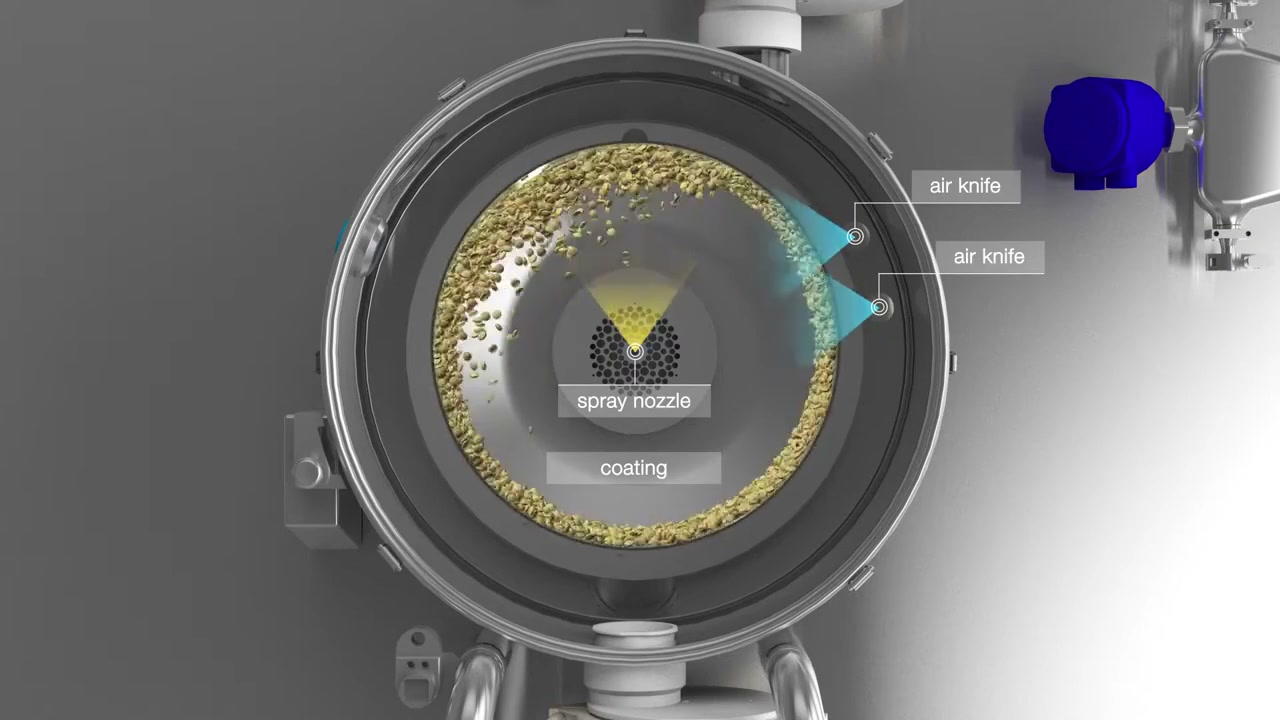
ConsiGma Coater Animation
GEA explains the working principle of the ConsiGma coater, the coating step of a continuous tableting line.
Total reach: 11,203
GEA
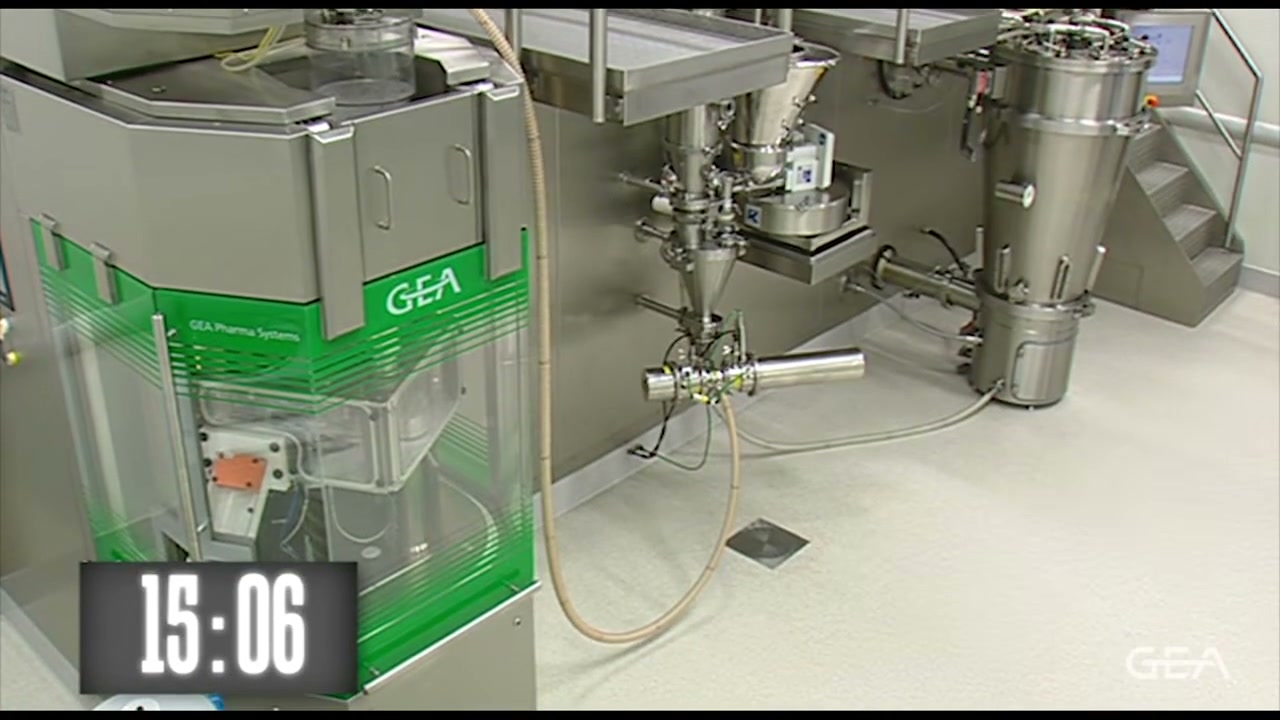
ConsiGma Continuous Granulation and Compression Line
GEA explains the working principle of a continuous granulation and compression line, the section of a continuous tableting plant between the feeders and the tablet press.
GEA
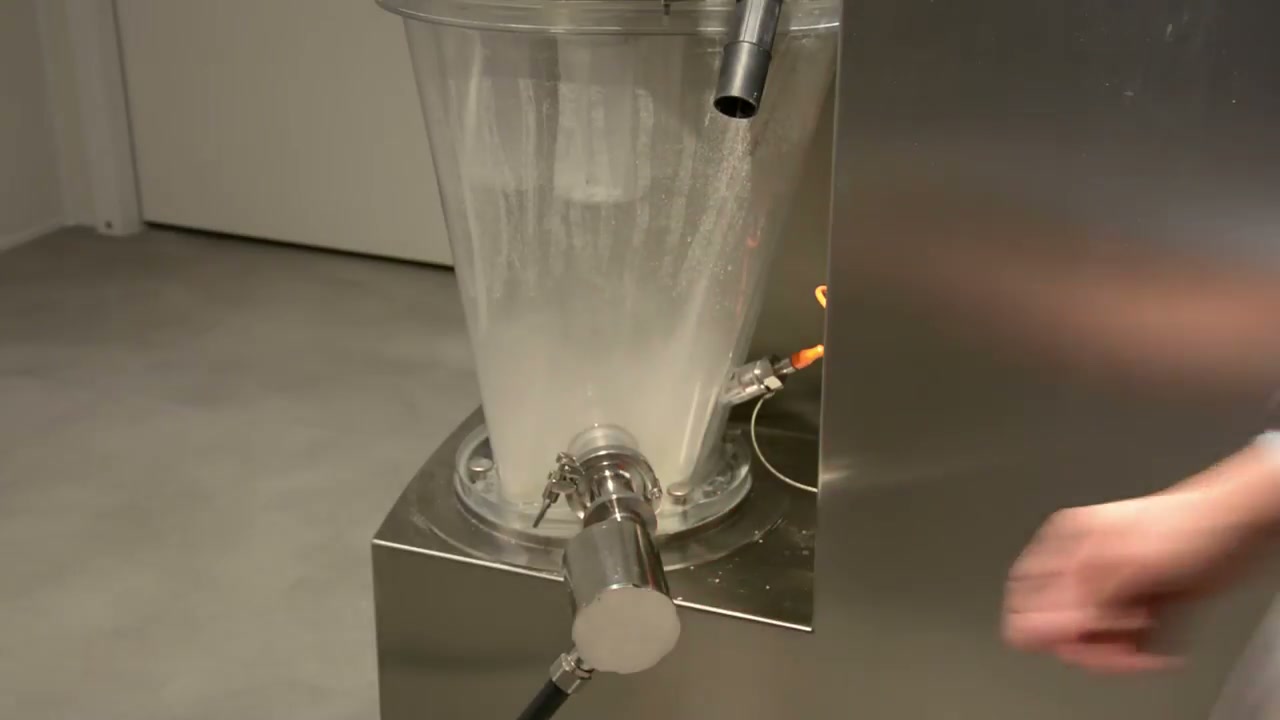
From Powder to Tablet: Continuous Processing with ConsiGma
GEA presents ConsiGma, a range of plug flow tableting equipment with which pharmaceutical producers manufacture oral solid dosage forms continuously, from powder to tablet.
Total reach: 4,430
Glatt
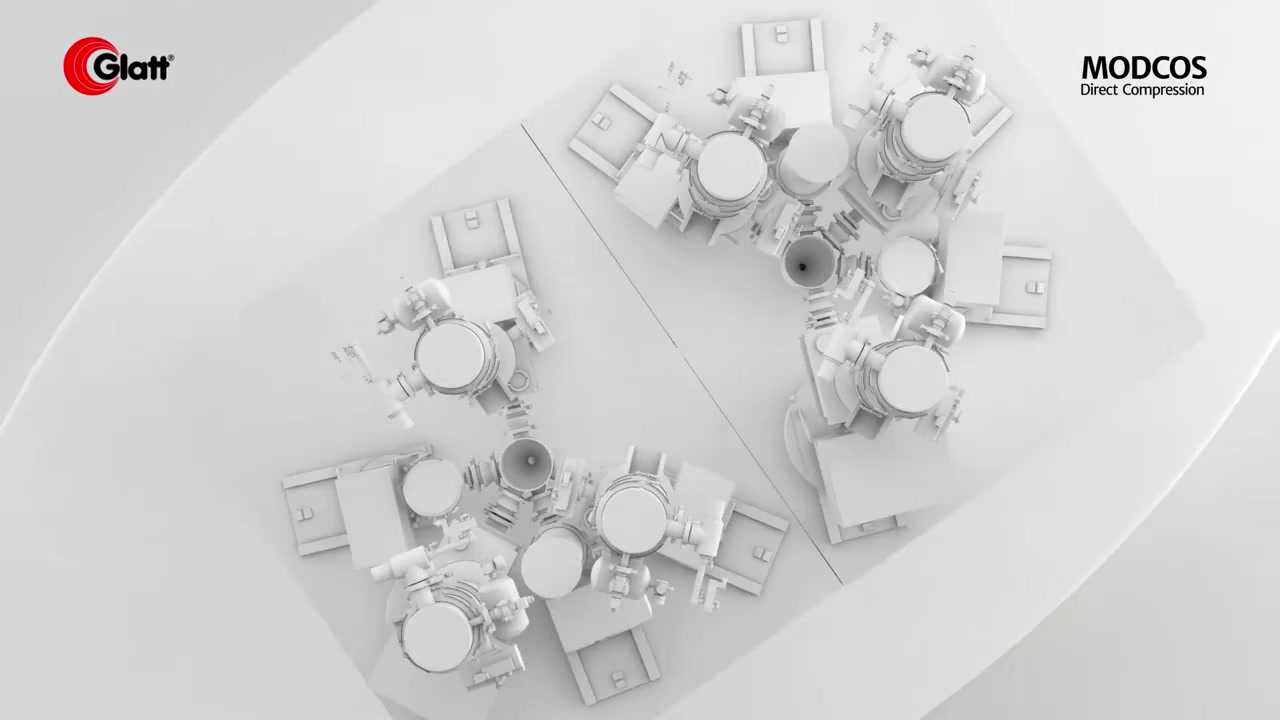
MODCOS Direct Compression
Glatt shows the MODCOS line for continuous direct compression, which can integrate up to three mixers and ten feeders on the way from powder to tablet.
Total reach: 2,621
Gericke AG
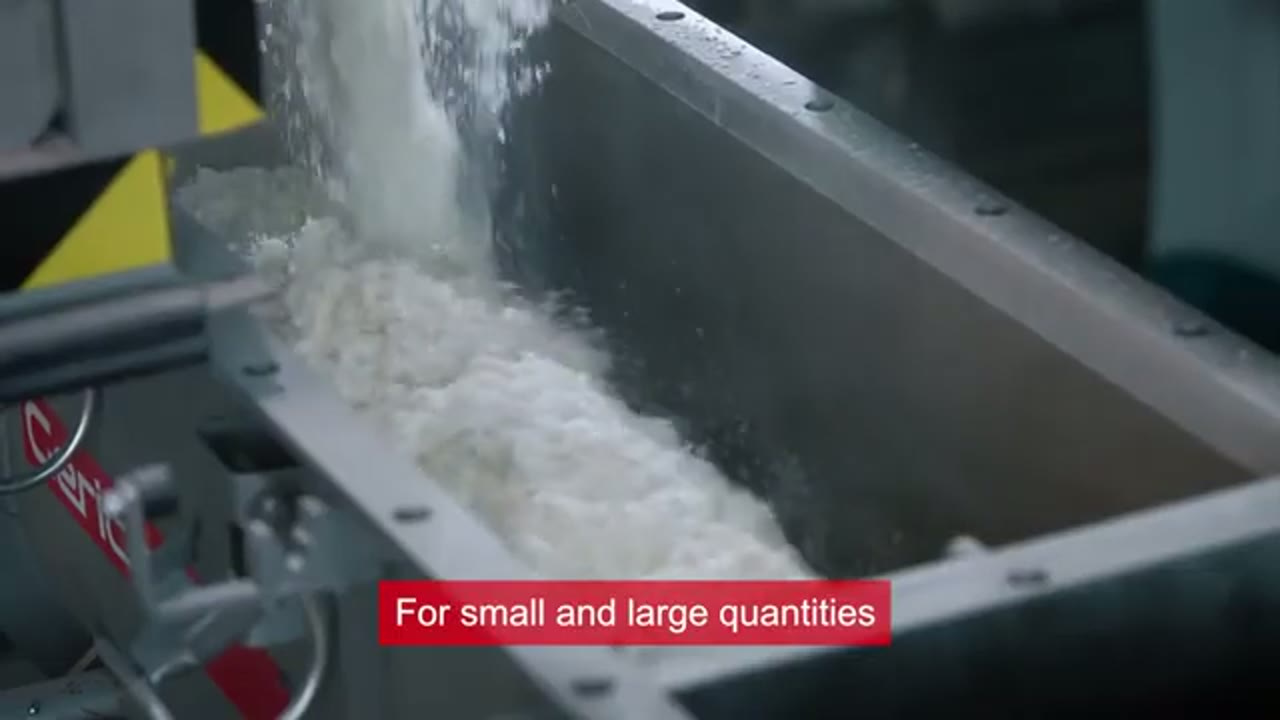
Continuous Mixer Gericke GCM
Gericke shows the GCM continuous mixer, which combines radial and axial mixing for throughputs that range from 10 l to 150,000 l/h.
Total reach: 4,465