
Comparison
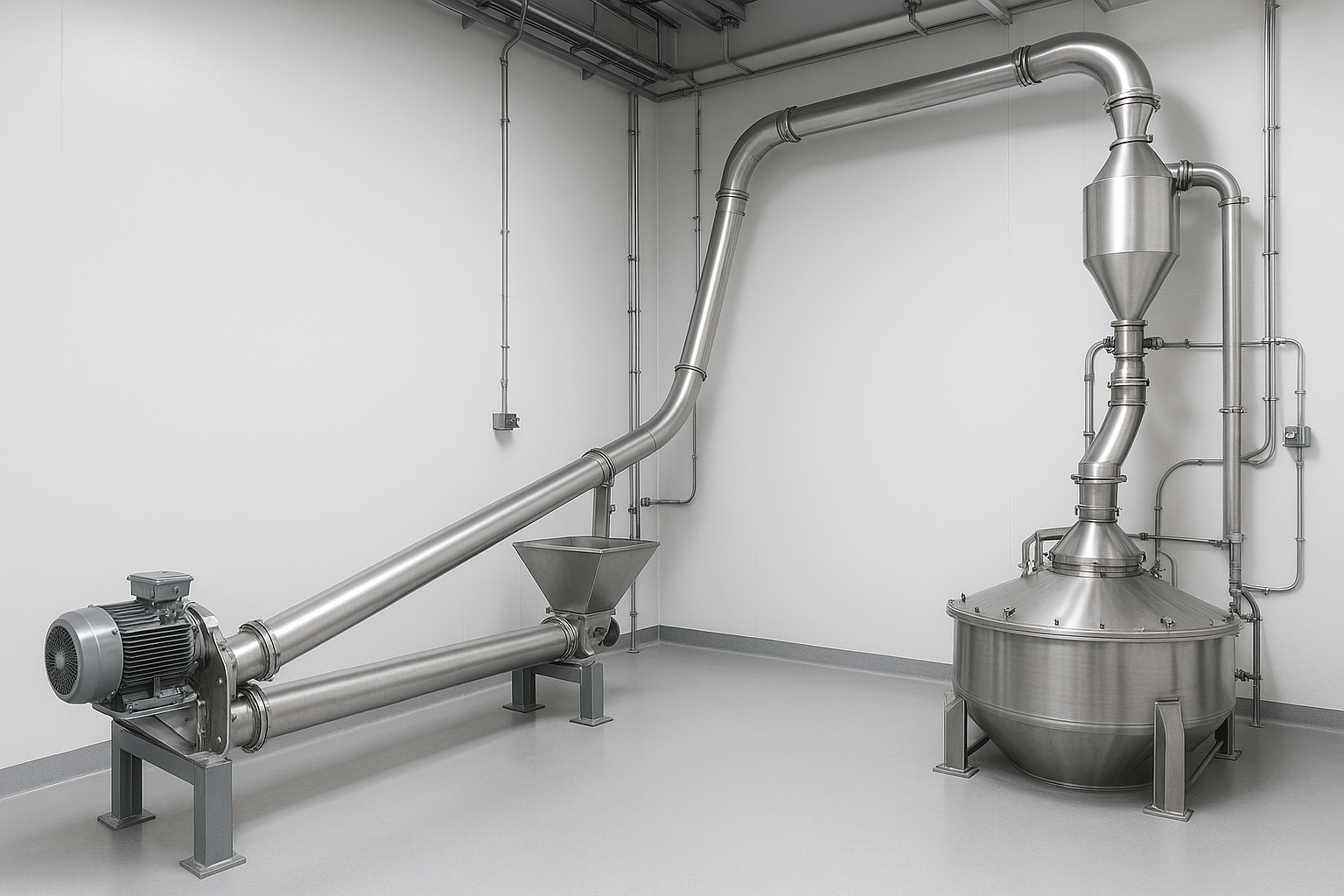
Screw Conveyor vs Pneumatic Conveying
Distance and routing usually settle it before anything else.
A screw conveyor is efficient and simple over short, straight runs.
Independent engineering knowledge
Most equipment decisions are a choice between two reasonable options. Each comparison takes one such pair, names the property that decides between them, and says where each one stops working. - The question is never which is better, but which is better here. - One or two material properties usually settle it. - Where both work, the tie-breaker is maintenance, not performance.
21 published
Comparison
Distance and routing usually settle it before anything else.
A screw conveyor is efficient and simple over short, straight runs.
Comparison
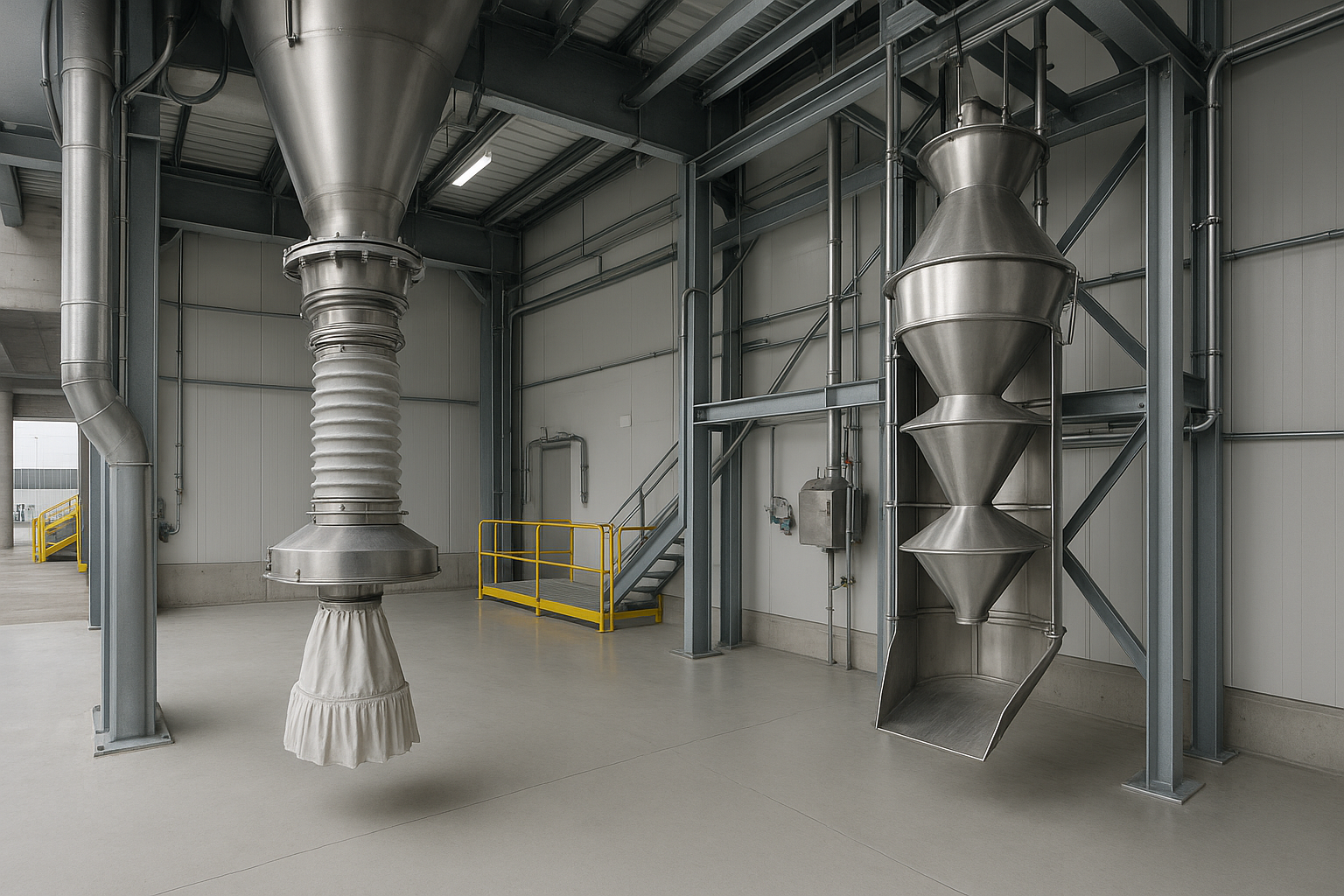
Both contain the falling stream, and they do it by different means.
A telescopic spout encloses the material in a sleeve and extracts the displaced air; a cascade chute slows the material by letting it tumble over internal cones so it arrives with little energy and little entrained air.
Comparison
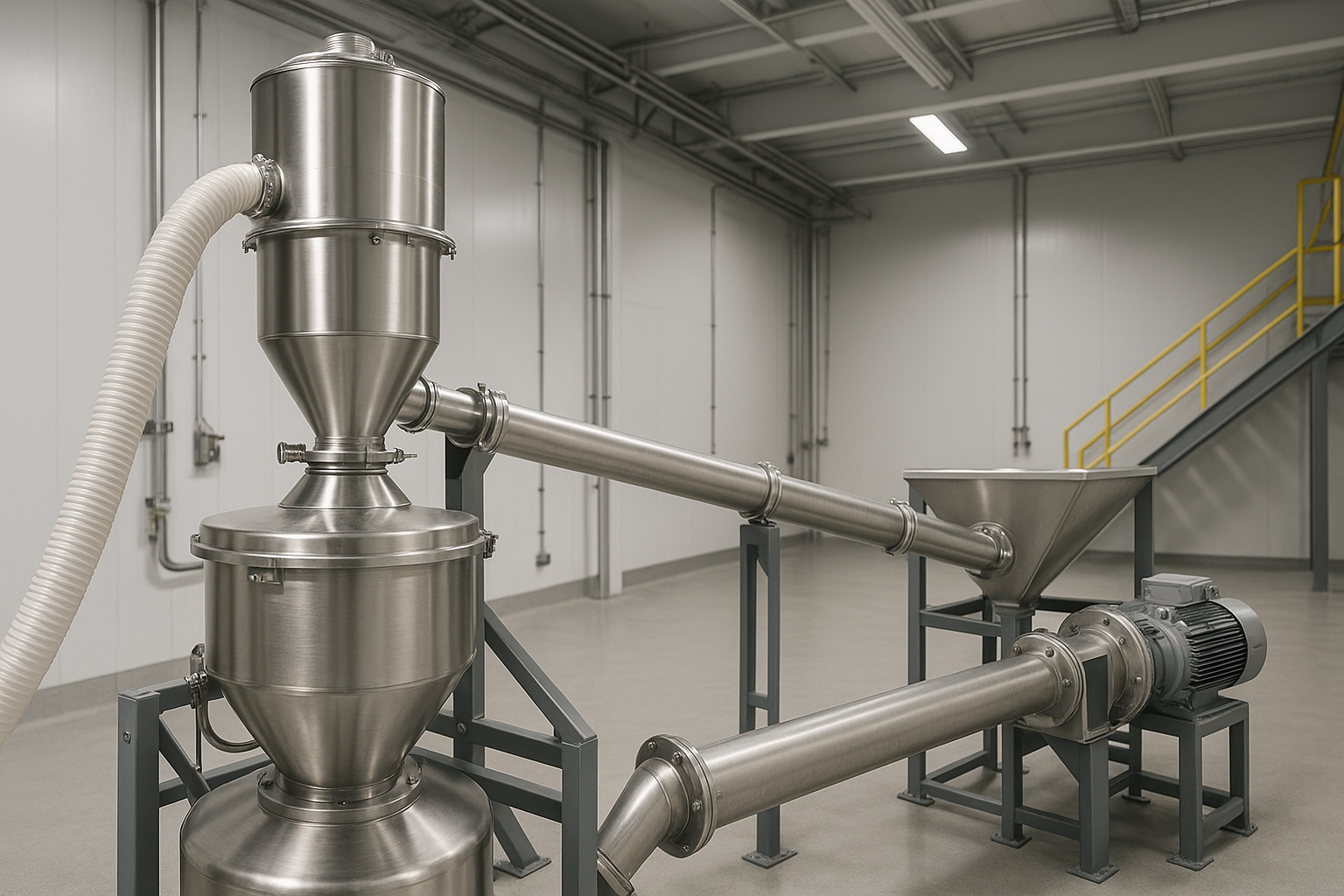
For hygienic and contained duties vacuum conveying usually wins on principle, not on performance.
A vacuum system leaks inward, so a failed seal draws air in rather than releasing product, and the pipework dismantles for cleaning.
Comparison
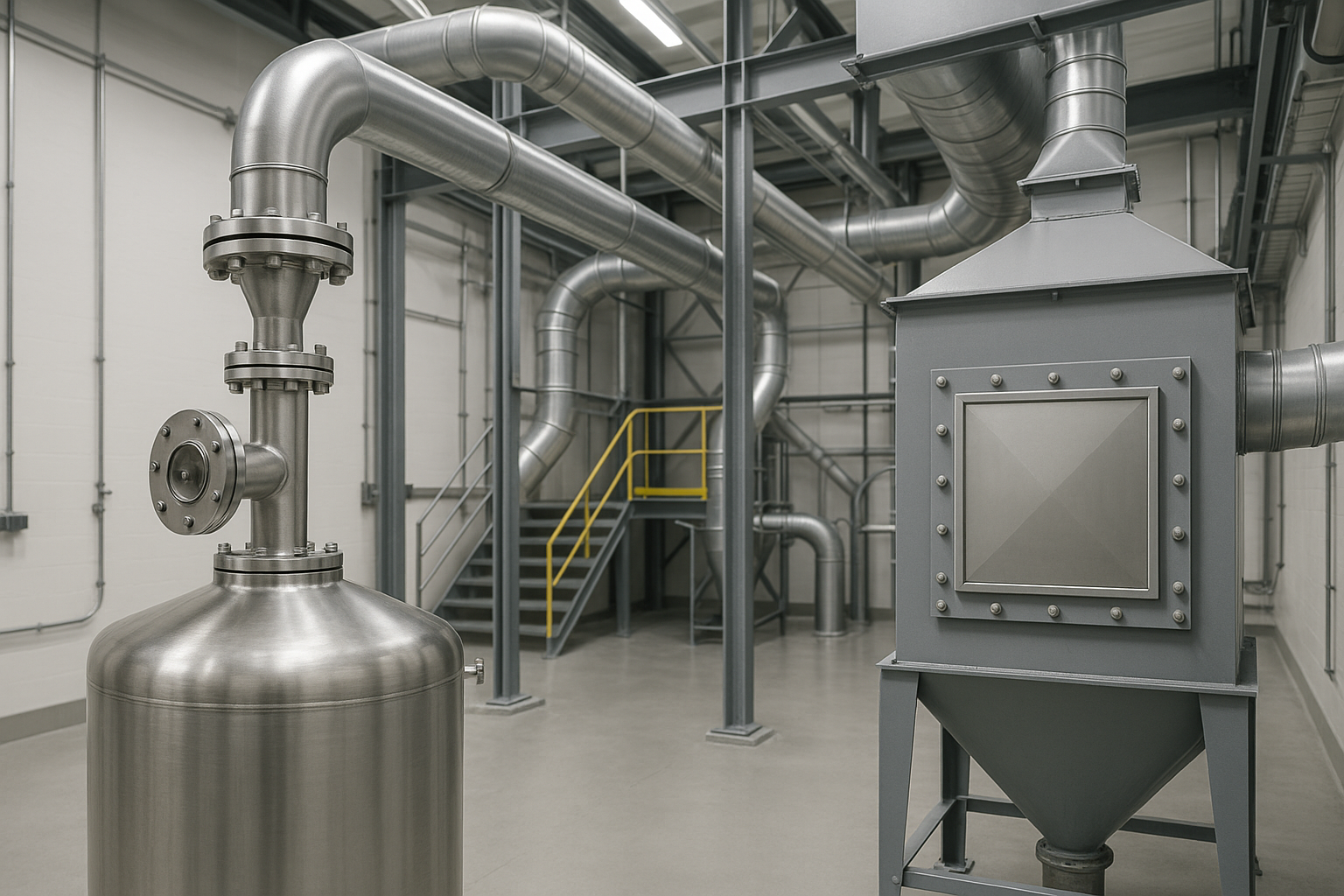
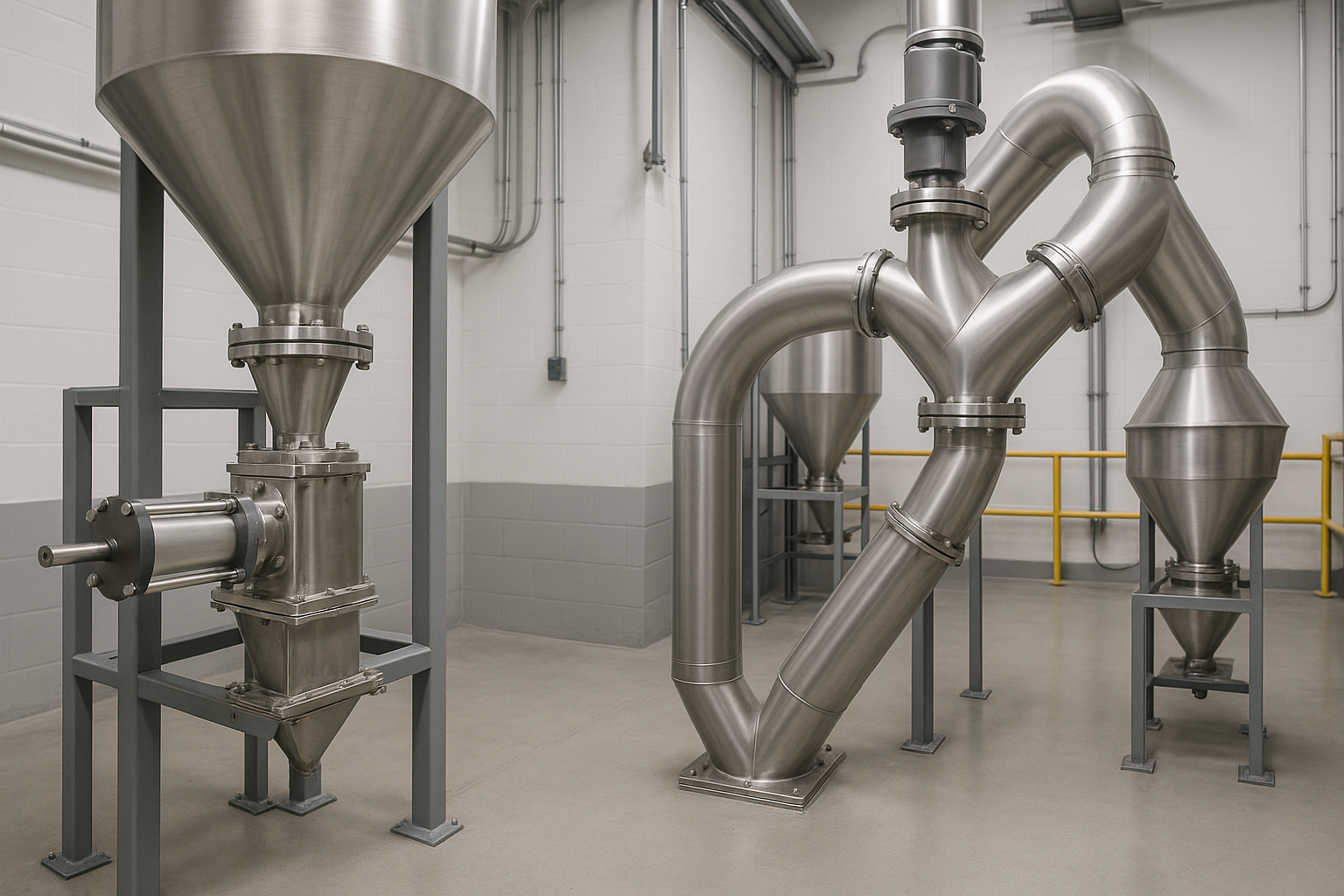
They solve different problems and are not interchangeable.
A rupture disc protects a vessel against a process overpressure, usually from gas or liquid, and is sized by relieving capacity.
Comparison
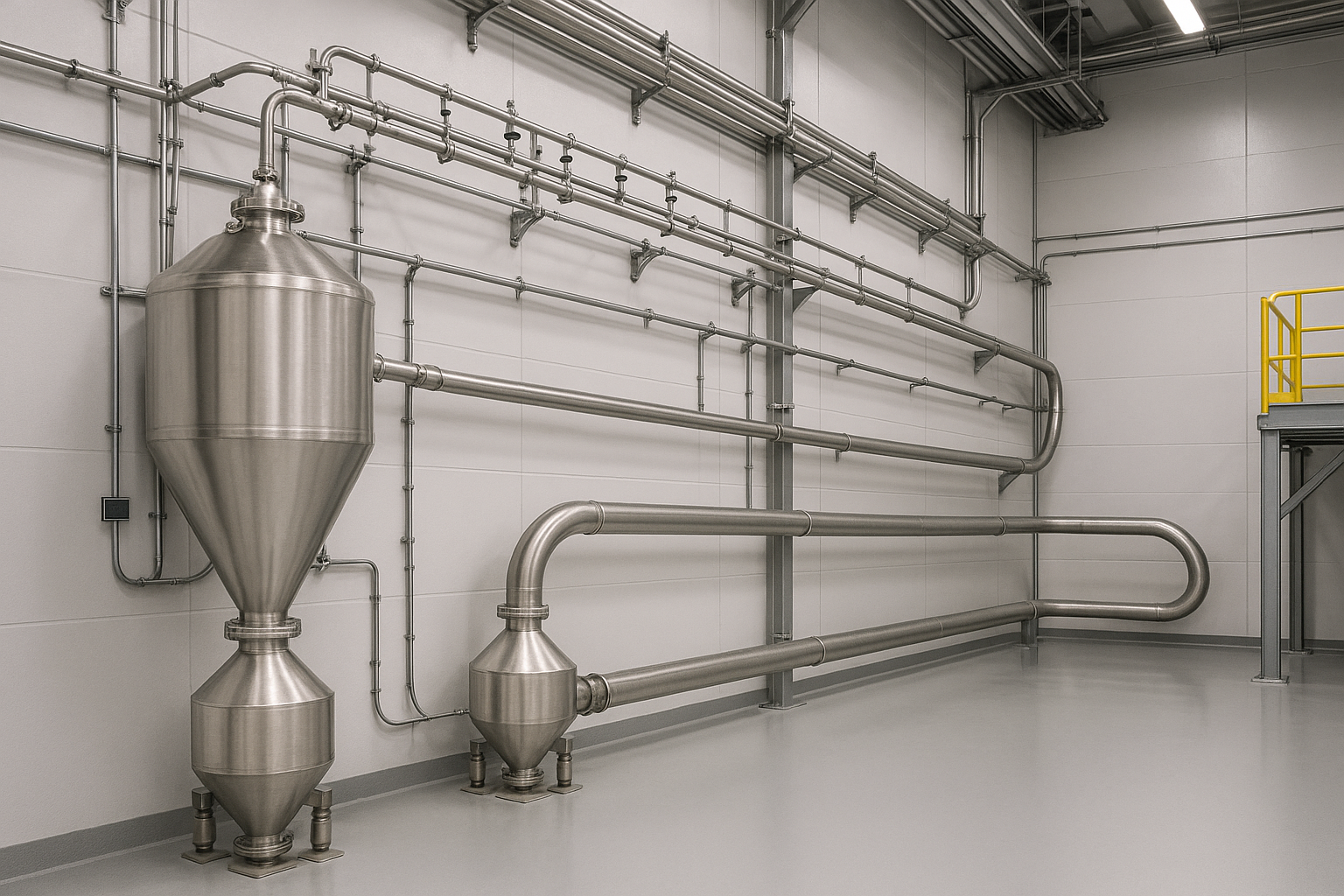
They do different jobs, and most selection mistakes come from using a gate where a route change is needed.
A slide gate opens or closes one path.
Comparison
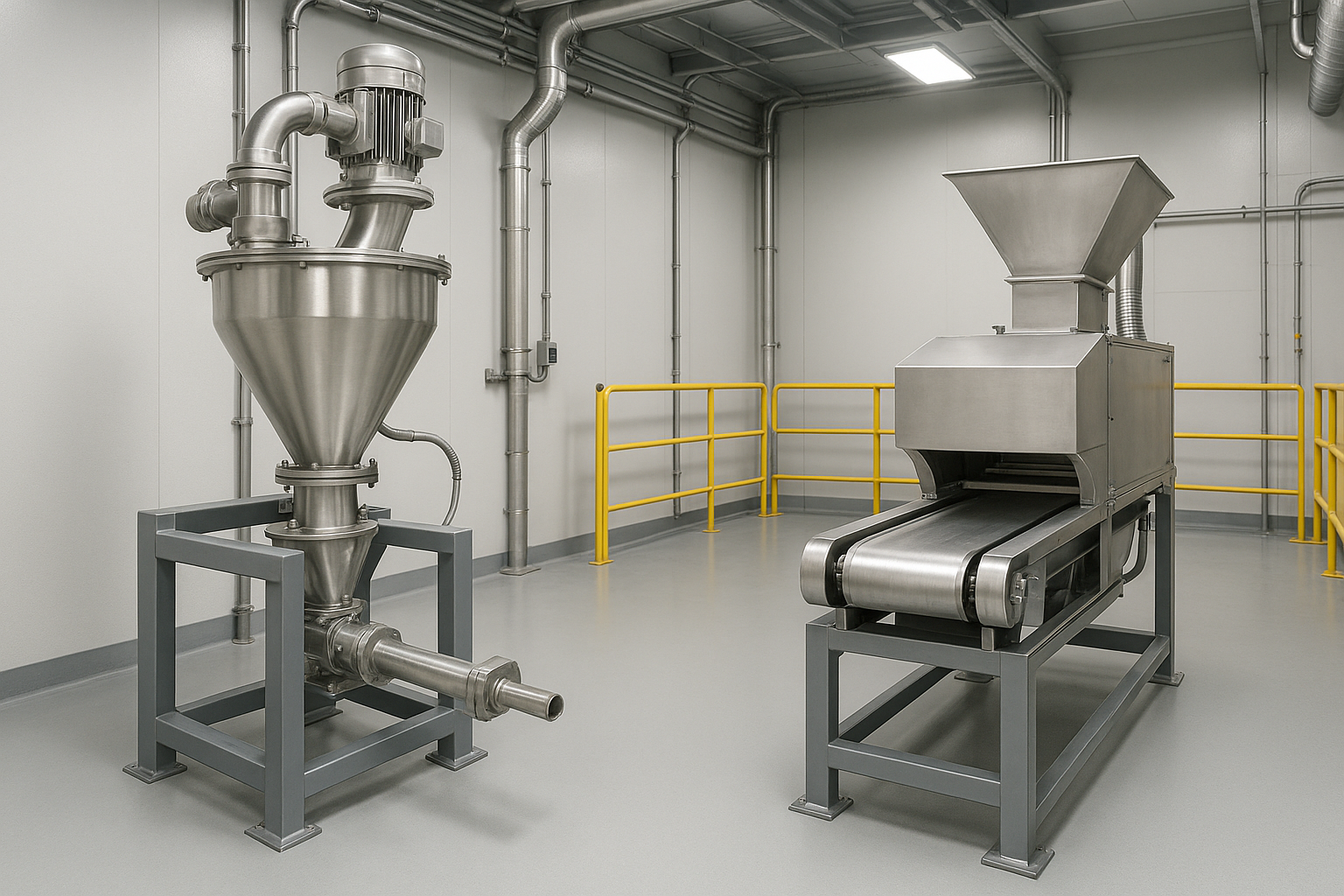
Both move material slowly at a high solids loading; the difference is how the flow is organised.
Conventional dense phase lets the material form whatever pattern it will, often moving dunes along the pipe bottom.
Comparison
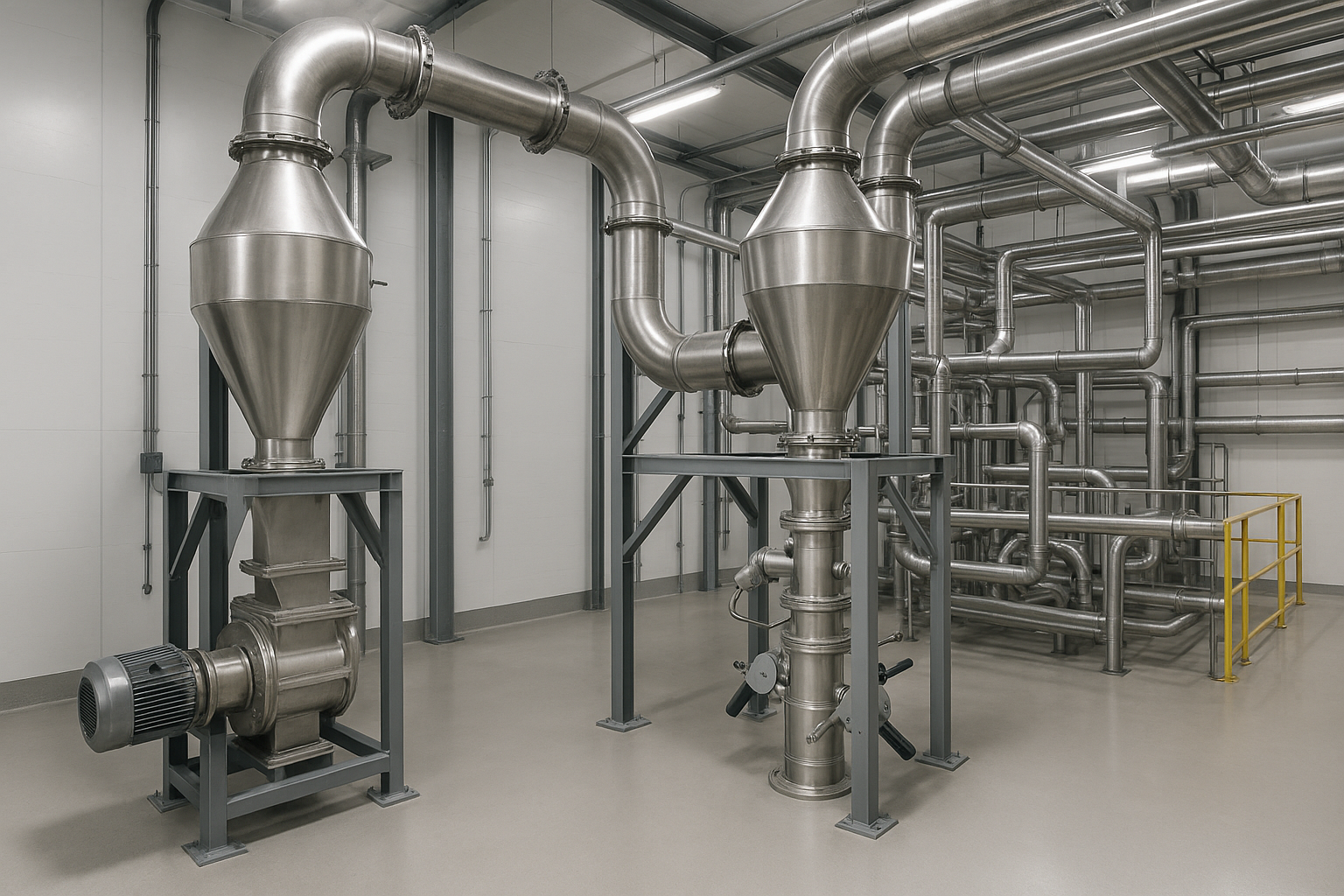
Both are gravimetric, and the difference is what they weigh.
A loss-in-weight feeder weighs its own hopper and infers rate from the falling weight.
Comparison
Both maintain a pressure boundary while material passes; one does it continuously, the other in batches.
A rotary valve passes material in pockets and leaks a defined amount of gas across the clearances.
Comparison
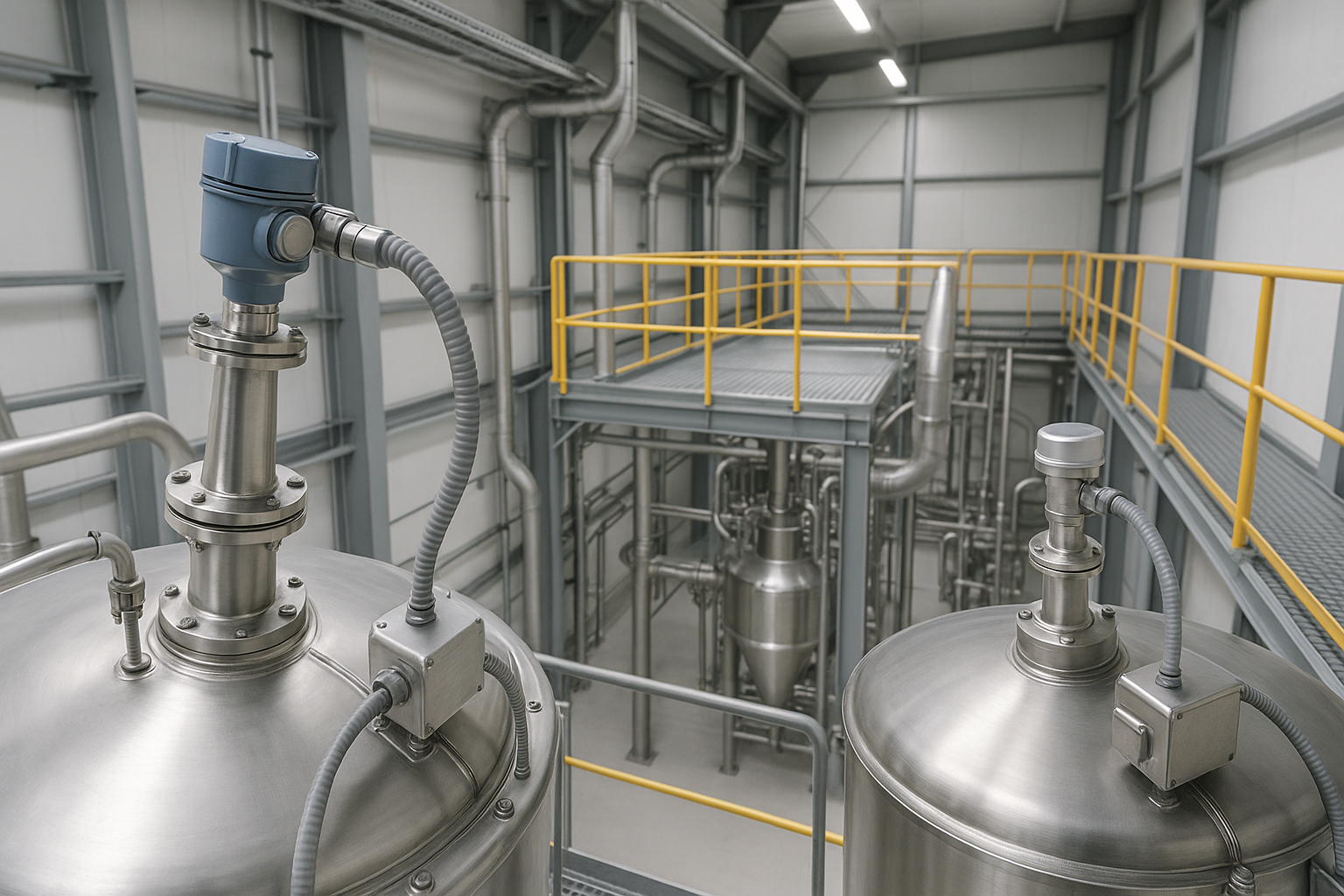
Dust decides it.
Ultrasonic measurement relies on sound travelling through air, and filling dust, temperature layers and foam all attenuate it.
Comparison
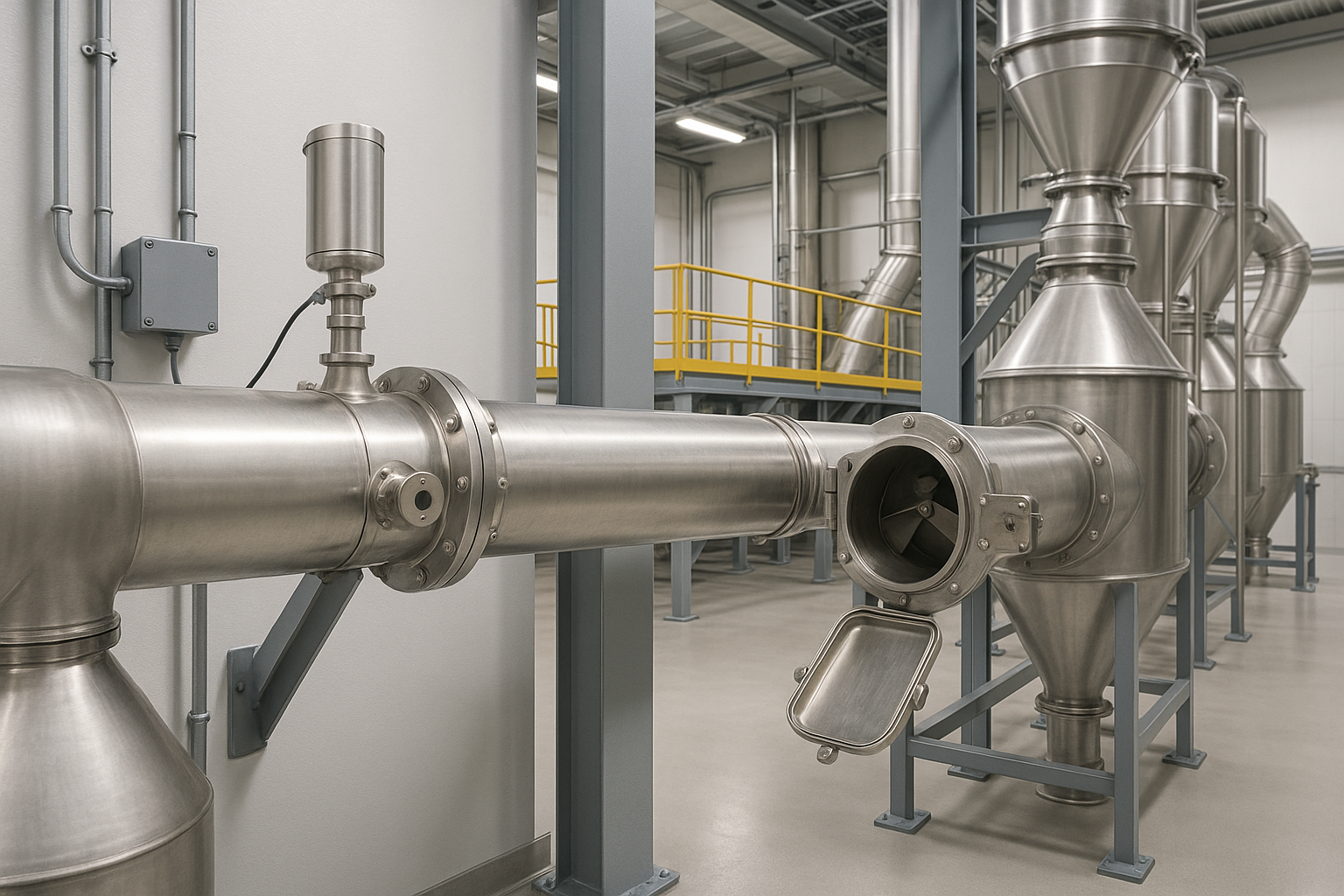
Isolation is the measure most often missing, and the choice between chemical and mechanical comes down to detection time, duct geometry and what the duct carries.
A chemical barrier injects suppressant into the duct on detection and works in either flow direction.
Comparison
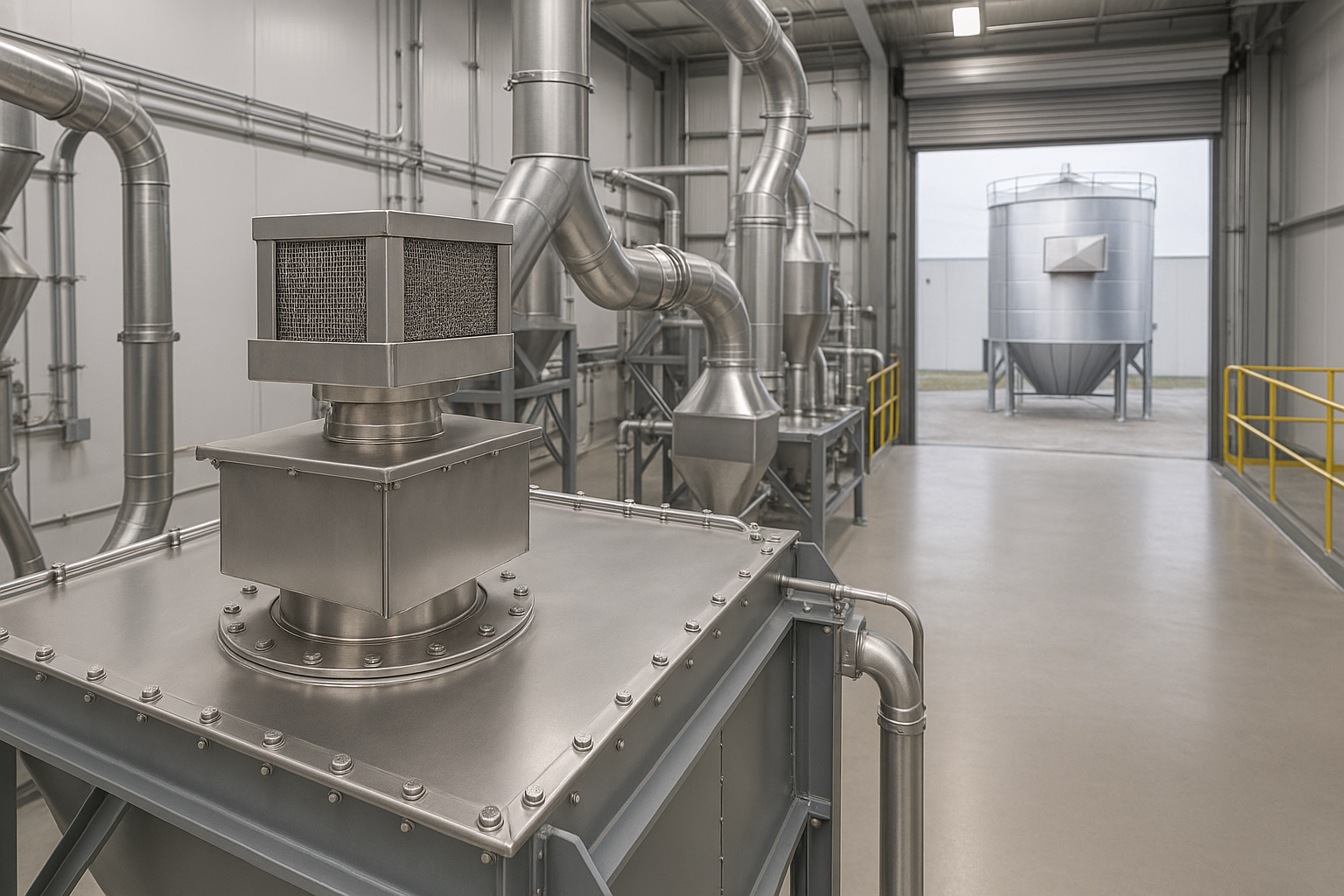
The question is almost always about where the vessel stands.
A conventional vent panel is the cheaper and simpler device, but it needs a safe outdoor discharge area that no person or structure occupies.
Comparison
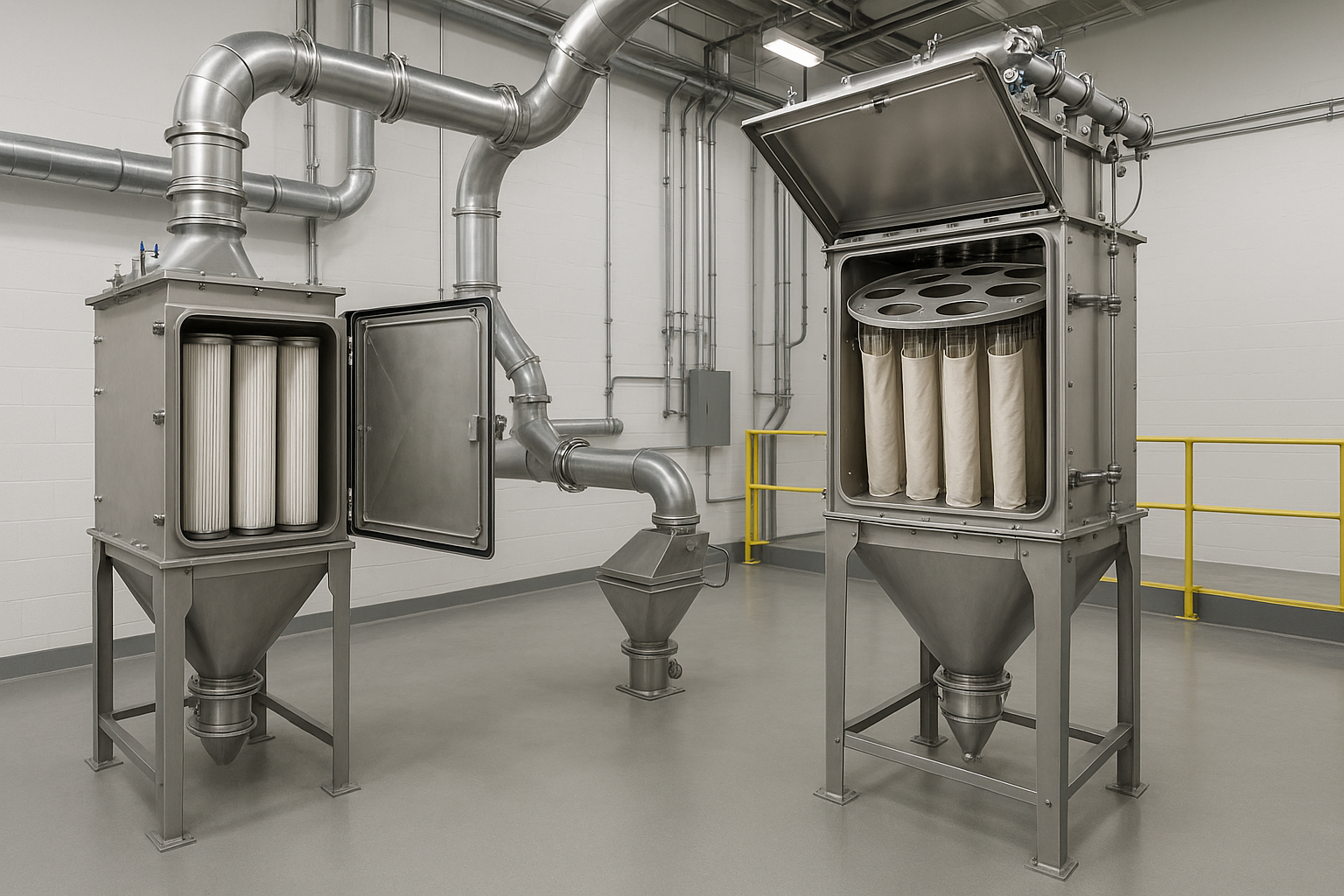
Cartridges give far more filter area in the same footprint; bags tolerate harder conditions.
The decision usually turns on the dust itself: sticky, moist, hot or fibrous dust blinds pleated media quickly, while fine dry dust suits it well.
Comparison
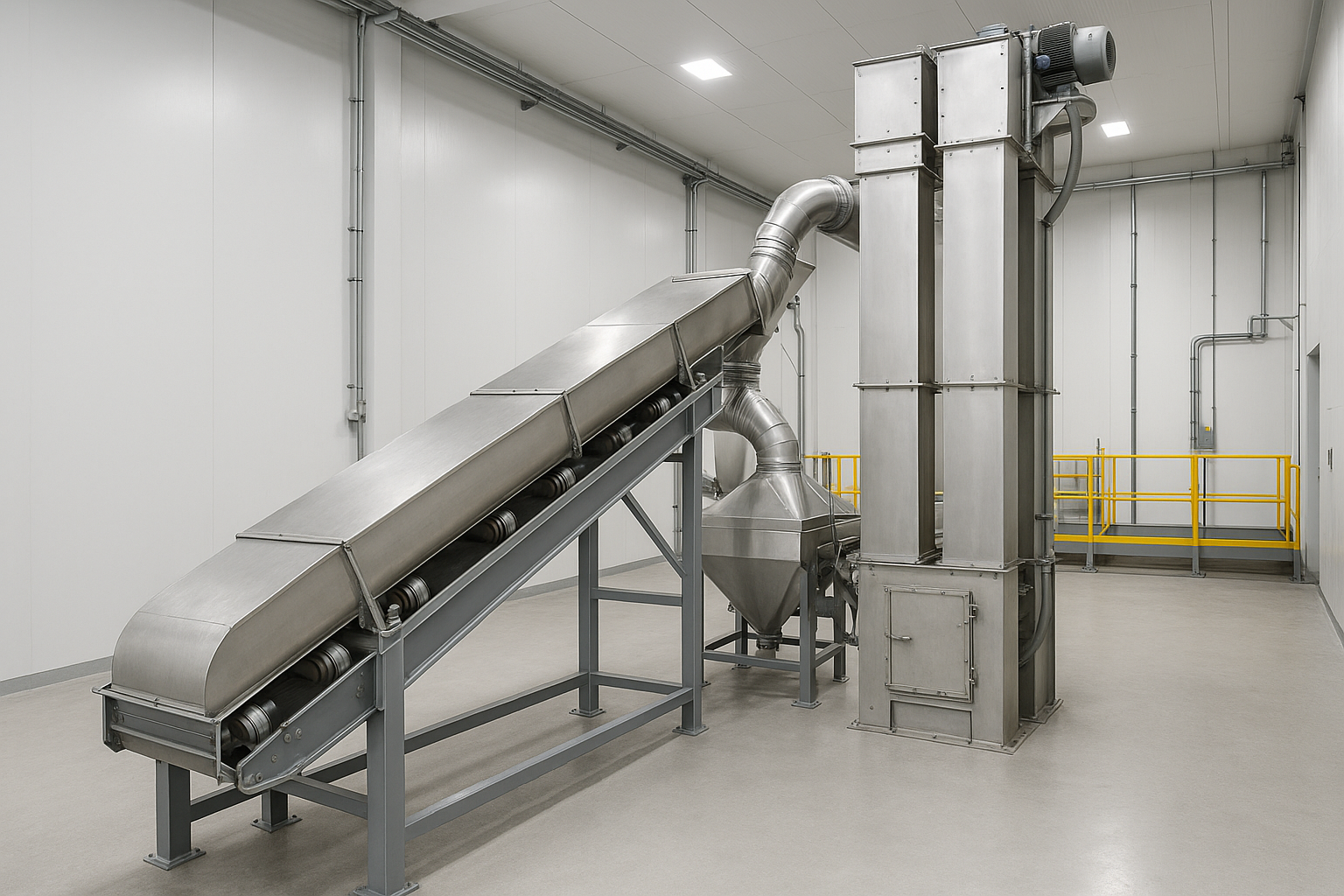
Height and floor space decide this more than anything else.
A belt conveyor is gentle and simple but needs a long run to gain height, because material slips back above roughly 18 to 20 degrees for free-flowing solids.
Comparison
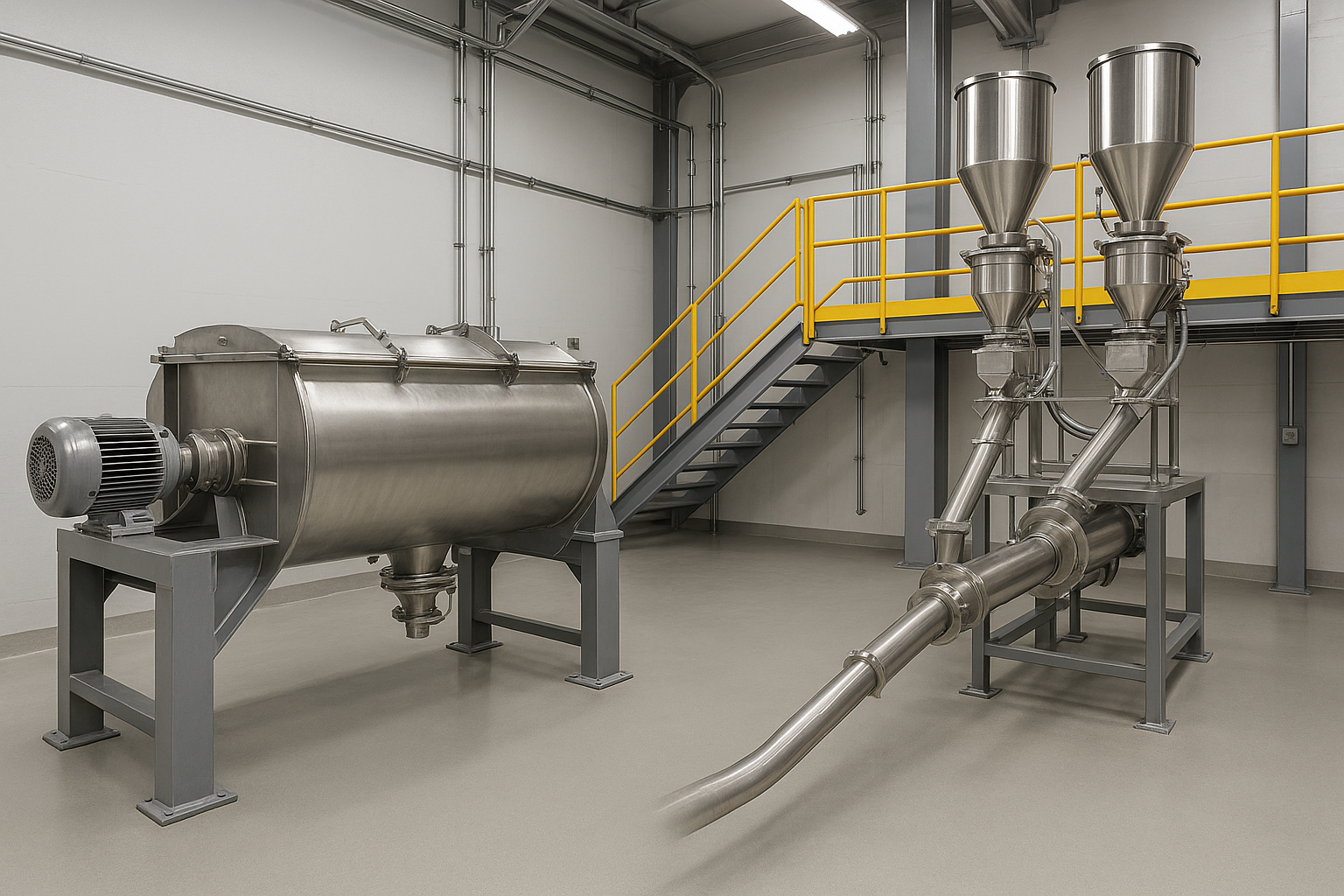
Batch mixing proves uniformity per batch; continuous mixing proves it statistically over time.
That difference drives everything else, including how the plant is validated and how a deviation is handled.
Comparison
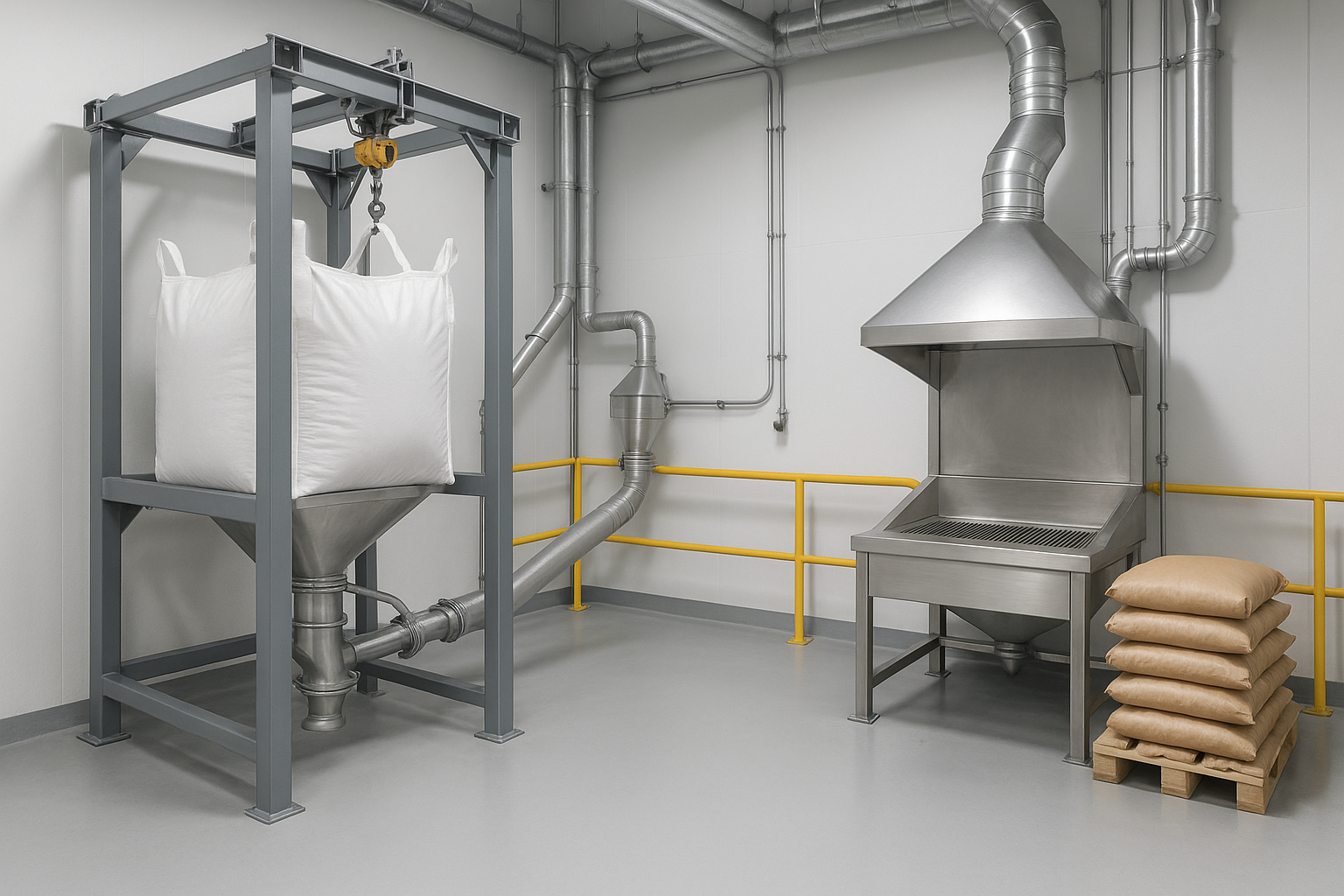
The decision is usually made by people and dust rather than by tonnage.
Bulk bags remove repetitive lifting and cut the number of open transfers per tonne, while sacks keep flexibility for small batches and many recipes.
Comparison
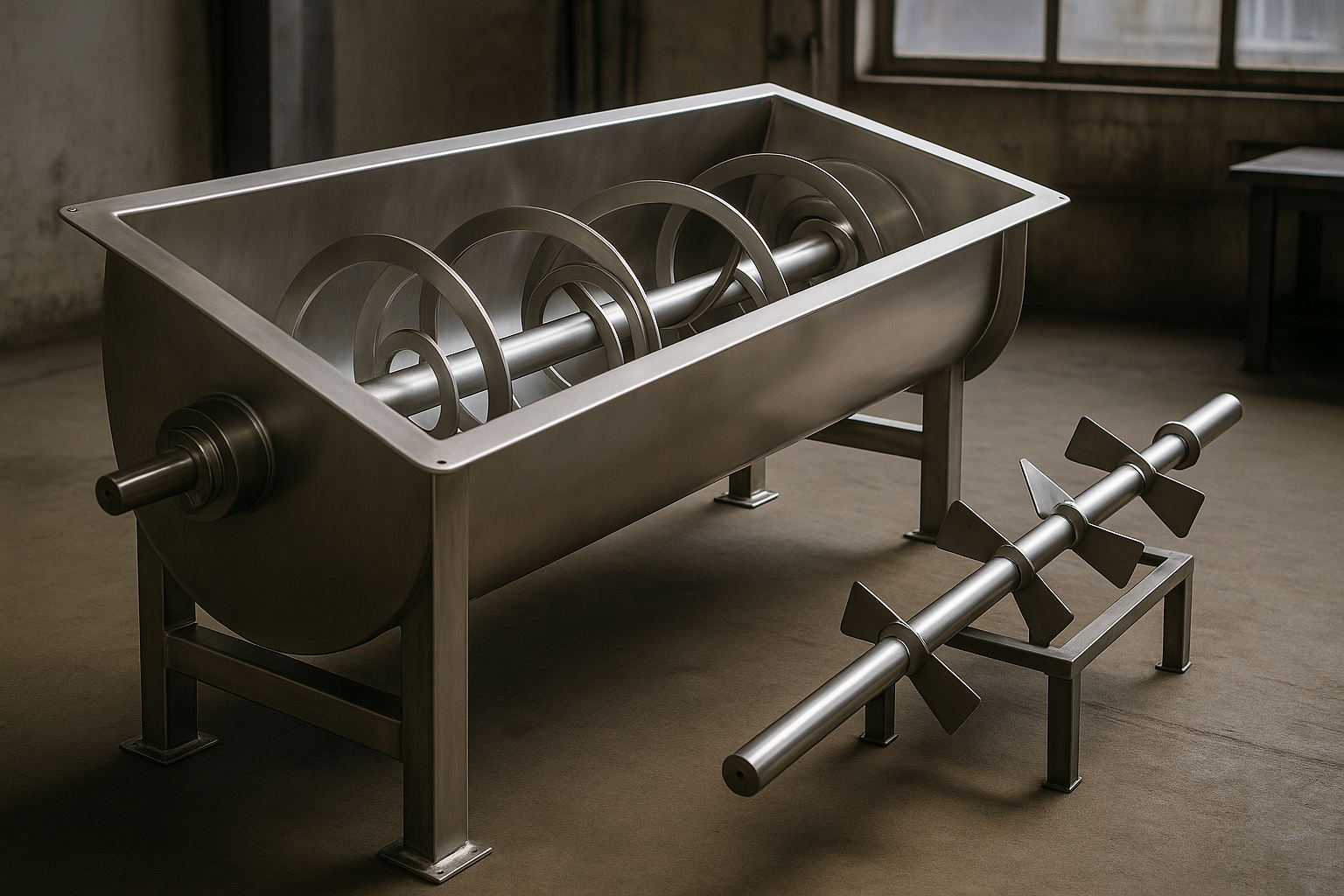
Ribbon blenders and paddle mixers share the same horizontal trough — the agitator decides the duty.
Ribbons convect material in two counter-current spirals: efficient and economical for free-flowing to moderately cohesive powders at consistent fill levels.

Comparison
Vacuum conveying is usually the stronger starting point when powder must be drawn from several pickup points to one receiver and inward air leakage is preferable at open interfaces.
Positive-pressure conveying comes into play when one source must feed several destinations or the route and duty demand a different pressure envelope.

Comparison
Neither machine wins by default.
A vibratory sieve presents powder to one or more vibrating screens and supports safety screening or grading; a centrifugal sifter uses rotating paddles inside a cylindrical screen for enclosed inline sifting or deagglomeration.
Partner with powderbulkvideos.com
Build a connected company, video and technology presence with clearly labelled partner visibility and measurable placement performance.