
Comparison
Vacuum Conveying vs Mechanical Conveying
Answer in brief
For hygienic and contained duties vacuum conveying usually wins on principle, not on performance.
A vacuum system leaks inward, so a failed seal draws air in rather than releasing product, and the pipework dismantles for cleaning.
- Containment, hygiene, frequent product changes: vacuum.
- Continuous high tonnage over a short distance: mechanical.
- Vacuum systems cost more energy per tonne and have a practical rate ceiling.
By Editorial Team · Published October 21, 2026 · Updated October 21, 2026
What actually differs
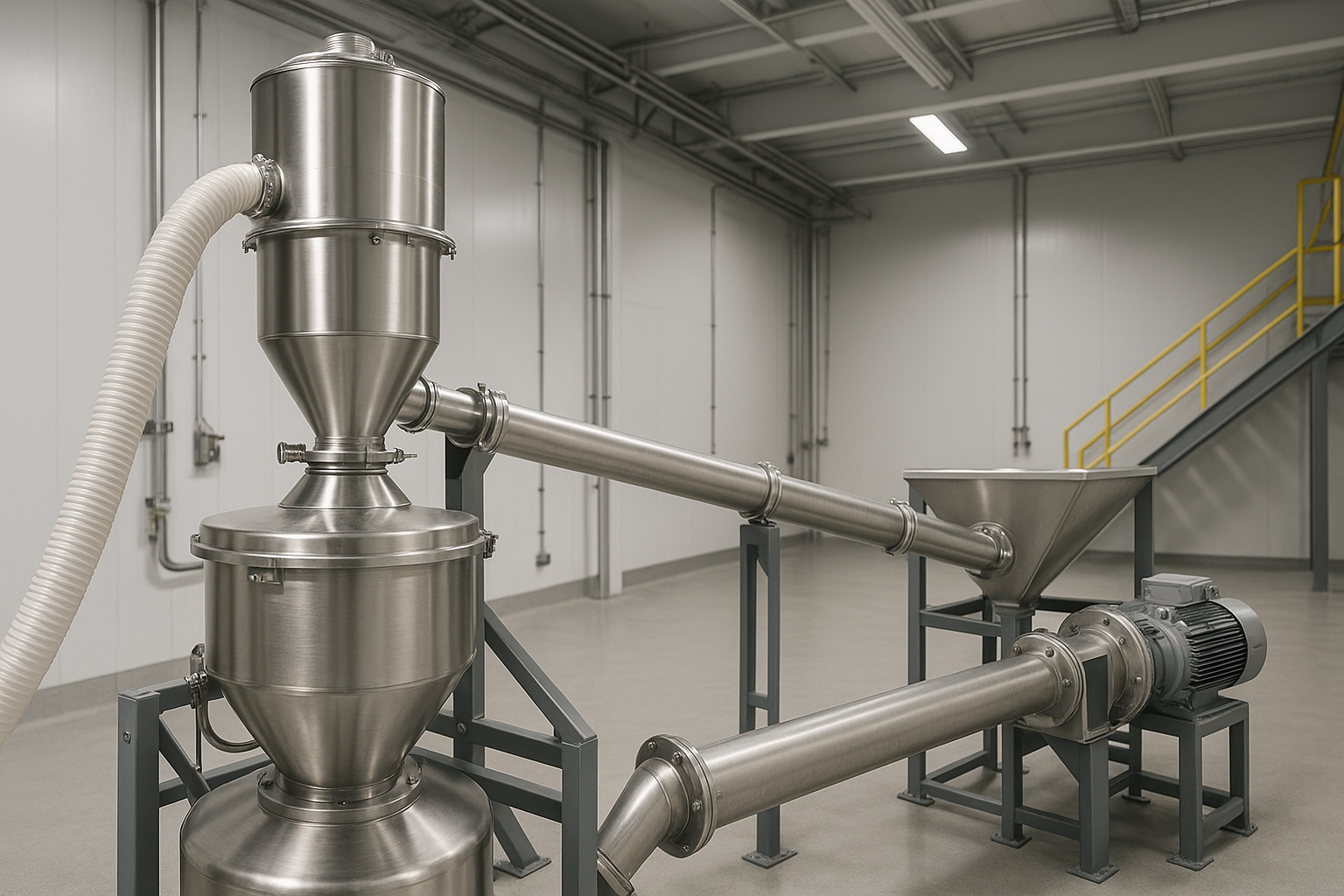
A vacuum system holds the conveying line below atmospheric pressure, so any leak is inward.
A mechanical conveyor carries material in an enclosure that is at ambient pressure, so a failed seal releases dust.
That single fact decides most hygiene and containment arguments, before rate or energy enters the discussion.
Decision criteria
| Criterion | Vacuum conveying | Mechanical conveying |
|---|---|---|
| Leak direction | Inward | Outward |
| Cleaning | Dismantle or clean in place | Access hatches, longer downtime |
| Routing | Free, pipework | Straight runs, limited incline |
| Rate | Up to a few tonnes per hour per line | Much higher |
| Energy per tonne | High | Low |
| Moving parts in product | None in the line | Screw, chain or belt |
Where vacuum conveying is the better choice
- Food, pharmaceutical and nutritional plants with frequent product changes.
- Potent or hazardous powders where outward leakage is unacceptable.
- Charging mixers, reactors and packing lines from several sources.
Because there are no moving parts in the conveying line, the wear points are the filter, the valves and the vacuum generator, all of which sit outside the product path and are easy to service.
Partner with powderbulkvideos.com
Put your expertise beside the decisions engineers are making.
Connect a relevant company profile and technical video portfolio with clearly labelled visibility on this topic.
Where mechanical conveying is the better choice
- Continuous transfer of tonnes per hour over short distances.
- Materials that would degrade in an air stream or are too dense to lift economically.
- Plants where energy cost dominates and hygiene requirements are moderate.
Where neither fits
Neither principle handles a product that will not leave its hopper; discharge is a separate problem.
Very abrasive powders wear vacuum pipework at bends and wear screw flights in mechanical systems, so neither offers an easy answer there.
What to measure before deciding
- Required rate per hour and whether it is continuous or intermittent.
- Cleaning frequency and the standard that must be met.
- Containment requirement expressed as an exposure limit.
- Bulk density and particle size, which set the achievable vacuum rate.
Frequently asked questions
What rate can a vacuum system reach?
Single lines commonly reach a few tonnes per hour, depending on bulk density, distance and vacuum capacity. Higher rates are possible but the energy and equipment cost rise quickly.
Does vacuum conveying damage the product?
Less than high velocity pressure conveying in most cases, because typical vacuum velocities are lower. Fragile agglomerates still need the velocity checked against the product.
Is a vacuum system automatically contained?
The conveying line is. The filter, the discharge valve and the receiver outlet are where containment is won or lost, and they have to be specified for it.
Related content
Continue exploring
Move from this page to the companies, videos and technical topics that add useful context.
Companies
Videos


VAC-U-MAX
VAC-U-MAX: Signature Series Packaged Vacuum Conveying Systems
With over 65 years of experience in pneumatic conveying and more than 10,000 powders and granular materials handled, VAC-U-MAX packages its Signature Series vacuum conveying systems as complete units: receiver, UL-listed controls, convey hose, filters, and vacuum producer.
Total reach: 10,678

WAMGROUP
Tubular Screw Conveyors and Feeders
WAMGROUP presents enclosed tubular screw conveyors and feeders used to transfer or meter powders and bulk solids.

Airlock
Airlock: Air only Diverter Valve for Pressure and Vacuum
The video explains an Airlock bypass valve for routing conveying air in pressure and vacuum systems. It shows an air handling component, not a valve intended to divert powder through alternate product lines.
Total reach: 20,368
Volkmann GmbH
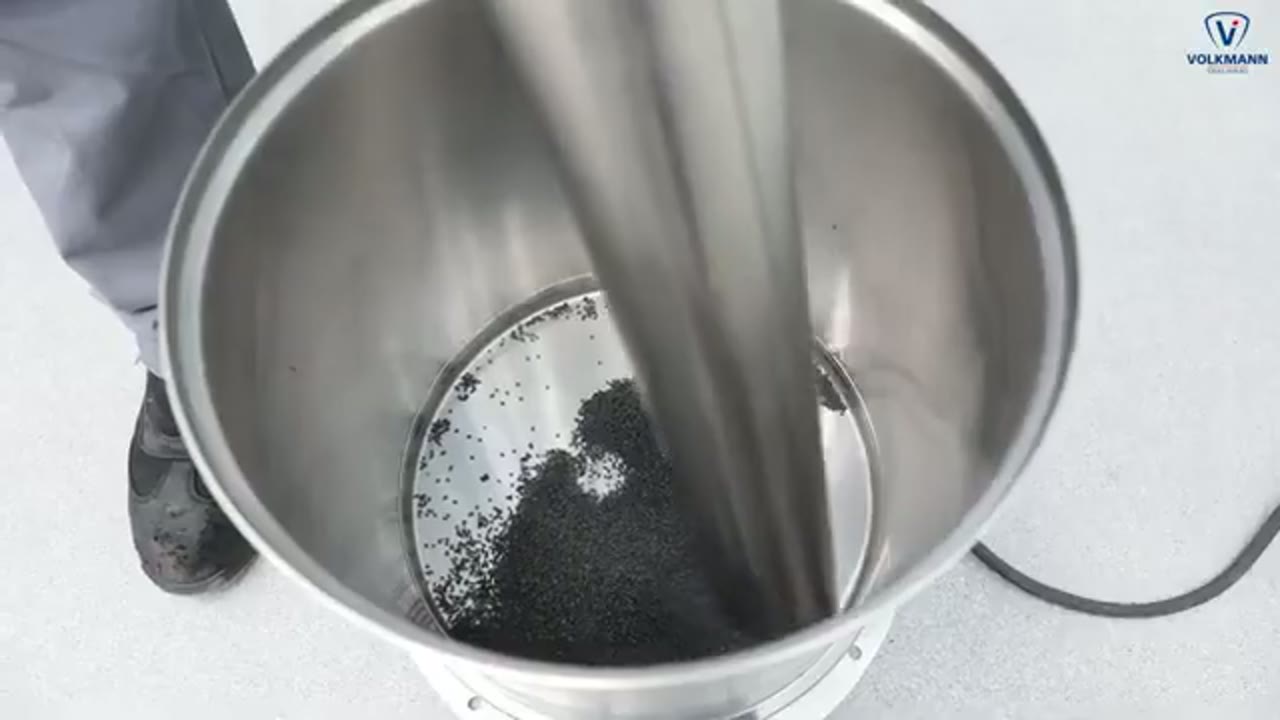
Suction lance for powder feeding
The Volkmann video shows powder being introduced from a drum or container through a suction lance into a vacuum conveying line. It shows the pickup boundary and the need to admit material and conveying air in a controlled way. Capacity and suitability depend on the powder and need a conveying trial with the actual material.
Total reach: 1,814
Products
Technologies
Applications
- Chemical Powder Repackaging and Batching
- Feeder Refill from Pneumatic Conveying
- Gentle Ingredient Transfer from Gaylord Boxes
- Hygienic Vacuum Conveying for Food and Pharma
- Inline Screening in Conveying and Processing Lines
- Polysilicon Powder Reclamation
- Vacuum Conveying for Battery Powder
- Vacuum Conveying from Bulk Bags to Process Equipment