
FAQ
Vacuum Conveying FAQ
Answer in brief
Vacuum conveying uses negative pressure to draw air and bulk material toward a receiver. Reliable operation depends on the material, pickup condition, route, air mover, separation stage, filter, and discharge device working as one system. Most failures trace back to missing material data, unstable feed, air leakage, filter restriction, or a discharge arrangement that does not match the process.
By Editorial Team · Published July 15, 2026 · Updated July 26, 2026
Vacuum conveying questions are best answered from a complete duty. The same powder may convey reliably on a short route and fail on a longer route with more lift, bends, or air leakage.
Start with material data and the operating cycle, not a nominal pipe size
Collect representative material data and define the operating cycle. Include startup, steady transfer, receiver discharge, filter cleaning, and restart after an interruption.
Partner with powderbulkvideos.com
Put your expertise beside the decisions engineers are making.
Connect a relevant company profile and technical video portfolio with clearly labelled visibility on this topic.
Separate capacity from product protection
A system can reach a mass rate while still causing attrition, segregation, contamination, or excessive filter loading. Acceptance criteria should cover both throughput and the attributes that matter to the process.
Treat hazards as system requirements
OSHA identifies electrostatic discharge, hot material, foreign objects, and connected separators among possible concerns in pneumatic transfer. Controls depend on the material and installation, so a generic equipment label is not a substitute for a hazard assessment.
Engineering visual guide
How the system behaves
These conceptual diagrams connect the operating principle, equipment internals and engineering review points. They are explanatory and not fabrication drawings or a substitute for project-specific calculations.
Engineering infographic
System architecture and interfaces
Conceptual system architecture and interface map for Vacuum Conveying; use it to structure an engineering review, not as a fabrication drawing or project-specific design.
Engineering infographic
Verification and acceptance checklist
Conceptual verification and acceptance checklist for Vacuum Conveying; use it to structure an engineering review, not as a fabrication drawing or project-specific design.
Frequently asked questions
What is vacuum conveying?
It is pneumatic transfer in which negative pressure draws conveying air and material toward a receiver.
Why does a vacuum conveying system lose capacity?
Common causes include unstable feed, air leakage, filter restriction, an unsuitable route, excessive solids loading, or a discharge sequence that interrupts the cycle.
Can every powder be vacuum conveyed?
No. Feasibility depends on powder behavior, required rate, route, product quality limits, and hazards. Representative testing is prudent for difficult materials.
Does vacuum conveying prevent dust explosions?
No. Enclosed transfer may reduce open dust release, but combustible dust hazards and credible ignition sources still require a system-level assessment.
Related content
Continue exploring
Move from this page to the companies, videos and technical topics that add useful context.
Companies
Videos

Airlock
Airlock: Air only Diverter Valve for Pressure and Vacuum
The video explains an Airlock bypass valve for routing conveying air in pressure and vacuum systems. It shows an air handling component, not a valve intended to divert powder through alternate product lines.
Total reach: 20,356
Volkmann GmbH
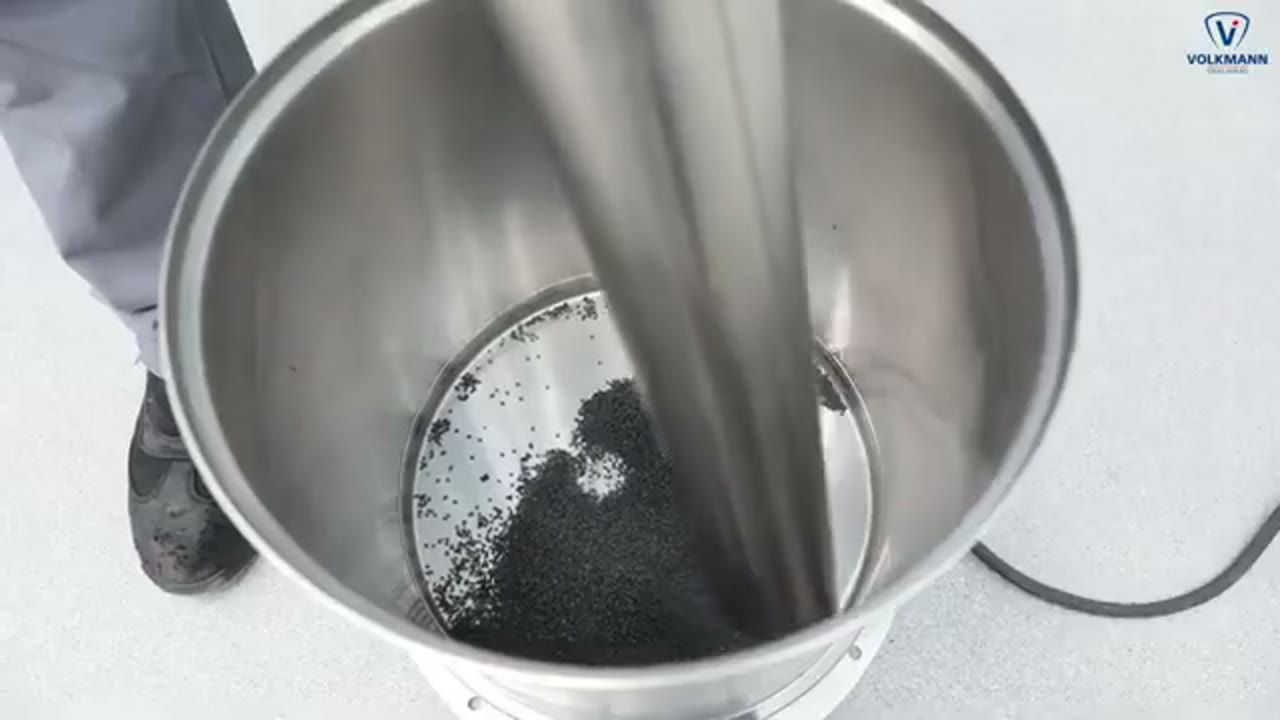
Suction lance for powder feeding
The Volkmann video shows powder being introduced from a drum or container through a suction lance into a vacuum conveying line. It shows the pickup boundary and the need to admit material and conveying air in a controlled way. Capacity and suitability depend on the powder and need a conveying trial with the actual material.
Total reach: 1,765
Products
Technologies
Applications
- Chemical Powder Repackaging and Batching
- Feeder Refill from Pneumatic Conveying
- Gentle Ingredient Transfer from Gaylord Boxes
- Hygienic Vacuum Conveying for Food and Pharma
- Inline Screening in Conveying and Processing Lines
- Polysilicon Powder Reclamation
- Vacuum Conveying for Battery Powder
- Vacuum Conveying from Bulk Bags to Process Equipment