
Application
Automated Sack Emptying in Food Production
Answer in brief
Automated sack emptying removes the two worst features of manual tipping: the lifting and the dust.
The machine opens the sack inside an enclosure, empties it and compacts the empty, so the operator never stands over an open hopper.
- Match the opening method to the sack type.
- Sieve after emptying, because sacks bring foreign material.
- Plan the allergen changeover for the enclosure as well as the hopper.
Reviewed October 21, 2026
The problem
Sack tipping is the dustiest operation in most food plants and the one with the most human contact.
An operator lifts twenty five kilograms, cuts it open and shakes it out, several hundred times a shift. Every one of those movements releases dust at face height, and the empty sack carries product back out of the station.
Automating it removes the lifting and most of the exposure, but introduces the problems of handling a sack mechanically: sacks vary, they tear, and the cutting has to separate paper or film from product reliably.
Desired outcome
Sacks emptied without an operator in the dust, with the product free of packaging fragments and the empty sacks compacted and removed.
The figures that matter are residual product in the discarded sack and packaging fragments in the product, both measured rather than assumed.
An enclosure that is included in the allergen changeover, not just the hopper below it. The cutting chamber, the sack inversion area and the compactor all hold product dust from whatever ran last, and none of them is visible from the operator position.
A realistic sack rate. A station that cannot keep up with the line will be helped by hand, and a station being helped by hand has none of the exposure benefit it was bought for.
For mineral processing the governing figure is the respirable silica fraction, and capture judged by how clean the station looks passes while the dangerous part is still in the air.
Process approach
Sacks are fed from a pallet onto an infeed conveyor, usually by a de-palletiser or by hand onto a magazine.
The machine opens the sack by cutting or by ripping, inverts it over a screen and shakes or beats the remaining product out. The screen catches packaging fragments and any foreign body, which is the food safety function of the station as much as a product one.
Extraction runs at the cutting point and at the discharge, because both release dust. The empty sack is compacted and discharged into a closed container rather than being handled again.
Everything downstream of the screen is a food contact surface and has to be cleanable in the plant's changeover window.
The screen is the food safety function of the station. Sacks bring staples, string, paper fragments and occasionally something from the pallet, and the screen after inversion is where those are removed. Its mesh is chosen for the packaging fragments rather than for the powder, which usually means a different aperture from the process sieve downstream.
Residual product in the discarded sack is worth measuring. It is a yield loss that runs continuously, it is an allergen leaving the station in a compactor, and it is the simplest indicator of whether the beating stage is specified correctly.
- Cut, invert, beat, screen.
- Extraction at the cut and at the discharge, not at the room.
- Empties handled mechanically, never a second time by hand.
- Screen mesh chosen for packaging fragments, which is not the process sieve aperture.
- Enclosure, cutting chamber and compactor included in the allergen changeover.
- Residual product in the empties measured as a yield and an allergen figure.
Selection factors
- Sack construction: paper, film or laminate all cut and tear differently, and a mixed supply is the hard case.
- Product cohesion, which decides how much beating is needed to get the last of it out.
- Allergen matrix, which decides whether the station can be shared and how it is cleaned.
- Throughput in sacks per hour, measured at the realistic rate rather than the peak.
- Explosion characteristics of the powder, since the station contains a dust cloud by design.
- Residual product target in the empties, which indicates whether the beating is right.
- Cleaning access to the enclosure, since the cutting chamber is not visible from outside.
- Realistic sack rate, because a slow station invites manual help.
Common failure modes
- Machine specified for one sack construction and fed a mixed supply
- Extraction at the room rather than at the cutting point, so dust escapes where it is created
- Screen sized for the product and not for the packaging fragments it has to catch
- Residual product in discarded sacks accepted without measurement, which is a quiet yield loss
- Station not cleanable in the changeover window, so it is cleaned less often than the allergen plan assumes
- Allergen changeover covering the hopper but not the cutting chamber or the compactor
- Screen aperture copied from the process sieve rather than chosen for packaging fragments
- Station slower than the line, so operators open sacks by hand beside it
Partner with powderbulkvideos.com
Put a relevant technical solution in this decision path.
Connect your company and video evidence with clearly labelled visibility where engineers evaluate this material, application, industry or product.
Frequently asked questions
What does automation actually remove?
The lifting and most of the exposure. The operator no longer stands in the dust cloud several hundred times a shift, which is the main health benefit.
What is the food safety function of the screen?
It catches packaging fragments and foreign bodies that the cutting releases. That makes it a critical control rather than a product screen.
What should be measured on handover?
Residual product in the discarded sacks and packaging fragments in the product. Both are easy to measure and both are usually assumed instead.
Which mesh belongs in the station screen?
One chosen for packaging fragments: staples, string and pieces of paper or film. That is usually a different aperture from the process sieve downstream, which is sized for the product.
Related content
Continue exploring
Move from this page to the companies, videos and technical topics that add useful context.
Companies
Videos
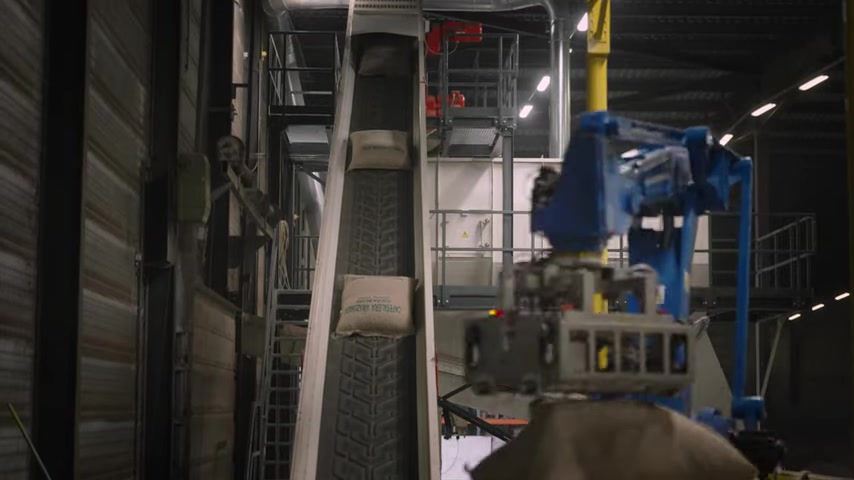
Dinnissen
Dinnissen DIMA 1200 Bag Emptying System at Steinweg
Dinnissen shows the DIMA 1200 fully automatic bag emptying system installed at Steinweg Amsterdam for cocoa, where it saves the equivalent of two full-time jobs per truckload.
Total reach: 1,325
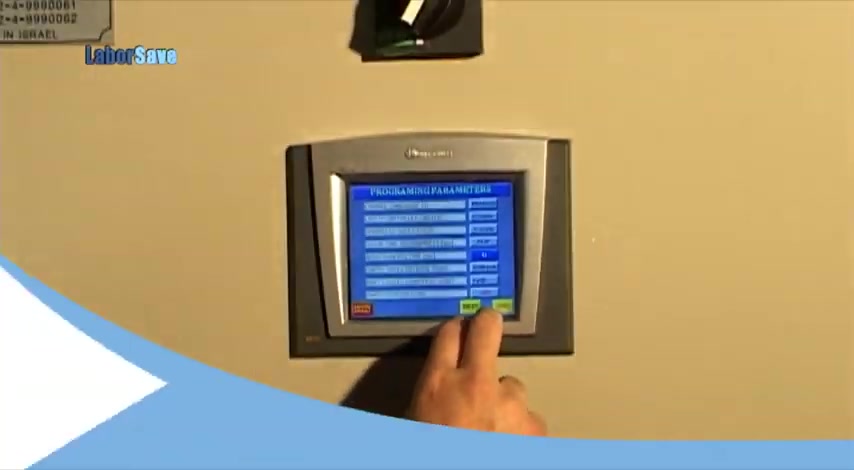
LaborSave
LaborSave: The Original Automatic Bag Emptying Machine
LaborSave presents its fully automated bag emptying machine: whole pallets of sacks are lifted, cut open and emptied into a hopper without an operator handling a single bag.
Total reach: 15,254
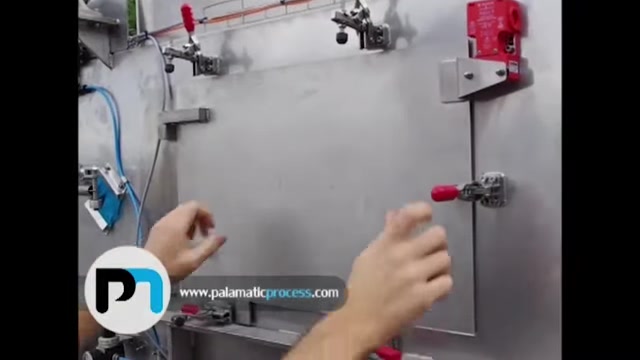
Palamatic Process
Palamatic Process MiniSlit: Automatic Bag Dump Station
Palamatic Process shows the MiniSlit automatic sack discharging station: sacks arrive on a belt conveyor, are cut open on three sides, emptied, and the empty bags are compacted.
Total reach: 8,503