
Independent industry shortlist for Screening & Sieving Systems
Best Industrial Screening & Sieving System Suppliers 2026
Answer in brief
AViTEQ, Gericke, Hecht, Netter Vibration, and IEDCO make up this shortlist of industrial screening and sieving suppliers. The right choice follows the screening task: vibrating screens classify bulk material from fine powders up to feed of 1,000 mm edge length, centrifugal sifters handle in-line check screening of powders up to 120 t/h, and contained or in-line screeners serve hygiene- and exposure-critical transfer points.
By Editorial Team · Published August 14, 2026 · Updated October 14, 2026
How we selected these companies
ShowHide
We compared screening and sieving suppliers on five technical areas that decide whether a machine fits a separation task.
- Screening machine range (30%) looks at the machine families a supplier builds: centrifugal sifters, linear and circular vibrating screens, multi-deck machines, dewatering screens, and in-line or integrated screeners.
- Application coverage (25%) looks at the products and separation duties the machines serve, from check screening of food powders to classification of coarse bulk material.
- Hygienic design and containment (20%) covers stainless construction, tool-free access to the screen, dust-tight and pressure-rated housings, containment levels, and ATEX versions.
- Product-specific engineering and testing (15%) covers how far motion, screen media, and deblinding are adapted to the product, and whether trials with the real material are possible in a test center.
- Capacity and sizing data (10%) covers model sizes, throughput, mesh range, and particle-size limits that let you size a machine early.
Machine range carries the most weight because check screening, classification, and dewatering call for different machine physics, and a supplier with one family can only answer one of those tasks. Application coverage follows because blinding, near-size content, and moisture make screening results specific to the product. Hygiene and containment weigh more than sizing data because a screener that can't be cleaned or sealed to the plant's standard is out, whatever its capacity.
Screening machine range 30%
Which machine families are built: centrifugal sifters, linear and circular vibrating screens, multi-deck, dewatering, and in-line or integrated screeners.
Application coverage 25%
The products, industries, and separation duties the machines serve, from check screening to classification and dewatering.
Hygienic design and containment 20%
Stainless construction, tool-free screen access, dust-tight or pressure-rated housings, containment levels, and ATEX versions.
Product-specific engineering and testing 15%
Adaptation of motion, screen media, and deblinding to the product, and trials with the real material in a test center.
Capacity and sizing data 10%
Model sizes, throughput, mesh range, and particle-size limits available for early machine sizing.
Last reviewed October 7, 2026
Every powder process screens somewhere: incoming ingredients are check-screened for foreign material, milled product is classified into fractions, finished powder is safety-screened before packing. The machines doing that work span three families with different physics, and the supplier landscape splits the same way, which is why a shortlist has to name the machine family each supplier builds.
The three machine families
Centrifugal sifters throw product through a cylindrical screen with a rotating paddle assembly: high throughput per footprint, gentle on friable products, and the standard answer for in-line check screening of flour, starch, dairy and chemical powders.
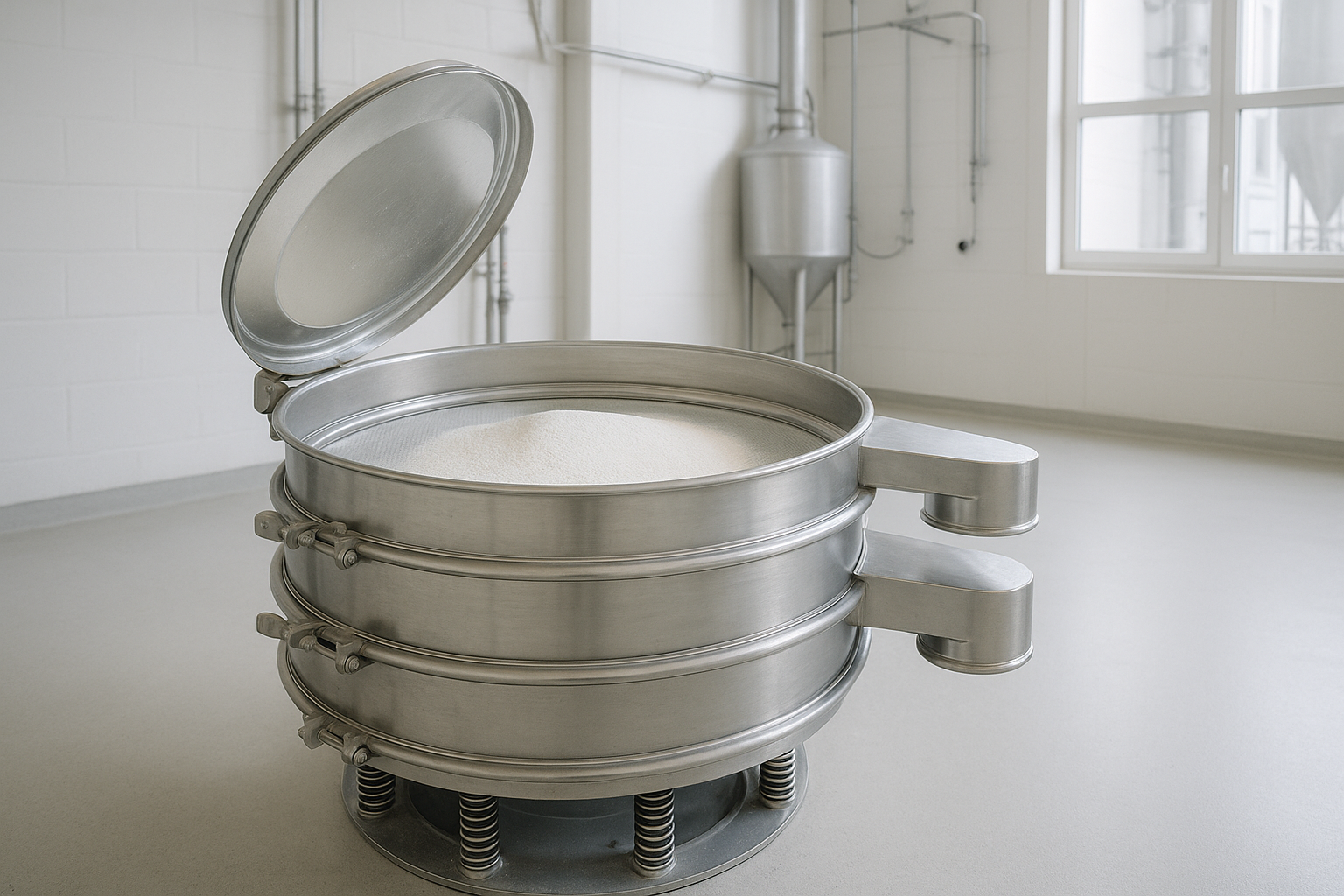
Vibrating screens (linear, circular and multi-deck) classify by size across everything from fine powders to heavy aggregate, with the motion profile and deck count tuned to the separation. In-line and vacuum screeners sit directly in a conveying line and screen product in transit, removing a separate process step in contained installations.
What actually differentiates suppliers
Screen media and deblinding decide uptime: mesh selection to standards such as ASTM E11, anti-blinding systems (balls, ultrasonic excitation, rotary brushes) and tool-free screen changes matter more in daily operation than nominal capacity.
Hygiene splits the field a second time: food and pharma duties need crevice-free welds, quick-release clamps, proven cleanability and, at the exposure-critical end, fully contained screening under negative pressure. Finally, real screening problems are product-specific: suppliers who run trials with the real material and adapt frequency, amplitude and screen geometry to the material earn their place on a shortlist.
How we ranked the suppliers
The ranking below applies five weighted criteria. Machine range carries the largest weight because it determines whether a supplier can match the machine family to the task instead of forcing one design onto every problem. Application coverage, hygienic design and containment, product-specific engineering and testing, and capacity and sizing data complete the score.
The five suppliers build different machine families. AViTEQ makes linear, circular-motion, and multi-deck vibrating screens; its linear screens run up to 6,000 mm long and 2,500 mm wide and carry up to three decks for four fractions. Gericke makes centrifugal sifters, in which a paddle assembly rotates inside a fixed cylindrical screen, for capacities from 2 kg/h to 120 t/h and separations between 40 µm and 5 mm.
Hecht integrates a vibrating protective sieve into bag-emptying stations with containment up to OEB 5. Netter Vibration engineers vibrating screen troughs and screening conveyors around its own vibrators, and IEDCO places a vibrating mesh screen inside a pneumatic conveying line.
Matching supplier to task
- High-rate check screening of powders before packing or after milling: centrifugal sifters (Gericke).
- Classification of bulk materials, multi-fraction separations, dewatering: vibrating screen programs (AViTEQ).
- Product-specific screening solutions built around vibration engineering: customized systems (Netter Vibration).
- Screening inside a contained conveying line, sanitary duties: in-line vacuum screeners (IEDCO).
- Exposure-critical, hygienic screening integrated with containment systems: contained screening interfaces (Hecht).
Screen media: where separations are actually decided
The machine provides motion; the mesh does the separating. Woven wire remains the default for most industrial duties, specified by opening size and wire diameter against standards such as ASTM E11 so that a replacement screen reproduces the original separation.
Finer cuts raise the stakes: thin wires blind faster, tension matters more, and the difference between a screen tensioned correctly and one merely clamped flat shows up directly in capacity and cut sharpness. For sanitary duties, bonded and molded screen designs eliminate the wire-to-frame crevices that woven media leaves, at higher media cost per change.
Hygienic execution in practice
Food and pharmaceutical screening adds requirements that separate suppliers faster than capacity tables do: crevice-free welds and polished product-contact surfaces, tool-free disassembly so operators actually clean the machine as often as the plan says, material certificates and surface-finish records for audits, and, at the exposure-critical end, screening under containment with dust-tight connections on both sides. A supplier who can specify hygienic design in that detail is de-risking the buyer's next audit, not just selling options.
Combustible dust at the screener
Many screened powders are combustible, and a screener is a dust-generating step by definition: it agitates product, liberates fines and often sits between mills and packing, the dustiest neighborhood in the plant.
NFPA 660, the consolidated combustible dust standard that replaced NFPA 652 in December 2024, applies here as everywhere: dust hazard analysis covers the screening station, grounding and bonding cover the machine and its flexible connections, and enclosed or aspirated designs keep the dust cloud inside the process. ATEX versions of the machine and screen media selected against electrostatic discharge are the equipment-side answer to this reality.
Trials before purchase orders
Screening performance is product-specific to a degree that catalog data cannot capture: blinding behavior, near-size content, moisture and electrostatics all change the result. The suppliers on this list run trials with customer material or engineer the screener around the product.
Use that. A witnessed trial with the real powder, the real mesh specification and the intended throughput is the cheapest insurance in the purchase, and the acceptance criteria from that trial belong verbatim in the purchase order.
Specifying your own screener
- Separation task defined: check screening, classification, dewatering, with target cut size?
- Mesh specification written to a standard (ASTM E11) rather than a vendor name?
- Deblinding concept matched to the product's blinding behavior?
- Hygiene class decided: open, sanitary quick-clean, or fully contained?
- Screen change time and media cost included in the comparison?
- Trial with the real product agreed before the purchase order?
Partner with powderbulkvideos.com
Show your equipment where buyers compare suppliers.
Booked places and Featured Listings are limited to 40 percent of a Top List, clearly labelled and separate from the editorial ranking.
Selected companies
-
1Best for: Vibrating screens for classification of bulk material, from fine multi-deck cuts to feed of 1,000 mm edge length
AViTEQ covers the vibrating-screen side of the field with several machine lines.
- Linear vibrating screens run up to 6,000 mm long and 2,500 mm wide, take feed up to 1,000 mm edge length at up to 1,500 m³/h, and carry up to three decks for four fractions.
- Circular-motion screens classify 5 to 300 mm material at up to 750 m³/h on decks inclined 15 to 30 degrees.
- Multi-deck horizontal screens make sharp cuts from a few microns into the millimeter range at up to 60 t/h, in steel or stainless steel, with ball beaters under the mesh keeping it clear.
- Dewatering screens reach 200 m³/h.
- A technical center in Hattersheim holds two screening machines for trials with customer material.
View related CompanyTechnical score breakdown
- Screening machine range
- 5/5 · Linear, circular-motion, multi-deck horizontal, dewatering, grizzly, and banana screens plus small conveying and dosing screens, driven by magnetic vibrators, unbalance motors, or exciters.
- Application coverage
- 4.5/5 · Wet and dry classification from fine sugar, salts, and metal powder on multi-deck machines to stone, coal, and glass at 5 to 300 mm and above.
- Hygienic design and containment
- 2.5/5 · Multi-deck screens in stainless steel, easy-to-clean screening systems for food, and an optional ATEX version on the small conveying and dosing screen.
- Product-specific engineering and testing
- 4.5/5 · Technical center of around 100 m² in Hattersheim with two screening machines, a large stock of screen surfaces, and sieve analyses; four drive types and ball-beater deblinding.
- Capacity and sizing data
- 5/5 · Linear screens to 6,000 by 2,500 mm and 1,500 m³/h, circular screens to 9,000 by 4,000 mm and 750 m³/h, multi-deck to 60 t/h, dewatering screens to 5,000 by 2,800 mm and 200 m³/h.
-
Best for: Centrifugal sifters for in-line check screening of powders, 2 kg/h to 120 t/h
Gericke builds centrifugal sifters: a paddle assembly rotates inside a fixed cylindrical screen and throws fines through the mesh while oversize leaves at the end.
- The GS range runs from the GS 722, with a 7 by 22 inch sieve area, to the GS 1542 at 15 by 42 inches, plus a twin version.
- Capacities span 2 kg/h to 120 t/h for tanker loading, separating between 40 µm and 5 mm.
- The housing is dust-tight and pressure-rated for vacuum and positive-pressure conveying lines, and ATEX versions cover Zone 20 inside and Zones 21 and 22 outside.
- The basket rotates 360 degrees in place for inspection, and screens change without special tools.
- Test centers in Switzerland, France, England, Brazil, the USA, and Singapore run trials on original machines.
View related CompanyTechnical score breakdown
- Screening machine range
- 3.5/5 · One machine family, the GS centrifugal sifter, in four standard sizes from GS 722 to GS 1542 plus a twin version, for gravity feed or in-line conveying.
- Application coverage
- 4.5/5 · Safety sifting, two-fraction separation, and conditioning of flour, starch, sugar, milk powder, spices, PVC, gypsum, and phosphates in food, dairy, chemical, and pharmaceutical plants.
- Hygienic design and containment
- 4.5/5 · Dust-tight, pressure-rated housing in 304 or 316 stainless steel, 360-degree basket inspection, tool-free screen change, and ATEX type certification to Zone 20 inside.
- Product-specific engineering and testing
- 4.5/5 · Test centers in six countries with original machines, hexagonal perforated-plate screens with over 10 percent more open area, a quick-release shaft option, and custom designs.
- Capacity and sizing data
- 5/5 · 2 kg/h to 120 t/h, separation from 40 µm to 5 mm, mesh sizes of 100 to 4,000 µm, and capacity ranges by product such as 400 to 20,000 kg/h for milk powder.
-
Best for: Protective sieving inside bag-emptying stations with containment up to OEB 5
Hecht builds screening into its emptying and containment stations.
- The SE-RVS bag chute has an integrated vibrating protective sieve, driven by a vibration motor, that holds back foreign bodies and packaging residue and breaks up light lumps.
- Its round one-piece housing avoids transition sleeves, reaches OEB level 3, holds 180 liters in the hopper, and takes wet cleaning.
- Sieves change without tools.
- The SE-CS high-containment chute empties bags dust-tight up to OEB 5.
- A crusher with sieve grater handles 1,000 to 4,000 kg/h depending on product, with sieve inserts of 10, 15, or 20 mm and an adjustable gap between sieve and rotor, and suits Ex zones 20 to 22.
- The technical center runs sieving, crushing, containment, and CIP/WIP cleaning trials.
View related CompanyTechnical score breakdown
- Screening machine range
- 3/5 · Bag chutes with integrated vibrating protective sieve (SE-RVS, SE-H-EF), the SE-H chute with a 50 by 50 mm grating and sieve inserts, and a crusher with sieve grater.
- Application coverage
- 3.5/5 · Protective sieving and lump breaking at manual bag emptying and ahead of pneumatic conveying, mainly in pharmaceutical and other hygienic plants.
- Hygienic design and containment
- 5/5 · OEB level 3 on the SE-RVS and up to OEB 5 on the SE-CS, one-piece housing without transition sleeves, wet cleaning, tool-free sieve change, and ATEX versions.
- Product-specific engineering and testing
- 4/5 · Technical center trials for sieving, crushing, containment, and CIP/WIP cleaning including a riboflavin test; adjustable sieve-to-rotor gap on the crusher.
- Capacity and sizing data
- 3.5/5 · Crusher at 1,000 to 4,000 kg/h with 10, 15, or 20 mm sieve inserts; hoppers of 180 liters (SE-RVS) and 260 liters (SE-H); sieve change within one minute.
-
4Best for: Custom vibrating screen troughs and sorting systems tuned to the product
Netter Vibration
Netter Vibration
Netter Vibration builds screening as an engineered application of its own vibrators, not as a catalog machine line.
- Typical builds are vibrating screen troughs, screening conveyors that convey and separate at once with a separate outlet per fraction, and mobile stainless-steel screening and sorting units.
- NEG electric external vibrators provide the main motion at 750 to 3,000 rpm with adjustable unbalance weights, while NCT pneumatic turbine vibrators keep the screen holes clear.
- Frequency, amplitude, and screen geometry are matched to the product.
- One system breaks lumps in salt and lime over three screens of decreasing mesh size, fitted with quick-release clamps for cleaning.
- ATEX vibrators cover Zones 1, 2, 21, and 22, and trials with customer samples run at the Mainz-Kastel headquarters.
View related CompanyTechnical score breakdown
- Screening machine range
- 3/5 · Custom vibrating screen troughs, screening conveyors with separate outlets per fraction, mobile screening and sorting units, and multi-stage screens on vibrating tables.
- Application coverage
- 3.5/5 · Size sorting of plastic granules, seed and pulp separation, gentle sorting of chocolate products, and stepwise lump breakup in salt and lime.
- Hygienic design and containment
- 3.5/5 · Brushed stainless-steel construction in hygienic design, oil-free pneumatic drives, quick-release screen clamps, and ATEX vibrators for Zones 1, 2, 21, and 22.
- Product-specific engineering and testing
- 4.5/5 · Frequency, amplitude, and screen geometry matched to the product, turbine vibrators that keep screen holes clear, and trials with customer samples at Mainz-Kastel.
- Capacity and sizing data
- 2/5 · NEG vibrators run at 750 to 3,000 rpm with adjustable unbalance weights; screen size and throughput are set per project.
-
Best for: In-line vacuum screening inside a pneumatic conveying line
IEDCO puts the screen inside the pneumatic conveying line.
- Its In-Line Vacuum Screener connects directly into the line: vacuum draws powder or granules through vibrating mesh screens and returns the screened stream to the conveying path.
- The duty is scalping, which means taking lumps and unwanted contaminants out of the product stream.
- The unit comes in a range of sizes and mesh sizes, in sanitary construction for food, chemical, and pharmaceutical powders.
- IEDCO fabricates in 304 and 316L stainless steel with sanitary finishes and FDA-compliant contact materials, and its vacuum conveyors can run entirely on compressed air in hazardous areas.
- Projects include material trials and factory acceptance tests.
- The company has built custom powder handling systems in Turnersville, New Jersey, since 1995.
View related CompanyTechnical score breakdown
- Screening machine range
- 2.5/5 · One machine type: an in-line vacuum screener with vibrating mesh screens for pneumatic conveying lines, in a range of sizes.
- Application coverage
- 3/5 · Scalping of lumps and contaminants from food, chemical, and pharmaceutical powders and granules in transit.
- Hygienic design and containment
- 4/5 · Screening enclosed in the vacuum conveying path, sanitary construction in 304 or 316L stainless steel, and FDA-compliant contact materials.
- Product-specific engineering and testing
- 3.5/5 · Screener tailored to the application, with material trials, factory acceptance tests, 3D layouts, and rate modeling in the project.
- Capacity and sizing data
- 1.5/5 · A range of unit sizes and mesh sizes, selected with the conveying system.


Frequently asked questions
What is the difference between a centrifugal sifter and a vibrating screen?
A centrifugal sifter rotates a paddle assembly inside a fixed cylindrical screen and throws fines through the mesh. It works without vibrating the housing, so it can sit in a conveying line without flexible connections, and it suits in-line check screening of powders. A vibrating screen moves product across flat or inclined decks and separates by size, from multi-deck cuts in fine powder to coarse material several hundred millimeters across.
What is check screening (control sieving)?
Check screening is a safety screen at a process boundary, such as after a bag-emptying station, after milling, or before packing and bulk loading. It removes oversize contamination, packaging residue, and lumps instead of making a precise size cut. It is usually a high-rate, coarse-mesh duty and the most common screening application in powder plants.
How do I stop my screen mesh from blinding?
Match the deblinding system to the blinding mechanism. Balls or ball beaters under the mesh knock out near-size particles that wedge into the openings. Ultrasonic excitation of the mesh helps with fine powders, where blinding becomes common at 300 µm and below. A secondary vibrator that keeps the screen plate moving clears fibrous or sticky residue. Blinding is product-specific, so a trial with the real powder tells you more than catalog data.
What does ASTM E11 specify?
ASTM E11 sets the technical requirements for woven wire test sieve cloth and test sieves, with nominal aperture sizes from 125 mm down to 20 µm. Specifying production screen media by opening size and wire diameter against such a standard makes mesh sizes comparable between suppliers and keeps separation results reproducible when media is replaced.
Which combustible dust standard applies to a screening station in the US?
NFPA 660, Standard for Combustible Dusts and Particulate Solids. It took effect on December 6, 2024 and replaced NFPA 652 along with NFPA 61, 484, 654, 655, and 664. It requires a dust hazards analysis for new and existing facilities, and that analysis has to include dust-generating steps such as screeners and their flexible connections.
Can a supplier buy a higher rank on this list?
No. The ranked positions follow the five technical criteria: machine range, application coverage, hygienic design and containment, product-specific engineering and testing, and capacity and sizing data. Booked and Featured places are labeled as such and carry no rank.
Sources and further reading
- A 10-Point Guide to the New NFPA 660 Standard, Powder & Bulk Solids
- ASTM E11 – Standard Specification for Woven Wire Test Sieve Cloth and Test Sieves, ASTM International
- ASTM E11-22 Standard Specification for Woven Wire Test Sieve Cloth and Test Sieves, ASTM International
- ATEX and explosive atmospheres, Health and Safety Executive
- AViTEQ dewatering screen, Mining Technology
- AViTEQ supplier profile, Mining Technology
- AViTEQ vibrating screens, Mining Technology
- Centrifugal Sifters Achieve 300% Higher Throughput than Flat Deck Sieves, Food Industry Executive
- Combustible Dust Safety and Health Topics, OSHA
- EHEDG Guideline Catalogue, EHEDG
- EHEDG Guidelines Overview, European Hygienic Engineering & Design Group
- Gericke Unveils Line of Sifters in Stainless Steel, Powder & Bulk Solids
- IEDCO inline vacuum sifter, Food Engineering
- NFPA 652 – Standard on the Fundamentals of Combustible Dust, National Fire Protection Association
- NFPA 660, Standard for Combustible Dusts and Particulate Solids, National Fire Protection Association
- NFPA 660: Now the Only NFPA Standard for Combustible Dusts, Powder & Bulk Solids
- Ultrasonic anti-blinding technology for sieving fine pharmaceutical powders, Manufacturing Chemist
- What is NFPA 660 Standard for Combustible Dusts and Particulate Solids?, Processing Magazine
Related content
Continue exploring
Move from this page to the companies, videos and technical topics that add useful context.
Companies

Videos

HAZEMAG & EPR GmbH
HAZEMAG | Recycling | C&D Waste | 1946 – today
HAZEMAG & EPR GmbH designs, manufactures, installs and commissions plants for the cement & aggregate, minerals processing and recycling industries, combining equipment optimization expertise with beneficiation experience across the processing chain.
Total reach: 6,452
Hanningfield
Hanningfield Centrifugal Sifter (Kwik-Sift)
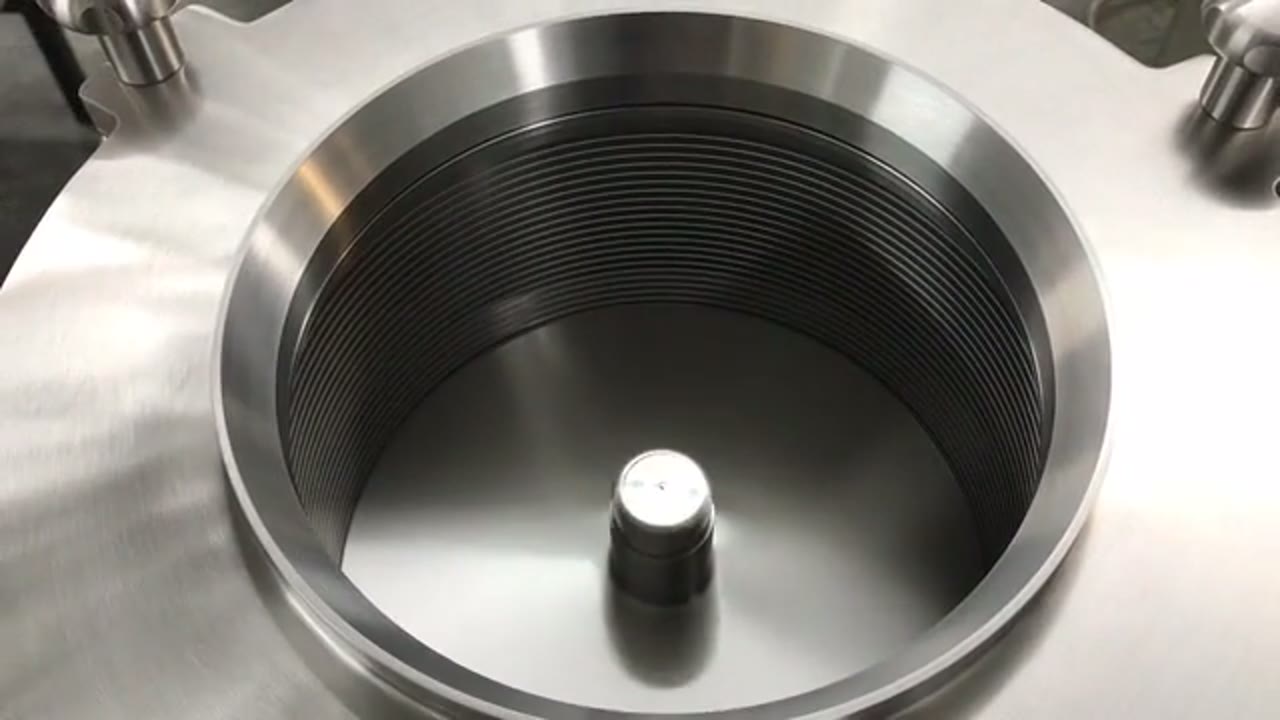
Hanningfield's Kwik-Sift video walks through centrifugal sifting — rotating assembly, cylindrical screen, and separate discharge paths for product and oversize.
Hapman
Hapman Compact Sieve Animation
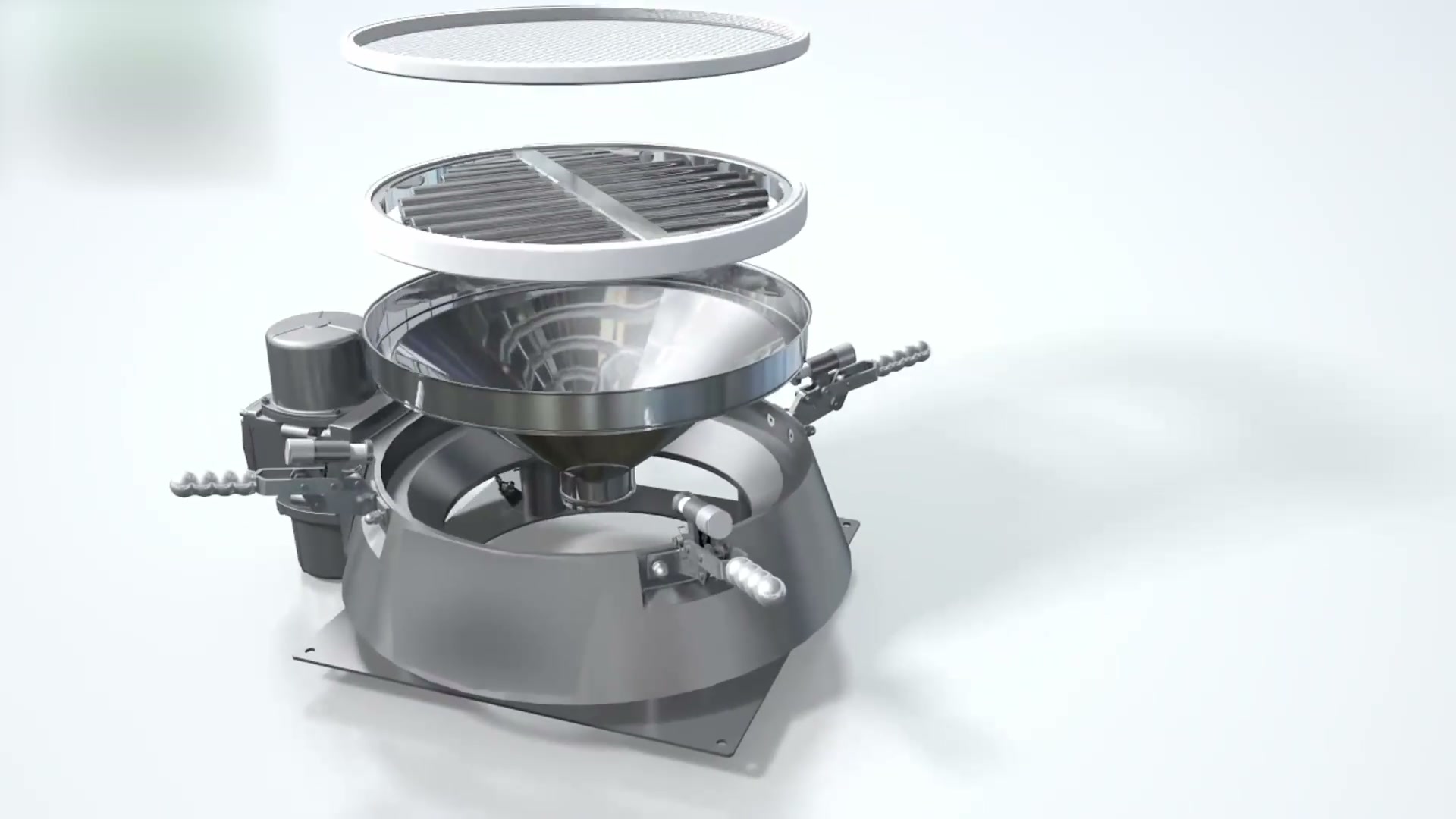
Hapman's animation shows a compact vibratory sieve mounted beneath a bulk bag unloader, screening powder before it enters the next process step. The sieve is a high-capacity, easy-clean option for restricted spaces.

RETTAR
RETTAR: 3D Radar Scanner
RETTAR presents its 3DPro2300 3D radar scanner in this video.
Total reach: 19,810