
Application
Powder Blending in Chemical Production
Answer in brief
In chemical production the mixer runs several products, and the changeover is the engineering problem.
Residue in a mixer is the next campaign's contaminant, some combinations react, and the dust inside the vessel is frequently an explosible atmosphere with a mechanical ignition source stirring it.
- Design for complete discharge and a defined clean.
- Check the combinations, not just the products.
- Protect the mixer; it is a vessel with an agitator in a dust cloud.
Reviewed October 21, 2026
The problem
A chemical blending plant runs campaigns, and the mixer is shared. That makes residue the dominant quality question: what stays under the ribbon, in the shaft seal, behind the discharge valve and in the dead corner of a cone goes into the next product.
Sometimes it is worse than a contaminant. Oxidisers with organics, acids with bases, materials that liberate gas on contact: a residue that is merely undesirable in one campaign can be a reaction in the next, and the combinations have to be assessed rather than discovered.
The mixer is also an explosion risk in its own right. The vessel contains a dust cloud by design, often in the explosible concentration range, and the agitator provides bearings, seals and a possible metal to metal contact in the middle of it.
And the materials behave badly. Hygroscopic powders cake, fine products build up on the agitator, and a mixer running a sticky campaign loses both its mixing action and its discharge.
Desired outcome
A mixer that discharges completely and can be cleaned to a defined, verified standard between campaigns, with the residual quantity known rather than estimated.
A documented assessment of the product combinations that will share the vessel, with incompatible pairs separated by sequence, by a full clean or by dedicated equipment.
Explosion protection for the mixer as a vessel: an assessed ignition source list, and venting, suppression or inerting chosen deliberately rather than inherited.
A cosmetics plant needs two different actions from the mixer, dispersion and distribution, and one gentle machine asked to do both leaves the pigment agglomerates intact.
Process approach
The campaign plan comes first, because it defines the problem. Which products share the vessel, in what order, and what the permitted carryover is between each pair. That matrix is what decides whether the answer is a cleaning procedure, a flush batch, a sequence rule or a second mixer.
Mixer geometry is then chosen for discharge. A ribbon mixer with a full length discharge, a conical screw mixer or a paddle mixer with a flush bottom valve all leave much less than a vessel with a small outlet in a flat bottom, and the residual mass should be measured during commissioning so the carryover figure is real.
Explosion protection is assessed on the vessel. Dust characteristics are measured on the blend, not only on the components, since a blend can be more reactive than either. Bearings outside the product space, temperature monitoring on the shaft seal and a documented ignition source review are the practical content; the protection method then follows from the Kst and the vessel geometry.
Build up and caking are handled by surface finish, by agitator clearance and by a cleaning interval that reflects how the material actually behaves rather than how the datasheet describes it.
- Campaign matrix built with permitted carryover for each product pair.
- Incompatible combinations separated by sequence, full clean or dedicated equipment.
- Mixer geometry chosen for complete discharge, with residual mass measured at commissioning.
- Dust characteristics measured on the blend as well as the components.
- Ignition sources reviewed: bearings outside the product space, shaft seal temperature monitored.
- Protection method chosen from the measured Kst and vessel geometry rather than inherited.
Selection factors
- Campaign plan and the permitted carryover for each product pair, which is the primary design input.
- Chemical incompatibility between products that will share the vessel.
- Discharge completeness and the measured residual mass, which converts carryover from a guess into a number.
- Explosion characteristics of the blend, measured rather than taken from the components.
- Caking and build up behaviour, including hygroscopic materials and anything that sticks to the agitator.
- Cleaning method, wet or dry, and the drying step that follows a wet clean.
Common failure modes
- Carryover between campaigns estimated rather than measured as a residual mass
- Incompatible product pair run in sequence because only the individual products were assessed
- Flat bottom vessel with a small outlet, leaving a heel that no cleaning procedure reaches
- Explosion data taken from the components while the blend is more reactive than either
- Bearings inside the product space, putting an ignition source in the dust cloud
- Hygroscopic product caking on the agitator, losing both mixing action and discharge
Partner with powderbulkvideos.com
Put a relevant technical solution in this decision path.
Connect your company and video evidence with clearly labelled visibility where engineers evaluate this material, application, industry or product.
Frequently asked questions
How is carryover between campaigns quantified?
By measuring the residual mass left after a normal discharge, during commissioning and again after any change. An estimate is not something a customer complaint can be answered with.
Does the blend need its own explosion data?
Yes. A blend can be more reactive than any of its components, so Kst and minimum ignition energy measured on the components do not establish the protection case for the vessel.
What is the most common ignition source in a mixer?
The agitator assembly: bearings and seals inside or close to the product space, and the possibility of metal contact. Moving the bearings outside and monitoring the seal temperature removes most of it.
Related content
Continue exploring
Move from this page to the companies, videos and technical topics that add useful context.
Companies

Videos
Gericke AG
Continuous Mixer Gericke GCM
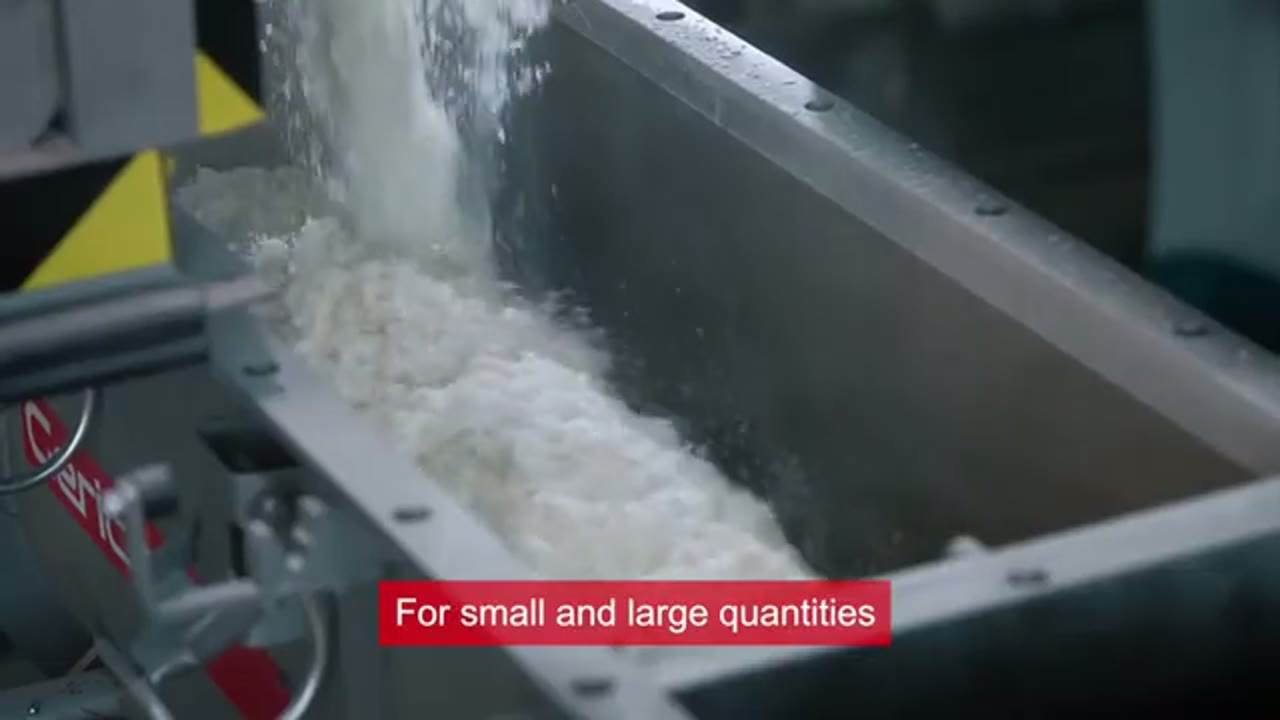
Gericke shows the GCM continuous mixer, which combines radial and axial mixing for throughputs that range from 10 l to 150,000 l/h.
Total reach: 4,638

Gericke AG
Double Shaft Mixer GMS 5000 ECD Multiflux
Gericke presents the GMS 5000 Multiflux double-shaft mixer in a powder-mixing and hygienic-design context.
Total reach: 41,100

Gericke AG
See Gericke's Leading Bulk Mixing Technology in Action
Gericke shows its bulk mixing portfolio in operation, from laboratory scale double shaft mixers to continuous mixers that cover inline mixing from 1 kg/h to more than 100,000 kg/h.
Total reach: 2,699