
Guide
Screening & Sieving Systems: Selection and Design Guide
Answer in brief
Select a screener by task and material, in that order: check-screening, grading, de-lumping and recovery each favor different machines. Then match screen motion to the powder, choose mesh from standardized designations, plan deblinding for anything cohesive, and validate capacity with a material test — screening is the unit operation where small trials predict full scale best.
By Editorial Team · Published August 14, 2026 · Updated October 13, 2026
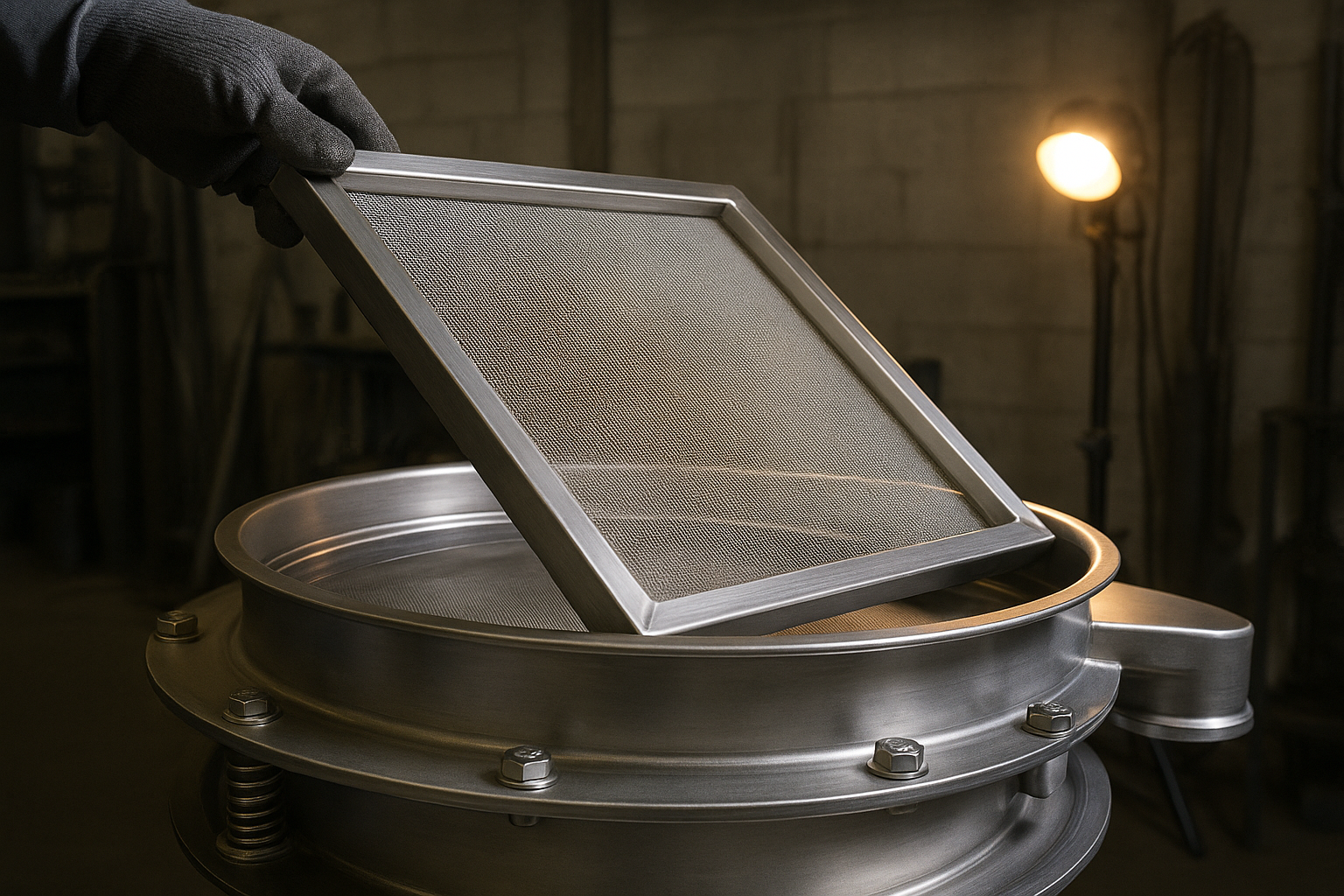
Screening problems rarely announce themselves in the machine brochure: they appear as blinded meshes, surging capacity and off-spec fractions months after startup. Most trace back to a selection that started with a machine instead of the task.
Step 1 — Name the task
Check or safety screening protects a product with one coarse cut at high rate. Grading splits a stream into specified fractions and lives or dies on cut accuracy. De-lumping conditions material after storage. Recovery pulls value out of reject streams. Each task weights throughput, cut precision and cleanability differently — write the task down before comparing machines.
Step 2 — Match motion to material
Gyratory motion keeps particles sliding on the mesh and gives accurate fine cuts; straight-line and circular vibration are robust and compact for scalping and check-screening; tumbler motion treats very fine, light and fragile products most gently at the sharpest cuts; centrifugal sifters push high rates through a cylindrical mesh inline, ideal in conveying lines and hygienic control points.
The technology page for screening and sieving systems details the families; the material narrows them quickly — fatty powders blind vibrating meshes that gyratory or ultrasonic-assisted machines handle calmly.
Step 3 — Specify the mesh, not just the machine
Cut point lives in the screen: aperture, wire diameter and open area set both separation and capacity. Standardized test-sieve designations (ASTM E11) provide the reference scale for specifying and verifying apertures. Fine cuts multiply near-size particles that must find an opening — capacity falls faster than aperture, which is why honest suppliers ask for a material test instead of quoting from tables.
Partner with powderbulkvideos.com
Put your expertise beside the decisions engineers are making.
Connect a relevant company profile and technical video portfolio with clearly labelled visibility on this topic.
Step 4 — Plan for blinding before it happens
Cohesive, fatty or electrostatic powders will blind fine meshes; the only question is how fast. Ball trays and sliders knock the mesh from below and handle most duties; ultrasonic deblinding vibrates the wire itself and keeps very fine meshes open that would otherwise be unusable.
Budget mesh replacement as an operating cost and design for fast, tool-free screen changes — mesh downtime is the hidden cost driver of screening.
Step 5 — Integrate: feed, containment, integrity
Screeners perform only as well as their feed: a surging conveyor or an off-center chute overloads part of the mesh and ruins the cut. Enclose the machine for dust control — in combustible-dust service, ground it and integrate it into the plant protection concept per the NFPA 652 framework.
In food and pharma duties, add documented mesh-integrity checks and broken-wire detection; the screen then doubles as the plant’s foreign-body control point, complemented by downstream magnets.
Selection checklist
- Task defined (check, grade, de-lump, recover) with cut point and rate?
- Machine family matched to material behavior, not habit?
- Mesh specified against standardized designations, capacity validated by trial?
- Deblinding method chosen for the worst recipe, not the average one?
- Feed presentation even and controlled?
- Dust containment, grounding and explosion protection addressed?
- Mesh-integrity checks and fast screen change designed in?
Frequently asked questions
Why does my screen blind and how do I stop it?
Near-size particles wedge into openings and fatty or electrostatic fines coat the wire. Mechanical deblinding (ball trays, sliders) solves most cases; ultrasonic deblinding keeps very fine meshes open for cohesive powders. Choosing a slightly different cut point sometimes eliminates the problem entirely.
How accurate is a screening cut?
It depends on motion and loading: tumbler and gyratory machines give the sharpest separations, vibrating machines trade some accuracy for compact robustness. Overloading any machine blurs the cut — near-size particles need time and free mesh area to pass.
What mesh should I specify?
Specify the aperture against standardized test-sieve designations (ASTM E11) and let a material test confirm capacity at that cut. Wire diameter and open area matter as much as aperture: more open area means more capacity but a weaker, shorter-lived mesh.
Where does a control sieve belong in the process?
As late as possible before packing or load-out, so it catches foreign bodies and agglomerates from every upstream step — and, in audited food or pharma plants, wherever the documented foreign-body control point is defined.
Related content
Continue exploring
Move from this page to the companies, videos and technical topics that add useful context.
Companies

Videos

HAZEMAG & EPR GmbH
HAZEMAG | Recycling | C&D Waste | 1946 – today
HAZEMAG & EPR GmbH designs, manufactures, installs and commissions plants for the cement & aggregate, minerals processing and recycling industries, combining equipment optimization expertise with beneficiation experience across the processing chain.
Total reach: 6,449
Hanningfield
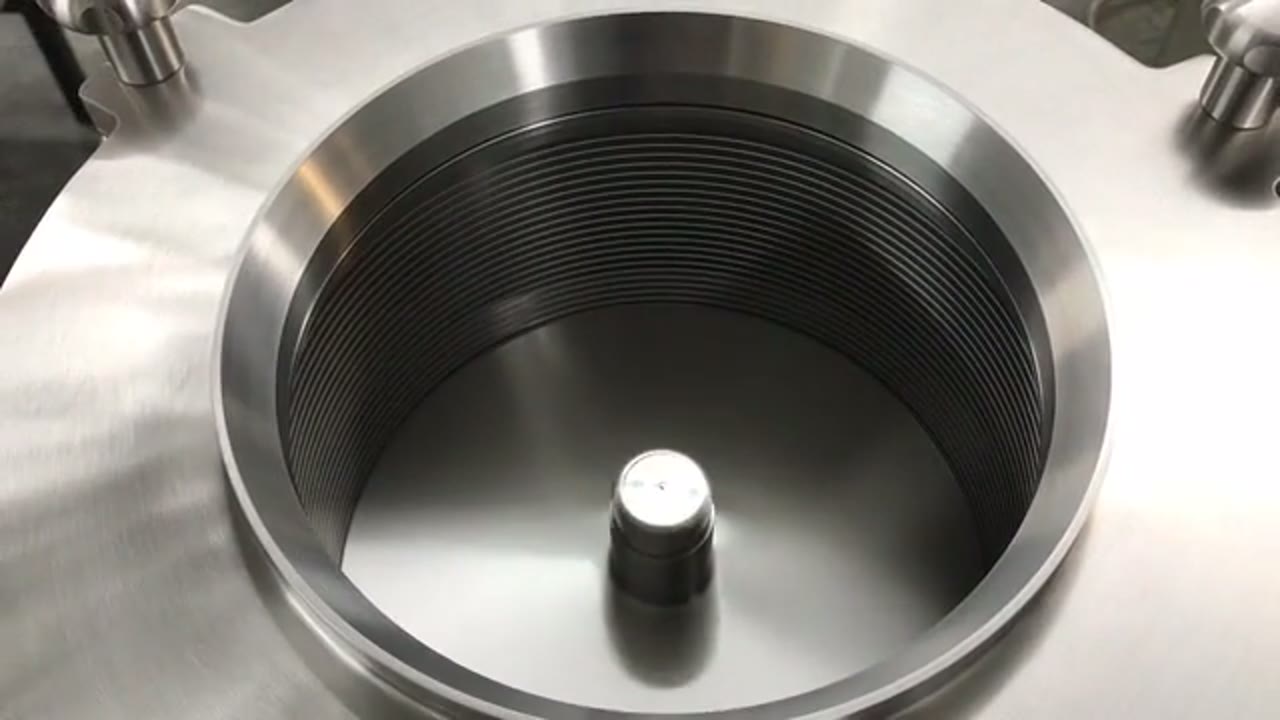
Hanningfield Centrifugal Sifter (Kwik-Sift)
Hanningfield's Kwik-Sift video walks through centrifugal sifting — rotating assembly, cylindrical screen, and separate discharge paths for product and oversize.
Hapman
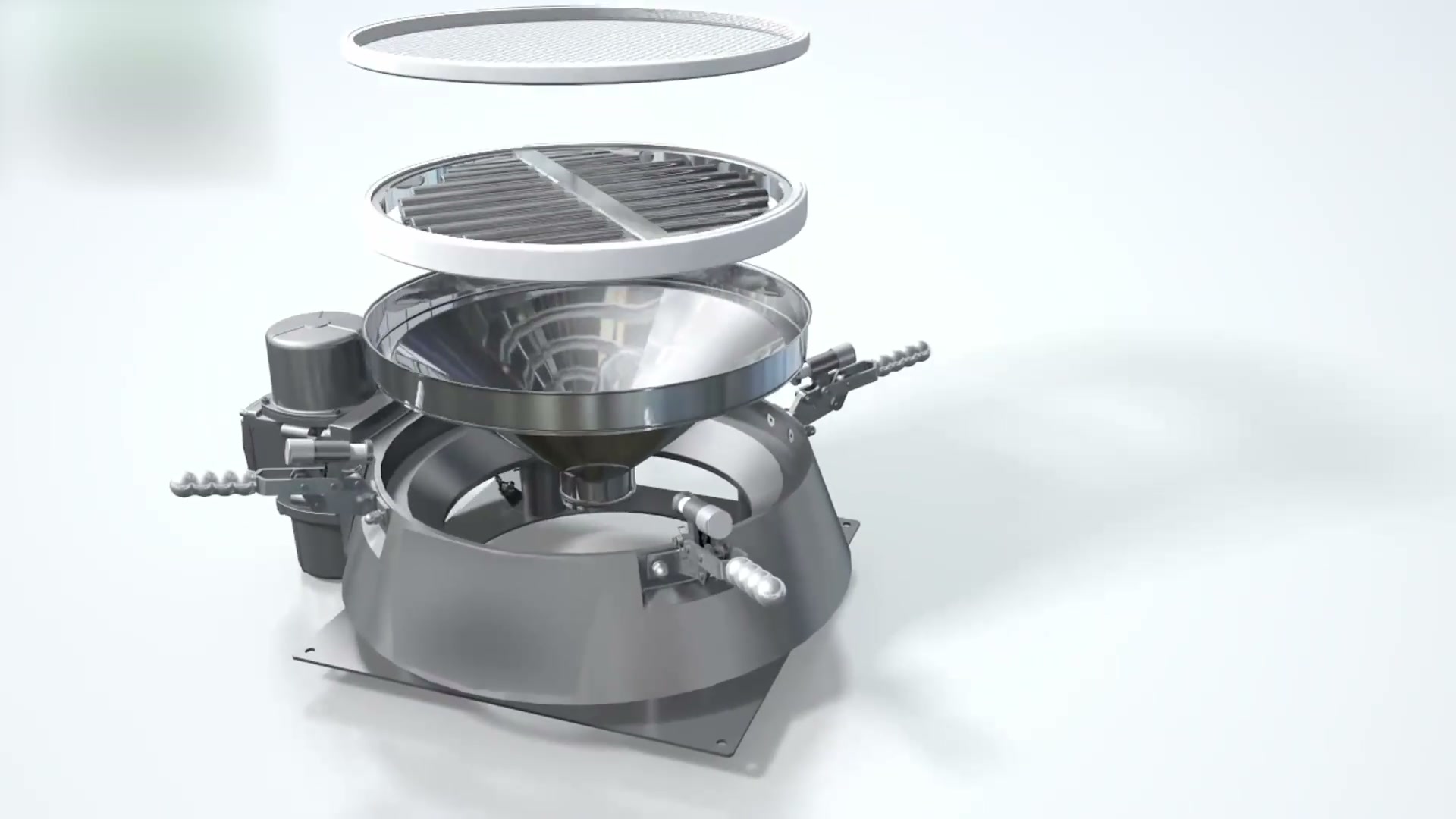
Hapman Compact Sieve Animation
Hapman's animation shows a compact vibratory sieve mounted beneath a bulk bag unloader, screening powder before it enters the next process step. The sieve is a high-capacity, easy-clean option for restricted spaces.

RETTAR
RETTAR: 3D Radar Scanner
RETTAR presents its 3DPro2300 3D radar scanner in this video.
Total reach: 19,808