
Application
Bulk Bag Discharge in Pharmaceutical Production
Answer in brief
In pharmaceutical production the bulk bag station has to be judged against a containment figure, not a description.
The untying and the spout connection are the exposure events, and a station rated for one compound may be unsuitable for the next.
- Start from the occupational exposure band.
- Require measured containment data for the station.
- Plan the cleaning validation before installation.
Reviewed October 21, 2026
The problem
Bulk bag discharge in a pharmaceutical plant is a containment problem wearing the clothes of a handling problem.
The mechanics are the same as anywhere: the bag deforms, the powder bridges, the spout has to be opened. What changes is that the opening of the spout is an exposure event that has to be demonstrated, not merely managed, and that every contact surface has to be cleanable in a way that can be validated.
Desired outcome
A transfer in which the bag is emptied completely and the operator is never exposed to the product, with evidence to show it.
The measurable result is an exposure figure from a standardised test, under the conditions the plant will actually run, including the disconnection and the cleaning that follow.
Partial discharge handled deliberately or excluded deliberately. Taking part of a bag and closing it again is the hardest case for containment, because the connection has to be broken with product still in the liner, and plants that need it should specify it rather than discover it.
In plastics compounding the same station is judged on static: a non-conductive component anywhere in the path holds the charge the pellets brought with them.
Process approach
The bag is lifted into the frame and the spout is connected into a contained interface before anything is opened.
Where the compound requires it, that interface is a split butterfly valve or a continuous liner system rather than a clamp and a seal. Both keep the product path closed through the connection, the discharge and the disconnection.
Massaging or vibration works the powder down as in any other plant, but the devices have to be cleanable and must not create a route for product to escape the containment.
The liner is removed at the end through a procedure designed for it, which in a continuous liner system means crimping and cutting within the contained zone rather than opening it in the room.
Explosion protection is settled alongside the containment rather than after it. Lactose, starch and most granulations are explosible, and the station is a vessel holding a dust cloud by design. Inerting fits a contained station well, since the enclosure already holds an atmosphere, and it avoids the question of a suppressant touching the product.
- Closed interface before opening, always.
- Containment maintained through disconnection, not only during flow.
- Cleaning validated on the interface, not only on the vessel.
- Partial discharge specified or excluded explicitly, since it is the hardest containment case.
- Explosion concept settled with the containment concept, with inerting often the natural fit.
- Massaging devices chosen so they are cleanable and do not breach the containment.
Selection factors
- Containment band of the compound, which sets the interface type and the measured performance required.
- Cleaning method and whether the interface can be cleaned in place or has to be removed.
- Flow behaviour, which decides the massaging requirement independently of the containment.
- Batch size and whether partial discharge is needed, which complicates containment considerably.
- Qualification burden: every contact part is part of the validated system.
- Explosion characteristics, since many pharmaceutical powders are explosible and inerting may be required.
- Partial discharge requirement, which complicates the interface considerably.
Common failure modes
- Containment specified for the transfer but not for the disconnection, where the residue actually sits
- Massaging device that cannot be cleaned to the validated standard, so it is quietly left out of the procedure
- Partial discharge required but not designed for, so the bag is opened and closed outside containment
- Exposure claimed from a supplier's test under conditions the plant does not reproduce
- Liner change procedure that defeats the containment it is meant to protect
- Partial discharge needed in practice but never specified, so the connection is broken with product in the liner
- Containment figure taken from a supplier statement rather than a standardised test under plant conditions
- Explosion protection added after the containment design, leaving no acceptable option
Partner with powderbulkvideos.com
Put a relevant technical solution in this decision path.
Connect your company and video evidence with clearly labelled visibility where engineers evaluate this material, application, industry or product.
Frequently asked questions
Why is a clamp and seal not enough for potent compounds?
Because containment has to hold through the disconnection as well as the flow. A clamp opens into the room; a split butterfly valve or continuous liner keeps the product path closed throughout.
What exposure figure should be specified?
One from a standardised test with a surrogate powder, under the conditions your plant will run, including disconnection and cleaning. A figure from a different procedure proves little.
Does partial discharge complicate containment?
Considerably. Stopping and restarting means closing and reopening the interface, which is the exposure moment. If partial discharge is needed, it has to be designed in from the start.
What makes partial discharge difficult?
The connection has to be broken while product is still in the liner, which is the one situation a contained interface was not designed for. It needs specifying from the start rather than solving later.
Why does inerting suit a contained station?
Because the enclosure already holds an atmosphere, nothing has to be opened to vent, and no suppressant touches the product. It becomes a safety system with oxygen monitoring and a trip action.
Related content
Continue exploring
Move from this page to the companies, videos and technical topics that add useful context.
Companies

Videos

Hecht Technologie GmbH
HECHT: Containment Sampling Stick – Closed Sampling up to OEB 5
HECHT presents the handling sequence for its CPS disposable containment sampling system.
Total reach: 27,222
Flexicon
Flexicon BULK-OUT Bulk Bag Dischargers
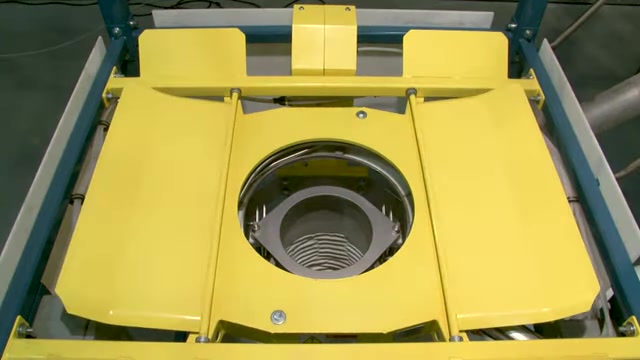
Flexicon presents its BULK-OUT bulk bag discharger range: forklift-loaded BFF frames, hoist-and-trolley BFC frames, split and half frames, and accessories for dust-free untying, retying and flow promotion.
Total reach: 73,122
Palamatic Process
Palamatic Process: Emptying Big Bags of Sensitive Powders with OEB Containment
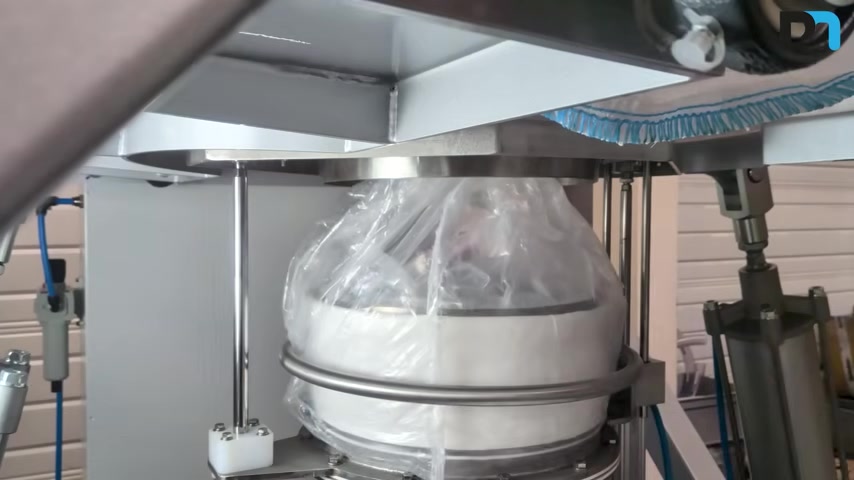
A Palamatic Process engineer explains the OEB big bag discharge station for toxic, CMR and ultra-fine powders, including the sleeve tie-off that keeps containment through a bag change.
Total reach: 18,760
Technologies
- Bulk Bag Unloading Systems
- Bulk Bag Unloading Systems: Selection and Design
- Dust Collection & Air Pollution Control
- Dust Collection & Air Pollution Control Technology Guide
- Feeding & Dosing Control
- Feeding & Dosing Control
- Screening & Sieving Systems
- Screening & Sieving Systems for Powder and Bulk Solids
- Vacuum Conveying
- Vacuum Conveying Systems