
Material
Pharmaceutical Powders
Answer in brief
Pharmaceutical powder handling starts from the specific active ingredient, excipient or blend: its quality attributes, exposure controls and the validated manufacturing process. Containment, cleaning, segregation, transfer, dosing and recovery decisions all need product-specific risk assessment and documented acceptance rather than a generic containment band.
Reviewed July 17, 2026 · Updated October 8, 2026

Sponsored visibility
Featured Pharmaceutical Powders videos
Paid placements are clearly marked and remain separate from the editorial related-video selection.


Hecht Technologie GmbH
HECHT Technologie: Pfizer HighCon Factory
HECHT documents a high-containment powder-handling project at Pfizer, showing contained transfer interfaces and the surrounding production context for pharmaceutical powder handling.
Total reach: 25,405
This featured spot is open
Show your video here, in front of engineers who are researching this topic.
Handling challenges
Pharmaceutical powder is a broad process category, not a sufficient design specification. Flow, electrostatic behavior and sensitivity can vary by formulation and process history, so handling decisions start from the specific material and its health-based boundary.
Start with the material and health-based boundary
Identify the active ingredient or excipient state, potency and exposure information, batch size and traceability requirements, particle distribution, moisture sensitivity, electrostatic behavior and required environmental controls. Map every point where powder is connected, transferred, sampled, discharged, cleaned or removed as waste; practical containment performance is determined by the complete task, including disconnection and maintenance.
Link flow behavior to dose and blend quality
Cohesion, aeration and segregation can affect hopper discharge, refill stability and the composition delivered to the next operation. Define the acceptable mass-transfer error and any critical quality attribute that handling could change. Feeder and transfer trials should use representative formulation and process history. A successful water or placebo test does not establish behavior for a cohesive or electrostatically charging production powder unless equivalence is justified.
Design cleaning and changeover before selecting hardware
State the required cleaning state, analytical or visual verification, permitted dismantling and maximum acceptable carryover. Those requirements determine seals, surface access, filter treatment, drainability where wet cleaning is used, and whether disposable product-contact parts are appropriate. Sampling locations and swab access should represent difficult retained-product zones, and reassembly controls must protect the cleaned state and preserve the containment boundary.
Define controls and abnormal states
The operating sequence should cover connection confirmation, transfer permissives, receiver discharge, filter cleaning, disconnection and waste handling. Define safe states for loss of vacuum, high differential pressure, a failed valve, loss of inert gas or an oxygen-limit excursion where inerting is used. Recovery should avoid automatic retries that spread powder or compact a blockage, and diagnostic values and event timing should be retained for investigation.
Qualify the complete operating cycle
Acceptance should use a written protocol with representative material or a scientifically justified surrogate. Record transferred mass, residual material, cycle time, pressure profile, filter condition, containment observations, cleaning results and downstream quality response. Include interventions, filter change and maintenance when they are credible exposure routes, and preserve the approved recipe, configuration and evidence so formulation, batch size, filter, line-route or cleaning changes enter formal change control.
Engineering visual guide
How the system behaves
These conceptual diagrams connect the operating principle, equipment internals and engineering review points. They are explanatory and not fabrication drawings or a substitute for project-specific calculations.
Engineering infographic
Material behavior chain
Conceptual material behavior chain for Pharmaceutical Powders; use it to structure an engineering review, not as a fabrication drawing or project-specific design.
Material behavior
- Flowability
- Formulation-specific; particle size, morphology, density, moisture and process history require representative characterization.
- Cohesiveness
- Can range from free-flowing granules to highly cohesive fine powders; one excipient or surrogate does not define the blend.
- Moisture behavior
- Moisture can either lubricate or strengthen liquid bridges depending on material and level, so limits must be formulation-specific.
Engineering infographic
Handling envelope
Conceptual material handling envelope for Pharmaceutical Powders; use it to structure an engineering review, not as a fabrication drawing or project-specific design.
Engineering infographic
Quality and hazard controls
Conceptual quality and hazard control layers for Pharmaceutical Powders; use it to structure an engineering review, not as a fabrication drawing or project-specific design.
Partner with powderbulkvideos.com
Put a relevant technical solution in this decision path.
Connect your company and video evidence with clearly labelled visibility where engineers evaluate this material, application, industry or product.
Frequently asked questions
Why is containment especially important in pharmaceutical powder handling?
Pharmaceutical powders often include active ingredients that are effective in very small doses, so even minor operator exposure or a trace of residue carried into the next batch can affect worker safety or product quality at the same time.
How does electrostatic charge affect pharmaceutical powder transfer?
Fine, dry powders can build up static charge as they move through hoppers, pipes, and transfer lines. That charge can make powder cling to equipment surfaces, cause blockages, or create a spark hazard, which is why equipment grounding and bonding are common design considerations.
What role do isolators and glove boxes play in handling potent pharmaceutical powders?
Isolators and glove boxes place a physical barrier between the operator and the powder, letting personnel handle material through sealed gloves or transfer ports instead of open exposure. They are considered when engineering controls alone cannot keep exposure low enough for a given compound.
Why does cleaning validation matter when a line switches between pharmaceutical powder products?
When a line is used for more than one product, residue from the prior batch can carry over into the next one if cleaning is incomplete. Cleaning validation combines visual checks and analytical testing to confirm the equipment is free of meaningful residue before changeover.
Related content
Continue exploring
Move from this page to the companies, videos and technical topics that add useful context.
Companies

Videos
Hecht Technologie GmbH
HECHT Technologie: Pfizer HighCon Factory
HECHT documents a high-containment powder-handling project at Pfizer, showing contained transfer interfaces and the surrounding production context for pharmaceutical powder handling.
Total reach: 25,405

Gericke AG
Gericke: GFS Formulation Skid and Tablet Press
This video presents the Gericke Formulation Skid (GFS) combined with a tablet press, showing how pharmaceutical formulations move from blending through downstream processing in one controlled, scalable setup. The system runs semi-continuously or fully continuously and targets development, scale-up, and technology transfer.
Total reach: 3,734
GEA
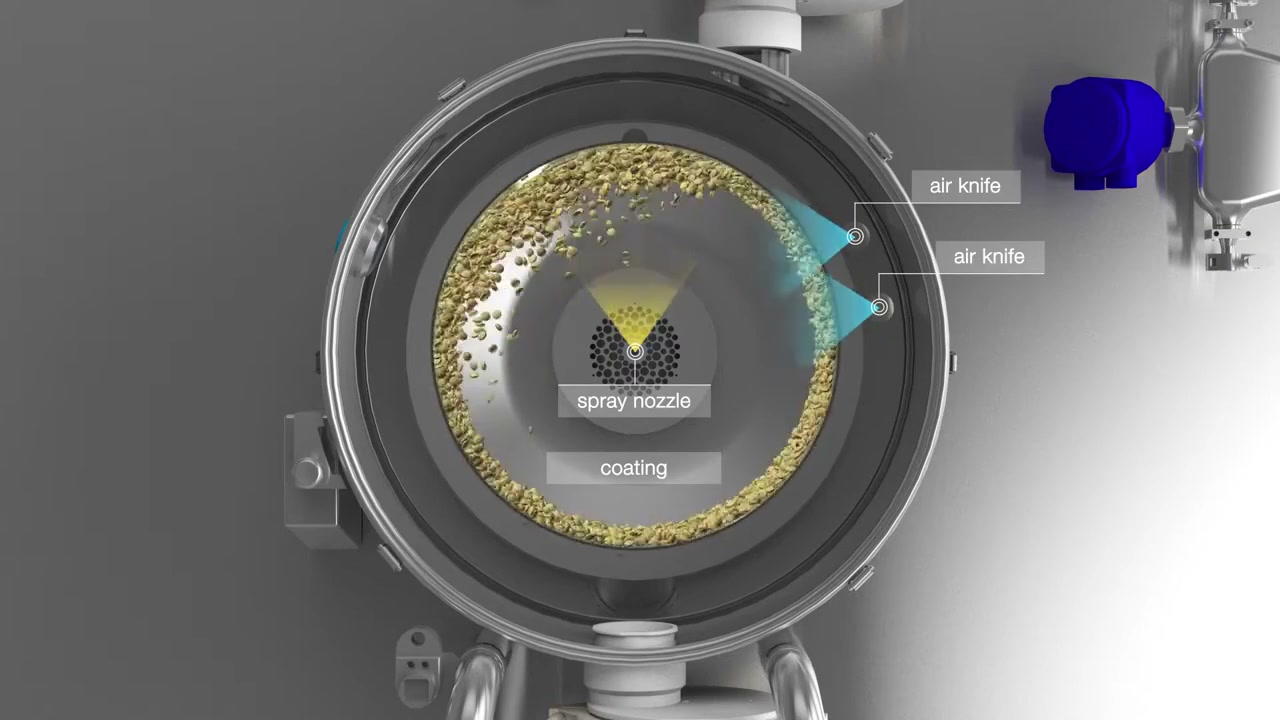
ConsiGma Coater Animation
GEA explains the working principle of the ConsiGma coater, the coating step of a continuous tableting line.
Total reach: 11,207
GEA
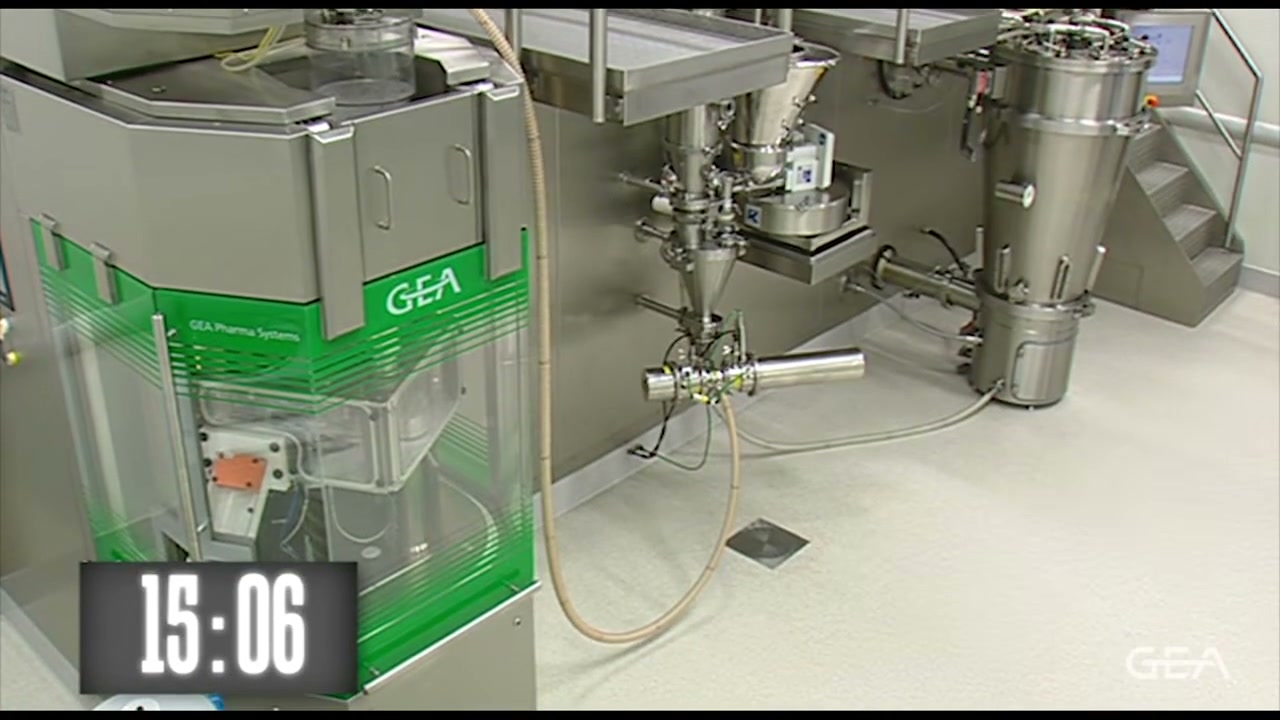
ConsiGma Continuous Granulation and Compression Line
GEA explains the working principle of a continuous granulation and compression line, the section of a continuous tableting plant between the feeders and the tablet press.
GEA
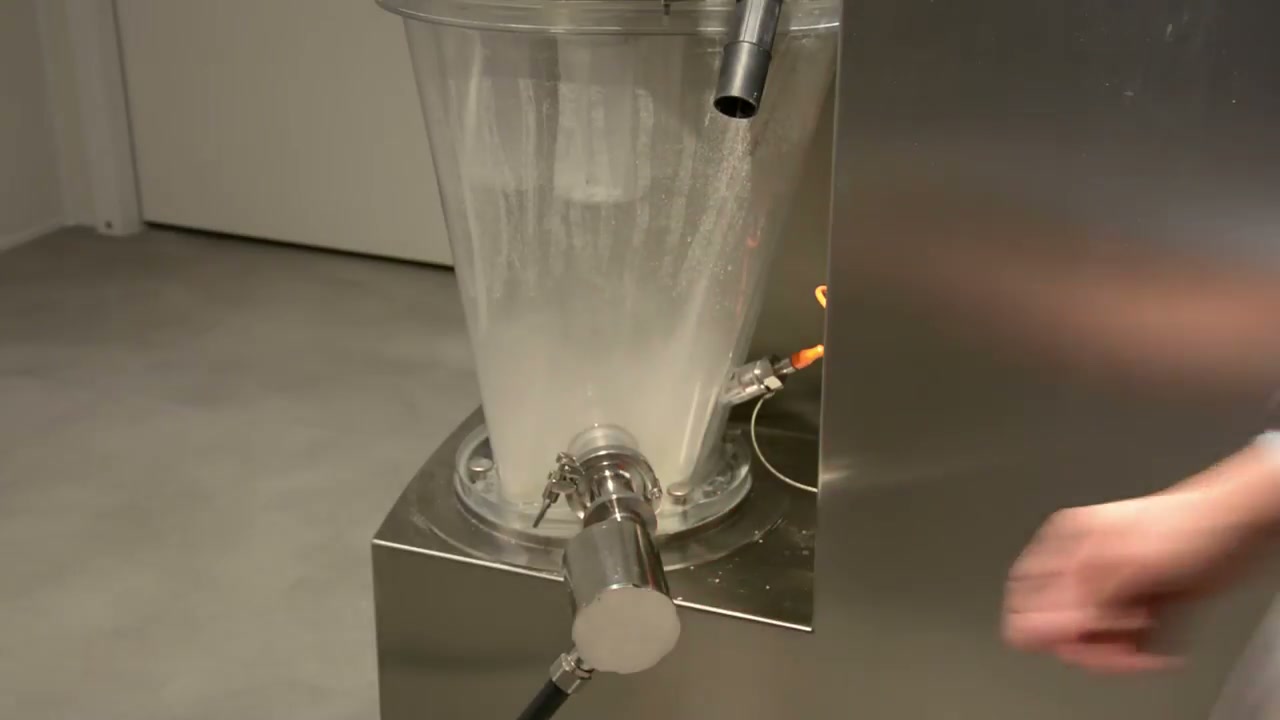
From Powder to Tablet: Continuous Processing with ConsiGma
GEA presents ConsiGma, a range of plug flow tableting equipment with which pharmaceutical producers manufacture oral solid dosage forms continuously, from powder to tablet.
Total reach: 4,431
Glatt
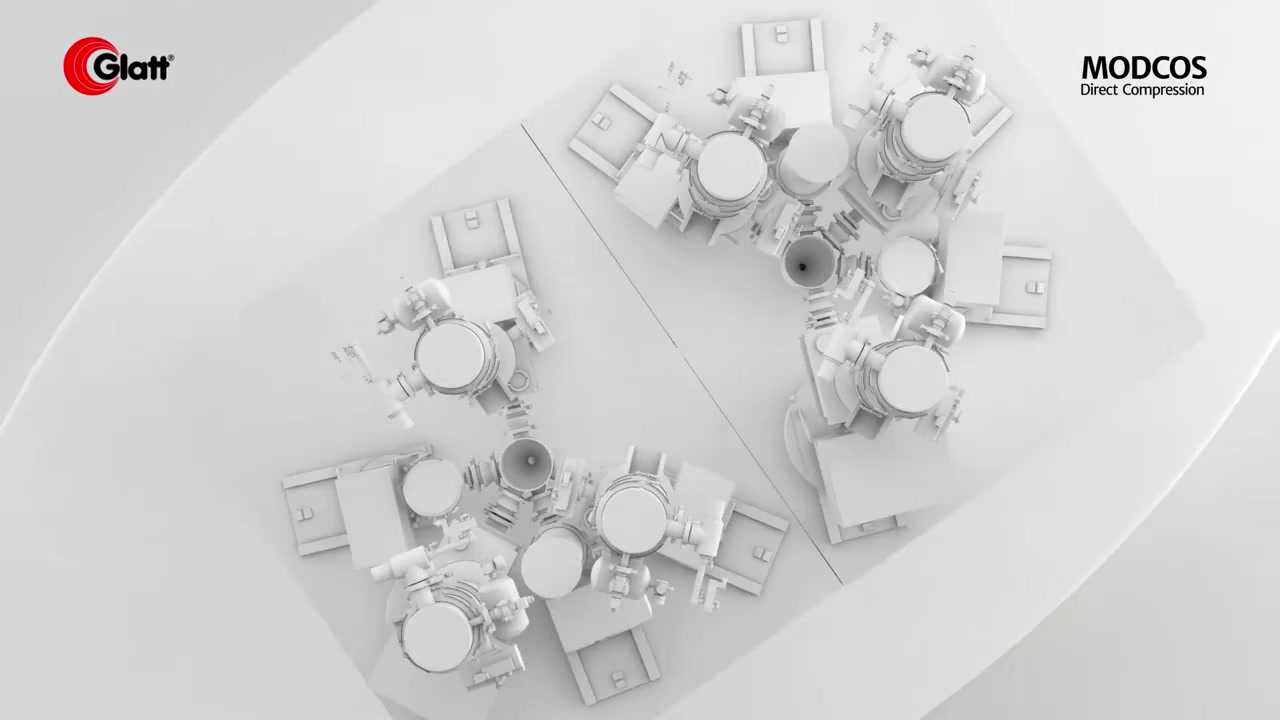
MODCOS Direct Compression
Glatt shows the MODCOS line for continuous direct compression, which can integrate up to three mixers and ten feeders on the way from powder to tablet.
Total reach: 2,622