
Guide
Feeding & Dosing Systems: Selection and Design Guide
Answer in brief
Choose feeding technology by the accuracy the process actually needs: volumetric feeders meter by device speed and suit stable materials with tolerant processes; gravimetric feeders — loss-in-weight above all — close the loop on real mass flow and are the standard wherever recipe accuracy, documentation or material variability matter.
By Editorial Team · Published August 14, 2026 · Updated October 13, 2026
Sponsored visibility
Featured videos for this topic
Paid placements are clearly marked and remain separate from the editorial related-video selection.
Feeders are where recipes become real: every downstream quality depends on the mass flows metered here. The selection question is rarely "which feeder is best" but "how much accuracy does this process line actually need, at which point, for which materials" — because accuracy is bought with weighing technology, refill logistics and control effort.
Volumetric feeding: metering by speed
A volumetric feeder runs its metering device — single or twin screw, vibratory tray, rotary valve — at a set speed and delivers whatever volume that speed produces.
It is simple, compact and inexpensive, and perfectly adequate when the material’s bulk density is stable and the process tolerates drift. Its weakness is invisible: when density or flowability changes, the mass flow changes with no signal that anything moved.
Gravimetric feeding: closing the loop on mass
Loss-in-weight (LIW) feeding puts the feeder and its hopper on load cells and controls the metering speed against the measured weight loss per second — actual mass flow, continuously verified.
Gain-in-weight batching instead weighs the receiving vessel and stops each component at its target, trading continuous accuracy for simplicity in batch plants. LIW dominates continuous processes (extrusion, compounding, continuous mixing) and documented recipes; weigh-belt feeders serve high-rate bulk streams where hopper weighing is impractical.
The refill problem
A LIW feeder is blind while its hopper refills: control falls back to volumetric for those seconds.
Design decides how much that matters — refill fast (seconds, not minutes), from a dedicated buffer above the feeder, at a hopper level that leaves working headroom, and let the controller bridge the gap with learned material behavior. Poor refill design is the most common reason LIW installations miss their promised accuracy.
Partner with powderbulkvideos.com
Put your expertise beside the decisions engineers are making.
Connect a relevant company profile and technical video portfolio with clearly labelled visibility on this topic.
Material decides the metering device
- Free-flowing granules: single screws, vibratory trays, rotary valves all work — choose on rate and cleaning.
- Cohesive, bridging powders: twin concave screws with agitation; steep, mass-flow hoppers.
- Floodable fines: closed devices with controlled venting to stop uncontrolled flushing.
- Fragile products: slow, gentle devices — vibratory trays or large slow screws.
- Abrasives: hardened surfaces and low speeds, accepting larger devices.
Integration and verification
Accuracy claims live or die downstream: stable weighing needs vibration isolation, flexible connections that transmit no forces, draft protection and disciplined maintenance of tare. Verify performance with catch-weight tests at commissioning — timed samples weighed on a reference scale — across the operating range, not just at the design point.
Legal-for-trade applications add certified weighing chains under frameworks such as NIST Handbook 44; combustible powders bring the usual grounding and protection duties per NFPA 652.
Selection checklist
- Required accuracy defined per material, with the process consequence of drift?
- Volumetric sufficiency honestly assessed — or gravimetric justified?
- Metering device matched to material behavior?
- Refill concept designed (buffer, speed, level band, control bridging)?
- Weighing environment protected from vibration, forces and drafts?
- Catch-weight verification planned at commissioning?
- Dust-safety and cleaning requirements covered?
Frequently asked questions
What is the difference between volumetric and gravimetric feeding?
Volumetric feeders meter by running a device at a set speed and assume the density stays constant; gravimetric feeders measure real mass — loss-in-weight from the feeder hopper or gain-in-weight in the receiver — and control against it. Gravimetric costs more and delivers verified accuracy despite material variation.
How does a loss-in-weight feeder work?
Feeder and hopper stand on load cells; the controller measures weight loss per second and adjusts the metering speed to hold the mass-flow setpoint. During hopper refill it bridges volumetrically using learned behavior — which is why refill design determines real-world accuracy.
Why does my LIW feeder lose accuracy during refill?
Because it cannot weigh while material is being added. Slow refills, refilling from uncontrolled sources and refilling across a wide level band stretch the blind window. Fast refill from a dedicated buffer within a narrow level band keeps the volumetric bridge short and accurate.
Which feeder suits cohesive powders?
Twin concave screws with hopper agitation and steep mass-flow geometry: the twin screws keep pockets filled and self-clean, the agitation keeps material moving to the screws without ratholes. Single screws and trays lose accuracy first when powders bridge.
Related content
Continue exploring
Move from this page to the companies, videos and technical topics that add useful context.
Companies

Videos

Gericke AG
Gericke: GUC-F Feeding and Dosing Controller
This video presents the Gericke GUC-F Feeding and Dosing Controller, a multi-channel control system designed for precise feeding, dosing, and weighing tasks in powder and bulk solids processing. The controller supports demanding process requirements across a wide range of industries where accuracy, reproducibility, and process transparency matter.
Total reach: 3,532

AZO
AZO DOSITAINER with Discharge Base
AZO demonstrates a DOSITAINER with discharge base in an ingredient-handling and dosing context.
Coperion
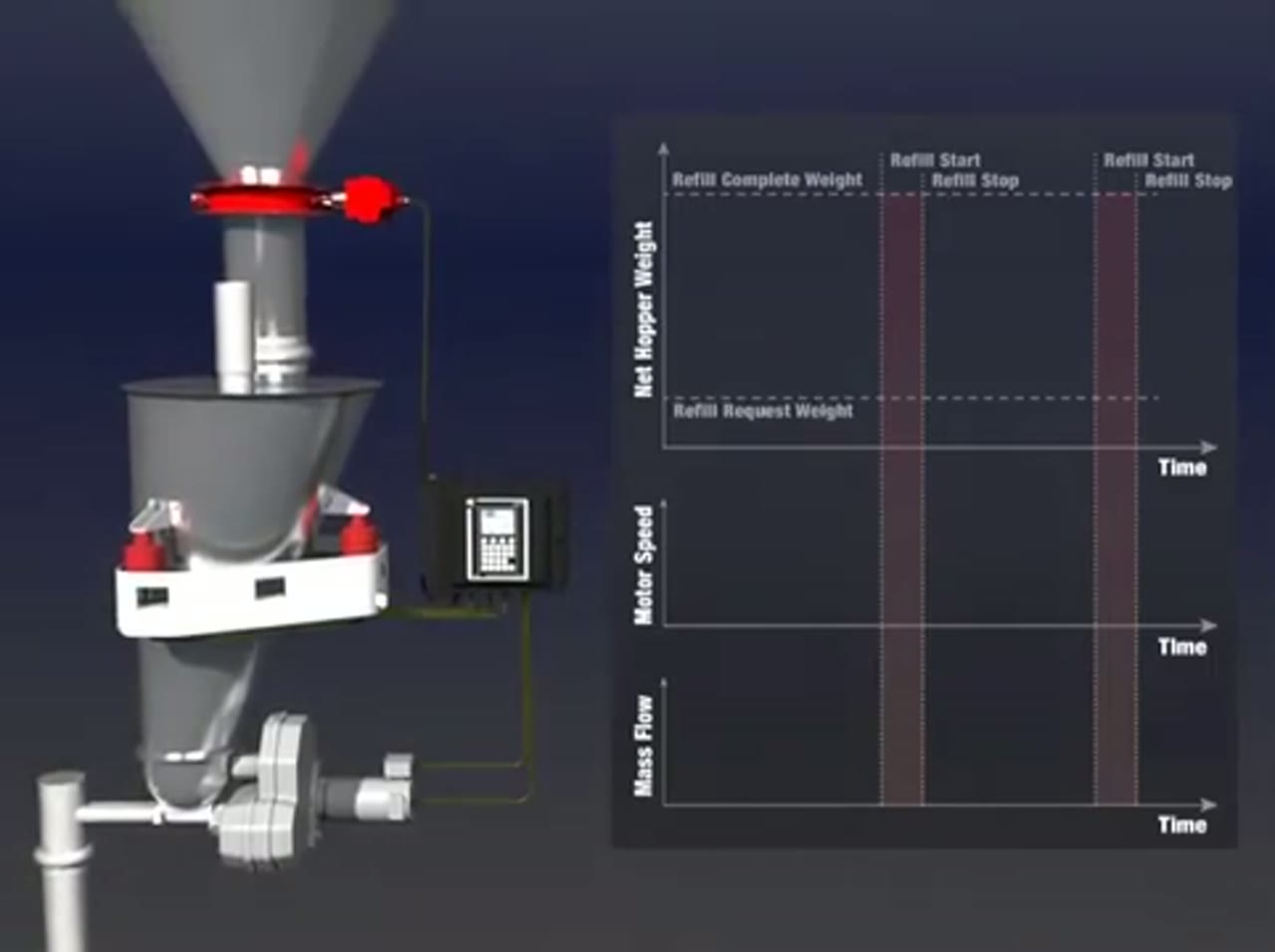
Coperion Loss-in-Weight Feeder Animation
The Coperion K-Tron animation shows a controller observing the decrease in combined hopper, feeder and material weight, comparing the measured rate with the setpoint and adjusting feeder output.
Total reach: 43,056
Dinnissen
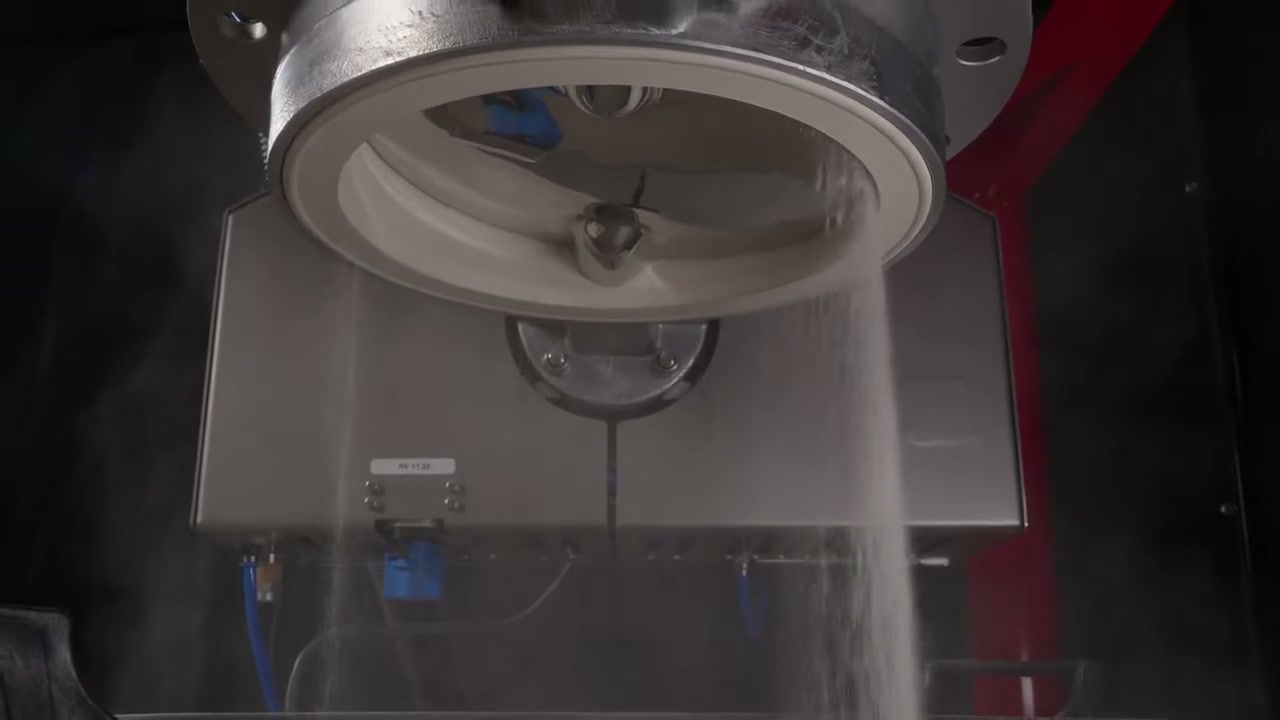
Feeder Valve
Dinnissen Process Technology shows a feeder valve developed for powder dosing at an accuracy that the older generation of equipment could not reach.
Brabender Technologie GmbH & Co. KG
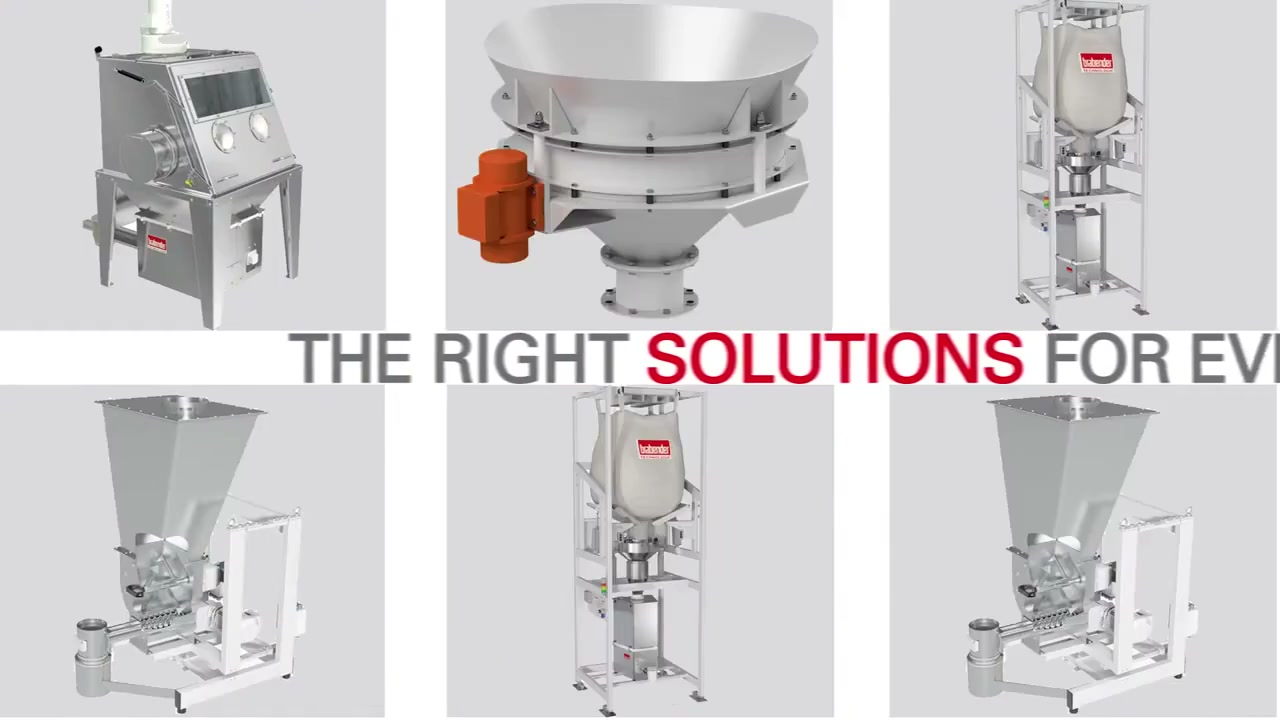
Food feeding technology by Brabender Technologie
Brabender Technologie presents its gravimetric and volumetric feeding systems for the food industry, the equipment that meters an ingredient into a process at a controlled rate.
Total reach: 1,761

WAMGROUP
Tubular Screw Conveyors and Feeders
WAMGROUP presents enclosed tubular screw conveyors and feeders used to transfer or meter powders and bulk solids.