
Application
Gravimetric Feeding in Pet Food Production
Answer in brief
In pet food the feeders handle a fibrous meal, a micro premix and a sticky coating, and each one defeats a different machine.
Meals bridge, micro ingredients are dosed in grams, and anything with fat on it coats the screw until the feed factor is no longer the one that was calibrated.
- Use separate feeders for separate problems.
- Expect fat to shift the feed factor, and check it.
- Count the changeovers before specifying the cleaning.
Reviewed October 21, 2026
The problem
Three feeding duties sit in the same plant and they are not alike. The meal side handles coarse, fibrous, low density material at high rates; the micro side doses vitamins, minerals and sometimes a veterinary additive in grams; the coating side handles fat and palatant, which stick to everything.
The meal is a flow problem. Fibrous material with a wide particle size range bridges over a hopper outlet and hangs on a screw, and a feeder that will not discharge steadily cannot control a rate however good its load cells are.
The micro side is an accuracy problem, and the accuracy that matters is at the bottom of the range. A feeder sized for convenience has no useful precision at a few kilograms an hour, and the ingredients in question are the ones with regulated inclusion levels.
The coating side is a maintenance problem. Fat builds on the screw and the tube, the volumetric relationship drifts, and gravimetric control compensates until it runs out of screw speed.
A pet food plant doses across a range that spans a tonne an hour and a few grams, and the regulated inclusions sit at the bottom of it.
Desired outcome
Each duty on a machine configured for it, with the micro feeders sized for their own rate rather than for the plant standard.
Hoppers and discharge devices that keep fibrous meal moving without working it into a different density, and build up on fat contact surfaces controlled by a checked interval rather than by hope.
Cleaning and changeover that fit the number of recipe changes the plant actually runs, with the regulated ingredients traceable through the feeder.
For pharmaceutical production accuracy is measured on the actual active rather than taken from a catalogue, and the process residence time decides how much short term error the line forgives.
Process approach
Meal feeding is designed around flow. A steep hopper, flexible walls with external massage, or a live bottom, and a twin screw that will not let the material pack. Agitation is set to maintain flow and no more, because working a fibrous meal changes its density and therefore the feed factor.
Micro feeding is sized small and often duplicated. Separate feeders for separate ingredients, each at its own scale, with the accuracy stated at the real rate and the real sample time. Where a veterinary additive is involved the feeder enters the traceability record, not just the control system.
Fat and liquid addition is metered rather than fed by screw, and the surfaces that fat touches get an inspection and cleaning interval based on measurement: a feed factor check after a known running time shows how fast the drift is, and that number sets the interval.
Changeover is then specified honestly. Quick release hoppers, screws and tubes, and a sequence that runs from restricted products downwards so cleaning does not have to do work that sequencing can.
- Separate machines for meal, micro ingredients and liquids, each configured for its duty.
- Meal hopper designed for flow, with agitation limited to avoid density change.
- Micro feeders sized for their own rate, with accuracy stated at that rate.
- Regulated additives recorded through the feeder for traceability.
- Feed factor drift on fat contact surfaces measured, and the cleaning interval set from it.
- Quick release contact parts and a production sequence from restricted to unrestricted.
Selection factors
- Rate range across duties, which usually means several feeder sizes rather than one.
- Flow behaviour of the meal, including bridging and the effect of agitation on density.
- Regulated inclusion levels for additives and the traceability that follows.
- Fat and palatant contact, which decides the feed factor drift rate and the cleaning interval.
- Changeover frequency and the time allowed, which decides quick release construction.
- Dust explosion characteristics of the meal and premix dusts.
Common failure modes
- One feeder size used for meal and micro ingredients alike, so the micro accuracy is meaningless
- Hopper agitator working the meal until the density and the feed factor move continuously
- Fat build up shifting the feed factor with no scheduled check, until the controller runs out of screw speed
- Veterinary additive fed without a traceability record through the feeder
- Cleaning specified for a changeover frequency lower than the plant actually runs
- Bridging over the hopper outlet treated as a control fault rather than a flow design fault
Partner with powderbulkvideos.com
Put a relevant technical solution in this decision path.
Connect your company and video evidence with clearly labelled visibility where engineers evaluate this material, application, industry or product.
Frequently asked questions
Why separate feeders for meal and micro ingredients?
Because the rates differ by orders of magnitude and the accuracy that matters is at the micro rate. A feeder sized for the meal has no useful precision at a few kilograms an hour.
How fast does fat shift the feed factor?
Fast enough to matter, and it is measurable: a feed factor check after a known running time gives the drift rate, and that number should set the cleaning interval rather than a habit.
Does agitating the hopper help?
Up to the point where the material flows, yes. Beyond that it works the meal into a different bulk density, which moves the feed factor and makes the control chase its own disturbance.
Related content
Continue exploring
Move from this page to the companies, videos and technical topics that add useful context.
Companies
Videos


Gericke AG
Gericke: GFS Formulation Skid and Tablet Press
This video presents the Gericke Formulation Skid (GFS) combined with a tablet press, showing how pharmaceutical formulations move from blending through downstream processing in one controlled, scalable setup. The system runs semi-continuously or fully continuously and targets development, scale-up, and technology transfer.
Total reach: 3,835

WAMGROUP
Tubular Screw Conveyors and Feeders
WAMGROUP presents enclosed tubular screw conveyors and feeders used to transfer or meter powders and bulk solids.
Dinnissen
Feeder Valve
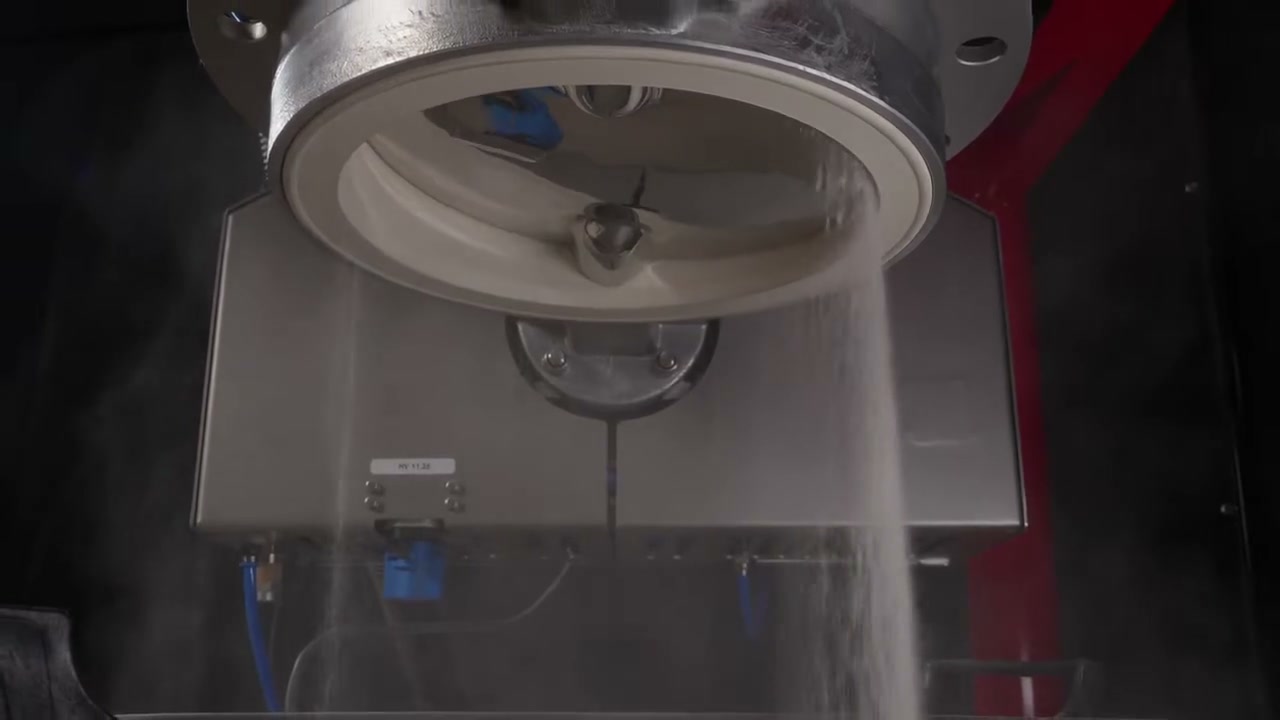
Dinnissen Process Technology shows a feeder valve developed for powder dosing at an accuracy that the older generation of equipment could not reach.