
Application
Gravimetric Feeding in Pharmaceutical Production
Answer in brief
In pharmaceutical production a feeder has to be accurate, contained and provable at the same time.
Continuous processes make the feeder part of the product specification rather than part of the equipment, which means its performance has to be measured and documented, not assumed.
- Define accuracy at the rate and the time scale the process cares about.
- Design containment for charging, refill and cleaning.
- Keep the refill short, because that is when the control is blind.
Reviewed October 21, 2026
The problem
Feeding in a pharmaceutical plant is either a batch charge or, increasingly, a continuous process where the feeders define the formulation in real time. In the second case the feeder is no longer a utility; a rate deviation becomes a composition deviation in product that is already being made.
The quantities are small and the materials are difficult. An active at a low percentage is often the most cohesive component in the formulation, prone to bridging and to a bulk density that changes with every handling step, and it is exactly the one whose rate matters most.
Containment complicates the mechanics. Charging a potent powder into a hopper, refilling it during operation and cleaning the machine afterwards are three operations where the operator meets the compound, and the enclosures that solve that add weight, stiffness and connections to a machine whose accuracy depends on being mechanically free.
And everything has to be demonstrable. An accuracy figure from a catalogue is not evidence; a catch test on the installed machine with the actual material is.
Desired outcome
Feed rate accuracy defined at the actual rate and at a time scale that matches the process, demonstrated by catch tests on the installed equipment with the real material.
Containment through the whole cycle, including refill and cleaning, achieved without adding force paths that corrupt the weighing.
A refill strategy that keeps the blind period short and infrequent, with the behaviour during refill characterised rather than hoped for.
In plastics compounding the feeder has to survive a bulk density range and a fibre length, and a light filler dropped into the throat entrains air before it is ever weighed.
Process approach
The accuracy requirement is derived from the process, not from the supplier. A continuous direct compression line has a residence time and a mixing capability that will smooth variation over some period and not over a shorter one, and the feeder specification follows from that: a figure at a stated rate over a stated sample interval.
Discharge devices are then chosen for the material. Twin screws for cohesive actives and for most excipients; a single screw where the material is genuinely free flowing. Hopper agitation is kept to the minimum that maintains flow, since a vertical agitator that works the powder changes its bulk density and therefore the feed factor continuously.
Containment is designed around the three contact operations. Charging through a split butterfly valve or from a closed liner, refill without opening the hopper to the room, and a cleaning route that reaches everything. The key mechanical rule is that the containment must not restrain the weighed assembly: flexible connections stay flexible, and nothing bridges them.
Performance is then characterised and documented. Catch tests across the rate range, feed factor behaviour through a refill cycle, and the response to a deliberate disturbance. That body of evidence is what makes the feeder part of a validated process rather than a machine with a datasheet.
- Accuracy requirement derived from process residence time and the mixing available downstream.
- Discharge device matched to the material, with twin screws for cohesive actives.
- Agitation limited to what maintains flow, to keep the feed factor stable.
- Containment designed for charging, refill and cleaning without restraining the weighed assembly.
- Refill short and infrequent, with behaviour through the refill characterised.
- Catch tests on the installed machine with real material, documented as evidence.
Selection factors
- Rate and tolerance for each component, and the sample time over which the tolerance applies.
- Process residence time, which decides whether short term variation matters or is smoothed out.
- Flow behaviour of the active, measured, since it is usually the most cohesive and most critical component.
- Containment band, which decides charging, refill and cleaning arrangements.
- Cleaning validation and whether every internal surface can be reached and swabbed.
- Evidence requirement, which decides how much characterisation testing is planned from the start.
Common failure modes
- Accuracy taken from a catalogue instead of measured on the installed machine with the real material
- Tolerance specified with no sample time, so it cannot be tested or breached
- Containment enclosure bridging the weighed assembly and adding a drifting tare force
- Hopper agitator working the powder, changing the bulk density and the feed factor continuously
- Refill behaviour never characterised, so a rate excursion at every refill goes unexplained
- Cleaning route that cannot reach an internal surface, found during swab recovery
Partner with powderbulkvideos.com
Put a relevant technical solution in this decision path.
Connect your company and video evidence with clearly labelled visibility where engineers evaluate this material, application, industry or product.
Frequently asked questions
What accuracy figure should be specified?
One tied to a rate and a sample time, both derived from the process. A figure over a long interval tells you nothing about a process whose residence time is shorter than that interval.
Why does containment affect feeder accuracy?
Because weighing needs the assembly to be mechanically free. An enclosure, a hose or a cable that bridges the flexible connection applies a force the load cells read as mass, and it drifts.
How should refill behaviour be handled?
Characterise it. Measure the rate through the refill cycle, keep the refill short and infrequent, and record the behaviour so a recurring excursion is a known feature rather than an investigation.
Related content
Continue exploring
Move from this page to the companies, videos and technical topics that add useful context.
Companies

Videos
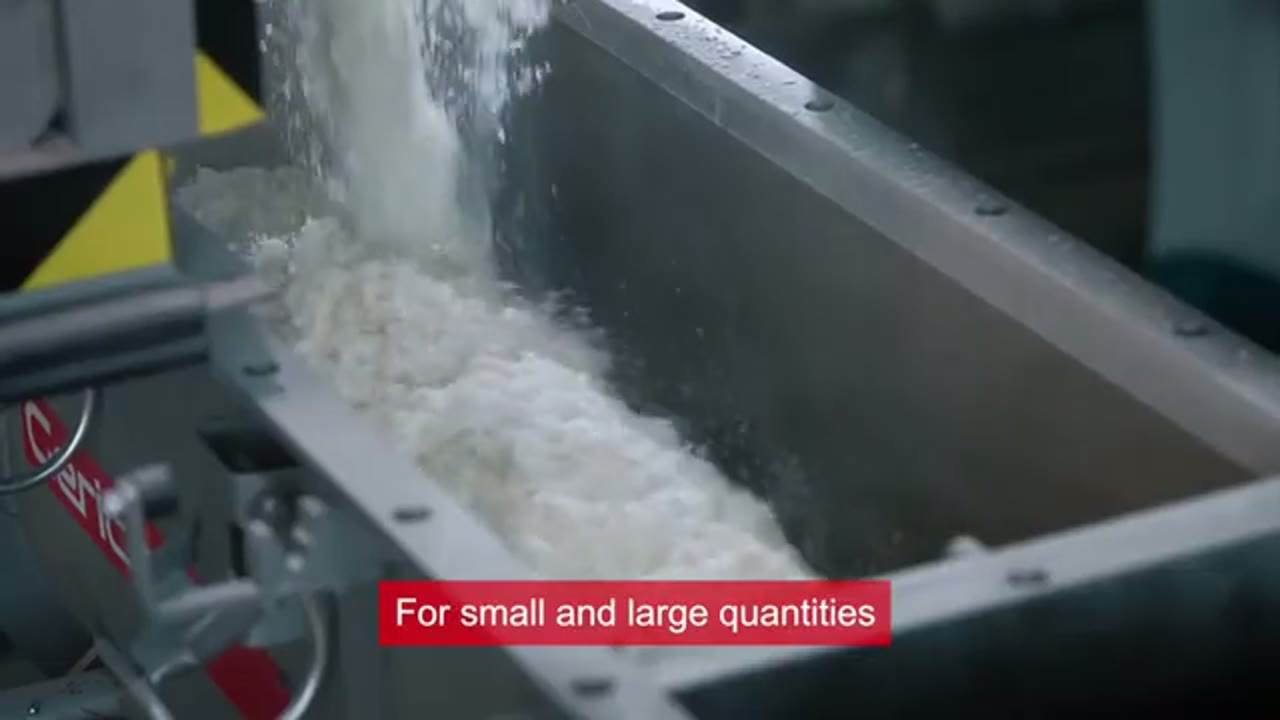
Gericke AG
Continuous Mixer Gericke GCM
Gericke shows the GCM continuous mixer, which combines radial and axial mixing for throughputs that range from 10 l to 150,000 l/h.
Total reach: 4,638

Gericke AG
Gericke: GFS Formulation Skid and Tablet Press
This video presents the Gericke Formulation Skid (GFS) combined with a tablet press, showing how pharmaceutical formulations move from blending through downstream processing in one controlled, scalable setup. The system runs semi-continuously or fully continuously and targets development, scale-up, and technology transfer.
Total reach: 3,835
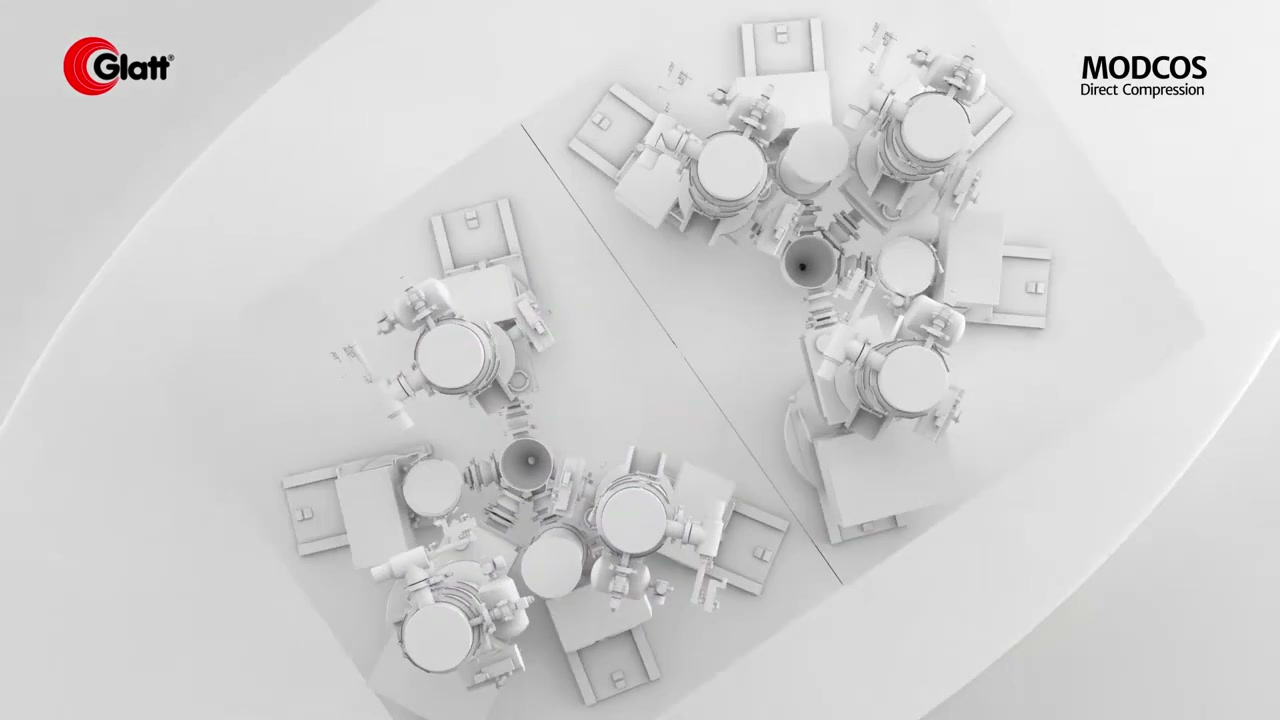
Glatt
MODCOS Direct Compression
Glatt shows the MODCOS line for continuous direct compression, which can integrate up to three mixers and ten feeders on the way from powder to tablet.
Total reach: 2,669