
Comparison
Loss-in-Weight vs Weigh Belt Feeder
Answer in brief
Both are gravimetric, and the difference is what they weigh.
A loss-in-weight feeder weighs its own hopper and infers rate from the falling weight. A weigh belt weighs the material on a moving belt and multiplies by speed.
- Low rates and high accuracy, especially powders: loss-in-weight.
- High rates, coarse or free-flowing material, continuous duty: weigh belt.
- Refill behavior and vibration decide more installations than the data sheet accuracy does.
By Editorial Team · Published October 21, 2026 · Updated October 21, 2026
Sponsored visibility
Featured videos for this topic
Paid placements are clearly marked and remain separate from the editorial related-video selection.
What actually differs
A loss-in-weight feeder is a weighing vessel with a discharge device, and it controls rate by holding the rate of weight loss constant.
During refill it cannot weigh, so it runs volumetrically on the last known setting for a short period.
A weigh belt measures a load on a span of belt and a belt speed, and it continues measuring indefinitely because nothing has to be refilled.
Decision criteria
| Criterion | Loss-in-weight | Weigh belt |
|---|---|---|
| Rate range | Grams per hour to tonnes per hour | Higher rates, bulk duty |
| Accuracy at low rate | High | Limited by belt loading |
| Blind time | During refill | None |
| Vibration sensitivity | High | Moderate |
| Material suitability | Powders, granules, fibres with the right discharge device | Free flowing, coarse, less dusty |
| Installation | Isolated support, flexible connections | Space for the belt span |
Where loss-in-weight is the better choice
- Minor ingredients dosed at low percentages in compounding and food lines.
- Powders that aerate, flood or bridge, where the discharge device can be matched to the behavior.
- Processes needing fast response to a rate change.
The installation decides whether the stated accuracy is achieved: structural vibration, rigid pipe connections and air pressure fluctuations in the refill line all show up directly in the weight signal.
Partner with powderbulkvideos.com
Put your expertise beside the decisions engineers are making.
Connect a relevant company profile and technical video portfolio with clearly labelled visibility on this topic.
Where the weigh belt is the better choice
- Continuous bulk feeding of minerals, grain or aggregates.
- Duties with no acceptable blind time.
- Materials that would be difficult to discharge reliably from a weighing hopper.
Belt loading matters: a belt running far below its design load loses accuracy, which is why a weigh belt sized for a future expansion often performs poorly today.
Where neither fits
Neither solves a material that will not discharge. A bridging powder above a feeder is a hopper problem, and no weighing principle compensates for it.
Where the process needs only an approximate rate, a volumetric device is simpler and cheaper, and the gravimetric investment buys nothing.
What to measure before deciding
- Required rate range and the accuracy that the product specification actually needs.
- Material flow properties, including aeration and bridging behavior.
- Vibration at the proposed location.
- Refill source and how quickly it can deliver.
Frequently asked questions
How long is the blind time during refill?
Typically a few seconds to under a minute, depending on refill rate and hopper size. During that time the feeder runs on the last calculated setting, so a material whose density changes quickly introduces an error.
Does vibration really affect a loss-in-weight feeder?
Yes, strongly. Load cells measure very small weight changes, and structural vibration from nearby equipment appears as noise in the rate signal. Isolated supports and flexible connections are part of the specification, not an option.
Can a weigh belt handle fine powders?
It can, but dust release, material carryover on the belt and belt cleaning become the limiting factors. For dusty powders an enclosed loss-in-weight arrangement is usually preferred.
Related content
Continue exploring
Move from this page to the companies, videos and technical topics that add useful context.
Companies
Videos


Gericke AG
Gericke: GFS Formulation Skid and Tablet Press
This video presents the Gericke Formulation Skid (GFS) combined with a tablet press, showing how pharmaceutical formulations move from blending through downstream processing in one controlled, scalable setup. The system runs semi-continuously or fully continuously and targets development, scale-up, and technology transfer.
Total reach: 3,769

WAMGROUP
Tubular Screw Conveyors and Feeders
WAMGROUP presents enclosed tubular screw conveyors and feeders used to transfer or meter powders and bulk solids.

Gericke AG
Gericke: GUC-F Feeding and Dosing Controller
This video presents the Gericke GUC-F Feeding and Dosing Controller, a multi-channel control system designed for precise feeding, dosing, and weighing tasks in powder and bulk solids processing. The controller supports demanding process requirements across a wide range of industries where accuracy, reproducibility, and process transparency matter.
Total reach: 3,544

AZO
AZO DOSITAINER with Discharge Base
AZO demonstrates a DOSITAINER with discharge base in an ingredient-handling and dosing context.
Coperion
Coperion Loss-in-Weight Feeder Animation
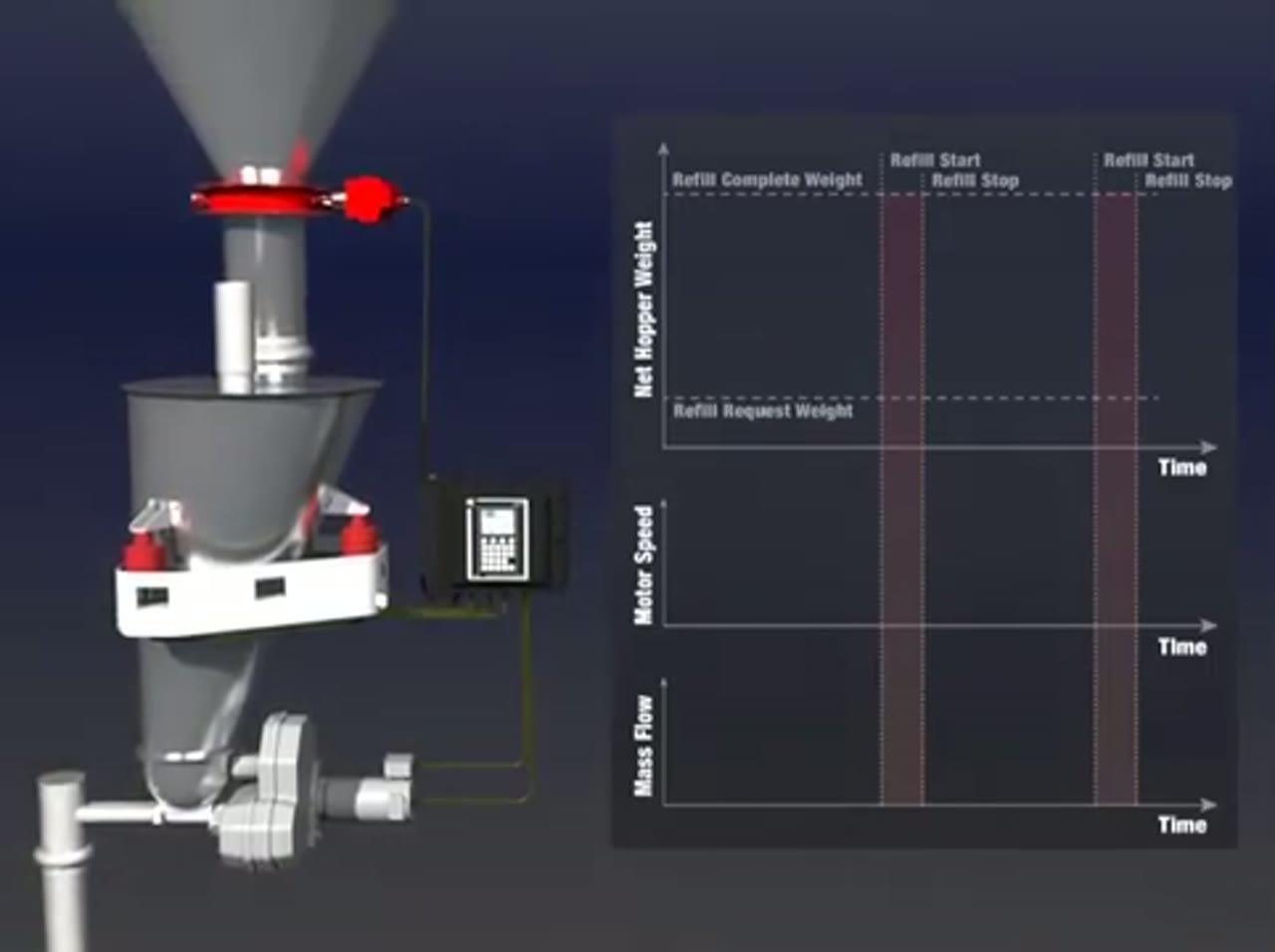
The Coperion K-Tron animation shows a controller observing the decrease in combined hopper, feeder and material weight, comparing the measured rate with the setpoint and adjusting feeder output.
Total reach: 43,225
Dinnissen
Feeder Valve
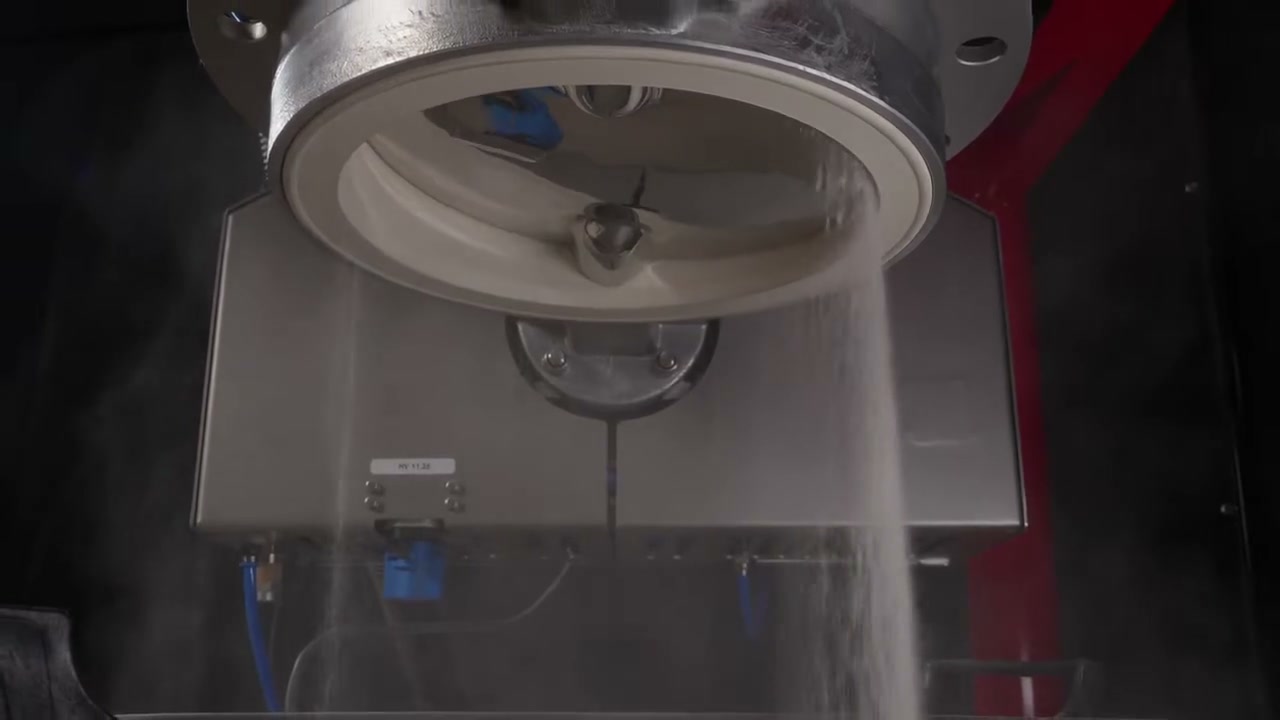
Dinnissen Process Technology shows a feeder valve developed for powder dosing at an accuracy that the older generation of equipment could not reach.
Brabender Technologie GmbH & Co. KG
Food feeding technology by Brabender Technologie
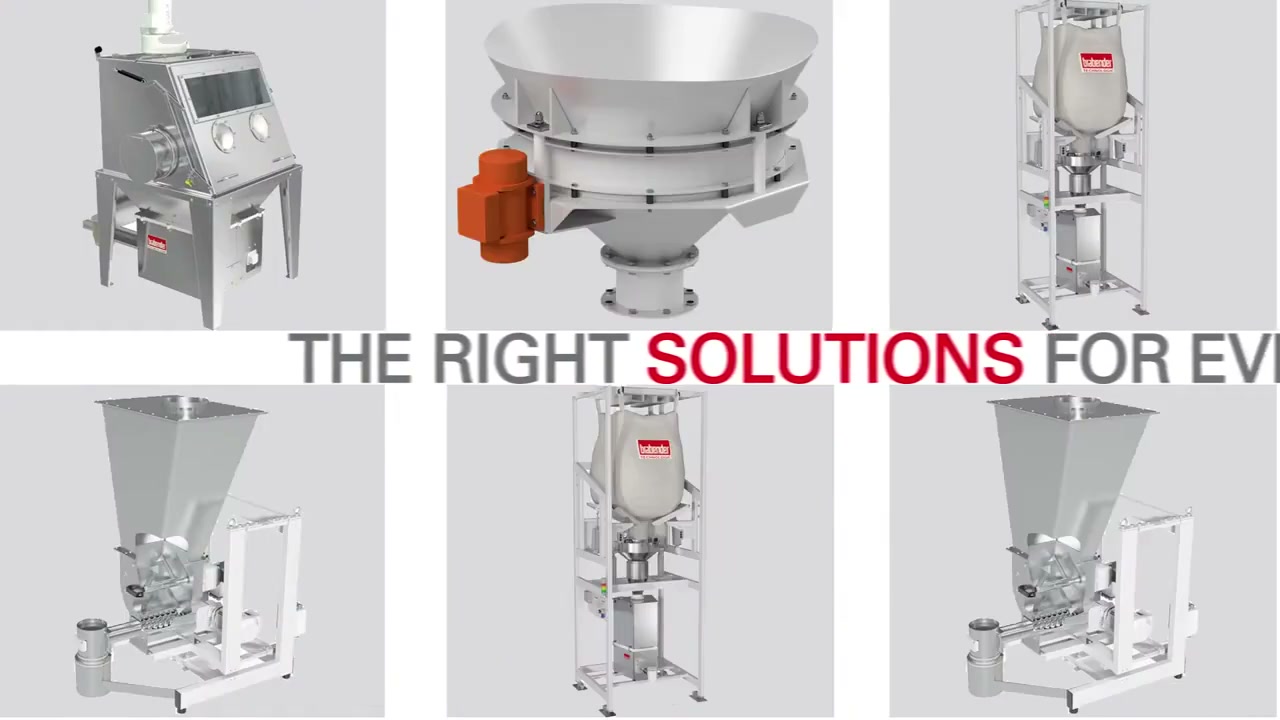
Brabender Technologie presents its gravimetric and volumetric feeding systems for the food industry, the equipment that meters an ingredient into a process at a controlled rate.
Total reach: 1,774