
Comparison
Rotary Valve vs Double Flap Valve
Answer in brief
Both maintain a pressure boundary while material passes; one does it continuously, the other in batches.
A rotary valve passes material in pockets and leaks a defined amount of gas across the clearances. A double flap valve opens one flap at a time, so there is never an open path.
- Continuous discharge and metering: rotary valve.
- Abrasive dust, high pressure difference, intermittent flow: double flap.
- Below a collector the decision is usually driven by wear and by how much air leakage the fan can tolerate.
By Editorial Team · Published October 21, 2026 · Updated October 21, 2026
Sponsored visibility
Featured videos for this topic
Paid placements are clearly marked and remain separate from the editorial related-video selection.
What actually differs
A rotary valve is a rotor in a close-fitting housing, and the clearance between the two decides both the gas leakage and the wear rate.
A double flap valve has two flaps in series, operated so that one is always closed, which gives a positive seal at the cost of continuous flow.
The wear mechanism differs accordingly: the rotary valve wears at the tip clearance, the flap valve at the seats.
Decision criteria
| Criterion | Rotary valve | Double flap valve |
|---|---|---|
| Discharge | Continuous | Intermittent, batchwise |
| Gas leakage | Defined, rises with wear | Very low |
| Metering capability | Volumetric, with limits | None |
| Abrasive dust | Clearance opens, leakage rises | Seat wear, replaceable |
| Pressure difference | Moderate | Higher |
| Maintenance | Rotor and housing | Seats and actuators |
Where the rotary valve is the better choice
- Continuous feeding into a pneumatic conveying line.
- Applications where an even discharge is needed for a downstream process.
- Clean or mildly abrasive powders where clearance is maintained over time.
Specialised variants exist for explosion isolation and for quick cleaning; neither function should be assumed on a standard process valve.
Partner with powderbulkvideos.com
Put your expertise beside the decisions engineers are making.
Connect a relevant company profile and technical video portfolio with clearly labelled visibility on this topic.
Where the double flap valve is the better choice
- Discharge of abrasive dust from cyclones and collectors, where a rotary valve would wear open.
- Higher pressure differences where gas leakage must stay minimal.
- Duties where intermittent discharge is acceptable because a hopper buffers the flow.
Where neither fits
Neither device is a feeder in the metering sense; a rotary valve meters volumetrically at best, and that accuracy varies with material density and fill.
Neither is an explosion isolation device unless specifically certified as one, with the clearance, pocket count and construction tested for that purpose.
What to measure before deciding
- Pressure difference across the device, in normal and upset conditions.
- Dust abrasiveness and the expected clearance life.
- Acceptable gas leakage into or out of the process.
- Whether downstream equipment tolerates intermittent discharge.
Frequently asked questions
Why does a rotary valve leak more as it wears?
The seal is a close clearance between rotor tips and housing. Abrasive material opens that clearance, and leakage rises steadily, often appearing first as a loss of conveying performance.
Can a double flap valve feed a conveying line?
Not directly, because the discharge is intermittent. It usually discharges into a hopper or a screw that then feeds the line.
Is a rotary valve an explosion isolation device?
Only a valve specifically designed, tested and certified for that duty, with defined clearances and pocket geometry. A standard process valve does not provide isolation.
Related content
Continue exploring
Move from this page to the companies, videos and technical topics that add useful context.
Companies
Videos
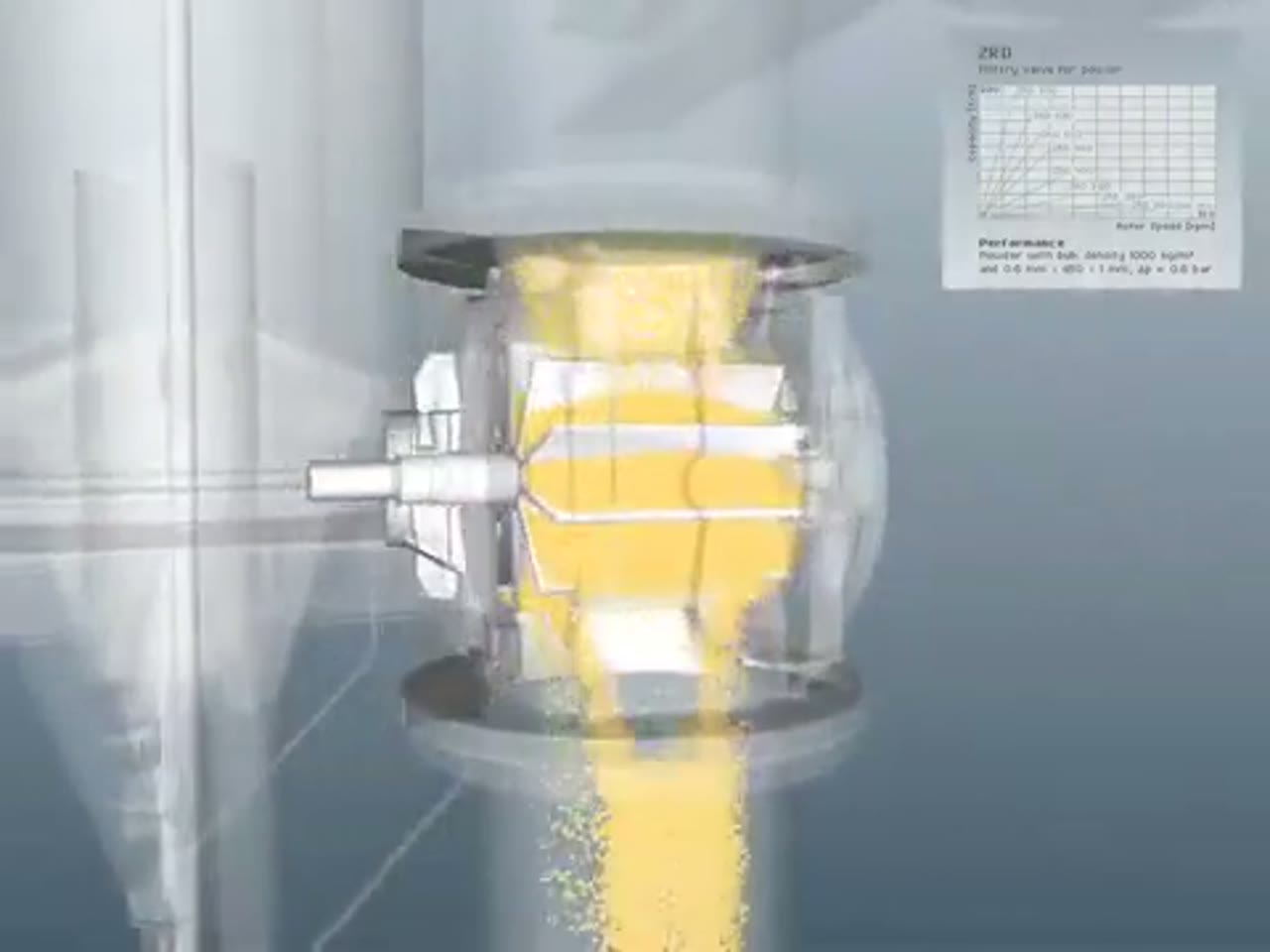
Coperion
Coperion ZRD Rotary Valve for Powder Applications
Coperion presents the ZRD rotary valve and the design choices that adapt it to powder discharge, metering and pneumatic-conveying service.
Total reach: 10,407

KREISEL Industries GmbH
Kreisel: Screw Pump vs. Rotary Valve
This video presents KREISEL rotary valves and the process duties that distinguish a rotary valve from alternative feeding equipment.
Total reach: 6,234
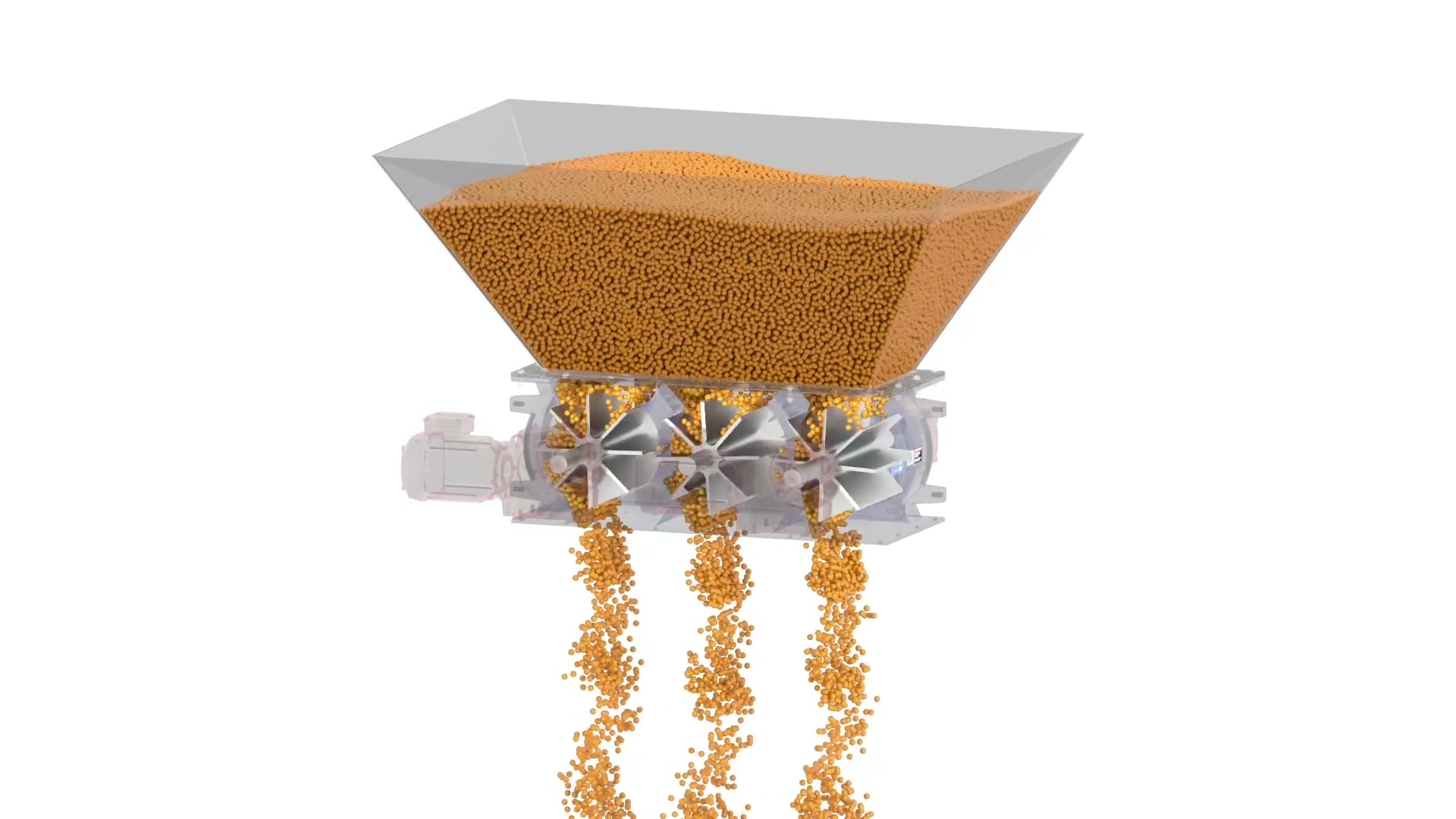
ACS Valves
ACS Multi-Port Rotary Valve in 3D
ACS Valves uses a 3D animation to explain a multi-compartment rotary-airlock arrangement for high-volume discharge duties with independent rotors and drives.
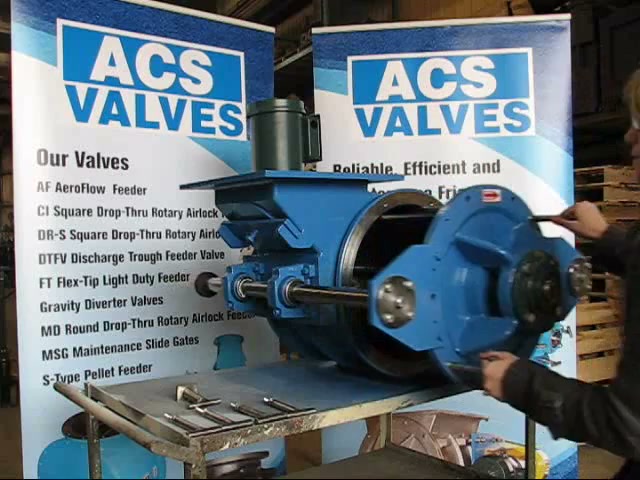
ACS Valves
ACS Quick Clean Rotary Valve Demonstration
In this 65-second ACS Valves clip, a presenter opens a Quick-Clean rotary valve without tools: handles release, the rotor and endplate slide out on RotorRail supports, and a locating key guides reassembly. What the demo establishes is physical access to the product-contact zone — cleaning validation and sanitary certification still depend on the supplied model and the site's procedure.

Airlock
Airlock: Dairy Standard Rotary Valves
Airlock video on the DCSR Version 2.0 rotary valve range (2T and 2TE): drop-through and blow-through configurations for feeding, metering, and pneumatic conveying, with a detachable rotor and end cover for cleaning access in dairy service.
Total reach: 20,564
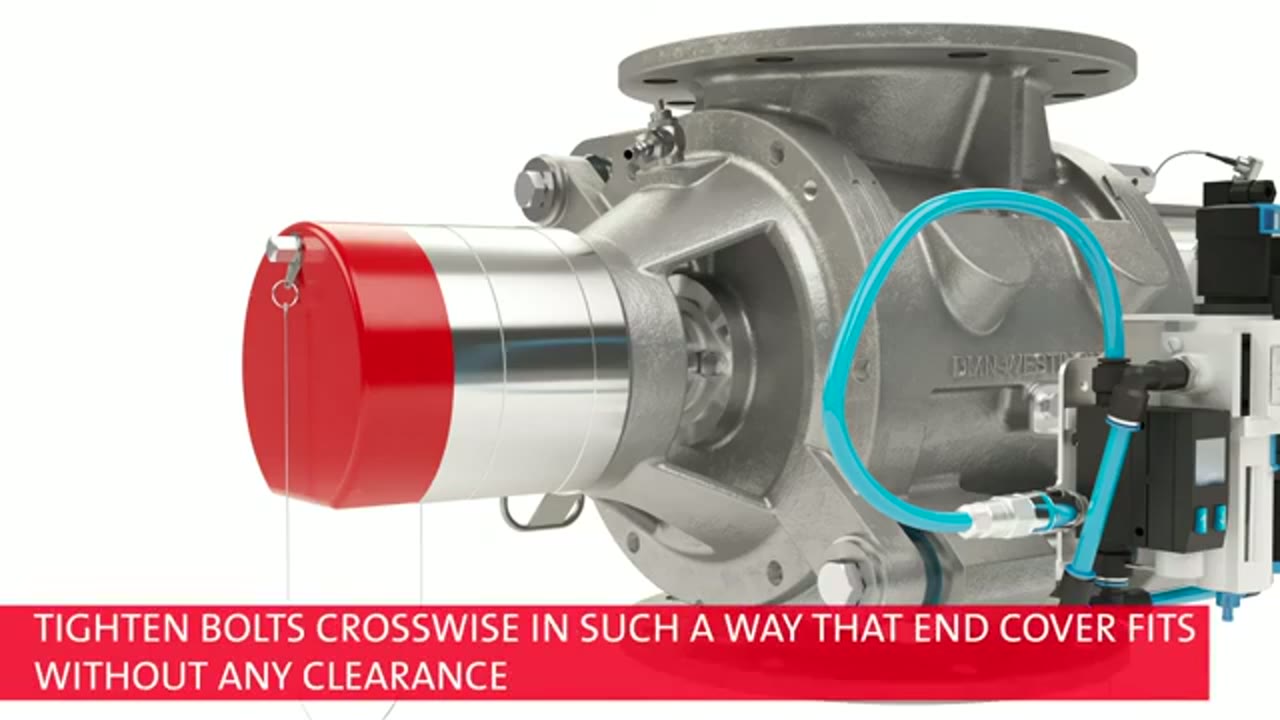
DMN-WESTINGHOUSE
DMN-WESTINGHOUSE MZC-II Basic Inspection and Cleaning
DMN-WESTINGHOUSE demonstrates the basic inspection and cleaning context for an MZC-II rotary valve and states the safety boundary for maintenance work.
Total reach: 2,224

Prater Industries
How To Select The Proper Rotary Airlock Valve
Prater Industries explains the process information engineers need before choosing and sizing a rotary airlock valve.
Total reach: 3,613

Kice Industries
Kice VJX Airlock Installation
Kice Industries demonstrates installation considerations for its VJX airlock at a dry-bulk process interface.