
Independent industry shortlist for Rotary Valves
Best Rotary Valves for Abrasive Powders
Answer in brief
Gericke, The Young Industries, Prater Industries, ACS Valves, and DMN-WESTINGHOUSE lead this shortlist of rotary valves for abrasive powders.
Gericke puts every wear part of its extra heavy-duty valves on an exchangeable insert, Young offers tungsten carbide and Stellite hard-facing with purged packing and an end seal that halves leakage, Prater lines body and end plates with alumina ceramic, ACS grades chrome and tungsten coatings to the powder and adds adjustable tips, and DMN-WESTINGHOUSE combines tungsten coating with hardened replaceable blades.
Service life still depends on particle hardness, velocity, and pressure differential.
By Editorial Team · Published July 27, 2026 · Updated October 15, 2026

How we selected these companies
ShowHide
We compared rotary valve suppliers on five technical areas that decide how a valve holds up in abrasive service.
- Wear protection design (30%) looks at what stands between the powder and the base metal: hard chrome, tungsten carbide, Stellite, or ceramic on the housing bore and end plates, hardened or wear-plate rotors, and tips, blades, or liners that can be adjusted or replaced.
- Clearance, sealing, and bearing protection (25%) covers how the rotor-to-housing gap is held and restored, the pressure differential the valve is rated for, shaft seals with air purge, and bearings mounted outboard of the powder.
- Powder and duty fit (20%) covers sizes, capacity per revolution, temperature limits, and drop-through or blow-through builds for cement, sand, minerals, and ash.
- Wear-part access and overhaul (15%) covers how liners, blades, end plates, seals, and bearings are reached and replaced.
- Configuration range and application engineering (10%) covers the spread of series, rotor designs, and options.
Wear protection and clearance control carry the most weight because abrasive duty changes the valve over time: enlarged gaps increase leakage, reduce pressure isolation, and alter feed consistency, and leaking air speeds up further wear. Range size earns no automatic advantage; a specialist design with replaceable wear parts can place ahead of a larger range. The result is a shortlist, not a service-life table: final selection needs representative powder data, operating conditions, and acceptance limits agreed with the supplier.
Wear protection design 30%
Hard-facing, coatings, liners, and replaceable or adjustable rotor tips on the housing bore, end plates, and rotor.
Clearance, sealing, and bearing protection 25%
Means of holding and restoring the rotor-to-housing gap, pressure rating, shaft seals with purge, and bearings placed outside the powder.
Powder and duty fit 20%
Sizes, capacity per revolution, pressure differential, temperature limit, and drop-through or blow-through builds for abrasive products.
Wear-part access and overhaul 15%
How liners, blades, tips, end plates, seals, and bearings are reached and replaced.
Configuration range and application engineering 10%
Number of valve series, rotor designs, sizes, and options for configuring a valve to the powder.
Last reviewed October 7, 2026
Disclosure: Up to 40 percent of the places on this list can be booked. Booked and Featured entries are commercially supported, clearly labeled and carry no bought rank. Payment does not determine the editorial assessment or the ranked positions.
Abrasive powder does not merely “make the valve wear faster.” It changes clearances, leakage, pocket filling, drive load and sometimes particle size. The correct valve is therefore a maintainable wear system, not just a heavier casting.
How to use this shortlist
Characterize the powder before comparing brands. Record particle hardness, shape, size distribution, bulk density, moisture, temperature and whether wear is dominated by sliding, impact or entrained high-velocity particles.
Define the operating boundary as well: throughput, rotor speed, pressure differential, conveying-gas velocity, duty cycle and acceptable leakage. A valve under a bin and the same valve blowing directly into a line may see very different wear.
This page focuses on abrasive duty. For a broader view of suppliers, see the rotary-valve company list.
Rotor, tips and housing
Replaceable tips can move the wear interface to a service part and help restore clearance. Hardened metals, coatings and ceramics may extend life, but brittle or dissimilar materials introduce their own impact, thermal and repair constraints.
Ask which component is intended to wear first and how it is measured. “Abrasion resistant” is not an inspection plan.
Clearance is a performance variable
Small rotor-to-housing gaps improve airlock behavior but increase sensitivity to trapped particles and misalignment. Larger gaps tolerate interference but leak more gas. The Rotary Valves guide explains how pocket filling and leakage interact.
Temperature changes the gap, and pressure or product loading can deflect the rotor. A cold workshop clearance may be unsafe or ineffective at operating conditions, so the supplier should calculate or test the full envelope, including startup, shutdown and upset temperatures, not just the nominal steady state.
Ask for cold clearances, temperature assumptions, acceptable wear limits and the method for restoring performance. Trend measurements at repeatable rotor positions.
Velocity and feeding mode
Wear rate often rises sharply with particle velocity. Blow-through arrangements can improve discharge for sticky products yet expose surfaces to gas-borne particles. Drop-through designs may reduce that interaction but can struggle if material does not leave the pockets.
Rotor speed affects both capacity and impact frequency. Increasing speed to solve a capacity problem can reduce fill factor and accelerate damage.
Identify the wear mechanism
Sliding abrasion occurs where particles move along a loaded surface. Erosive wear develops when gas-borne particles strike a surface, and impact wear concentrates at abrupt changes in direction or where coarse particles enter a narrowing gap. A single valve can experience all three.
Inspection patterns help diagnose the dominant mechanism. Uniform polishing at tips suggests a different response from a localized groove at the inlet or deep attack in the outlet transition. The repair should address the cause, not just cover the scar with a harder material.
Hardness is not the whole specification
A harder surface may resist sliding wear but become vulnerable to impact or cracking. Ceramic liners can perform well in severe abrasion when they are supported and protected from shock. Weld overlays and thermal-spray coatings introduce thickness, bond and repair considerations.
Ask for the substrate, treatment, hardness range, coating thickness and permitted repair route. Also check corrosion compatibility. A surface that survives abrasion but corrodes in the process atmosphere is not a durable solution.
Shaft seals and bearing protection
Fine abrasive powder can migrate along the shaft and damage seals or bearings. Purged seals may help when clean, compatible gas is available at the right pressure. Packing and lip-seal arrangements have different leakage, adjustment and maintenance behavior.
Outboard bearings reduce direct exposure but do not make the shaft interface maintenance-free. Trend seal leakage, bearing temperature, vibration and drive current alongside clearance measurements.
Representative wear testing
Standard abrasion tests can compare material coupons under controlled conditions, but they do not reproduce every valve geometry. A useful project test combines material characterization with pilot or reference-duty results and a defined inspection interval after commissioning.
Record the starting clearances and surface condition. Without a baseline, the first shutdown inspection produces an interesting photograph but little engineering information.
Maintenance and total cost
Compare the time, tooling and access required to inspect tips, housing, endplates, seals and bearings. Include spare-part lead time, coating repairability and the risk of contaminating product with wear debris.
A lower purchase price can disappear quickly if the complete valve has to be removed whenever clearances drift. Conversely, an elaborate wear package is wasted when the actual powder is only mildly abrasive.
Safety boundary
A worn rotary valve may no longer satisfy the gap conditions assumed for explosion isolation. If the valve has a protective function, inspection limits and replacement criteria must follow the certified configuration and site dust-hazard analysis.
Questions for the shortlist
- What is the expected wear mechanism and sacrificial component?
- Which hardness, coating or ceramic specification is supplied?
- What are the initial and discard clearances?
- How do pressure and gas velocity affect the proposed design?
- What test or reference duty supports the expected maintenance interval?
Partner with powderbulkvideos.com
Show your equipment where buyers compare suppliers.
Booked places and Featured Listings are limited to 40 percent of a Top List, clearly labelled and separate from the editorial ranking.
Selected companies
-
Best for: Highly abrasive minerals in drop-through or blowing-seal duty, with every wear part on an exchangeable insert
Gericke builds its RotaVal valves in drop-through (HDM) and blowing-seal (BSM) form from 150 to 400 mm, with throughput up to 50 m³/h and special sizes up to 1200 mm.
- For abrasive duty the extra heavy-duty EHDM and EBSM versions put every part under abrasion on an exchangeable insert: body liners with hard chrome, ceramic, or tungsten carbide coating, hardened steel blades, end discs, slotted collars, and plasma-nitrided shaft sleeves.
- The wear surfaces are renewed without replacing housing or rotor, and one technician can do the work with hand tools.
- Shaft sealing options include gland packing, mechanical seals, and air or grease purge.
- Housings are pressure tested to 10 bar(g).
- Typical products are cement, silica sand, quartz, granite dust, and pulverized fuel ash.
View related CompanyTechnical score breakdown
- Wear protection design
- 5/5 · EHDM and EBSM valves carry replaceable body liners with hard chrome, ceramic, or tungsten carbide coating, hardened steel blades, and plasma-nitrided shaft sleeves.
- Clearance, sealing, and bearing protection
- 4/5 · Replaceable liners and blades renew the sealing surfaces, shaft seals come as gland packing or mechanical seals with air or grease purge, and housings are pressure tested to 10 bar(g).
- Powder and duty fit
- 4.5/5 · Drop-through and blowing-seal builds from 150 to 400 mm with up to 50 m³/h, used on cement, silica sand, quartz, granite dust, and pulverized fuel ash.
- Wear-part access and overhaul
- 4.5/5 · Liners, blades, end discs, slotted collars, and shaft sleeves are exchangeable inserts that one technician replaces with hand tools.
- Configuration range and application engineering
- 4.5/5 · More than 15,000 configurations across hygienic, heavy-duty, and extra heavy-duty series, with special sizes up to 1200 mm.
-
Best for: Abrasive powders at elevated pressure or temperature that need hard-facing, purged packing, and low leakage
The Young Industries configures its Model HC valve for abrasive service through interior hard-facing with chrome plating, nickel plating, tungsten carbide, or Stellite, and through rotors with adjustable tips or replaceable tips of abrasion-resistant material.
- End plates are piloted to the housing so that tight rotor clearances stay concentric, and two blades seal on each side at all times.
- Outboard precision ball bearings sit behind a four-ring packing gland of PTFE-impregnated Kevlar; a lantern ring with purge connection, end plate purges, live-loaded packing, and mechanical seals are options.
- The End Seal version adds peripheral rings against the rotor shroud and cuts leakage by about 50 percent.
- Standard sizes run from 4 to 24 inch at 15 PSIG and 250°F, with high-temperature designs up to 1,000°F.
View related CompanyTechnical score breakdown
- Wear protection design
- 4/5 · Interior hard-facing in chrome plating, nickel plating, tungsten carbide, or Stellite, plus adjustable tips and replaceable tips of abrasion-resistant material.
- Clearance, sealing, and bearing protection
- 4.5/5 · Piloted end plates hold tight rotor clearances, the End Seal design cuts leakage by about 50 percent, and outboard ball bearings sit behind packing with a purged lantern ring at about 1 to 3 psi.
- Powder and duty fit
- 4.5/5 · Standard 4 to 24 inch valves at 15 PSIG and 250°F, high-temperature designs up to 1,000°F, and a 6 inch build for 50 PSIG at 900°F.
- Wear-part access and overhaul
- 3.5/5 · Side inspection panel to the rotor, tapped holes for end plate removal, and rotor tips that are adjusted or replaced instead of the rotor.
- Configuration range and application engineering
- 4/5 · Eleven valve models and eight rotor designs, with custom valves built in an ASME code shop from 1 inch upward.
-
Best for: Ceramic-lined airlocks in 6 to 16 inch for abrasive powders below 300°F
Prater's abrasion-resistant airlock has a cast iron body and end plates lined with thick layers of alumina ceramic, and can add ceramic-lined rotors, ceramic end plates, and a tungsten carbide throat; hardened rotor tips and tungsten or chrome coatings are further options.
- It comes in 6 to 16 inch square sizes with an eight-blade rotor, for temperatures up to 300°F and pressure differentials up to 12 PSI.
- Two sealed outboard bearings, two self-adjusting packing glands, and end plates pre-drilled for shaft air purge keep powder away from the shaft.
- The heavy-duty PAV series runs to 500°F, and its 10 inch valve moves 0.53 cubic feet per revolution.
- The Quick-Take-Apart series, in 6 and 8 inch, removes rotor and end plate as one assembly without tools.
View related CompanyTechnical score breakdown
- Wear protection design
- 4.5/5 · Alumina ceramic lining on body and end plates, with ceramic-lined rotors, a tungsten carbide throat, hardened rotor tips, and tungsten or chrome coatings as options.
- Clearance, sealing, and bearing protection
- 4/5 · Two sealed outboard bearings, two self-adjusting packing glands, end plates pre-drilled for air purge, and a rating of up to 12 PSI differential.
- Powder and duty fit
- 4/5 · Abrasion-resistant valves in 6 to 16 inch for up to 300°F, heavy-duty PAV valves to 500°F, and blow-through valves in 8 and 10 inch.
- Wear-part access and overhaul
- 4/5 · End plates come off with jack bolts, tips are bolt-on, and the 6 and 8 inch Quick-Take-Apart valves remove rotor and end plate together without re-gapping.
- Configuration range and application engineering
- 3.5/5 · Six airlock series, with the heavy-duty PAV line in nine sizes and four rotor configurations.
-
Best for: Cement, gypsum, and mineral conveying with coatings graded to abrasiveness and adjustable rotor tips
ACS Valves grades its interior coatings by abrasiveness: hard chrome for mildly to moderately abrasive powders, heavy plate chrome for cement, and tungsten for silica sand, applied to the housing bore, endplates, and rotor.
- Rotors are available in AR400 steel, with closed ends that shield the endplates and outboard bearings, or with adjustable tips in hardened steel, stainless steel, or bronze that are reset as they wear.
- The ACST-4 glandless shaft seal sits on both ends of the shaft and takes an air purge for severe duty.
- The cast iron CI Series comes in ten square-flange sizes from 6 to 26 inch for up to 15 PSIG, 22 PSIG in the super-duty build, and 750°F.
- RotorRail models give tool-less rotor access while keeping rotor and endplate aligned.
View related CompanyTechnical score breakdown
- Wear protection design
- 4/5 · Hard chrome, heavy plate chrome, and tungsten coatings on bore, endplates, and rotor, with AR400 steel rotors and hardened steel adjustable tips.
- Clearance, sealing, and bearing protection
- 4/5 · Adjustable rotor tips, closed-end rotors that shield endplates and bearings, ACST-4 shaft seals with air purge, outboard bearings, and up to 22 PSIG.
- Powder and duty fit
- 4/5 · CI Series in ten sizes from 6 to 26 inch and MD Series in seven sizes from 4 to 16 inch, up to 22 PSIG and 750°F, used on cement, gypsum, coal, and mineral ore.
- Wear-part access and overhaul
- 4/5 · RotorRail gives tool-less access to the rotor and keeps rotor and endplate aligned, and tips are adjusted in place of frequent replacement.
- Configuration range and application engineering
- 4/5 · Square-flange and round-flange series with closed-end, metering, shallow-pocket, and adjustable-tip rotors and 6, 8, 10, or 12 vanes.
-
Best for: Heavy-duty valves with hardened replaceable blades and purged shaft seals, from 4 to 20 inch
DMN-WESTINGHOUSE fits its heavy-duty AL and BL valves for abrasive duty with coatings and blade choice.
- Hard chrome plating covers mildly abrasive conditions and tungsten coating moderately to highly abrasive products; both can be applied to body, end covers, and rotor.
- Rotors with replaceable and adjustable blades take hardened steel blades for abrasive materials, and blades are changed to hold tight clearances without replacing the whole rotor; a resilient-edge rotor has reinforced vane edges that protect the end covers.
- The valves have outboard bearings and the SAS-II air purge shaft seal, and a shaft seal flow control holds purge airflow steady as pressure varies.
- AL sizes run from 4 to 20 inch, 0.03 to 8.12 cubic feet per revolution, at up to 29 PSI and 302°F, optionally 1,112°F.
View related CompanyTechnical score breakdown
- Wear protection design
- 4/5 · Hard chrome for mild abrasion and tungsten coating for moderately to highly abrasive products on body, end covers, and rotor, with hardened steel replaceable blades.
- Clearance, sealing, and bearing protection
- 4/5 · Adjustable blades hold tight clearances, bearings are outboard, and the SAS-II air purge shaft seal runs with flow control; pressure rating 29 PSI.
- Powder and duty fit
- 4/5 · AL valves from 4 to 20 inch with 0.03 to 8.12 cubic feet per revolution, up to 29 PSI and 302°F, optionally 1,112°F, in drop-through and blow-through form.
- Wear-part access and overhaul
- 3.5/5 · Blades are replaced without changing the rotor, protective end plates and vane edges on the resilient-edge rotor can be repaired, and worn valves can be refurbished.
- Configuration range and application engineering
- 4/5 · Eleven rotary valve types in stainless steel, cast iron, or aluminum, with rotor designs from fixed vanes to semi end disc with adjustable blades.
-
Work with usAvailable
3 places on this Top List are open
Bookable places are limited, clearly labelled and separate from the editorial ranking above.

Frequently asked questions
Which rotary-valve material is best for abrasive powder?
There is no universal best material. Hard chrome plating suits mildly abrasive powders, heavier chrome is used for cement, and tungsten carbide, Stellite, or ceramic linings are chosen for silica sand, quartz, and similar hard minerals. Selection also depends on impact, temperature, corrosion, and whether tips, liners, or the full housing should be the sacrificial part.
Why do rotary-valve clearances matter in abrasive service?
Wear enlarges clearances, which increases gas leakage and can reduce pressure isolation and feeding stability. The leaking air carries particles through the gap and speeds up further wear. Clearances need defined inspection and discard limits, measured at repeatable rotor positions, and a means of restoring them such as adjustable tips or replaceable liners.
How are shaft seals and bearings protected from abrasive fines?
Bearings are mounted outboard, away from the housing, and the shaft seal is purged with clean air or gas so that fines are pushed back toward the rotor. Purged packing typically runs a few psi above the pressure in the valve. Closed-end rotors add a shield between the powder and the end plates.
Is a blow-through or a drop-through valve better for abrasive powder?
Neither by default. Wear rises sharply with particle velocity, and a blow-through valve exposes its surfaces to gas-borne particles, although it discharges sticky products better. A drop-through valve reduces that exposure but can struggle when material does not leave the pockets.
Can a supplier buy a higher rank on this list?
No. The ranked positions follow the five technical criteria above, with wear protection and clearance control weighted highest. Booked and Featured places are labeled as such and carry no rank.
Sources and further reading
- Abrasion and wear, The Wolfson Centre for Bulk Solids Handling Technology, University of Greenwich
- Abrasion-Resistant Rotary Airlocks, Powder & Bulk Solids
- Abrasion-Resistant Rotary Valves Keep Humming Along, Powder & Bulk Solids
- ASTM G65 dry sand/rubber wheel abrasion test, ASTM International
- ASTM G65-16(2021) Standard Test Method for Measuring Abrasion Using the Dry Sand/Rubber Wheel Apparatus, ASTM International
- ASTM G76-18 Standard Test Method for Conducting Erosion Tests by Solid Particle Impingement Using Gas Jets, ASTM International
- Combustible Dust Safety and Health Topics, OSHA
- DSS178: Ineffective Dust Explosion Isolation Using Material Chokes, Part 2: Rotary Valves, Dust Safety Science
- Gericke Unveils New Line of Rotary Valves, Powder & Bulk Solids
- HSE rotary valves used as explosion chokes, UK Health and Safety Executive
- HSE Safe handling of combustible dusts, UK Health and Safety Executive
- Increasing Rotary Valve Life by Decreasing Wear, Powder & Bulk Solids
- NIOSH Dust Control Handbook for Industrial Minerals Mining and Processing, NIOSH
- Product Focus: Extra heavy duty rotary valves, Processing Magazine
- Rotary Valves Designed for Abrasive Powders, Process Worldwide
- Tailored made solutions from DMN UK at Hillhead 2018, HUB-4
Related content
Continue exploring
Move from this page to the companies, videos and technical topics that add useful context.
Companies
Videos
ACS Valves
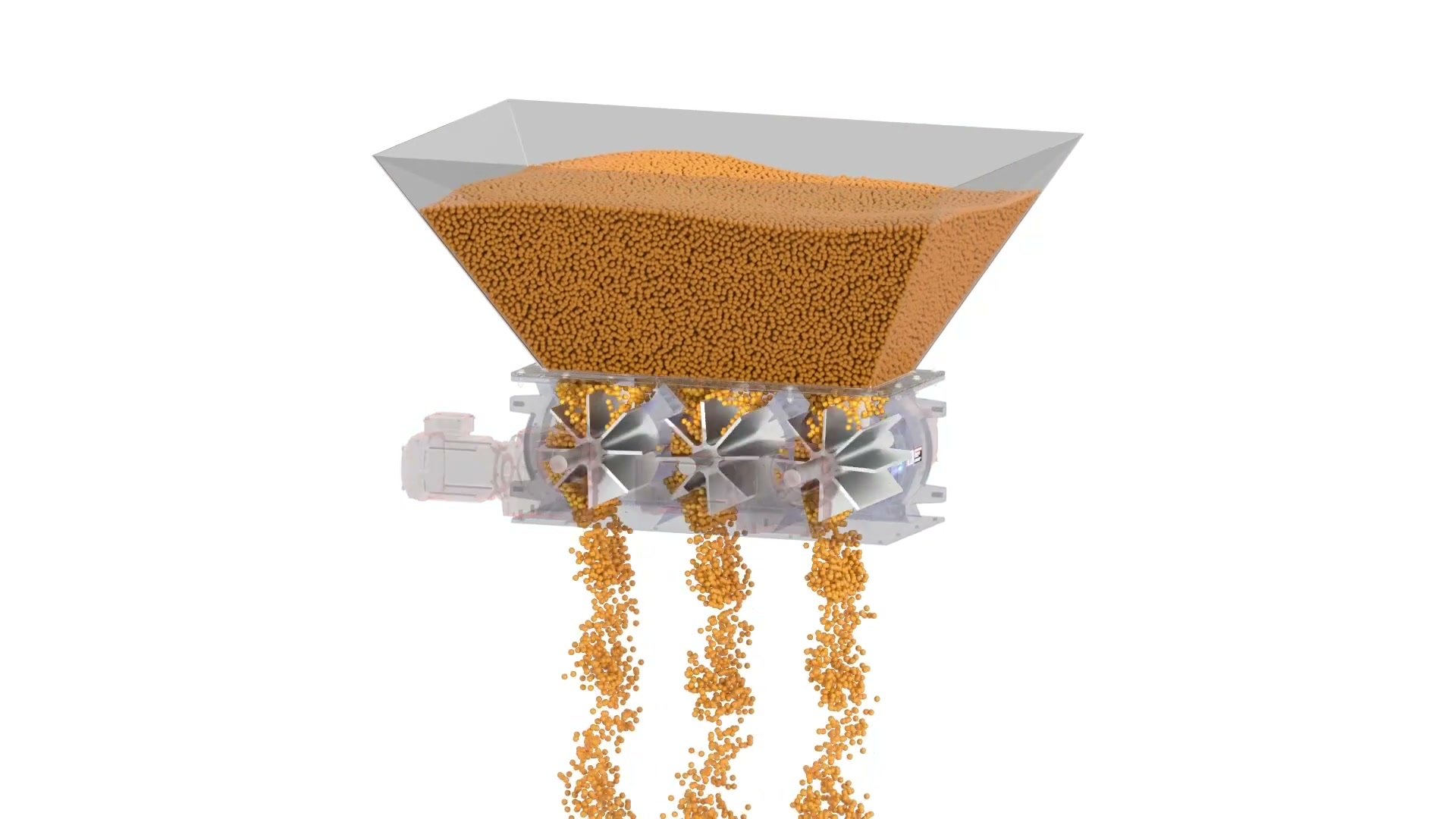
ACS Multi-Port Rotary Valve in 3D
ACS Valves uses a 3D animation to explain a multi-compartment rotary-airlock arrangement for high-volume discharge duties with independent rotors and drives.
ACS Valves
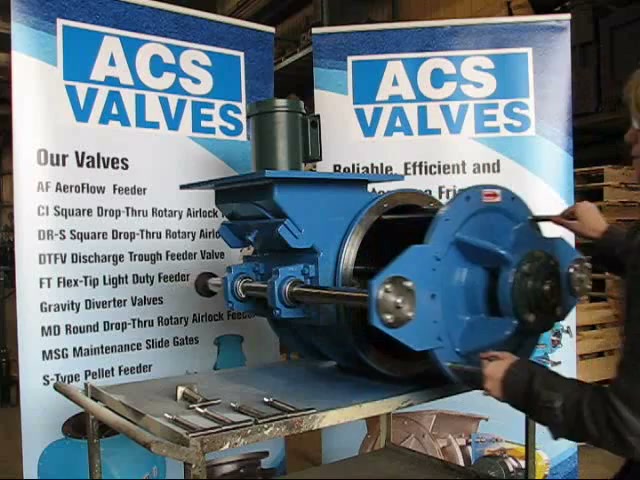
ACS Quick Clean Rotary Valve Demonstration
In this 65-second ACS Valves clip, a presenter opens a Quick-Clean rotary valve without tools: handles release, the rotor and endplate slide out on RotorRail supports, and a locating key guides reassembly. What the demo establishes is physical access to the product-contact zone — cleaning validation and sanitary certification still depend on the supplied model and the site's procedure.

Airlock
Airlock: Dairy Standard Rotary Valves
Airlock video on the DCSR Version 2.0 rotary valve range (2T and 2TE): drop-through and blow-through configurations for feeding, metering, and pneumatic conveying, with a detachable rotor and end cover for cleaning access in dairy service.
Total reach: 20,553

Coperion
Coperion ZRD Rotary Valve for Powder Applications
Coperion presents the ZRD rotary valve and the design choices that adapt it to powder discharge, metering and pneumatic-conveying service.
Total reach: 10,368
DMN-WESTINGHOUSE
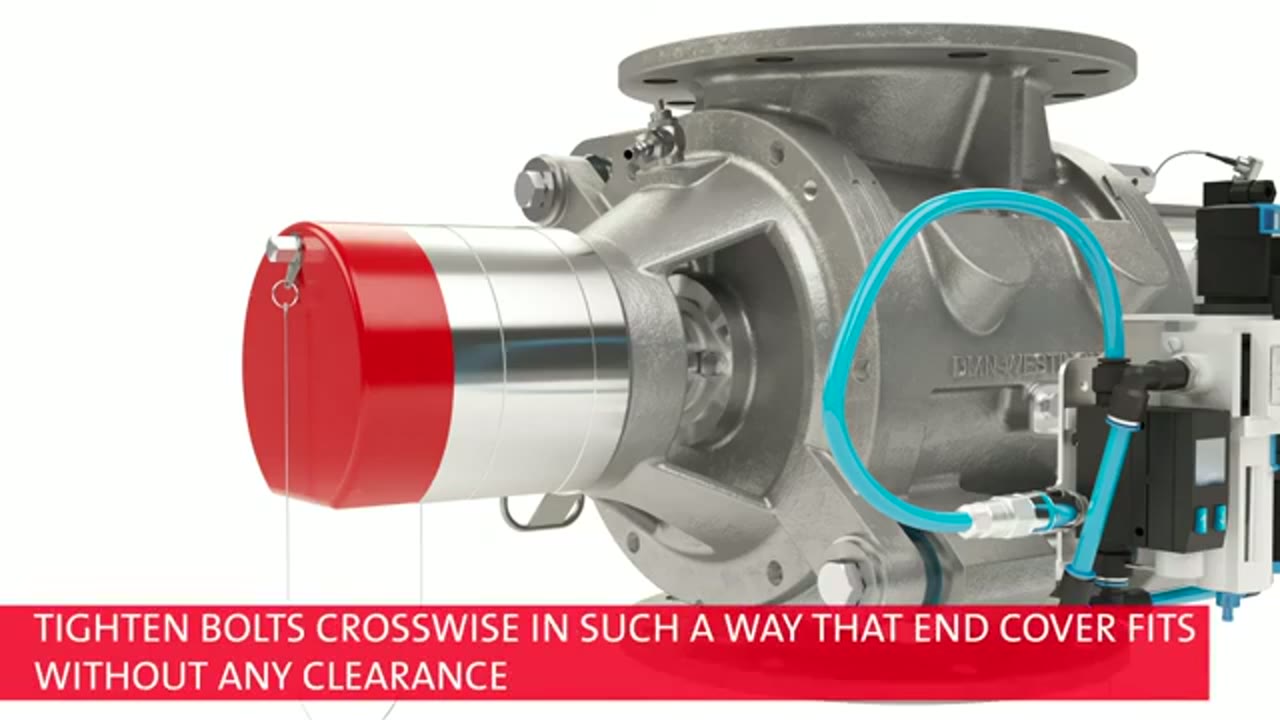
DMN-WESTINGHOUSE MZC-II Basic Inspection and Cleaning
DMN-WESTINGHOUSE demonstrates the basic inspection and cleaning context for an MZC-II rotary valve and states the safety boundary for maintenance work.
Total reach: 2,184

Prater Industries
How To Select The Proper Rotary Airlock Valve
Prater Industries explains the process information engineers need before choosing and sizing a rotary airlock valve.
Total reach: 3,607

Kice Industries
Kice VJX Airlock Installation
Kice Industries demonstrates installation considerations for its VJX airlock at a dry-bulk process interface.

KREISEL Industries GmbH
Kreisel: Screw Pump vs. Rotary Valve
This video presents KREISEL rotary valves and the process duties that distinguish a rotary valve from alternative feeding equipment.
Total reach: 6,228