
Application
Explosion Isolation in Pharmaceuticals
Answer in brief
In pharmaceutical plants isolation competes with containment for the same ducts.
Suppressant entering the product is usually unacceptable, and opening a duct for a mechanical device conflicts with the closed system. The equipment is small, which does not remove the hazard; it removes the room to install a device.
- Resolve the conflict with the containment strategy, not after it.
- Keep the documentation qualification ready from the start.
- Remember that small equipment still needs isolation.
Reviewed October 21, 2026
The problem
A mill, a dryer and a collector sit within a few metres of each other, joined by short ducts. If a deflagration starts in the mill it reaches the collector through that duct as a flame front in an atmosphere the pressure wave has already compressed and stirred. The collector's vent was sized for ignition inside the collector, not for that.
Isolation is the answer, and in a pharmaceutical plant it immediately runs into two things.
The first is containment. The ducts belong to a closed system that keeps an active ingredient away from the operator, and most isolation hardware wants to be opened, inspected and reset by hand. The second is the product itself. A chemical suppressant barrier fires a powder or an agent into the duct, and whatever it touches is in contact with the batch.
The equipment is also small. A micronizer and its receiver can be a metre apart, which is shorter than the distance most certified devices need to work.
Desired outcome
Every connection between protected vessels either carries a tested isolation device within its certified distance range, or is shown by assessment not to need one.
Shown, not assumed. The assessment that says a duct does not need isolation is part of the documentation, with the same status as a device certificate.
The arrangement holds the containment band the process was designed around, and the whole package reads as a qualification document rather than a drawing with notes on it.
A power or biomass plant certifies against a fuel envelope rather than a product: isolation valid for the commissioning fuel says nothing about the blend burning today.
Process approach
The sequence starts earlier than most plants expect. The isolation concept is written while the containment concept is still open, because the two of them share the same ducts and the second one to arrive loses.
Where the product cannot tolerate suppressant, which is the normal case for an active ingredient, the choice narrows to mechanical devices and to geometry. A rotary valve certified as an isolation device can serve where the process already needs a valve. A fast acting gate or a flap valve needs a minimum distance from the ignition source to close in time and a maximum distance beyond which the flame has already passed.
That is where the duct layout becomes a safety decision. A metre of straight duct added between two vessels is not a detail of the piping drawing; it is what makes a certified option available at all.
Detection, if the chosen method needs it, lives inside the duct and therefore inside the containment boundary. The detector, its seals and its cleaning route are part of the cleaning validation, not an afterthought bolted to the outside.
- Isolation method chosen together with the containment concept, not after it.
- Duct geometry designed to give the device the distance its certificate requires.
- Device internals included in cleaning validation and the product contact list.
- Certificates, test basis and distance ranges collected for the qualification package.
- Maintenance, testing and reset held under the same change control as the process equipment.
Selection factors
- Product compatibility with suppressant, which for an active ingredient usually rules out chemical barriers before anything else is discussed.
- Duct geometry between protected vessels: length, diameter and bends decide which certified devices are even eligible.
- Containment band the line is designed to, and what the device does to it when it is reset or inspected.
- Explosion characteristics of the active and of the blend, which are not the same; a blend can be milder or sharper than its components.
- Cleaning and changeover: whether the device internals can be cleaned to the validated standard in the time available.
- Documentation required for qualification, including the certified distance range and the test basis behind it.
Common failure modes
- Suppressant rejected by quality after the device was already installed, leaving the duct unprotected and the budget spent
- Containment broken by the isolation arrangement, so the line meets the explosion case and fails the exposure case
- Short duct leaving no certified option, discovered after the layout was fixed
- Device documentation missing at qualification, so a correctly installed device cannot be shown to be correct
- Detector seals outside the cleaning validation, so a product contact surface is cleaned to no defined standard
- Isolation assessed for the mill and the collector but not for the small transfer between them
Partner with powderbulkvideos.com
Put a relevant technical solution in this decision path.
Connect your company and video evidence with clearly labelled visibility where engineers evaluate this material, application, industry or product.
Frequently asked questions
Why is the second vessel not protected by its own vent?
Because the flame does not arrive alone. The pressure wave travels ahead of it, compressing and stirring the atmosphere in the receiving vessel, so combustion there is faster and harder than the vent was sized for.
Can suppressant be used on an active ingredient?
Usually not. The agent becomes a product contact material, and quality has to accept it as such. That answer is worth getting before the device is specified, because it decides the whole method.
What if the duct is too short for any device?
Then the duct is the thing to change. Adding straight length between the vessels is often cheaper than the alternatives, and it is the only way to bring a certified device inside its distance range.
Related content
Continue exploring
Move from this page to the companies, videos and technical topics that add useful context.
Companies

Videos

REMBE® GmbH Safety+Control
REMBE®: Explosion Isolation – REMBE® EXKOP®
This REMBE video explains an active explosion isolation system intended to stop propagation through connected ductwork. The shown equipment is part of explosion mitigation, not a substitute for ignition prevention. Selection requires representative dust test data, a hazard assessment and a coordinated venting, suppression and isolation strategy.
Total reach: 23,512
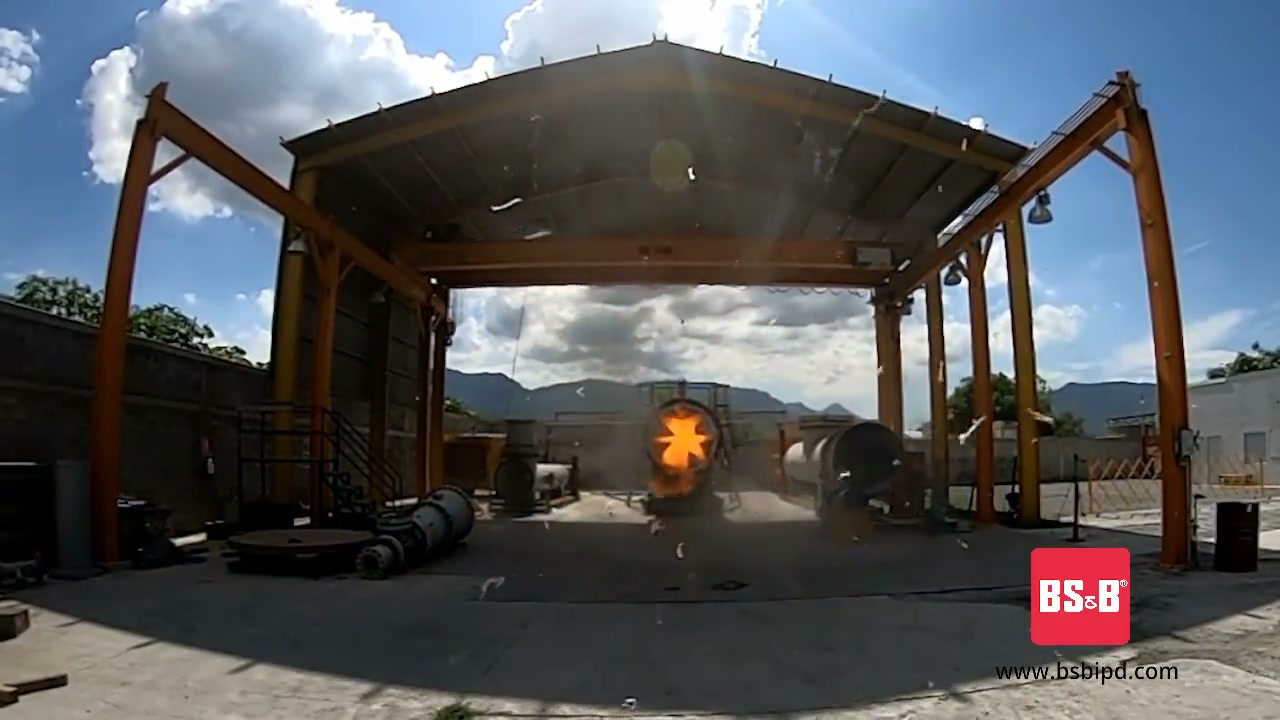
BS&B Safety Systems
BS&B Industrial Explosion Protection Devices
BS&B Safety Systems presents its range of industrial explosion protection devices: explosion vents, flameless venting, and chemical explosion suppression and isolation systems.
Total reach: 2,102

VIGILEX by STIF
VIGILEX by STIF: Explosion Vent Panel and Flameless Devices Protection
The video introduces VIGILEX explosion vent panels and flameless venting devices from STIF. These are mitigation components for limiting pressure effects after a deflagration begins inside protected equipment.
Total reach: 28,590