
Independent industry shortlist for Flameless Explosion Venting
Best Flameless Explosion Venting Solutions 2026
Answer in brief
REMBE, VIGILEX by STIF, and Camfil APC cover the main routes to flameless explosion venting in 2026.
REMBE offers four device families: the Q-Rohr quench tube in DN 200 to DN 800 for Kst values up to 400 bar m/s, the stainless Q-Box R3leaf for low-strength vessels, and the lightweight Q-Ball E and Q-Ball S for elevators and vibrating screens.
VIGILEX by STIF builds rectangular VIGIFLAM devices in eleven frame sizes up to 1.27 m² that take its own vent panels. Camfil APC fits a flameless vent to its Gold Series dust collectors as a factory option.
The right choice depends on the vessel, the tested dust data, and the vent area left once the venting efficiency is applied.
By Editorial Team · Published August 27, 2026 · Updated October 27, 2026
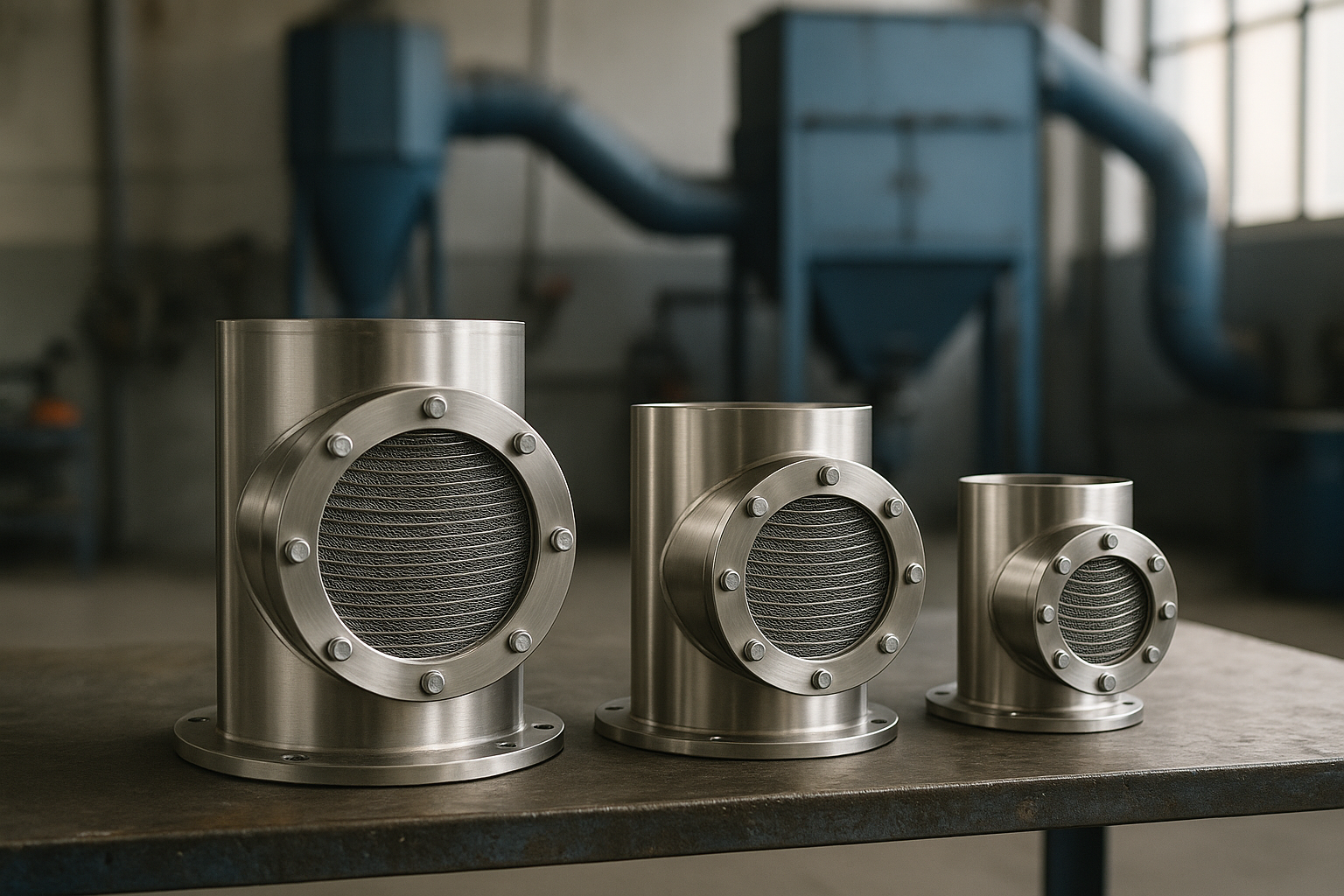
How we selected these companies
ShowHide
We compared flameless explosion venting suppliers on five technical areas that decide whether a device fits a vessel. Only suppliers with a named flameless device were compared.
- Flameless device range (30%) looks at the device families on offer, their frame or flange sizes, and the Kst values and reduced explosion pressures each one covers.
- Application coverage (25%) looks at the dust and gas types within scope, such as organic dusts, fibers, metal dusts, or hybrid mixtures, and at the equipment classes served, since a device that suits a dust collector may not suit a bucket elevator or a vibrating screen.
- Integration with protected equipment (20%) rates how the device connects to the vessel: matching vent openings, weight and recoil on low-strength housings, and the combination with isolation on connected ducts.
- Inspection and service support (15%) covers burst signalling, inspection access and intervals, the parts replaced after an activation, sizing support, and training.
- Certification and sizing basis (10%) covers certification to EN 16009 and NFPA 68, the venting efficiency, ignition limits, and the safety zone in front of the device, all of which enter the vent area calculation.
It carries the most weight because these limits define which dusts and vessel strengths a device may protect. A supplier that combines a broad device range with wide dust scopes scores well on the two heaviest criteria.
Flameless device range 30%
Flameless device families, frame and flange sizes, and the Kst and reduced-pressure limits each device covers.
Application coverage 25%
Dust and gas types within the certified scope and the equipment classes the devices are built for.
Integration with protected equipment 20%
How the device connects to the dust collector, silo, elevator, or screen it protects, and how it combines with isolation.
Inspection and service support 15%
Burst signalling, inspection access and intervals, parts replaced after an activation, sizing support, and training.
Certification and sizing basis 10%
Certification to EN 16009 and NFPA 68, venting efficiency, ignition limits, and the safety zone that enter the sizing.
Last reviewed October 7, 2026
Flameless venting exists for one stubborn reality: much of the equipment that needs deflagration venting stands nowhere near an outside wall.
A flame-arresting element over the vent quenches the fireball and retains burning dust, so the deflagration relieves as pressure and hot gas instead of a multi-meter flame jet — and the protected vessel can stay indoors. The suppliers differ in device families, certified scopes and how deeply the venting integrates with the equipment it protects.
What separates the solutions
Three questions sort the field. First, certification scope: which dusts, vessel volumes and reduced pressures is the device actually approved for — and at which venting efficiency, since the arresting element always de-rates the effective vent area.
Second, the device family behind the certificate: quench-tube designs, flat arrester assemblies over standard vent frames, and equipment-specific variants behave differently in retrofit and inspection. Third, integration: a flameless device engineered together with the dust collector, silo or elevator it protects removes interface risk that a component bought in isolation leaves with the buyer.
The inspection reality
A flameless device is a consumable safety system with a maintenance contract attached: the mesh must stay free of product buildup and corrosion, inspections follow the certificate, and after any activation the vent panel and burst sensor are replaced and the housing and mesh are inspected or renewed before restart.
Suppliers that define inspection intervals, build in inspection openings and burst signalling, and keep replacement panels available are de-risking the years after the purchase, which is where flameless installations actually fail.
How we ranked the suppliers
The ranking applies the five weighted criteria from the methodology to REMBE, VIGILEX by STIF, and Camfil APC. Flameless device range carries the largest weight because frame sizes, Kst limits, and reduced pressures define what a device may protect; application coverage, integration with protected equipment, inspection and service support, and the certification and sizing basis complete the score.
Retrofitting flameless venting to existing equipment
Most flameless projects are retrofits: a collector or silo that vented outdoors acquires walls around it as plants grow, or a dust hazard analysis flags an indoor vessel that was never properly protected. The retrofit sequence matters: first the dust data and the vessel strength are established or re-established, then the required vent area is recalculated per NFPA 68 with the flameless device efficiency applied — frequently demanding a larger frame than the existing open vent — and only then is the device selected.
Reusing the old vent opening because it is there is the classic retrofit error: an undersized flameless device produces higher reduced pressures than the vessel was ever checked for, and the protection concept becomes paperwork rather than physics.
Working with the shortlist
Treat the suppliers below as different entry points into the same engineering problem. REMBE brings four device families, from the Q-Rohr quench tube in DN 200 to DN 800 to lightweight units for elevators and vibrating screens, with scopes that include metal dusts and gases; VIGILEX builds rectangular VIGIFLAM devices in eleven frame sizes up to 1.27 m² around its own vent panels, which simplifies replacing an open vent; Camfil fits a flameless vent to its Gold Series collectors as a factory option, which suits plants standardizing on that equipment.
In every case the buying conversation should start with tested dust data and the vessel drawing, not with a frame size — and the supplier answer worth trusting is the one that asks for exactly those two documents before quoting.
Cost structure: device, installation, and the years after
Flameless devices cost a multiple of the open vent panels they replace, and comparing supplier quotes on device price alone misreads the economics. The full account has four lines: the device with its certified efficiency (which sets how much frame area you must buy), the installation including any structural reinforcement for recoil forces, the recurring inspection effort the certificate demands, and the replacement reserve for the day a device activates or blinds.
A cheaper device with lower venting efficiency can lose the comparison on frame area alone; a supplier without a defined inspection program shifts cost into your maintenance planning where it hides until the audit finds it. The honest comparison is total cost over the protection concept lifetime, quoted against the same tested dust data.
What the dust hazard analysis expects to see
Whichever supplier you choose, the documentation trail ends up in the dust hazard analysis: the tested explosibility data, the sizing calculation with the certified efficiency applied, the device certificate with its approved scope, the clearance-zone definition at the discharge face, and the inspection schedule embedded in the maintenance system. Suppliers differ in how much of this file they deliver ready-made, and that difference predicts how smoothly the concept passes review.
Before you choose any supplier
- Dust explosibility tested (Kst, Pmax) — flameless sizing starts there, not at the catalog?
- Dust type within the certified scope of the device (metal dusts only on devices certified for them) and no heavy blinding risk?
- Required vent area covered after applying the certified venting efficiency?
- Clearance zone at the discharge face defined and enforceable?
- Inlet-duct isolation engineered as part of the same concept?
- Inspection intervals and post-event replacement in the maintenance system?
Partner with powderbulkvideos.com
Show your equipment where buyers compare suppliers.
Booked places and Featured Listings are limited to 40 percent of a Top List, clearly labelled and separate from the editorial ranking.
Selected companies
-
Best for: Four flameless device families from DN 200 quench tubes to lightweight elevator and vibrating-screen units, with metal dust and gas scopes
REMBE covers the widest device range here.
- The Q-Rohr quench tube comes in DN 200 to DN 800, with custom versions up to DN 1400, for Kst values up to 400 bar m/s and reduced pressures from 0.1 to 2.0 bar; it also handles gases, hybrid mixtures, melting dusts, fibers, and metal dusts.
- The stainless steel Q-Box R3leaf serves low-strength vessels in five frame sizes from 305 x 610 to 586 x 920 mm, St 1 and St 2 dusts up to Kst 300, with up to 90 percent venting efficiency.
- The Q-Ball E weighs 15 to 25 kg and fits standard elevator vent openings up to Kst 200.
- The Q-Ball S mounts directly on vibrating screens.
- All are certified to EN 16009.
View related CompanyTechnical score breakdown
- Flameless device range
- 5/5 · Q-Rohr in DN 200 to DN 800 (custom to DN 1400) for Kst up to 400 and Pred 0.1 to 2.0 bar; Q-Box R3leaf in five frames up to 586 x 920 mm for Kst up to 300; Q-Ball E to Kst 200 and Q-Ball S to Kst 265.
- Application coverage
- 5/5 · Q-Rohr scope includes gases, hybrid mixtures, metal dusts, melting dusts, and fibers; the family covers filters, dryers, cyclones, silos, elevators, and vibrating screens.
- Integration with protected equipment
- 4/5 · Q-Ball E matches standard elevator vent dimensions at 15 to 25 kg, so the shaft needs no reinforcement; Q-Ball S bolts directly to oscillating machines; all devices are designed to pair with isolation valves and flaps.
- Inspection and service support
- 4/5 · Integrated signalling unit rated SIL 2 on the Q-Rohr, inspection openings on the Q-Ball units, and reuse of the Q-Rohr after cleaning the flame filter and replacing the vent panel; spares can ship within 24 hours.
- Certification and sizing basis
- 4.5/5 · EN 16009, EN 14797, and NFPA 68 across the family, FM approval on the Q-Rohr, up to 90 percent venting efficiency on the Q-Box R3leaf, and vent sizing software for EN 14491 and NFPA 68.
-
2Best for: Rectangular flameless devices in eleven frame sizes up to 1.27 m² that take standard flat, curved, or domed vent panels
VIGILEX by STIF
VIGILEX by STIF
VIGILEX by STIF builds the VIGIFLAM VQ as a rectangular housing with stainless steel mesh that takes a flat, curved, domed, or sanitary panel inside, in eleven sizes from 170 x 470 mm to 1130 x 1130 mm, or 0.0785 to 1.272 m² of vent area.
- It covers Kst values up to 500 and Pmax up to 10 bar; the light version allows reduced pressures up to 0.5 bar, the heavy version up to 2.3 bar.
- A curved VQ R fits cylindrical vessels and a stainless steel VQ SST suits food, pharmaceutical, and moist areas.
- The compact VIGIFLAM Vi, for conveyors and bucket elevators, has half the volume of a VQ and covers Kst up to 200 at 1 bar reduced pressure.
View related CompanyTechnical score breakdown
- Flameless device range
- 4.5/5 · VIGIFLAM VQ in eleven sizes from 0.0785 to 1.272 m² for Kst up to 500, in light (Pred up to 0.5 bar) and heavy (Pred up to 2.3 bar) versions, plus curved VQ R, stainless VQ SST, and the compact Vi in seven sizes for Kst up to 200.
- Application coverage
- 4/5 · VQ scope covers organic dust, fiber dust, and gas; the Vi is built for bucket, belt, chain, and screw conveyors; curved and stainless versions serve cylindrical vessels and food or pharmaceutical areas.
- Integration with protected equipment
- 3.5/5 · The VQ housing accepts the company's flat, curved, domed, flexible, and sanitary vent panels inside the device, with the curve radius made to order and the body available in 304L or 316L stainless steel.
- Inspection and service support
- 3.5/5 · Inductive burst sensor included, inspection door for panel access, outer mesh checks monthly at first and at least once a year, and panels and sensors replaced after a deflagration; vent areas are calculated to EN 14491, VDI 3673, and NFPA 68.
- Certification and sizing basis
- 4/5 · EN 16009 with ATEX type examination for the VQ and the Vi, defined ignition limits for the discharge area, and safety zones of 2 m up to 10 m³ vessel volume and 3 m above it.
-
3Best for: A flameless vent supplied as a factory option on Gold Series dust collectors, alongside isolation valves and a safety monitoring filter
Camfil APC
Camfil APC
Camfil APC supplies flameless venting as part of the dust collector.
- The flameless vent installs over a standard explosion vent and can be configured to every Gold Series dry dust collector; existing collectors can be fitted after an engineering review.
- It is a passive system for metal and organic dusts, also on high-vacuum applications, and its safety components can be renewed after an explosion.
- Indoors it needs a designated safe zone.
- The same collector program adds the Stinger isolation valve on the inlet, fast-acting valves, chemical isolation and suppression, and an integrated safety monitoring filter that isolates downstream equipment from a flame front.
- Camfil tests dust combustibility in its own lab.
- The scope is the collector; silos and elevators need a device specialist.
View related CompanyTechnical score breakdown
- Flameless device range
- 2/5 · One flameless vent that mounts over the collector's standard explosion vent, offered next to open, blast-plate, and vertical vent arrangements.
- Application coverage
- 3/5 · Dry dust collectors handling metal and organic dusts, including high-vacuum applications; other vessel types are outside the scope.
- Integration with protected equipment
- 4.5/5 · Configurable to every Gold Series dry dust collector and combined with the Stinger inlet isolation valve, fast-acting valves, chemical isolation, and the integrated safety monitoring filter in one collector design.
- Inspection and service support
- 3.5/5 · Dust combustibility testing in the company's own lab, collector sizing per application, compliance and maintenance training, and renewal of the safety components after an explosion.
- Certification and sizing basis
- 2.5/5 · ATEX-certified and NFPA-compliant equipment, with a designated safe zone required for indoor venting.

Listed here? Link to this list.
Companies on this list may use the badge on their website and share the list. The badge links back here, so readers can check the criteria and the full ranking themselves.
Frequently asked questions
When is flameless venting the right choice?
When the protected equipment stands indoors and a vent duct to the outside is impractical. The stainless steel mesh cools the flame gases and retains burning dust, so the deflagration relieves as pressure and hot gas. Organic dusts are the standard scope. Metal dusts, gases, and hybrid mixtures need a device certified for them, such as REMBE's Q-Rohr versions for metal dust.
Why does venting efficiency matter when comparing devices?
The mesh restricts flow, so every flameless device carries an efficiency that de-rates its nominal vent area. Two devices with the same frame size can protect different vessel volumes. REMBE's Q-Box R3leaf reaches up to 90 percent. Sizing per NFPA 68 or EN 14491 with the device's efficiency applied is the only valid comparison.
Do flameless vents need maintenance?
Yes. The outer mesh must stay free of dust buildup and corrosion. For the VIGIFLAM VQ the mesh is checked monthly at first, then at longer intervals, and at least once a year. After a deflagration the vent panel and burst sensor are replaced and the housing is inspected for damage. A Q-Rohr goes back into service once the flame filter is cleaned and the vent panel replaced.
How much clear space does a flameless vent need indoors?
Flameless venting still releases hot gas and pressure, so a marked safety zone stays in front of the device. For the VIGIFLAM VQ the zone is at least 2 m for vessels up to 10 m³ and 3 m for larger ones, with 0.5 m clearance to walls and other equipment. Confirm the distance for your dust and vessel during sizing.
Does a flameless vent replace explosion isolation?
No. A flameless vent protects the vessel it is mounted on; connected ducts still propagate deflagrations. Inlet isolation valves or flaps and discharge barriers belong to the same protection concept, whichever venting supplier you choose.
How is the order of this list decided?
The ranked positions follow the five technical criteria above, from flameless device range to certification and sizing basis. Booked and Featured places are labeled as such and carry no rank.
Sources and further reading
- Combustible Dust, U.S. Occupational Safety and Health Administration
- Dust Explosion Protection by Flameless Venting, Chemical Engineering Transactions vol. 31 (2013), AIDIC, The Italian Association of Chemical Engineering
- EN 16009 – Flameless explosion venting devices, European Committee for Standardization (CEN)
- NFPA 68 – Standard on Explosion Protection by Deflagration Venting, National Fire Protection Association
- NFPA 68, Standard on Explosion Protection by Deflagration Venting, National Fire Protection Association
- Rembe Cool Q-Rohr Vent Is Certified For Metal Dusts, Chemical Processing
- REMBE's Q-Rohr-3 Issued First EC-Type Examination Certificate According to DIN EN Standards 16009, Powder & Bulk Solids
- Safe handling of combustible dusts, Health and Safety Executive
- SS-EN 16009:2011 Flameless explosion venting devices, Swedish Institute for Standards (SIS) / CEN
- Understanding Flameless Venting Application and Design Considerations, Powder & Bulk Solids
- Using flameless venting to tame combustible dust explosions (author: REMBE), Processing Magazine
Related content
Continue exploring
Move from this page to the companies, videos and technical topics that add useful context.
Videos


REMBE® GmbH Safety+Control
REMBE®: Safety_Campus® –industrial – Flameless Explosion Venting
This REMBE video explains the principle and installation questions for industrial flameless venting. The shown equipment is part of explosion mitigation, not a substitute for ignition prevention. Selection requires representative dust test data, a hazard assessment and a coordinated venting, suppression and isolation strategy.
Total reach: 25,040

REMBE® GmbH Safety+Control
REMBE®: The Original of Flameless Venting – REMBE® Q-Rohr®
This REMBE video explains the Q Rohr flameless venting device and its operating principle. The shown equipment is part of explosion mitigation, not a substitute for ignition prevention. Selection requires representative dust test data, a hazard assessment and a coordinated venting, suppression and isolation strategy.
Total reach: 29,732

VIGILEX by STIF
VIGILEX by STIF: Explosion Vent Panel and Flameless Devices Protection
The video introduces VIGILEX explosion vent panels and flameless venting devices from STIF. These are mitigation components for limiting pressure effects after a deflagration begins inside protected equipment.
Total reach: 28,428
Technologies
Applications
- Combustible Dust Collection and Mitigation
- Dust Collection in Building Materials Plants
- Dust Collection in Food Production
- Dust Collection in Grain and Feed Plants
- Dust Collection in Mineral Processing
- Explosion Isolation in Agriculture
- Explosion Isolation in Building Materials
- Explosion Isolation in Chemicals