
Application
Explosion Isolation in Agriculture
Answer in brief
In grain handling isolation is what stops a local event from becoming a building loss.
The leg, the filter and the conveyors are all connected, and a deflagration travels between them faster than anyone can react.
- Isolate the elevator leg from the filter and the conveyors.
- Check that passive devices face the right direction.
- Keep the surrounding dust layers down, because they are the real damage.
Reviewed October 21, 2026
The problem
Grain handling is where dust explosion propagation was first understood, and the plant layout is the reason.
Elevators, conveyors, silos and filters form long connected paths, and an elevator leg is close to an ideal duct: tall, enclosed and full of dust. An ignition at the boot can travel the whole height within a second, and whatever is connected at the top is next.
Desired outcome
Each vessel protected and each connection isolated, so that an ignition in the elevator does not empty itself into the silo or the filter.
An aspiration network that is isolated as carefully as the product lines, because the filter is the common node of the plant: a flame arriving there can leave along every other duct connected to it.
Prevention and protection both in place on the elevator. Bearing temperature, belt alignment and speed monitoring find the developing fault; venting and isolation deal with the one that is not found in time.
In a petrochemical plant the device has to suit the classified area as well as the dust duty, and the second requirement is the one that disqualifies it.
Process approach
The network is drawn first: elevator legs, drag conveyors, aspiration ducts, filters and bins, with every connection marked.
Elevators get particular attention because they both propagate and ignite. Bearing temperature, belt alignment and speed monitoring are prevention; venting and isolation are protection, and a plant needs both.
Aspiration ducts are the connections most often forgotten. They run from every transfer point to the filter, which makes the filter the common node of the whole plant: a flame arriving there can propagate back out along every other duct.
Devices are chosen for the distance available and the dust severity, and the certified minimum distance governs. Where a duct is too short, the layout changes rather than the device.
The elevator leg deserves naming as the special case. It is tall, enclosed, full of dust and fitted with bearings at both ends, which makes it both the most likely place for an ignition and close to an ideal duct for carrying one. An event at the boot reaches the head within about a second, and whatever is connected there is next.
Seasonal variation is the quiet problem. Dust severity changes with crop, moisture and the amount of soil and chaff arriving with it, so a protection case established on one harvest can be optimistic for the next. Sampling across seasons is what keeps the design figures honest.
- Treat the filter as the common node and protect it accordingly.
- Isolate aspiration ducts, not only product lines.
- Monitor elevators as prevention, and protect them as well.
- Elevator leg treated as the special case: most likely ignition and best duct in the plant.
- Dust severity sampled across crops and seasons, not from one harvest.
- Filter treated as the common node, with isolation on every duct that reaches it.
Selection factors
- The full connection map including aspiration, which is where the gaps usually are.
- Dust severity for the actual crop and its dust, which varies with crop and season.
- Available duct length against the certified minimum distance.
- Elevator monitoring as the prevention layer.
- Maintenance access, since devices in a dusty plant need regular attention.
- Direction of flow at each passive device, since flap valves only work one way.
- Housekeeping standard, because the layer decides how large an event becomes.
- Seasonal dust sampling, which keeps the design severity figure current.
Common failure modes
- Aspiration ducts left unisolated, so the filter becomes the path between every vessel
- Elevator protected but not monitored, so the ignition source remains
- Device installed closer than the certificate allows because the duct was short
- Seasonal dust variation ignored, so protection is designed for the mildest crop
- Devices inaccessible for maintenance in a plant where dust accumulates quickly
- Flap valve installed against the flow direction it was certified in
- Protection case established on one harvest and never re examined
- Prevention on the elevator omitted because protection was installed instead
Partner with powderbulkvideos.com
Put a relevant technical solution in this decision path.
Connect your company and video evidence with clearly labelled visibility where engineers evaluate this material, application, industry or product.
Frequently asked questions
Why is the filter the critical node?
Because every aspiration duct leads to it. A flame arriving there can travel back out along all the others, which turns one event into a plant-wide one.
Is monitoring an elevator enough?
No. Monitoring reduces the chance of ignition, it does not stop propagation. A plant needs prevention and protection, not one instead of the other.
Does the dust change through the year?
Yes, with crop and season. Protection designed from a single mild sample can be undersized for the next harvest, so the measurement has to reflect the range.
Why is the filter the critical node?
Because every aspiration duct in the plant reaches it. A flame that arrives at the filter can propagate back out along all of them, which is why the aspiration network needs isolation as much as the product lines do.
Related content
Continue exploring
Move from this page to the companies, videos and technical topics that add useful context.
Companies

Videos

REMBE® GmbH Safety+Control
REMBE®: Explosion Isolation – REMBE® EXKOP®
This REMBE video explains an active explosion isolation system intended to stop propagation through connected ductwork. The shown equipment is part of explosion mitigation, not a substitute for ignition prevention. Selection requires representative dust test data, a hazard assessment and a coordinated venting, suppression and isolation strategy.
Total reach: 23,512
BS&B Safety Systems
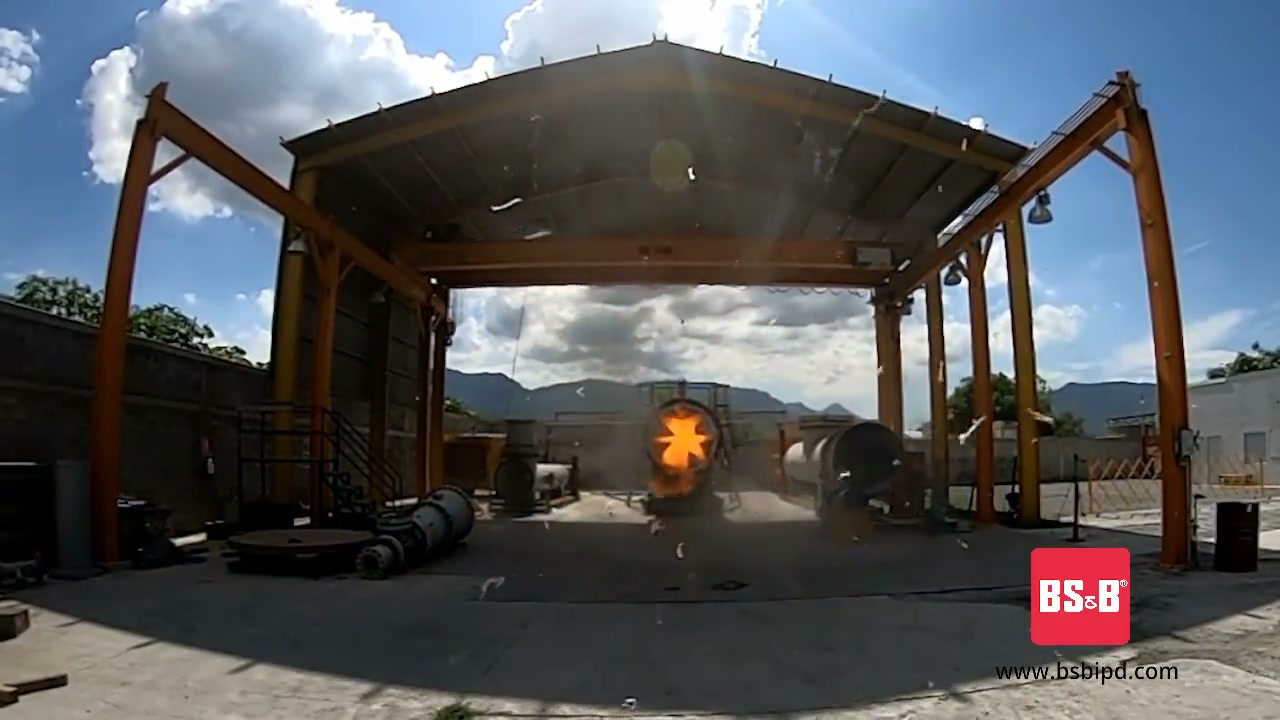
BS&B Industrial Explosion Protection Devices
BS&B Safety Systems presents its range of industrial explosion protection devices: explosion vents, flameless venting, and chemical explosion suppression and isolation systems.
Total reach: 2,102

VIGILEX by STIF
VIGILEX by STIF: Explosion Vent Panel and Flameless Devices Protection
The video introduces VIGILEX explosion vent panels and flameless venting devices from STIF. These are mitigation components for limiting pressure effects after a deflagration begins inside protected equipment.
Total reach: 28,590