
Material
Soybean Meal
Answer in brief
Soybean meal is easy in a laboratory and difficult in a 40,000 tonne silo.
Warm meal from the desolventiser is mildly cohesive, and after weeks of storage under its own weight it consolidates into a mass that gravity alone will not move.
- Design storage for the consolidated condition.
- Control dust at loading, which is where most of it escapes.
- Monitor temperature, because meal can self-heat.
Reviewed October 21, 2026 · Updated November 10, 2026
Handling challenges
Feed mills and export terminals handle soybean meal at a scale where small flow problems become expensive quickly.
Consolidation in storage
Meal stored warm and deep consolidates, and the usual result is a rathole with most of the inventory stuck around it.
- Outlets and hopper angles derived from measured flow properties.
- Mechanical reclaim in flat stores rather than reliance on gravity.
- First-in, first-out rotation where the storage design allows it.
Self-heating
Residual oil and moisture support biological activity and slow oxidation, and a hot spot in a large pile is difficult to find.
Temperature monitoring and cooling before long storage are the practical measures.
Dust at loading
Ship and truck loading generates visible plumes, and the dust is combustible.
Cascade chutes and telescopic spouts with extraction contain the column and reduce both emission and loss.
Feed safety
Meal is a feed ingredient, so contamination control reaches back into the handling system: closed transfer, cleanable equipment and documented segregation between medicated and non-medicated batches.
What to establish before buying equipment
- Temperature and moisture on receipt from the extraction plant.
- Flow properties after the longest realistic storage period.
- Loading rate and the dust control method.
- Segregation requirements in the feed safety plan.
Storage and conditioning
Soybean meal is warm when it arrives and that is the first thing to deal with.
Material from the desolventiser can still carry heat and residual moisture, and a deep bed holds both. Warm damp meal consolidates, can mould, and in extreme cases self-heats.
- Cool before deep storage; filling a silo with warm meal stores the problem.
- Monitor temperature in large volumes and know the response before it is needed.
- Expect strong time consolidation and size the outlet accordingly.
What this means for equipment
The meal is cohesive, fibrous and mildly abrasive, which rules out the simplest arrangements.
Discharge usually needs mechanical help, and screw or chain conveyors suit it better than pneumatic transfer over any distance.
- Live-bottom or sweep-type discharge rather than a plain cone.
- Mechanical conveying for distance; pneumatic only for short, well-defined transfers.
- Generous clearances, because fibrous material packs into tight ones.
Safety and regulatory
The dust is explosible and the storage can self-heat.
- Explosion protection on filters, elevators and bins.
- Temperature monitoring in large stores with an agreed response.
- Entry procedures that assume a depleted atmosphere; fermenting organic material consumes oxygen.
Material behavior
- Flowability
- Moderate when cool, poor when warm and consolidated
- Abrasiveness
- Low
- Cohesiveness
- Moderate, rising with temperature and moisture
- Moisture behavior
- Moisture promotes caking, mould and self-heating
- Contamination risk
- Mycotoxins and Salmonella in feed chains
Partner with powderbulkvideos.com
Put a relevant technical solution in this decision path.
Connect your company and video evidence with clearly labelled visibility where engineers evaluate this material, application, industry or product.
Frequently asked questions
Why cool meal before storage?
Because warm damp meal in a deep bed consolidates, can mould and in extreme cases self-heats. Cooling first removes the condition rather than managing it afterwards.
Why not convey it pneumatically?
It is cohesive, fibrous and mildly abrasive. Mechanical conveying handles those properties better over distance and costs less to run.
What is the risk when entering a meal silo?
A depleted atmosphere as well as engulfment. Fermenting organic material consumes oxygen, so testing before entry is not a formality.
Related content
Continue exploring
Move from this page to the companies, videos and technical topics that add useful context.
Companies

Videos

Laidig Systems
Laidig Systems: Applications – Powder and Bulk Solids
Laidig Systems designs and builds custom storage and reclaim systems that automate the unloading of dry bulk materials. The company focuses on materials with poor flow characteristics and delivers reclaimers for flat- and cone-bottom structures in industries such as food processing, biomass, power, cement, and mining.
Total reach: 24,494
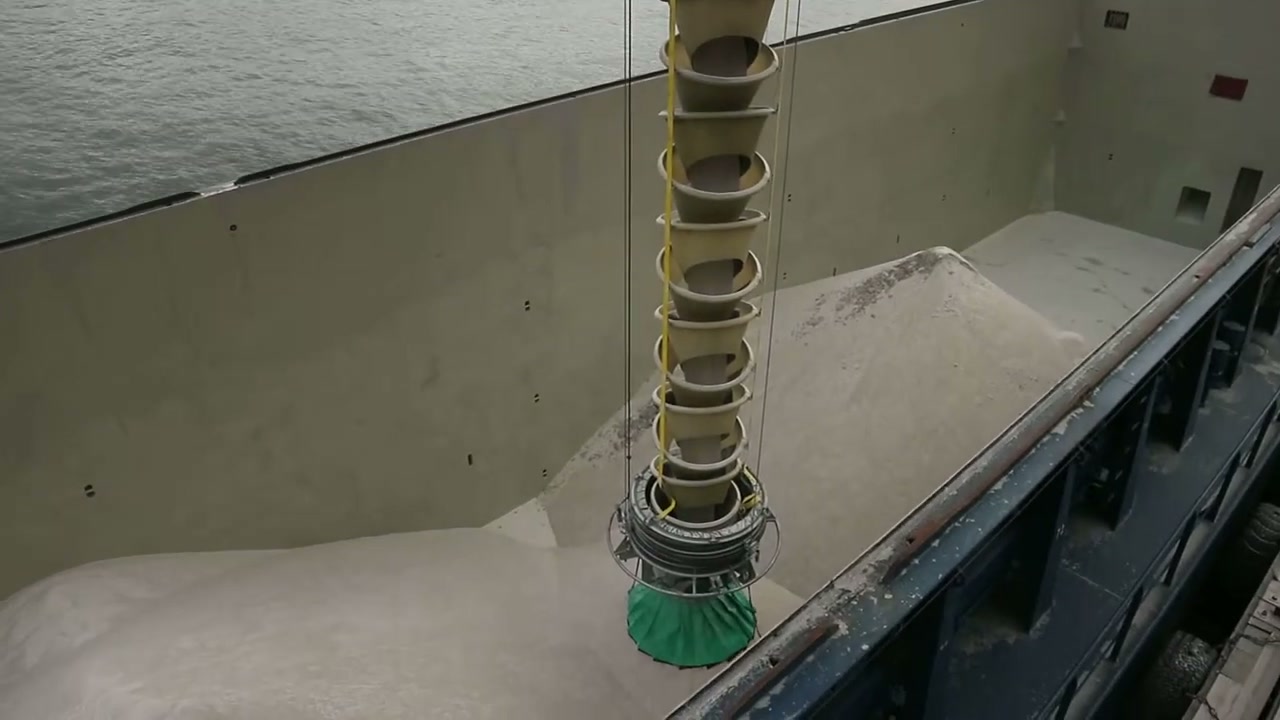
Cleveland Cascades
Cascade Chute Loading at 500 Tonnes per Hour
Cleveland Cascades shows a cascade chute loading material at 500 tonnes per hour, with the falling stream held together inside the chute.
Technologies
Applications
- Belt Conveying in Pet Food Plants
- Bulk Bag Discharge in Pet Food Plants
- Bulk Truck Loading
- Combustible Dust Collection and Mitigation
- Dense Phase Conveying in Feed and Grain Plants
- Dense Phase Conveying in Pet Food Plants
- Dust Collection in Grain and Feed Plants
- Dust Suppression at Transfer Points in Grain Handling
- Dust Suppression in Food Ingredient Handling
- Dust-free Loading in Grain and Feed Terminals
- Explosion Isolation in Agriculture
- Explosion Protection for Grain and Agricultural Plants
- Gravimetric Feeding in Pet Food Production
- Intake Pit and Bin Gates in Grain Handling
- Mechanical Conveying in Grain and Feed Handling
- Powder Blending in Pet Food Production
- Routing Powder to Multiple Destinations in Agriculture
- Routing Powder to Multiple Destinations in Pet Food
- Shut-off at Mixer and Coater Outlets in Pet Food Plants
- Valve and Airlock Selection for Grain and Feed Plants