
Application
Dense Phase Conveying in Pet Food Plants
Answer in brief
In pet food dense phase is chosen to stop breaking the kibble.
Extruded and coated product shatters in a fast line, and the broken pieces are screened out as fines. A slow bed delivers whole kibble, which is the whole point.
- Set the velocity from a breakage trial on coated product.
- Expect fat to coat the line and plan for it.
- Keep the route short; every bend costs product.
Reviewed October 21, 2026
The problem
Coated kibble is the most fragile finished product in the bulk solids industries. It is porous, it is brittle, and it carries a fat and palatant coating that is both the value of the product and the reason it sticks to everything.
A dilute phase line destroys it. At twenty metres a second a bend is an impact that shatters pieces, and the fines go to the screen rather than the bag. On a line running several tonnes an hour the loss is a continuous cost that often exceeds the energy cost of the conveying by a wide margin.
Dense phase solves the speed and introduces the fat. Material moving as a slow bed rubs along the pipe wall, and a fat coated product leaves a layer behind. The layer narrows the bore, changes the conveying behaviour and becomes a cleaning problem, particularly where a line is shared between recipes with different claims.
And the meal side upstream is a different material entirely: fine, fibrous, dusty, with its own conveying behaviour and its own carryover requirement.
Desired outcome
A line whose velocity is below the breakage threshold measured on coated product, with the increase towards the receiving end designed out so the final bends do not undo the rest.
A pipeline that can be cleaned of a fat layer, with access and a method, and whose behaviour is checked as the layer builds rather than after it blocks.
A documented place in the changeover procedure, since the line is a carryover path between recipes with different claims.
For abrasive minerals the deciding step is a conveying trial: hardness, shape and size distribution settle whether dense phase wears the line out before it pays for itself.
Process approach
The breakage threshold is measured on the real product, coated, because an uncoated trial gives a flattering answer. The trial gives both the achievable rate and the velocity at which damage starts, and the second becomes the design limit.
The pipeline is stepped to hold that limit at the far end. Bends are long radius and smooth, and their number is minimised, since on a fragile product each bend is a measurable cost rather than a pressure drop entry.
Fat build up is then planned for. Access points for inspection and cleaning, a route a cleaning head or a pig can take where that is appropriate, and a check on conveying pressure as an indicator: a rising pressure at constant rate is the layer announcing itself.
Changeover is designed into the line. Drain and blow through arrangements, an emptying sequence, and the line listed in the changeover procedure with the recipes whose claims depend on it. The meal duty, if it shares the line, is trialled and specified separately.
- Breakage threshold measured on coated product, and adopted as the velocity limit.
- Stepped pipeline so the limit holds at the receiving end.
- Long radius smooth bends, with the number of bends minimised.
- Inspection and cleaning access for the fat layer, with a defined method.
- Conveying pressure trended as the early indicator of build up.
- Line named in the changeover procedure, with the meal duty specified separately.
Selection factors
- Breakage threshold of coated kibble, measured rather than estimated from the uncoated piece.
- Fat and palatant level, which decides the build up rate and the cleaning interval.
- Route length and bend count, since each bend has a measurable product cost.
- Claim sensitivity of the recipes sharing the line.
- Whether meal shares the line, which is a second duty with its own trial.
- Dust explosion characteristics of the fines and the meal dust.
Common failure modes
- Velocity limit established on uncoated kibble, which breaks less than the real product
- Single diameter pipeline, so the last bends run fast enough to shatter pieces
- Bend count treated as a pressure drop item rather than as a product loss item
- Fat layer discovered when the line blocks, with no pressure trend being watched
- No cleaning access, so the only way to clean the line is to cut it
- Line omitted from the changeover procedure although it carries recipes with different claims
Partner with powderbulkvideos.com
Put a relevant technical solution in this decision path.
Connect your company and video evidence with clearly labelled visibility where engineers evaluate this material, application, industry or product.
Frequently asked questions
How much kibble does a dilute phase line break?
Enough that the fines loss usually exceeds the energy saving of the fast system. Each bend at suspension velocity is an impact, and the broken pieces report to the screen rather than the bag.
What does fat do inside a conveying line?
It leaves a layer. The layer narrows the bore, changes the conveying behaviour and eventually blocks the line, and a rising conveying pressure at constant rate is the earliest warning of it.
Should the meal and the kibble share a line?
Only with separate trials and settings. A fine fibrous meal and a large porous coated kibble behave completely differently in dense phase, and one set of air settings will not serve both.
Related content
Continue exploring
Move from this page to the companies, videos and technical topics that add useful context.
Companies
Videos
Magnum Systems
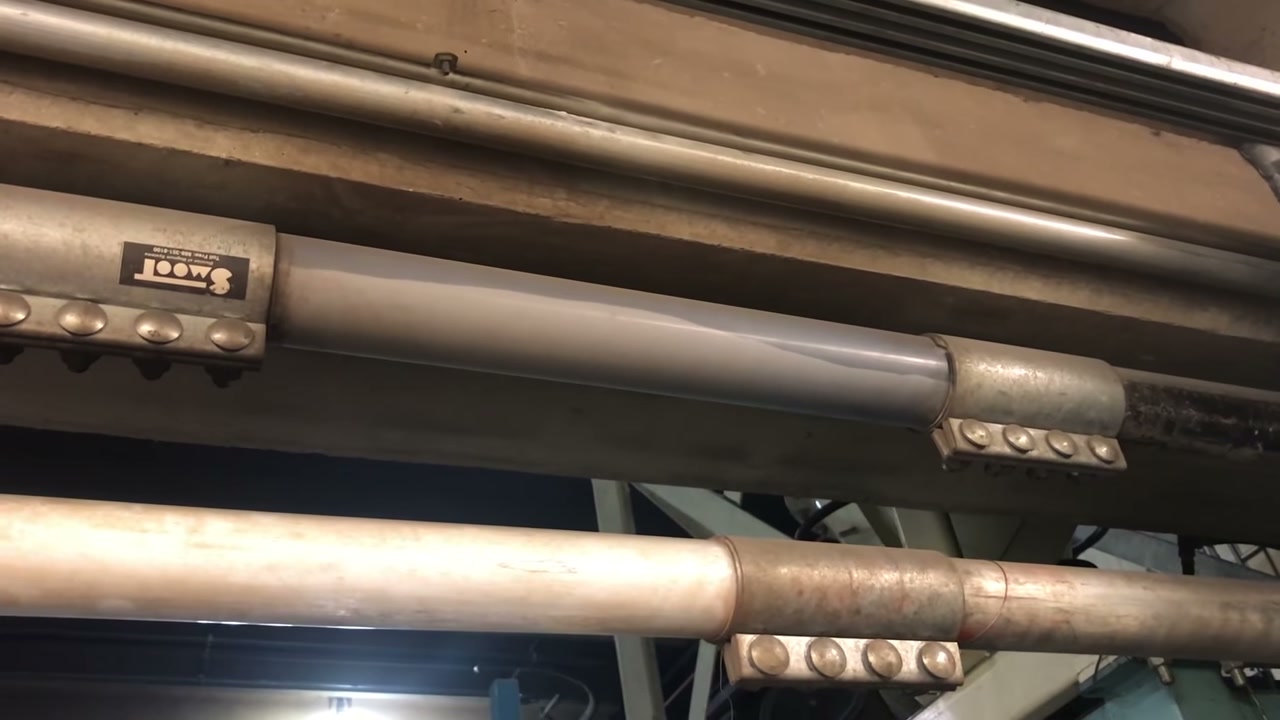
Dense Phase Conveying in the Test Laboratory
Magnum Systems shows dense phase pneumatic conveying running in its test laboratory in Kansas City.
Magnum Systems
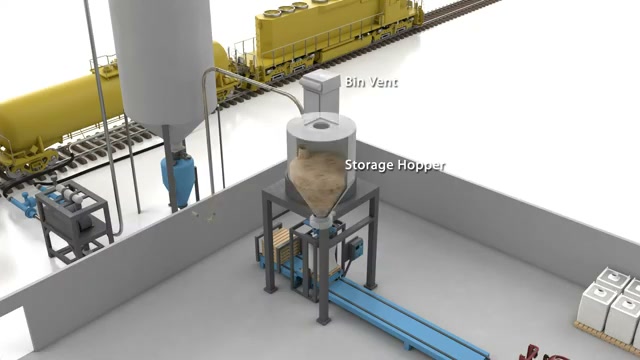
Dense Phase Conveying Process Flow Animation
Magnum Systems shows in a short animation how material travels through a dense phase line in slugs rather than as a continuous stream.
Total reach: 1,747

Coperion
E-finity Continuous Dense Phase Conveying
Coperion presents E-finity, a continuous dense phase conveying system for fragile granular and pelleted materials that monitors pressure and corrects the airflow during the run.
Total reach: 1,905