
FAQ
Dense Phase Conveying FAQ
Answer in brief
Dense phase conveying moves bulk solids at high solids loading and lower gas velocity than dilute phase transport. For suitable materials it can cut impact damage, erosion and gas demand, but it is more sensitive to material behavior and operating stability. Reliable design starts with powder characterization and representative testing.
By Editorial Team · Published July 16, 2026 · Updated July 26, 2026
Dense phase performance cannot be judged from velocity or pressure alone. Engineers need to understand the material, the observed flow mode, solids loading, route and operating stability.
Start with material behavior
Some powders retain air and move as a fluidized dense bed. Some permeable granular materials form plugs or slugs. Other materials do not support stable dense phase transport at all. Particle size distribution and flow properties are central to this distinction.
Partner with powderbulkvideos.com
Put your expertise beside the decisions engineers are making.
Connect a relevant company profile and technical video portfolio with clearly labelled visibility on this topic.
Use measured acceptance criteria
Capacity, gas use, pressure stability, product condition, residual material and restart behavior should be measured during a representative test. For abrasive or fragile products, include wear or attrition criteria rather than assuming low velocity solves the problem.
Keep safety within the complete system
Feeding, pressure containment, filtration, receiver discharge, electrostatic behavior and connected equipment belong in the hazard review. A technology name is not a protective measure.
Engineering visual guide
How the system behaves
These conceptual diagrams connect the operating principle, equipment internals and engineering review points. They are explanatory and not fabrication drawings or a substitute for project-specific calculations.
Engineering infographic
System architecture and interfaces
Conceptual system architecture and interface map for Dense Phase Conveying; use it to structure an engineering review, not as a fabrication drawing or project-specific design.
Engineering infographic
Verification and acceptance checklist
Conceptual verification and acceptance checklist for Dense Phase Conveying; use it to structure an engineering review, not as a fabrication drawing or project-specific design.
Frequently asked questions
What is dense phase pneumatic conveying?
It is pneumatic transport at relatively high solids loading in a nonsuspension flow mode, often with lower gas velocity than dilute phase conveying.
Can every powder be conveyed in dense phase?
No. Feasible flow modes depend on particle size distribution, permeability, air retention, cohesion and other material properties.
What is the main benefit of dense phase conveying?
For a suitable material and duty, lower velocity can reduce severe impacts, erosion and gas demand. The benefit must be verified for the actual system.
What is the main operating risk?
An unstable flow mode can cause pressure fluctuations, reduced capacity or blockage. The operating point needs margin for material and process variation.
How is a dense phase system sized?
Sizing combines representative material behavior, required rate, route, lift, fittings, feeding, receiving, pressure loss and the stable operating range.
Does dense phase prevent particle damage?
No. It can reduce high energy impacts, but sliding attrition, local acceleration and unsuitable bends can still change the product.
Does dense phase eliminate pipeline wear?
No. Lower velocity may reduce erosion, while bends and other impact locations still require suitable geometry, materials and inspection.
When should a conveying trial be required?
Testing is prudent for unfamiliar, fragile, abrasive, cohesive or safety critical materials, and whenever the performance guarantee depends on uncertain material behavior.
Related content
Continue exploring
Move from this page to the companies, videos and technical topics that add useful context.
Companies


Videos

Hosokawa Solids Solutions GmbH
Hosokawa Solids Solutions: Solids Puls Pneu Conveying System
Hosokawa Solids presents the Solids Puls Pneu plug-conveying system with bypass, impulse-valve and relay-station components.
Total reach: 70,220
Qlar
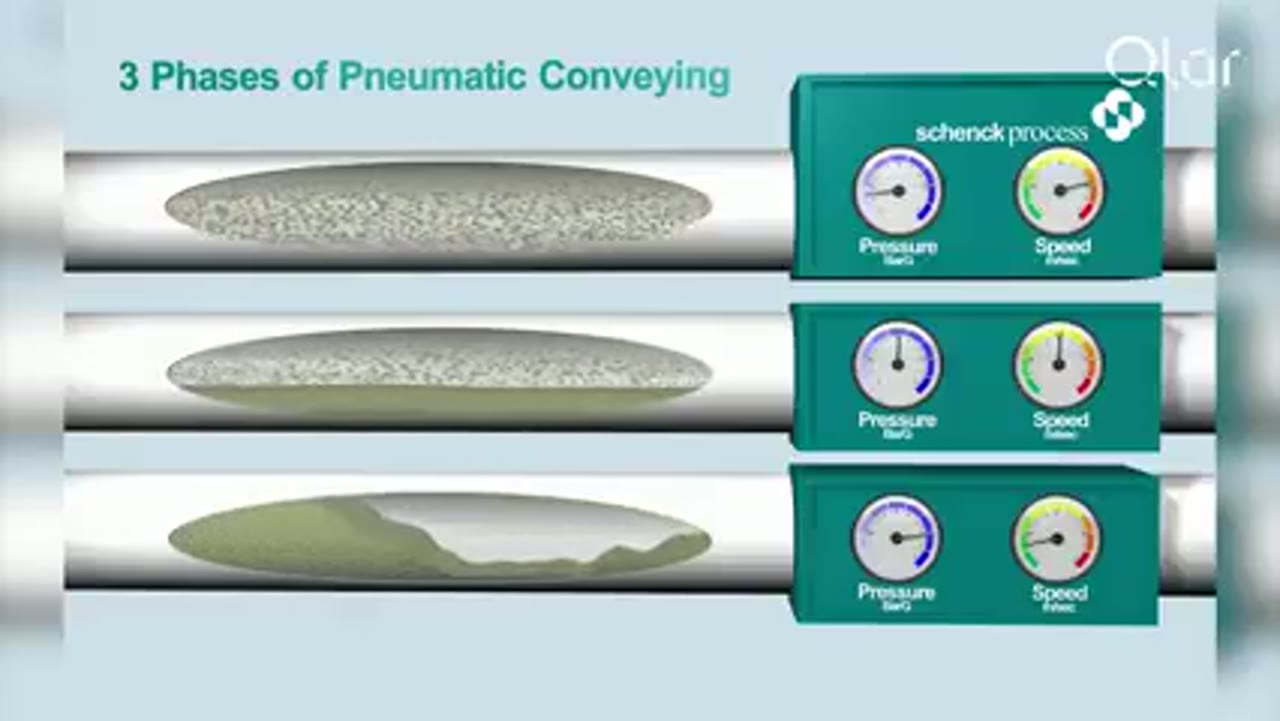
Pneumatic Conveying Explained: The 3 Key Phases of Dense Phase Conveying
Qlar explains the three phases of dense phase pneumatic conveying and where each one fits when powders, granules and bulk solids have to move without being damaged.
Magnum Systems
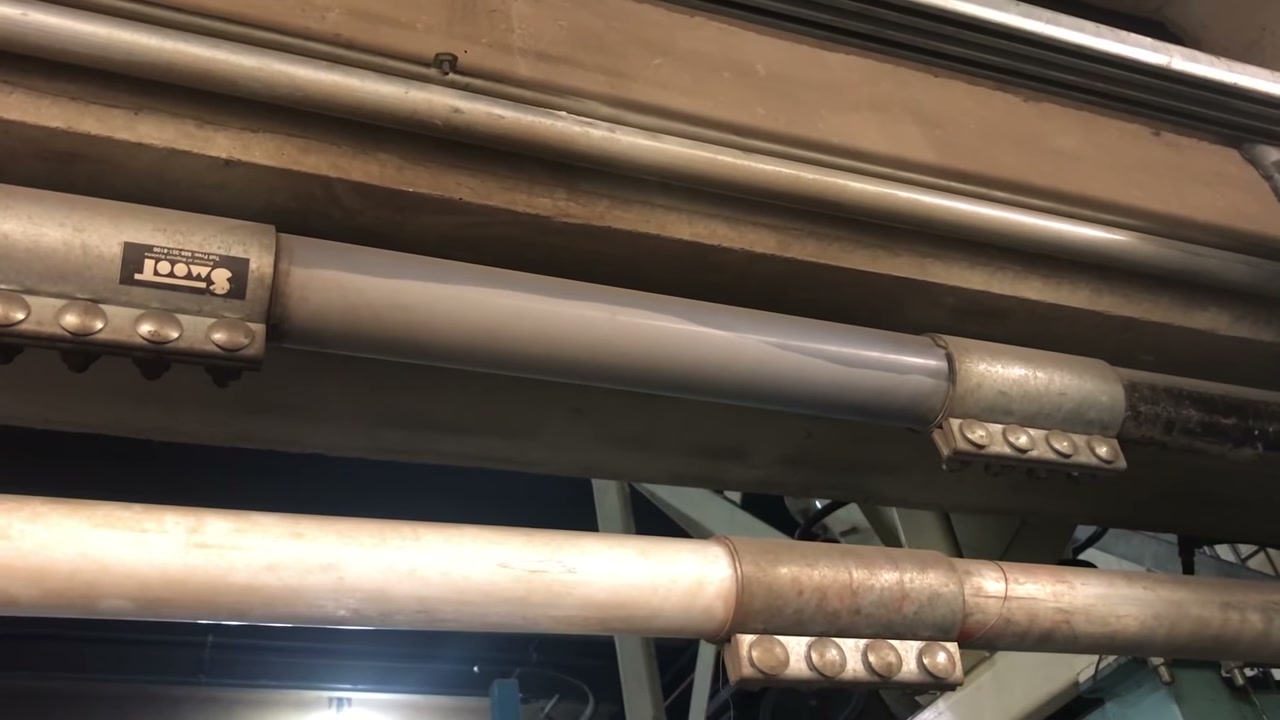
Dense Phase Conveying in the Test Laboratory
Magnum Systems shows dense phase pneumatic conveying running in its test laboratory in Kansas City.
Coperion
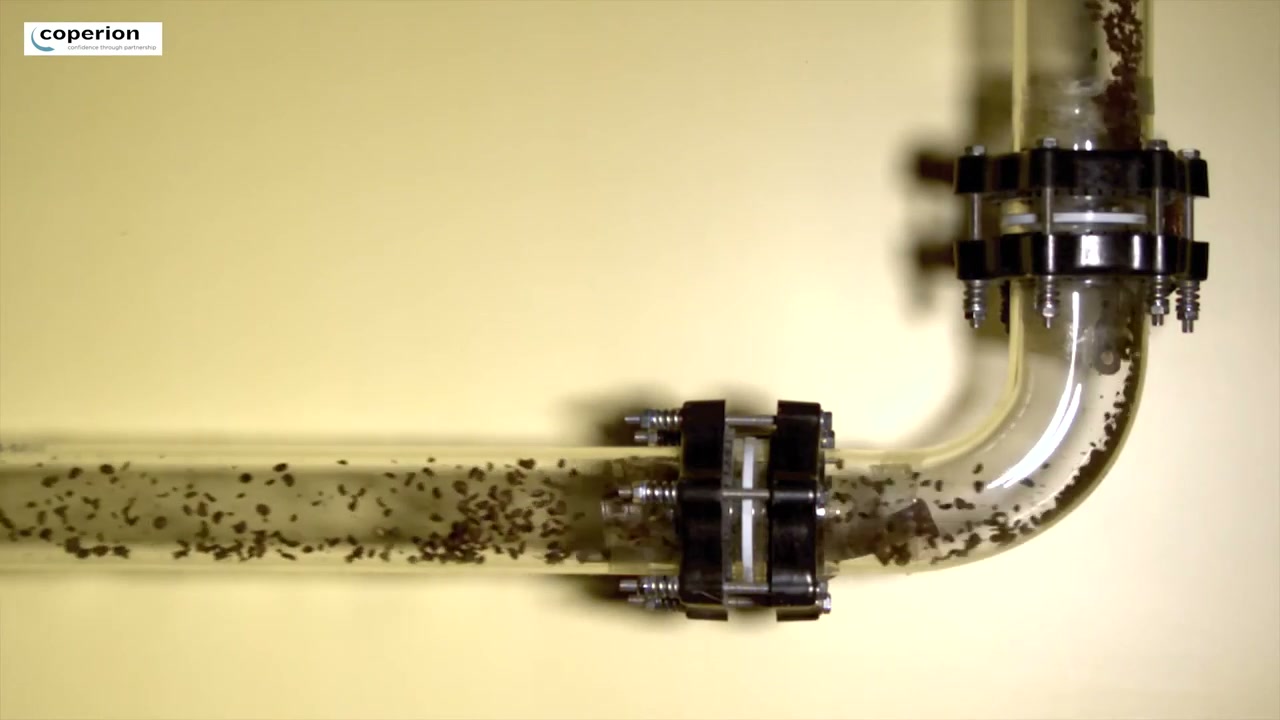
Dense Phase Conveying of Coffee Beans
Coperion shows dense phase conveying applied to coffee beans, where the point of the method is to move a fragile product without damaging it.
Total reach: 7,828
Magnum Systems
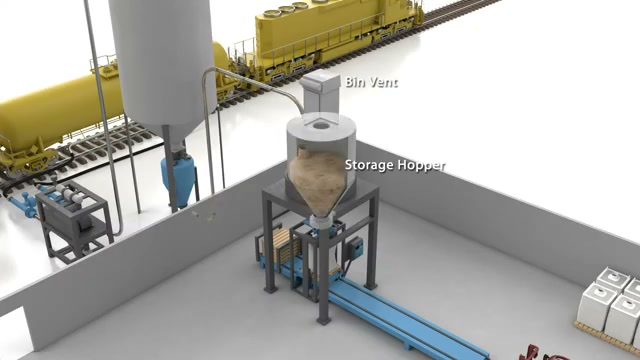
Dense Phase Conveying Process Flow Animation
Magnum Systems shows in a short animation how material travels through a dense phase line in slugs rather than as a continuous stream.
Total reach: 1,674

Coperion
E-finity Continuous Dense Phase Conveying
Coperion presents E-finity, a continuous dense phase conveying system for fragile granular and pelleted materials that monitors pressure and corrects the airflow during the run.
Total reach: 1,785