
Material
Activated Carbon
Answer in brief
Activated carbon is designed to adsorb, and it keeps doing that inside your silo.
It takes up oxygen from the stored air, which makes a carbon vessel a confined space with a genuinely lethal atmosphere, and loaded carbon can self-heat after adsorbing solvents.
- Treat every carbon vessel as oxygen-deficient until measured.
- Convey gently, because attrition turns product into unusable fines.
- Expect black dust everywhere the system is not tight.
Reviewed October 21, 2026 · Updated November 10, 2026
Handling challenges
Activated carbon is one of the few bulk materials that changes the atmosphere around it.
Oxygen depletion
Fresh carbon adsorbs oxygen from the air in a silo, hopper or container, and the headspace can fall well below a survivable concentration.
Entry requires measurement, forced ventilation and a permit; the hazard is invisible and gives no warning.
Self-heating
Carbon loaded with solvents or ketones can oxidise exothermically, and a hot spot in a deep bed is difficult to detect and harder to extinguish.
Temperature monitoring, limits on storage time for loaded carbon and a defined response plan belong in the operating procedure.
Attrition and dust
Granular carbon is friable, and high velocity conveying turns a specified particle size into fines that blind the bed and escape as black dust.
- Dense phase or vacuum conveying at modest velocity.
- Minimised drop heights into vessels.
- Screening before use where the specification depends on grain size.
Powdered carbon dosing
Powdered activated carbon is cohesive and extremely light, so dosing into a flue gas or water stream needs a feeder that tolerates both bridging and flooding.
Loss-in-weight feeding with a conditioned inlet and contained big bag discharge keeps rate stable and the room clean.
What to establish before buying equipment
- Entry procedure and gas monitoring for every enclosed vessel.
- Whether loaded carbon will be stored, and for how long.
- Attrition tolerance and the measured fines increase across the line.
- Dosing accuracy required at the process.
Storage and conditioning
Activated carbon adsorbs continuously, and that is the storage problem rather than a side effect.
A full silo takes up oxygen from the air between the particles and gives off heat while it does so. In a closed vessel this produces two conditions at once: an atmosphere that can be well below breathable oxygen, and a bed that is warmer in the middle than at the wall.
- Treat every storage vessel as a confined space with a depleted atmosphere until it is measured.
- Watch the bed temperature in large volumes; a rising trend is the early signal of self-heating.
- Keep solvent-laden carbon separate from fresh carbon. Loaded carbon has already released its adsorption heat and behaves differently.
Moisture adds a second effect. Wet carbon is heavier, more cohesive and slower to discharge, and the water occupies pore volume that the process expected to be free.
What this means for equipment
Two properties drive the selection: the dust is hard, and the product is porous.
Hardness means abrasion. Conveying velocity sets the wear rate on bends and valve seats, so a dense phase line or a vacuum system at modest velocity outlasts a dilute phase line at full speed, often by years rather than months.
Porosity means attrition. Every impact breaks granules into fines, and fines are the part that dusts, blinds filters and changes the pressure drop in a filter bed downstream. A conveying system that halves the particle size has changed the product, not just moved it.
- Prefer vacuum or dense phase over high-velocity dilute phase.
- Use long-radius or wear-backed bends, and expect to inspect them.
- Specify filters for an abrasive, fine dust rather than a general-purpose one.
Safety and regulatory
Carbon dust is combustible, and activated carbon brings a second hazard that ordinary combustible dust does not: it can heat itself.
The adsorption that makes the product useful releases heat, and in a large insulated volume that heat has nowhere to go. Smouldering fires in carbon silos develop slowly, deep inside the bed, and are not visible from an inspection hatch.
- Dust explosion protection follows the measured values for the specific grade.
- Entry into a vessel requires atmosphere testing for oxygen, not only for toxic gases.
- Carbon loaded with solvent is a different material from fresh carbon and is assessed separately.
Water is not always the right response to a carbon fire, because a wet bed can continue to heat internally. The fire plan belongs in the design, agreed with the supplier.
Material behavior
- Flowability
- Granular free flowing, powdered form cohesive
- Abrasiveness
- Moderate to high
- Cohesiveness
- Low for granules, high for powdered carbon
- Moisture behavior
- Adsorbs moisture, changing weight and performance
- Contamination risk
- Oxygen depletion in storage and black dust contamination of surroundings
Partner with powderbulkvideos.com
Put a relevant technical solution in this decision path.
Connect your company and video evidence with clearly labelled visibility where engineers evaluate this material, application, industry or product.
Frequently asked questions
Why does activated carbon get hot in storage?
Adsorption releases heat. In a large, closed vessel that heat cannot escape from the middle of the bed, so the temperature rises and the headspace loses oxygen at the same time.
Can activated carbon be conveyed in dilute phase?
It can, and it will cost you bends and product. The dust is hard enough to erode steel at high velocity, and the granules break into fines that blind filters and change the pressure drop downstream.
Is spent carbon handled like fresh carbon?
No. Carbon loaded with solvent has already released its adsorption heat and carries whatever it adsorbed. It is assessed as its own material, including for fire and exposure.
Related content
Continue exploring
Move from this page to the companies, videos and technical topics that add useful context.
Companies

Videos

VAC-U-MAX
VAC-U-MAX: Signature Series Packaged Vacuum Conveying Systems
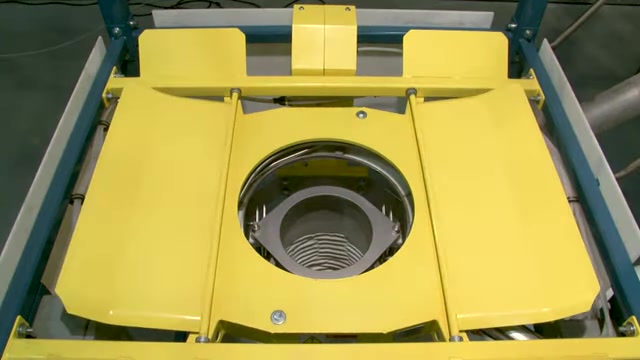
With over 65 years of experience in pneumatic conveying and more than 10,000 powders and granular materials handled, VAC-U-MAX packages its Signature Series vacuum conveying systems as complete units: receiver, UL-listed controls, convey hose, filters, and vacuum producer.
Total reach: 10,827
Flexicon
Flexicon BULK-OUT Bulk Bag Dischargers
Flexicon presents its BULK-OUT bulk bag discharger range: forklift-loaded BFF frames, hoist-and-trolley BFC frames, split and half frames, and accessories for dust-free untying, retying and flow promotion.
Total reach: 73,082
Technologies
- Bulk Bag Unloading Systems
- Bulk Bag Unloading Systems: Selection and Design
- Dense Phase Conveying
- Dense Phase Conveying
- Dust Collection & Air Pollution Control
- Dust Collection & Air Pollution Control Technology Guide
- Explosion Protection
- Feeding & Dosing Control
- Feeding & Dosing Control
- Screening & Sieving Systems
- Screening & Sieving Systems for Powder and Bulk Solids
- Vacuum Conveying
- Vacuum Conveying Systems
Applications
- Bulk Bag Discharge in Chemical Batching
- Bulk Bag Unloading with Dust Containment
- Chemical Powder Repackaging and Batching
- Dense Phase Conveying in Chemical Production
- Explosion Isolation in Chemicals
- Explosion Protection for Chemical Plants
- Gravimetric Feeding in Chemical Processing
- Mechanical Conveying in Chemical Plants
Industries
Guides
- Bulk Bag Unloading Systems: Selection and Design Guide
- Dense Phase Conveying Selection & Design Guide
- Dust Collection Systems: Selection and Design Guide
- Feeding & Dosing Systems: Selection and Design Guide
- Screening & Sieving Systems: Selection and Design Guide
- Vacuum Conveying System Selection & Design Guide