
Guide
Bulk Bag Unloading Systems: Selection and Design Guide
Answer in brief
A bulk bag unloader is selected from the material outward: flow behavior decides the discharge aids, hygiene and dust requirements decide the outlet interface, and the downstream process decides whether the frame simply empties bags or doses from them. The frame itself — forklift-loaded or hoist-and-trolley — is the last decision, not the first.
By Editorial Team · Published August 14, 2026 · Updated October 11, 2026
Sponsored visibility
Featured videos for this topic
Paid placements are clearly marked and remain separate from the editorial related-video selection.
Bulk bags (FIBCs) carry anywhere from a few hundred kilograms to more than a ton of powder, and the unloader is where that packaged material re-enters the process.
A good installation empties bags completely, keeps dust inside, protects operators from suspended loads and feeds the downstream process at a controlled rate. A poor one creates bridging, dust clouds and manual poking with rods — the exact problems the equipment exists to remove.
Define the duty first
- Material behavior: free-flowing, bridging, compacting during transport, hygroscopic or aeratable?
- Bag population: sizes, loop styles, liner or no liner, single-trip or reusable?
- Rate and mode: full-bag dump into a silo, or controlled dosing into batches?
- Environment: food/pharma hygiene, combustible dust zoning, washdown?
- Downstream interface: screw feeder, rotary valve, pneumatic line, weigh hopper?
Frame types and bag handling
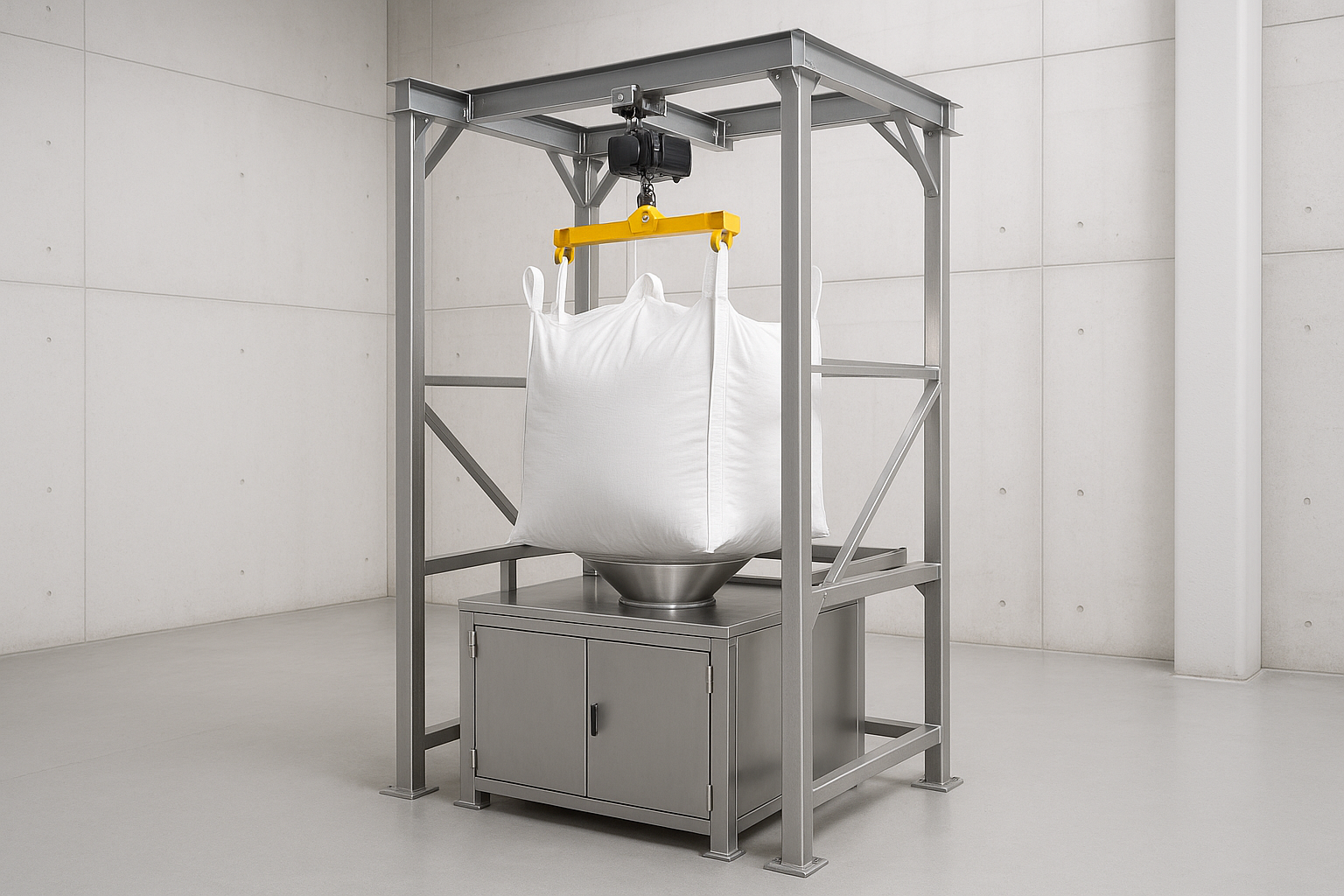
Forklift-loaded frames keep capital cost low: the bag hangs in a lifting cross that the truck sets into the frame. Integrated hoist-and-trolley frames remove the forklift from the loading loop, position bags precisely and suit frequent bag changes.
Both need honest headroom calculations — bag height plus lifting tackle plus discharge spout is regularly underestimated — and rated load paths, because a suspended ton of powder is a lifting operation, not just a process step.
Getting the material out
Transport compaction is normal: many powders arrive bridged. Discharge aids work the bag from outside — massage paddles that knead the bag bottom, vibration applied to the support structure, and bag-tensioning that pulls the emptying bag taut so product slides to the spout.
Sequence matters: activate aids only while the outlet is open and material is moving, otherwise they compact the product further. For truly difficult powders, plan the trial before the purchase; a discharge aid that rescues one material can be useless for another.
Partner with powderbulkvideos.com
Put your expertise beside the decisions engineers are making.
Connect a relevant company profile and technical video portfolio with clearly labelled visibility on this topic.
Dust-tight untying and the outlet interface
The spout interface decides emissions and hygiene. Simple duties use an open untying box with extraction; dusty or exposure-critical duties use enclosed untying cabinets with glove access, spout clamping systems and extraction that keeps the cabinet under slight vacuum.
Liner handling — stretching, clamping, cutting for single-trip liners — deserves explicit design attention, as does a dust-tight connection to the downstream hopper with a flexible sleeve and, in hygienic service, quick-release cleanable parts.
From emptying to dosing
If the unloader feeds batches, it becomes a dosing station: load cells under the frame or the receiving hopper, a metering device (screw, vibratory tray or rotary valve) and a control loop for coarse and fine feed. Gain-in-weight batching from the receiving vessel is simpler; loss-in-weight dosing from the suspended bag frame gives continuous accuracy but demands a stable, vibration-isolated weighing structure.
Safety and compliance
Two hazard families dominate: mechanical (suspended loads, bag changes at height, forklift traffic) and dust (many bagged powders are combustible).
Rated frames and lifting gear, clear exclusion zones during bag placement, grounding of the bag spout area for static control and extraction with appropriate explosion protection cover the standard cases; OSHA material-handling rules and the NFPA 652 combustible-dust framework define the baseline, with FIBC types selected for the electrostatic environment.
Selection checklist
- Material trial done with the real product, in the real bag type?
- Headroom, load path and lifting rating verified against the largest bag?
- Discharge aids specified — and interlocked with outlet state?
- Untying interface matches dust and hygiene class (open box vs. enclosed cabinet)?
- Liner strategy defined (clamping, cutting, disposal)?
- Downstream metering and weighing concept fixed before frame design?
- Static grounding, FIBC type and explosion-protection concept documented?
Frequently asked questions
What is the difference between a forklift-loaded and a hoist-loaded bulk bag unloader?
Forklift-loaded frames receive the bag in a lifting cross placed by a truck — lower cost, but every bag change needs the forklift. Integrated hoist-and-trolley frames lift and position bags themselves, which pays off with frequent bag changes and in plants where forklift traffic near the process is unwanted.
How do you unload bulk bags without dust?
With an enclosed untying cabinet: the operator opens the bag spout through sealed access, the cabinet is kept under slight vacuum by dust extraction, and a clamped, flexible connection seals the spout to the receiving hopper. Open untying boxes with local extraction handle less critical duties.
What discharge aids help when a bulk bag bridges?
Massage paddles that knead the bag bottom, vibration on the support frame and bag tensioning that keeps the emptying bag taut. They should operate only while the outlet is open — otherwise they compact the material and make bridging worse.
Can a bulk bag unloader dose directly into a batch?
Yes. With load cells and a metering device (screw feeder, vibratory tray or rotary valve) the station doses by gain-in-weight into the receiving vessel or by loss-in-weight from the weighed frame. Loss-in-weight gives continuous accuracy but needs a stable, vibration-isolated weighing structure.
Related content
Continue exploring
Move from this page to the companies, videos and technical topics that add useful context.
Companies
Videos
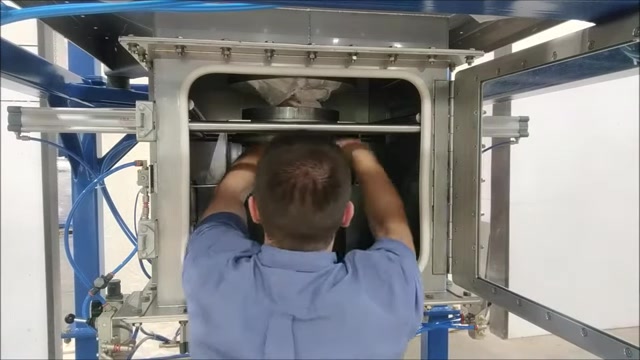
Carolina Conveying
Carolina Conveying Bulk Bag Unloader: Clamping Down on Dust
Carolina Conveying shows how its bulk bag discharge station contains dust: the spout is untied inside a sealed access module and clamped pneumatically to a feed tube.
Total reach: 17,797
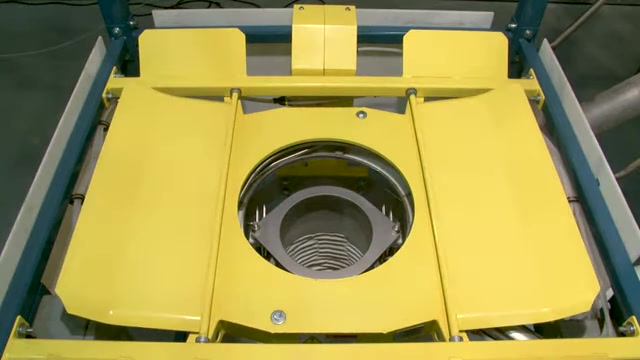
Flexicon
Flexicon BULK-OUT Bulk Bag Dischargers
Flexicon presents its BULK-OUT bulk bag discharger range: forklift-loaded BFF frames, hoist-and-trolley BFC frames, split and half frames, and accessories for dust-free untying, retying and flow promotion.
Total reach: 72,015
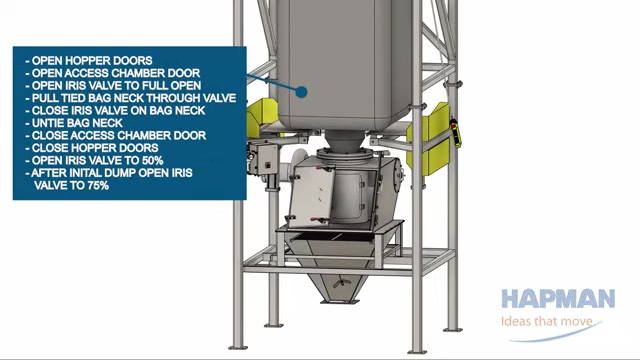
Hapman
Hapman Bulk Bag Hoist Unloader with Dust Collection
Hapman shows a hoist-loaded bulk bag unloader with a round access chamber and integrated dust collection for dust-free discharge.
Total reach: 2,846
Palamatic Process
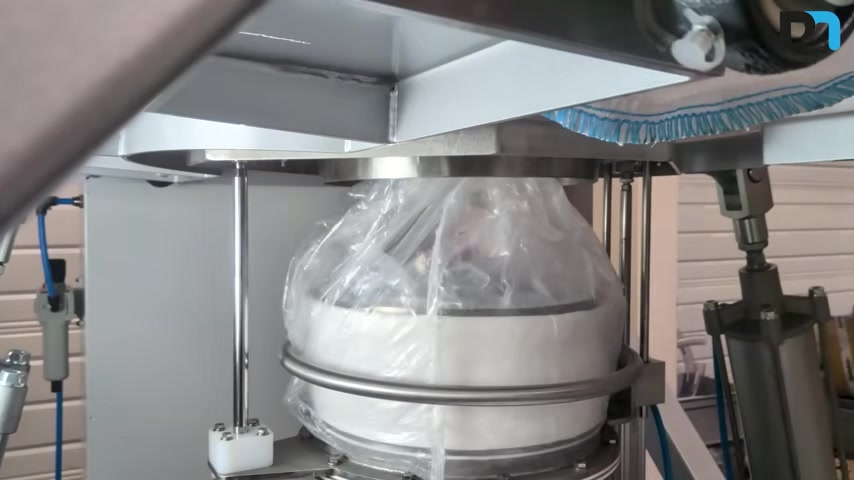
Palamatic Process: Emptying Big Bags of Sensitive Powders with OEB Containment
A Palamatic Process engineer explains the OEB big bag discharge station for toxic, CMR and ultra-fine powders, including the sleeve tie-off that keeps containment through a bag change.
Total reach: 18,626

F.lli Sacchi S.n.c.
Smart Pick – Fully Automated Bag Emptying and Processing of Complex Recipes
The video shows the F.lli Sacchi SmartPick robotic bag emptying system. A robot selects bags from pallet stations, presents them to a cutting and emptying station, and supports recipe controlled ingredient handling.
Total reach: 23,041
Hapman
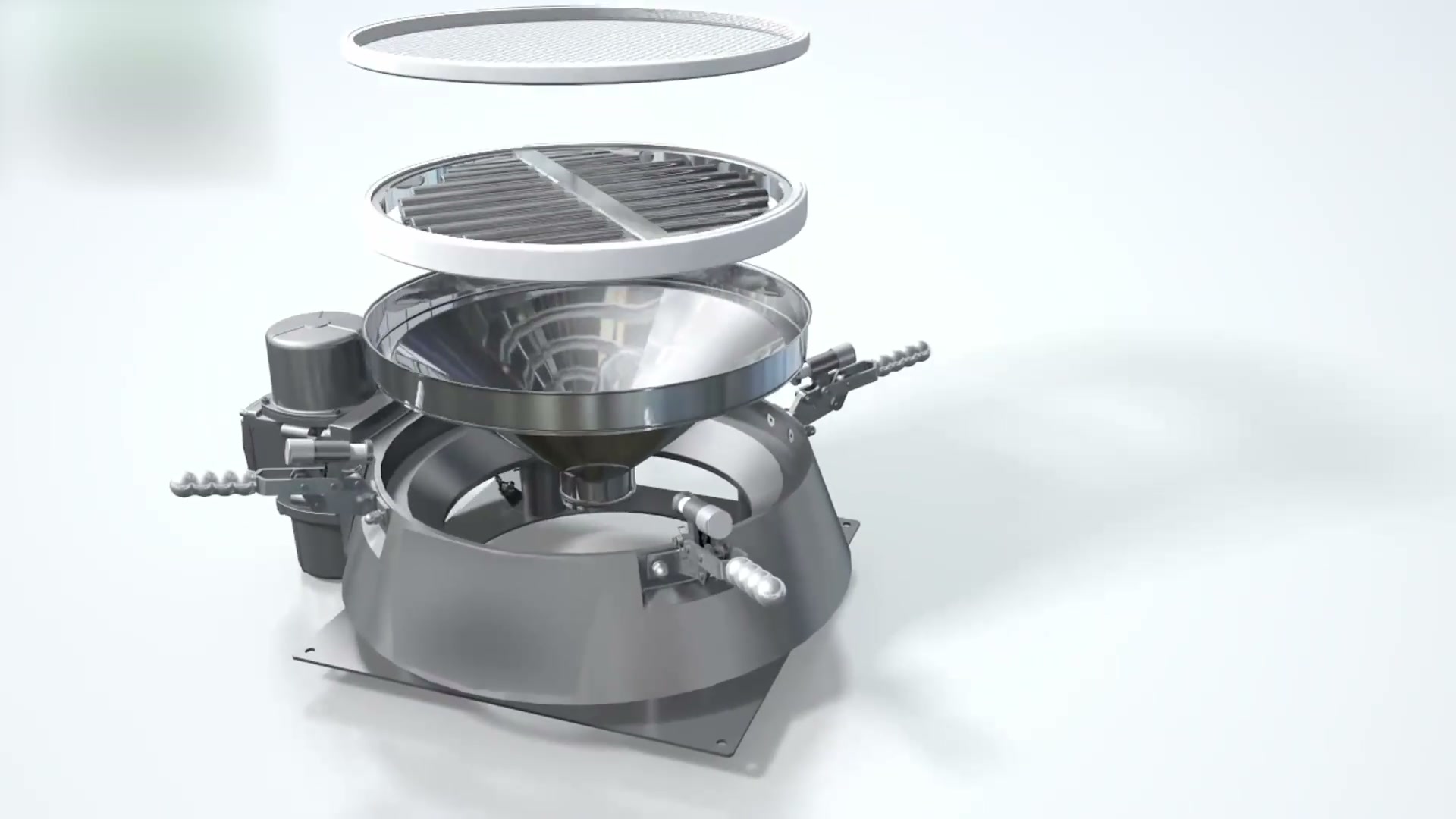
Hapman Compact Sieve Animation
Hapman's animation shows a compact vibratory sieve mounted beneath a bulk bag unloader, screening powder before it enters the next process step. The sieve is a high-capacity, easy-clean option for restricted spaces.

Vortex – Solids & Bulk Handling Components
Vortex®: Telescoping Loading Spout
Vortex presents a telescoping spout for guiding dry bulk material into a truck, railcar, vessel or stockpile. The video is useful for understanding the internal flow path and moving components. Pressure, leakage, wear, material compatibility and cleaning still require verification for the actual duty.
Total reach: 76,961