
Comparison
Telescopic Loading Spout vs Cascade Chute
Answer in brief
Both contain the falling stream, and they do it by different means.
A telescopic spout encloses the material in a sleeve and extracts the displaced air; a cascade chute slows the material by letting it tumble over internal cones so it arrives with little energy and little entrained air.
- Fine, dusty powders with extraction available: telescopic spout.
- Coarse, abrasive material at high rate: cascade chute.
- Both beat an open pipe by a wide margin, which is the comparison that matters most.
By Editorial Team · Published October 21, 2026 · Updated October 21, 2026
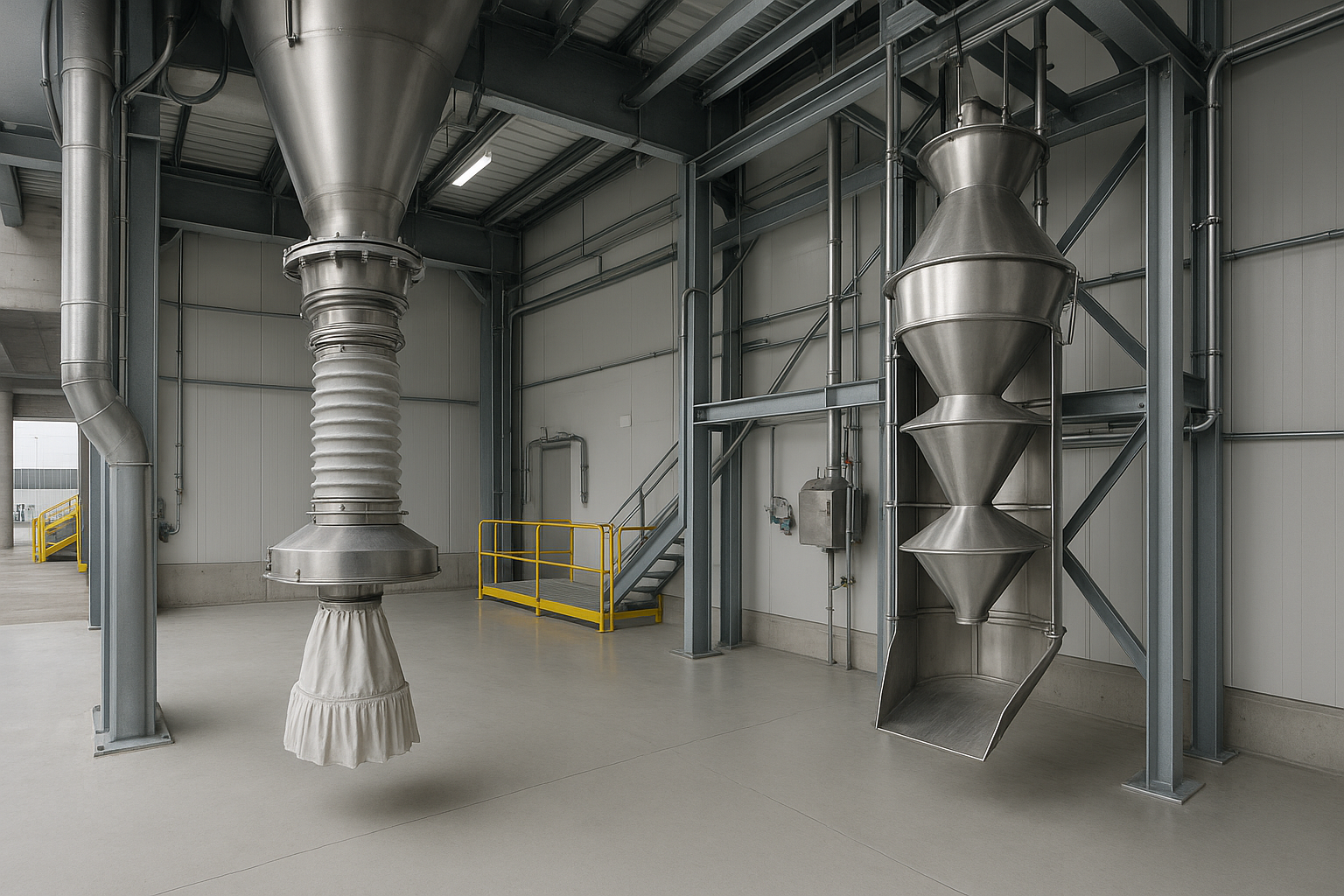
What actually differs
Dust at a loading point comes from two sources: the material itself and the air it drags with it as it falls.
A telescopic spout attacks the second by enclosing the column and extracting the induced air at the outlet skirt.
A cascade chute attacks the first by never letting the material reach high velocity, so there is less energy available to loft dust when it lands.
Decision criteria
| Criterion | Telescopic spout | Cascade chute |
|---|---|---|
| Dust principle | Enclose and extract | Slow the material down |
| Needs extraction | Usually yes | Often not |
| Suits | Powders and fine granules | Coarse, abrasive, high tonnage |
| Rate | Moderate to high | Very high |
| Wear | Sleeve and skirt | Internal cones |
| Product damage | Low | Low, controlled descent |
Where the telescopic spout is the better choice
- Cement, lime, flour and similar fine powders into trucks and railcars.
- Loading points where a filter and extraction fan are available or justified.
- Duties needing level sensing and automatic retraction as the vehicle fills.
The skirt at the outlet is the part that decides performance: it has to seal against the pile and remain intact, and a damaged skirt turns a contained system into an open pipe.
Partner with powderbulkvideos.com
Put your expertise beside the decisions engineers are making.
Connect a relevant company profile and technical video portfolio with clearly labelled visibility on this topic.
Where the cascade chute is the better choice
- Ship loading of ore, clinker, fertilizer or sulfur at very high rates.
- Installations with large drop heights where slowing the material matters more than enclosing it.
- Sites where extraction and filtration are impractical.
Because the material tumbles over internal cones rather than falling freely, the chute also reduces particle breakage and segregation on the pile.
Where neither fits
Neither device fixes dust generated upstream. If the material arrives at the loading point already aerated or carrying fines from a long pneumatic line, the chute can only contain what reaches it.
Neither is a weighing or metering device, and neither substitutes for the operational discipline of positioning the outlet close to the growing pile.
What to measure before deciding
- Particle size distribution and the fines fraction at the loading point.
- Drop height and loading rate at peak.
- Whether extraction and filtration can be provided at the position.
- Vehicle or hold geometry, which decides retraction and travel requirements.
Frequently asked questions
Can a cascade chute handle powders?
It can, but fine powders aerate inside the chute and the dust that escapes at the outlet is harder to control without extraction. For powders an enclosed spout with extraction usually performs better.
Does a telescopic spout need a filter?
In almost all powder applications, yes. The extraction has to go somewhere, and the recovered material is usually returned to the stream.
What limits the loading rate?
For the spout, the sleeve diameter and the extraction capacity. For the cascade chute, the cone geometry and the structural design, which is why ship loading chutes are built for a specific tonnage.
Related content
Continue exploring
Move from this page to the companies, videos and technical topics that add useful context.
Companies
Videos

Vortex – Solids & Bulk Handling Components
Vortex®: Telescoping Loading Spout
Vortex presents a telescoping spout for guiding dry bulk material into a truck, railcar, vessel or stockpile. The video is useful for understanding the internal flow path and moving components. Pressure, leakage, wear, material compatibility and cleaning still require verification for the actual duty.
Total reach: 77,050
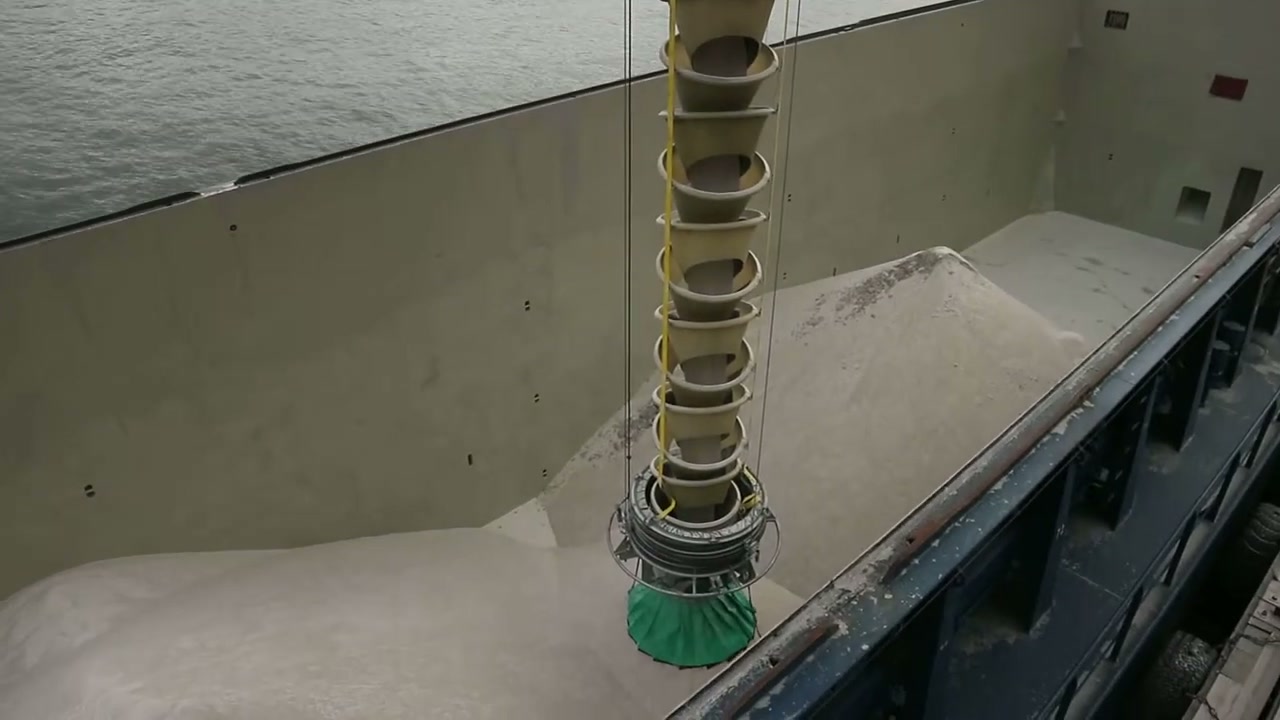
Cleveland Cascades
Cascade Chute Loading at 500 Tonnes per Hour
Cleveland Cascades shows a cascade chute loading material at 500 tonnes per hour, with the falling stream held together inside the chute.