
Application
Dust Suppression in Cement and Aggregate Loading
Answer in brief
Aggregates and cement need different answers at the same loading bay.
Coarse aggregate responds well to suppression and water; cement powder tolerates neither and needs an enclosed spout with extraction. A bay designed for one creates a problem for the other.
- Separate the two duties in the design, even in one bay.
- Never put water near cement or lime.
- Enclose the powder column; suppress the aggregate stream.
Reviewed October 21, 2026
The problem
A loading bay in a building materials plant frequently handles both ends of the material spectrum. Coarse aggregate is dusty because of the fines it carries and the air it drags with it; cement, lime and fly ash are dusty because they are powders.
The controls that work on one are wrong on the other. Water applied to aggregate is routine and effective; water applied to cement starts hydration, and a loading spout with a wet deposit inside it becomes a blocked loading spout. Conversely, enclosure and extraction are the right answer for powder and often impractical for a high rate aggregate stream.
Plants that install one system for the bay therefore end up with a compromise that controls neither material well, and the usual symptom is a visible plume on one product and a blockage on the other.
Both materials also carry respirable crystalline silica in most cases, which means the exposure limit applies to the loading operator regardless of which product is being handled.
Desired outcome
Two defined duties in the design, with the powder loading enclosed and extracted and the aggregate loading suppressed, even where they share a bay and a structure.
No water path to cement or lime at any point, including spray drift from the aggregate side and washdown.
Operator exposure measured, since the respirable fraction applies to the person in the bay whichever product is loading.
In food ingredient handling the first question is whether a duct can reach the point at all, because suppression installed where extraction was possible gives away a recoverable product.
Process approach
The duties are separated first, on paper. Which products load at which position, at what rate, and with what control. A shared structure is fine; a shared control system usually is not.
Powder loading is then designed as an enclosed column: a telescopic spout with an outer dust skirt, a seal to the vehicle hatch, and extraction of the displaced air to a filter. The volume to extract is the air the material displaces plus the air it drags with it, which is a calculable figure rather than a guess.
Aggregate loading is designed around slowing the stream and adding moisture where the specification allows. A suppression hopper or cascade arrangement reduces the energy available to loft fines, and sprays or fog deal with what remains.
Then the water is kept away from the powder side deliberately: separate drainage, no shared sumps that can be hosed towards a cement spout, and a washdown procedure that names what must stay dry.
- Loading duties separated by product and position, even within one bay.
- Powder loading enclosed with a telescopic spout, dust skirt and vehicle seal.
- Extraction volume calculated from displaced plus entrained air.
- Aggregate loading slowed by suppression hopper or cascade before water is added.
- Water paths, drainage and washdown designed to keep the powder side dry.
- Operator exposure to respirable silica measured in the bay.
Selection factors
- Product mix at the bay and whether powders and aggregates genuinely share a position.
- Loading rate, which decides between enclosure and slowing the stream.
- Moisture tolerance of each product, which is zero for cement and lime.
- Vehicle types and whether a reliable seal to the hatch is achievable.
- Respirable silica content and the operator exposure that follows.
- Drainage and washdown arrangement, which is how water usually reaches the powder side.
Common failure modes
- One dust control system specified for a bay handling both powder and aggregate
- Water or spray drift reaching a cement loading spout, starting hydration inside it
- Extraction volume guessed rather than calculated from displaced and entrained air
- Vehicle seal left out, so the enclosed spout vents into the bay anyway
- Shared drainage that lets washdown water run towards the powder side
- Operator exposure never measured, with the control judged by the visible plume
Partner with powderbulkvideos.com
Put a relevant technical solution in this decision path.
Connect your company and video evidence with clearly labelled visibility where engineers evaluate this material, application, industry or product.
Frequently asked questions
Why not use water on cement?
Because it hydrates. A wet deposit inside a loading spout sets, and what started as dust control becomes a blocked spout and a maintenance job with a chisel.
What sets the extraction volume on a powder spout?
The air the material displaces from the vehicle plus the air it entrains on the way down. Both are calculable, and a system sized without the entrained air is usually undersized.
Can one bay handle both duties?
The structure can. The controls should be separate: enclosure and extraction for the powder, slowing and moisture for the aggregate, with the water paths deliberately kept apart.
Related content
Continue exploring
Move from this page to the companies, videos and technical topics that add useful context.
Companies

Videos

DSH Systems
DSH Systems: Installation Profile – Phu My Port in Vietnam
DSH Systems documents a dust-suppression hopper installation for dry granular material transfer at Phu My Port in Vietnam.
Total reach: 23,755

DSH Systems
DSH Systems: Introduction Dust Suppression Hopper
DSH Systems introduces its dust-suppression hopper for controlling dust fallout during dry-bulk loading.
Total reach: 24,866
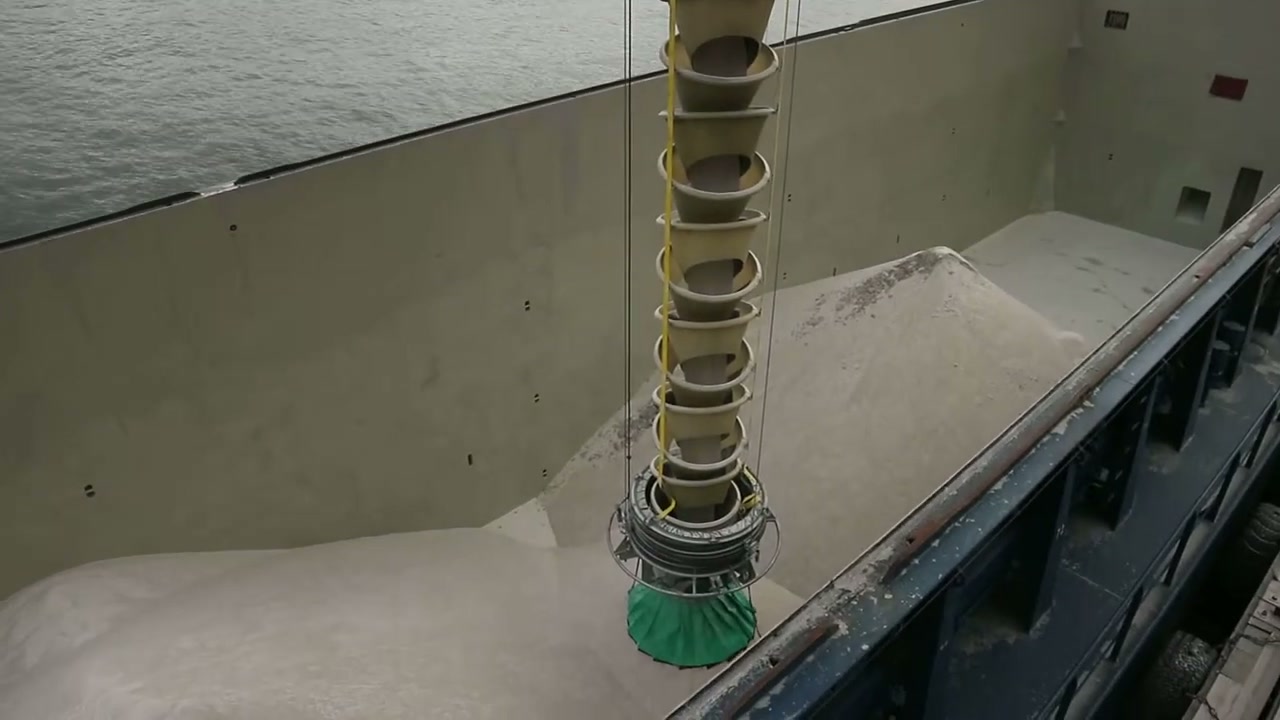
Cleveland Cascades
Cascade Chute Loading at 500 Tonnes per Hour
Cleveland Cascades shows a cascade chute loading material at 500 tonnes per hour, with the falling stream held together inside the chute.