
Application
Dust Suppression in Food Ingredient Handling
Answer in brief
In food plants the dust is product, and it is also the explosion hazard, so letting it settle is never the answer.
Suppression at a transfer point reduces the plume but leaves the dust with the product, which is acceptable for a bulk ingredient and not for a point where capture is possible.
- Prefer enclosure and extraction where the layout allows.
- Use suppression where a duct cannot follow.
- Never let the dust settle; the layer is the hazard.
Reviewed October 21, 2026
The problem
An open transfer point in a food plant releases ingredient dust, and that release has three separate costs. It is product lost. It is a settled layer, and the layer is the fuel for a secondary explosion. And it is a cleaning and allergen burden wherever it lands.
Suppression and extraction are not interchangeable here. Extraction removes the dust to a filter, which gives the plant a decision to make about recovery; suppression reduces how much becomes airborne and leaves it in the product, which is often exactly what is wanted for a bulk ingredient but is not a capture.
The choice is usually decided by the layout rather than by preference. An intake point in a yard, a mobile transfer or a bulk bag discharge in a tight space may have no route for a duct, and those are the places where suppression earns its keep.
What is never acceptable in a food plant is the third option: letting the dust go into the room and relying on cleaning. That produces the layer, and the layer is the mechanism behind the industry's worst incidents.
Desired outcome
Enclosed chutes with extraction to a protected filter wherever the layout allows, with a documented decision on whether the recovered dust returns to process.
Suppression devices at the points a duct genuinely cannot serve, chosen for the flow rate and with the expectation stated clearly: the dust stays in the product.
No transfer point left to release into the room, and the explosion protection of any filter based on the collected dust.
In a mineral stockyard the moisture specification and the prevailing wind govern, and water added before the drop height has been reduced treats the symptom.
Process approach
Each transfer point is assessed for whether a duct can reach it. Where it can, enclosure plus extraction is the answer, with the capture velocity at the opening as the design criterion and the filter protected and isolated.
Recovery is then decided explicitly. Returning the fines means they re enter the product, which needs a sieve, an allergen rule and a limit. Disposal is simpler and is a legitimate choice.
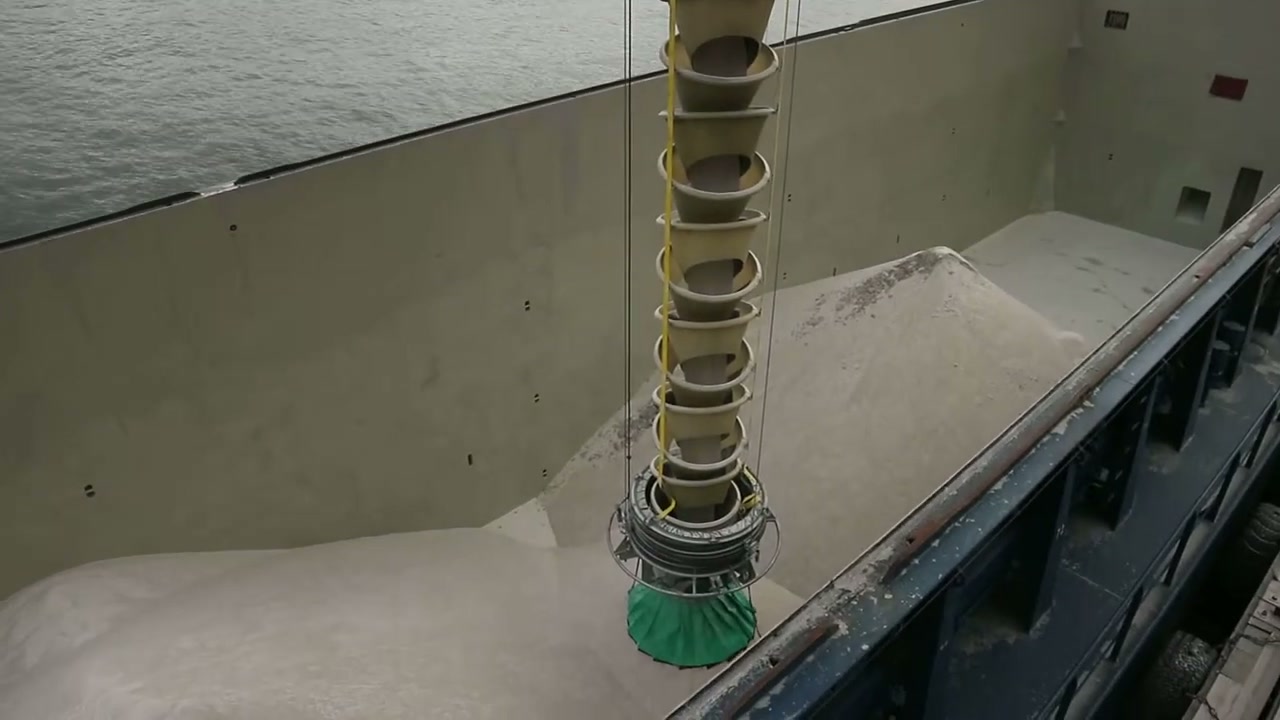
Where a duct cannot reach, a suppression device slows the stream so the entrained air separates through the material. These are sized for the flow rate, positioned at the end of the fall with a free discharge, and entered into the cleaning routine because they hold product internally.
Allergen handling runs through all of it. A shared extraction system collects dust from every recipe that ran, which makes the filter an allergen item, and a suppression device that holds product between recipes is a carryover path.
- Each transfer point assessed for whether extraction is physically possible.
- Enclosure plus extraction preferred, with capture velocity at the opening as the criterion.
- Recovery or disposal of collected dust decided explicitly, with a sieve and an allergen rule if returned.
- Suppression devices where no duct can reach, sized for the flow rate with a free discharge.
- Shared filters and suppression devices entered in the allergen matrix.
- Filter protected and isolated on the basis of the collected dust.
Selection factors
- Whether a duct can reach the point, which usually decides between extraction and suppression.
- Allergen matrix, since shared filters and devices retain dust from every recipe.
- Value of the recovered product and whether returning it is acceptable.
- Dust explosion characteristics of the collected fines.
- Flow rate and fall height, which set the size of a suppression device.
- Cleaning access for devices and ducts, which are product contact surfaces in practice.
Common failure modes
- Suppression installed where a duct could easily have reached, so nothing is captured
- Extraction installed and the collected dust returned to process with no sieve or allergen rule
- Transfer point left open and the release managed by cleaning, which produces the layer
- Shared filter left out of the allergen matrix although it holds dust from every recipe
- Suppression device never cleaned, so it carries one recipe into the next
- Filter protected using product data rather than data for the finer collected dust
Partner with powderbulkvideos.com
Put a relevant technical solution in this decision path.
Connect your company and video evidence with clearly labelled visibility where engineers evaluate this material, application, industry or product.
Frequently asked questions
Suppression or extraction?
Extraction wherever a duct can reach, because it removes the dust and gives you a choice about it. Suppression is for the points where a duct genuinely cannot follow, and it leaves the dust in the product.
Can the collected dust go back into the product?
Sometimes, as a deliberate decision with a sieve, an allergen rule and a quantity limit. What fails is returning it simply because the filter produced it.
Why is letting dust settle never acceptable?
Because the settled layer is the fuel for a secondary explosion, and it is also an allergen and cleaning burden wherever it lands. Cleaning is not a substitute for not releasing it.
Related content
Continue exploring
Move from this page to the companies, videos and technical topics that add useful context.
Companies

Videos

DSH Systems
DSH Systems: Installation Profile – Phu My Port in Vietnam
DSH Systems documents a dust-suppression hopper installation for dry granular material transfer at Phu My Port in Vietnam.
Total reach: 23,755

DSH Systems
DSH Systems: Introduction Dust Suppression Hopper
DSH Systems introduces its dust-suppression hopper for controlling dust fallout during dry-bulk loading.
Total reach: 24,866
Cleveland Cascades
Cascade Chute Loading at 500 Tonnes per Hour
Cleveland Cascades shows a cascade chute loading material at 500 tonnes per hour, with the falling stream held together inside the chute.