
Application
Dust Suppression in Mineral Stockyards
Answer in brief
In an open stockyard the wind does most of the dust generation, and the controls have to work without an enclosure.
Stacking height, drop distance and moisture are the three levers available, and the first two are free.
- Reduce the drop at the stacker before adding water.
- Use water where the product tolerates it, and only that much.
- Measure exposure, because the limit applies at the boundary and to people.
Reviewed October 21, 2026
The problem
A stockyard produces dust in two quite different ways and they need different answers. Handling dust comes from the drop at the stacker and from the reclaim operation: material falling entrains air, the air escapes at the pile, and it takes the fines with it. Wind erosion comes from the pile itself, and it happens continuously whether anything is being handled or not.
Neither can be enclosed at reasonable cost in most yards, which removes the usual engineering answer. What remains is geometry and moisture.
Moisture then runs into the product. Many minerals have a specification limit on moisture, and adding water to control dust is adding water to the product. The amount available for dust control is therefore whatever the specification allows minus whatever the weather already contributed, and that is often very little.
And the respirable fraction carries an exposure limit where crystalline silica is present, which applies to the people working in the yard, not only to the fence line.
A mineral stockyard has no enclosure to work with, which is the only reason suppression is considered here at all.
Desired outcome
Handling dust reduced at the source by geometry: the shortest practical drop at the stacker and a reclaim arrangement that does not fling material.
Moisture used deliberately within the product specification, with the application matched to where the dust actually comes from.
Wind erosion addressed by pile shape, orientation, surface treatment or barriers, and exposure measured on people rather than inferred from the look of the yard.
At a grain transfer point the honest question comes first, whether extraction is genuinely impossible, because a suppression device sized for a lower flow rate lets the stream pass through untouched.
Process approach
The stacker is the first place to work. A telescopic chute or a suppression hopper reduces the free fall and lets the entrained air escape through the material rather than carrying dust out of it. This is the cheapest dust reduction available in a stockyard and it is often overlooked in favour of water.
Water is then applied where it helps most. Fine fog systems address airborne dust at the point of generation with very little added moisture; spray systems wet the material and use considerably more. Which one is appropriate depends on whether the problem is dust already airborne or dust about to become so, and on how much moisture the specification allows.
Wind erosion is addressed by the pile and the yard: orientation relative to the prevailing wind, pile shape, surface crusting agents where they are acceptable, and barriers or screens where the layout permits. These are planning decisions as much as equipment ones.
Exposure monitoring then shows whether any of it is working, and personal sampling for respirable silica is the measurement that matters because it applies to the people in the yard.
- Drop at the stacker reduced by telescopic chute or suppression hopper before water is considered.
- Fog systems for airborne dust, sprays for wetting, chosen for the actual mechanism.
- Moisture addition kept inside the product specification, with the weather contribution counted.
- Pile orientation and shape used against wind erosion.
- Surface crusting agents or barriers where the product and layout allow.
- Personal sampling for respirable crystalline silica, with controls judged against it.
Selection factors
- Moisture specification of the product, which caps what water can do.
- Drop height available at the stacker and whether a telescopic arrangement fits.
- Prevailing wind and the yard orientation, which decide the erosion case.
- Crystalline silica content and the exposure limit it brings.
- Water availability and freezing, since many yards operate in winter.
- Boundary distance to neighbours, which decides how much the emission matters beyond the site.
Common failure modes
- Water added before the drop at the stacker has been reduced, paying for moisture instead of geometry
- Spray system used where the dust is already airborne, so most of the water lands on the pile
- Moisture addition exceeding the product specification, with the weather contribution never counted
- Wind erosion treated as a handling problem, so the controls only run when the yard is working
- Water system installed with no provision for freezing in winter
- Exposure inferred from the appearance of the yard rather than measured on people
Partner with powderbulkvideos.com
Put a relevant technical solution in this decision path.
Connect your company and video evidence with clearly labelled visibility where engineers evaluate this material, application, industry or product.
Frequently asked questions
What is the cheapest dust control in a stockyard?
Reducing the drop at the stacker. A telescopic chute or suppression hopper lets the entrained air escape through the material instead of carrying dust out, and it costs no moisture at all.
Fog or spray?
Fog for dust that is already airborne, spray for wetting material before it becomes airborne. They address different mechanisms, and fog adds far less moisture, which matters where the specification is tight.
How much water can be added?
Whatever the product moisture specification allows, less what the weather already contributed. In practice that is often a small margin, which is why geometry comes first.
Related content
Continue exploring
Move from this page to the companies, videos and technical topics that add useful context.
Companies

Videos

DSH Systems
DSH Systems: Installation Profile – Phu My Port in Vietnam
DSH Systems documents a dust-suppression hopper installation for dry granular material transfer at Phu My Port in Vietnam.
Total reach: 23,755

DSH Systems
DSH Systems: Introduction Dust Suppression Hopper
DSH Systems introduces its dust-suppression hopper for controlling dust fallout during dry-bulk loading.
Total reach: 24,866
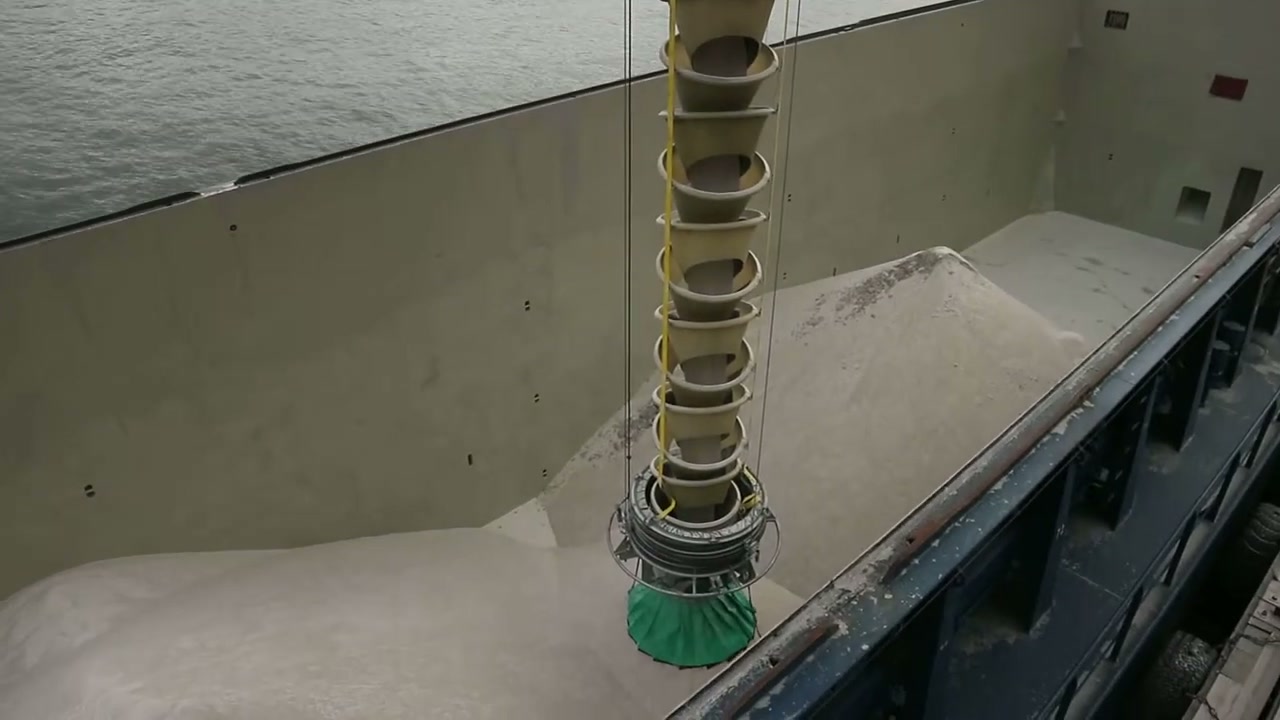
Cleveland Cascades
Cascade Chute Loading at 500 Tonnes per Hour
Cleveland Cascades shows a cascade chute loading material at 500 tonnes per hour, with the falling stream held together inside the chute.