
Material
Cement Clinker
Answer in brief
Clinker destroys equipment for a living, and the design question is where you accept wear and how quickly you can replace it.
It arrives hot, hard and irregular, and the same properties that make it grind well in a mill also grind away chutes, belts and valve seats.
- Choose wear liners and let them be sacrificial rather than protecting the structure by accident.
- Keep residual temperature in the design basis for belts, seals and bearings.
- Control dust at loading, where fine material separates from the nodules.
Reviewed October 21, 2026 · Updated November 10, 2026
Handling challenges
Clinker is the material that teaches a plant what abrasion really costs.
Nodules leave the cooler at temperatures that can still exceed one hundred degrees Celsius, and their hardness is close to that of the wear parts meant to contain them.
Wear is the dominant cost
Every chute, skirt, belt cover and valve seat in a clinker line is a consumable with a predictable life.
- Impact zones need thick, replaceable liners rather than hard-facing applied to structural steel.
- Transfer chutes benefit from a designed trajectory so that material slides rather than strikes.
- Belt speed and loading affect cover life more than belt grade does.
Designing for replacement, with access, lifting points and standard liner sizes, pays back faster than choosing a marginally harder alloy that nobody can change on a shift.
Residual heat
Hot clinker shortens the life of rubber components, lubricants and bearings well before it causes visible damage.
Belt covers rated for the actual discharge temperature, protected idlers and sufficient cooling residence time are cheaper than the alternative.
Dust at transfer and loading
Nodules carry fines, and the fines separate at every drop, most visibly at ship and truck loading.
Cascade chutes and telescopic loading spouts with integrated extraction keep the material column contained and reduce the induced air that carries dust away.
Open loading with a long free fall creates a plume that no downstream filter can recover.
Storage and reclaim
Clinker silos and domes are reclaimed by gravity or by mechanical reclaimers, and the choice determines how much of the stored inventory is actually usable.
Segregation by size across a stockpile is normal and affects mill feed consistency, so reclaim strategy is a quality question as well as a mechanical one.
What to establish before buying equipment
- Particle size distribution and the proportion of fines, which drives dust control.
- Discharge temperature range from the cooler, including upset conditions.
- Required throughput at loading, since chute sizing follows the peak rather than the average.
- Access and spare strategy for wear parts.
Storage and conditioning
Clinker is stored hot, and that is the first design condition.
Material leaving the cooler can still be well above ambient, so silos, conveyors and liners see temperature as well as abrasion. A hot bed also draws moisture in as it cools, and clinker that has taken up water starts to hydrate on the surface, which turns free-flowing granules into a crust.
- Keep the store dry and ventilated; a leaking roof costs a silo clean-out, not a bag of product.
- Expect temperature gradients in a large pile and allow for the expansion they cause.
- Older clinker handles differently from fresh: surface hydration changes both flow and grindability.
What this means for equipment
Clinker destroys equipment that was sized for a mineral powder.
The granules are hard, angular and heavy, so impact and sliding wear dominate. Belt conveyors are the usual answer over distance, with the transfer points designed as the critical part rather than as fittings. Where pneumatic conveying is used at all, it is for the ground product, not for clinker.
- Generous chute geometry, impact beds and replaceable liners at every drop.
- Deep troughed belts with rated temperature and a cleaning system on the return side.
- Bucket elevators sized with the wear plate and the chain, not only with the capacity.
The design question is never whether it wears, but where it wears and how quickly a worn part can be changed.
Safety and regulatory
Clinker is not combustible, so the hazards are physical, thermal and respiratory.
Hot material burns on contact and can ignite what it falls on. The dust from crushing and transfer contains crystalline silica, which makes the respirable fraction a regulated exposure. And the mass of a clinker store is a structural matter: a partially emptied silo loads its walls unevenly.
- Dust suppression or capture at every transfer point, sized for a coarse, heavy stream.
- Thermal protection and clear rules for entry anywhere material can still be hot.
- No entry into a silo with an unverified flow condition; a collapsing bridge is fatal.
Material behavior
- Flowability
- Free flowing, coarse and irregular
- Abrasiveness
- Very high
- Cohesiveness
- Low
- Moisture behavior
- Low moisture sensitivity; wet clinker builds up in chutes
- Contamination risk
- Not applicable; product quality affected by contamination with raw feed
Partner with powderbulkvideos.com
Put a relevant technical solution in this decision path.
Connect your company and video evidence with clearly labelled visibility where engineers evaluate this material, application, industry or product.
Frequently asked questions
Can clinker be conveyed pneumatically?
Rarely, and not economically. The granules are hard, heavy and angular, so a pneumatic line wears out fast. Pneumatic conveying belongs to the ground cement, not to the clinker.
Why does old clinker behave differently?
Because the surface hydrates when it meets moisture. That changes the flow in storage and the grindability in the mill, which is why covered storage is not a comfort.
What drives the maintenance cost on a clinker line?
The transfer points. Impact and sliding wear concentrate where material changes direction, so the chute design and the ease of changing a liner decide the annual cost.
Related content
Continue exploring
Move from this page to the companies, videos and technical topics that add useful context.
Companies

Videos

HAZEMAG & EPR GmbH
HAZEMAG | Cement | Aggregates
HAZEMAG presents its crushing and processing technology for the cement and aggregates industries. Founded in 1946 with the invention of the world's first impact crusher for cement and aggregates, the company reports an installed base of more than 75,000 machines worldwide.
Total reach: 7,488
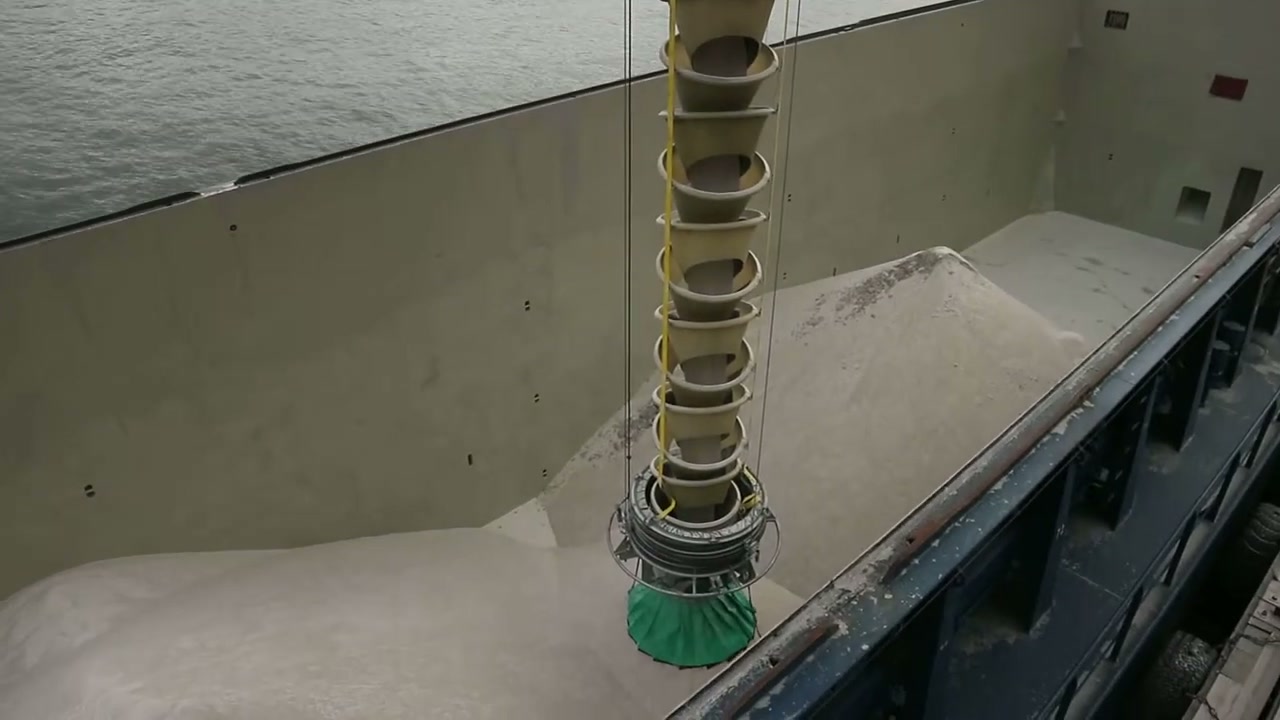
Cleveland Cascades
Cascade Chute Loading at 500 Tonnes per Hour
Cleveland Cascades shows a cascade chute loading material at 500 tonnes per hour, with the falling stream held together inside the chute.
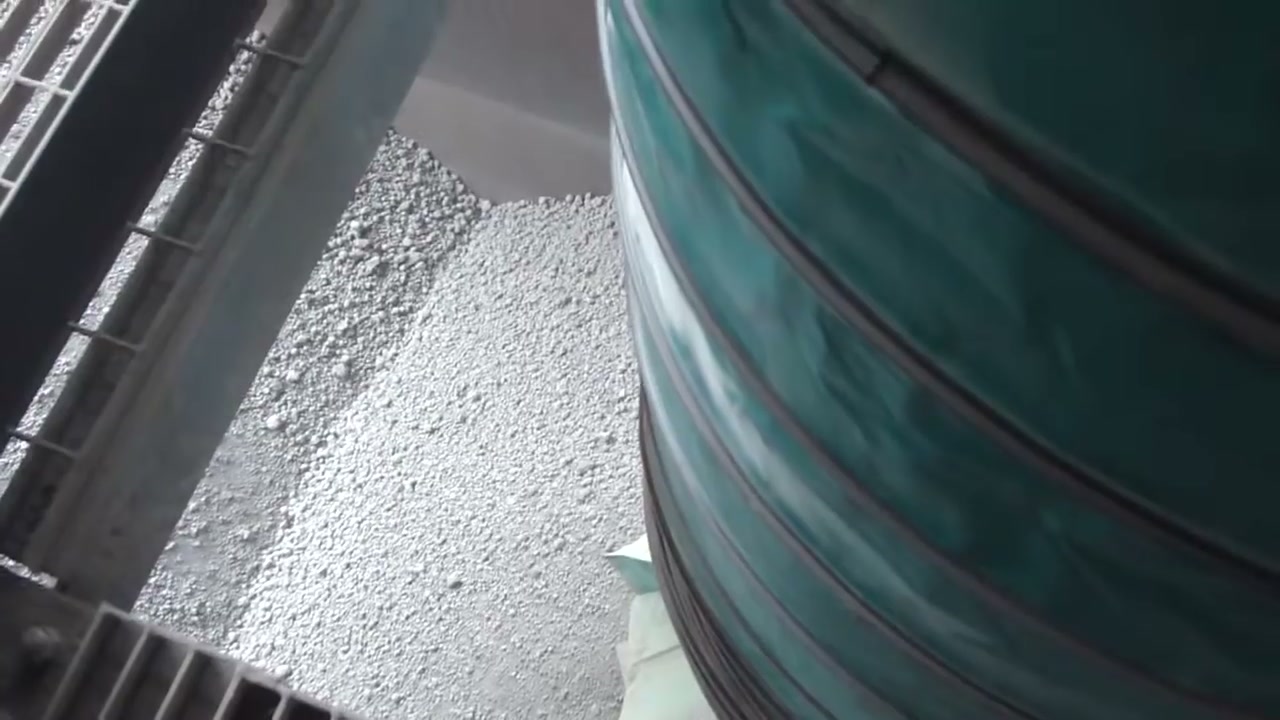
Cleveland Cascades
Truck Loading of Cement Clinker at 330 Tonnes per Hour
Cleveland Cascades shows a truck loading system handling cement clinker, which the manufacturer calls a very dusty product, loading 28 tonne trucks at 330 tonnes per hour.