
Application
Dust-free Loading in Food and Ingredient Terminals
Answer in brief
Loading food powders is a hygiene task as well as a dust task.
The connection between the plant and the vehicle is where contamination enters, and where the powder escapes if the spout is not sealed. It is also the part of the system most often improvised on site.
- Seal the connection to the vehicle, not just the spout.
- Specify couplings and hoses as food contact items.
- Protect the extraction filter; the dust is combustible.
Reviewed October 21, 2026
The problem
A silo vehicle arrives from somewhere else. Its hatches, its couplings and sometimes its hoses have been in other plants with other products, and the moment the plant connects to it, that history is at the boundary of a food process.
The loading connection is therefore a hygiene control, and it is routinely treated as site hardware: a coupling that lives on a hook outdoors, a hose stored on the floor, a hatch seal that is whatever the vehicle brought.
Dust is the second half. Flour, sugar, milk powder and starch are combustible, and the air displaced from the vehicle has to go somewhere. Without a sealed spout and extraction it goes into the yard, taking product with it and leaving a layer on the loading structure.
And the extraction filter then holds the finest fraction of a combustible food powder, which makes it a vessel needing protection, and an allergen item if several products share the bay.
Desired outcome
A sealed connection from the spout to the vehicle hatch that contains the displaced air, with the extraction sized from the displaced plus entrained volume.
Couplings, hoses, seals and spout internals specified, stored and cleaned as food contact items, with a routine rather than a habit.
An extraction filter protected and isolated on the basis of the collected dust, and entered in the allergen matrix where products share the bay.
At a grain and feed terminal the air volume follows the loading rate, and extraction specified for ship loading is a different machine from one specified for a road tanker.
Process approach
The connection is designed first. An enclosed spout with a seal to the hatch contains the air that the incoming powder displaces, and the extraction then takes that air to a filter and returns the clean air. The volume is the displaced air plus the air the falling powder entrains, which is calculable.
Food contact items are then specified properly. Couplings and hoses with defined materials, a storage arrangement that keeps them off the ground and covered, a cleaning method and a frequency, and a procedure for what happens when a vehicle arrives with its own equipment.
Vehicle hygiene is addressed as a procedure rather than as equipment: a check on the vehicle before loading, a record, and a defined response when a vehicle does not meet it. This is the control that catches the problem the plant cannot engineer away.
Finally the filter is protected on the collected dust, isolated from the loading spout, and given an allergen status if the bay handles more than one product.
- Enclosed spout with a seal to the vehicle hatch, containing the displaced air.
- Extraction volume calculated from displaced plus entrained air.
- Couplings, hoses and seals specified, stored and cleaned as food contact items.
- Vehicle hygiene check before loading, recorded, with a defined response to a failure.
- Filter protected and isolated on the basis of the collected dust.
- Bay and filter entered in the allergen matrix where products are shared.
Selection factors
- Vehicle types and hatch arrangements, which decide whether a reliable seal is achievable.
- Hygiene standard for the connection, including storage of couplings and hoses.
- Allergen matrix where the bay loads more than one product.
- Dust explosion characteristics of the collected powder.
- Loading rate, which sets the displaced air volume.
- Weather exposure at the bay, which affects both hygiene and the equipment.
Common failure modes
- Coupling and hose treated as site hardware, stored outdoors on a hook
- Spout sealed but the vehicle hatch not, so the displaced air leaves at the connection
- Extraction sized by habit rather than from the displaced and entrained volume
- Vehicle hygiene assumed, with no check and no record before loading
- Filter unprotected although it holds the finest fraction of a combustible food powder
- Shared bay left out of the allergen matrix
Partner with powderbulkvideos.com
Put a relevant technical solution in this decision path.
Connect your company and video evidence with clearly labelled visibility where engineers evaluate this material, application, industry or product.
Frequently asked questions
Where does contamination actually enter?
At the connection. The vehicle arrives from other plants and other products, and the couplings, hoses and hatch seals are the point where that history meets the food process.
What sets the extraction volume?
The air displaced from the vehicle as it fills, plus the air the falling powder entrains. Both are calculable, and systems sized without the entrained part are usually short.
Does the loading filter need explosion protection?
Yes. It holds the finest fraction of a combustible powder, and it is ducted to the loading spout, so it needs both protection and isolation.
Related content
Continue exploring
Move from this page to the companies, videos and technical topics that add useful context.
Companies

Videos

DSH Systems
DSH Systems: Installation Profile – Phu My Port in Vietnam
DSH Systems documents a dust-suppression hopper installation for dry granular material transfer at Phu My Port in Vietnam.
Total reach: 23,755
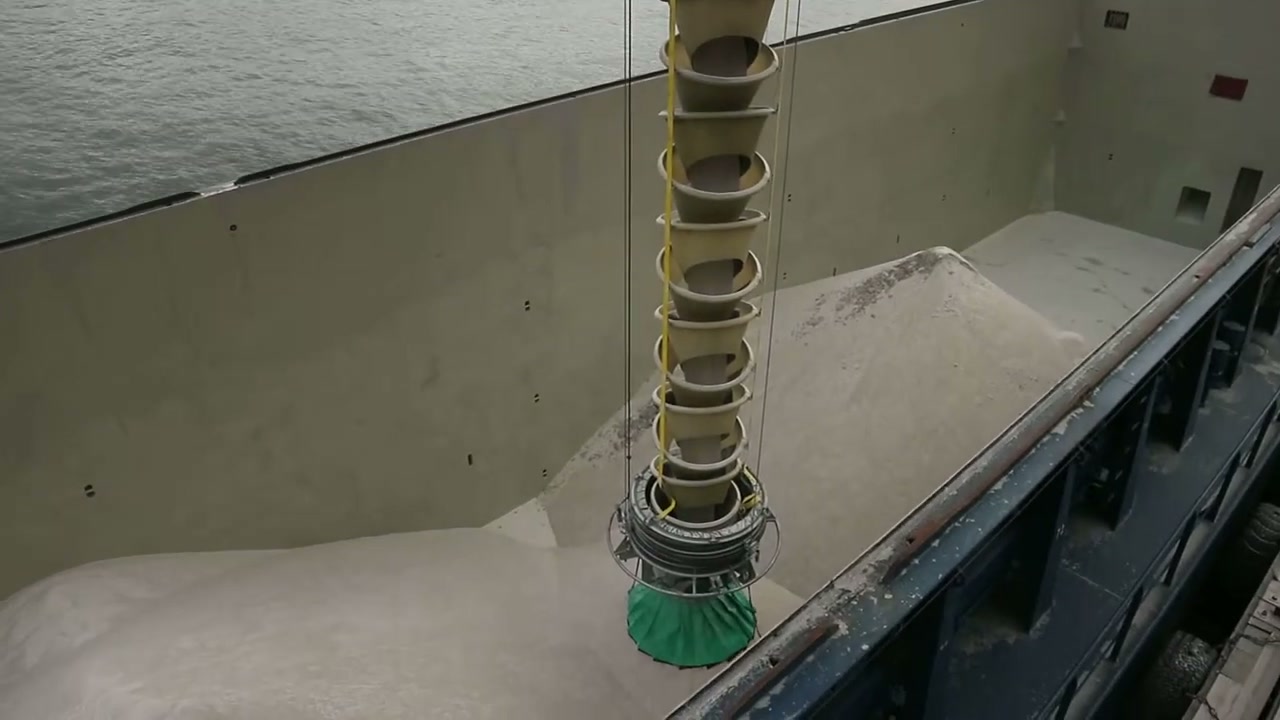
Cleveland Cascades
Cascade Chute Loading at 500 Tonnes per Hour
Cleveland Cascades shows a cascade chute loading material at 500 tonnes per hour, with the falling stream held together inside the chute.

Vortex – Solids & Bulk Handling Components
Vortex®: Telescoping Loading Spout
Vortex presents a telescoping spout for guiding dry bulk material into a truck, railcar, vessel or stockpile. The video is useful for understanding the internal flow path and moving components. Pressure, leakage, wear, material compatibility and cleaning still require verification for the actual duty.
Total reach: 77,198