
Material
Urea Fertilizer
Answer in brief
Urea sets the humidity agenda for the whole terminal.
It is strongly hygroscopic, so a warehouse that is comfortable for people is already too humid for the product, and the result is a cake that has to be broken mechanically.
- Control humidity in storage and in every conveying air stream.
- Keep drop heights low, because prills abrade into dust easily.
- Use coatings and material choices that survive damp urea.
Reviewed October 21, 2026 · Updated November 10, 2026
Handling challenges
Fertilizer terminals handle urea in tonnages where a handling decision becomes a civil engineering one.
Caking
Above its critical relative humidity urea takes up water, and each humidity cycle builds solid bridges between prills.
- Dehumidified storage, or at least controlled ventilation that does not import humid air.
- Coated product where the supplier offers it.
- Limited storage height and residence time, since pressure accelerates caking.
Breaking a cake in a warehouse is done with machines, and the operation is both costly and hazardous.
Dust and attrition
Prills break at every transfer, and the dust is a visible emission as well as a product loss.
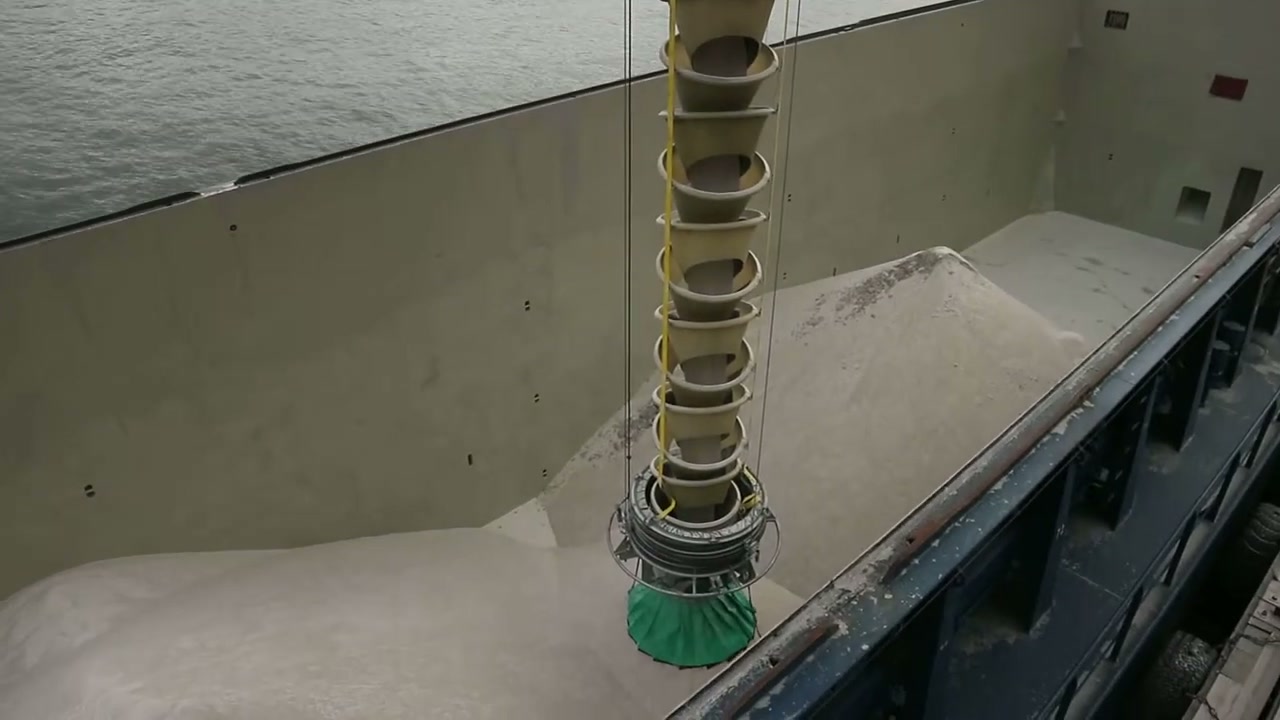
Cascade chutes and telescopic loading spouts with extraction contain the material column, which is more effective than filtering the resulting plume.
Corrosion
Damp urea and its decomposition products attack carbon steel and some coatings.
Material selection, drainage that prevents ponding and regular washdown of structures protect the asset.
Segregation and blending
Bulk blends of urea with other fertilizers separate by size and density during handling, which changes the nutrient ratio the farmer receives.
Matching particle size across blend components matters more than the blender itself.
What to establish before buying equipment
- Humidity profile in the store across the year.
- Prill or granule strength and the fines generated at design drop heights.
- Materials of construction for every damp contact surface.
- Loading rate and the dust control method at ship or truck.
Storage and conditioning
Urea is strongly hygroscopic and that governs the store.
It takes up moisture above a fairly low humidity, and prills then stick together into a solid mass. Warm humid air is the worst case, which is exactly what a closed shed in summer provides.
- Seal and condition; ventilation with untreated air makes it worse, not better.
- Expect caking in the surface layer first, where the humid air reaches.
- Handle gently: broken prills cake faster than intact ones.
What this means for equipment
Gentle handling and dry air are the design.
Prills break at every impact, and the dust that results is both a loss and the fraction that cakes. Low drop heights and generous chutes do more for a urea plant than extra capacity.
- Cascade chutes and low drop heights.
- Dry conveying air with a stated dew point.
- Corrosion-aware materials; urea solutions attack some steels.
Safety and regulatory
Urea itself is low hazard, and the issues are dust, decomposition products and housekeeping.
- Dust capture at transfer points.
- Awareness that heated urea gives off ammonia, which matters in a fire.
- Keep it separate from incompatible materials in storage.
Material behavior
- Flowability
- Free flowing when dry
- Abrasiveness
- Low to moderate
- Cohesiveness
- Low when dry, severe caking after moisture pickup
- Moisture behavior
- Strongly hygroscopic; critical relative humidity near 70 percent
- Contamination risk
- Dust emission at loading and corrosion of structures
Partner with powderbulkvideos.com
Put a relevant technical solution in this decision path.
Connect your company and video evidence with clearly labelled visibility where engineers evaluate this material, application, industry or product.
Frequently asked questions
Why does urea set into a block?
It takes up moisture from the air and the dissolved surface recrystallises between prills. A closed shed with warm humid air is the ideal condition for it.
Does ventilation help?
Only with conditioned air. Ventilating a urea store with untreated humid air brings in exactly what causes the caking.
Why does prill breakage matter?
Broken prills and dust cake faster than intact prills, so gentle handling directly reduces the caking problem as well as the loss.
Related content
Continue exploring
Move from this page to the companies, videos and technical topics that add useful context.
Companies
Videos
Cleveland Cascades
Cascade Chute Loading at 500 Tonnes per Hour
Cleveland Cascades shows a cascade chute loading material at 500 tonnes per hour, with the falling stream held together inside the chute.

Vortex – Solids & Bulk Handling Components
Vortex®: Telescoping Loading Spout
Vortex presents a telescoping spout for guiding dry bulk material into a truck, railcar, vessel or stockpile. The video is useful for understanding the internal flow path and moving components. Pressure, leakage, wear, material compatibility and cleaning still require verification for the actual duty.
Total reach: 77,189
Technologies
- Bulk Loading & Unloading
- Dust Collection & Air Pollution Control
- Dust Collection & Air Pollution Control Technology Guide
- Dust Suppression Hoppers
- Loading Spouts
- Loading Spouts for Trucks, Railcars and Ships
- Mechanical Conveying & Belt Conveyors
- Screening & Sieving Systems
- Screening & Sieving Systems for Powder and Bulk Solids
- Storage & Transportation