
Technology guide
Screening & Sieving Systems
Answer in brief
Screening and sieving systems separate powders and granules by particle size using gyratory screeners, vibrating screeners, tumbler machines or centrifugal sifters. Select by task — check-screening, grading, de-lumping or recovery — then match the screen motion to the material and plan mesh deblinding for cohesive powders.
Reviewed August 14, 2026 · Updated October 11, 2026
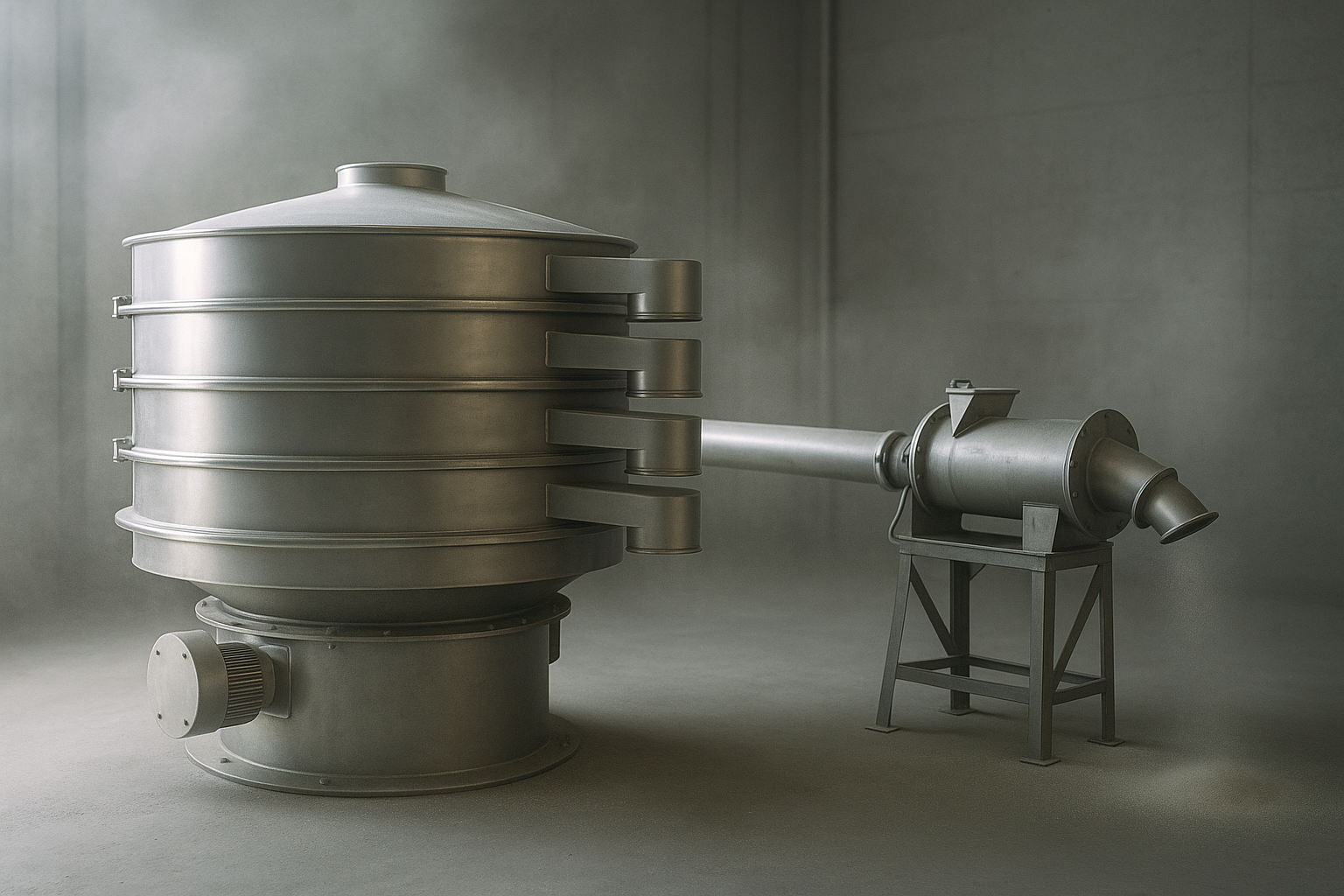
Screening and sieving give a powder process its size discipline: they protect products against oversize and foreign material, split streams into defined fractions and recover good product from waste. Almost every bulk solids plant screens somewhere — at intake, after milling, before packing or as a final safety screen ahead of the customer.
Screening tasks
- Check or safety screening — a single coarse cut that removes lumps, foreign bodies and packaging debris to protect products and downstream equipment.
- Grading and classification — separating a stream into two or more defined size fractions, often on multiple decks.
- De-lumping and conditioning — breaking soft agglomerates after storage or bulk-bag discharge so dosing and mixing see consistent material.
- Recovery and dedusting — pulling fines or reclaiming good product from reject and recycling streams.
Machine families
Gyratory screeners move the screen in a near-horizontal circular motion, keeping particles in contact with the mesh — the choice for accurate separations of fine and difficult powders. Vibrating screeners (circular or linear) use higher-acceleration motion; they are compact, robust and dominate check-screening and scalping duties. Tumbler screeners imitate hand sieving with a slow three-dimensional motion, giving the sharpest cuts on very fine, light or fragile products at large diameters. Centrifugal sifters throw material through a cylindrical screen with a rotating paddle shaft — fully inline, high throughput, well suited to pneumatic conveying lines and hygienic duties.
Mesh, cut point and capacity
The screen itself decides the separation: woven wire and synthetic meshes are specified by aperture and open area, with standardized test-sieve designations providing the reference scale. Real capacity is a balance — finer cuts and higher loads increase the number of near-size particles that must find an opening, and moisture or fat content reduces effective capacity long before the catalog limit. Screening is one of the few unit operations where a small material trial reliably predicts full-scale performance.
Blinding and deblinding
Blinding — particles wedging into or coating the mesh — is the dominant operating problem. Countermeasures include ball trays and sliders that knock the mesh from below, air brushes, and ultrasonic deblinding systems that vibrate the wire itself at high frequency, keeping fine meshes open for cohesive powders. Screen condition monitoring and quick mesh change matter as much as the initial selection.
Hygiene and integrity
In food and pharma service, sifters double as foreign-body control points: mesh integrity is checked and documented, machines open tool-free for inspection, and product-contact parts follow hygienic-design rules. Magnetic separators downstream complete the protection chain. Broken-wire detection and documented mesh checks are standard expectations in audited plants.
Safety
Screening fine organic or metal powders creates dust clouds inside the machine, so screeners in combustible-dust service are grounded, dust-tight and integrated into the plant explosion-protection concept following the NFPA 652 framework. Enclosed inline sifters reduce fugitive dust at transfer points and protect operators during bag dumping and sampling.
How to select Screening & Sieving Systems
Partner with powderbulkvideos.com
Place your video in the engineering context buyers are researching.
Use a relevant company profile and technical video to demonstrate this technology before engineers reach the supplier shortlist.
Popular on powderbulkvideos.com
Popular Screening & Sieving Systems videos


HAZEMAG & EPR GmbH
HAZEMAG | Recycling | C&D Waste | 1946 – today
HAZEMAG & EPR GmbH designs, manufactures, installs and commissions plants for the cement & aggregate, minerals processing and recycling industries, combining equipment optimization expertise with beneficiation experience across the processing chain.
Total reach: 6,449

RETTAR
RETTAR: 3D Radar Scanner
RETTAR presents its 3DPro2300 3D radar scanner in this video.
Total reach: 19,806
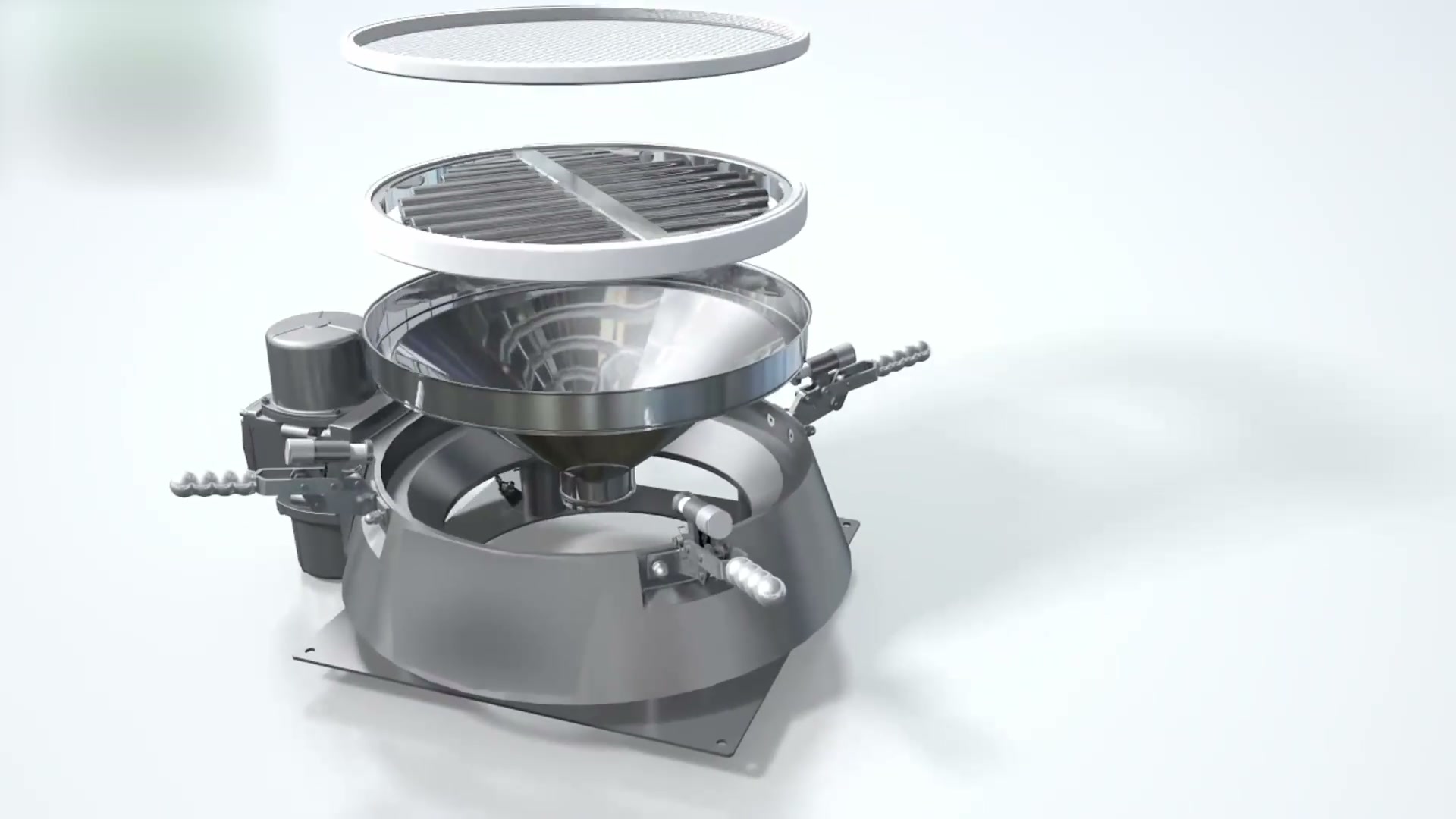
Hapman
Hapman Compact Sieve Animation
Hapman's animation shows a compact vibratory sieve mounted beneath a bulk bag unloader, screening powder before it enters the next process step. The sieve is a high-capacity, easy-clean option for restricted spaces.
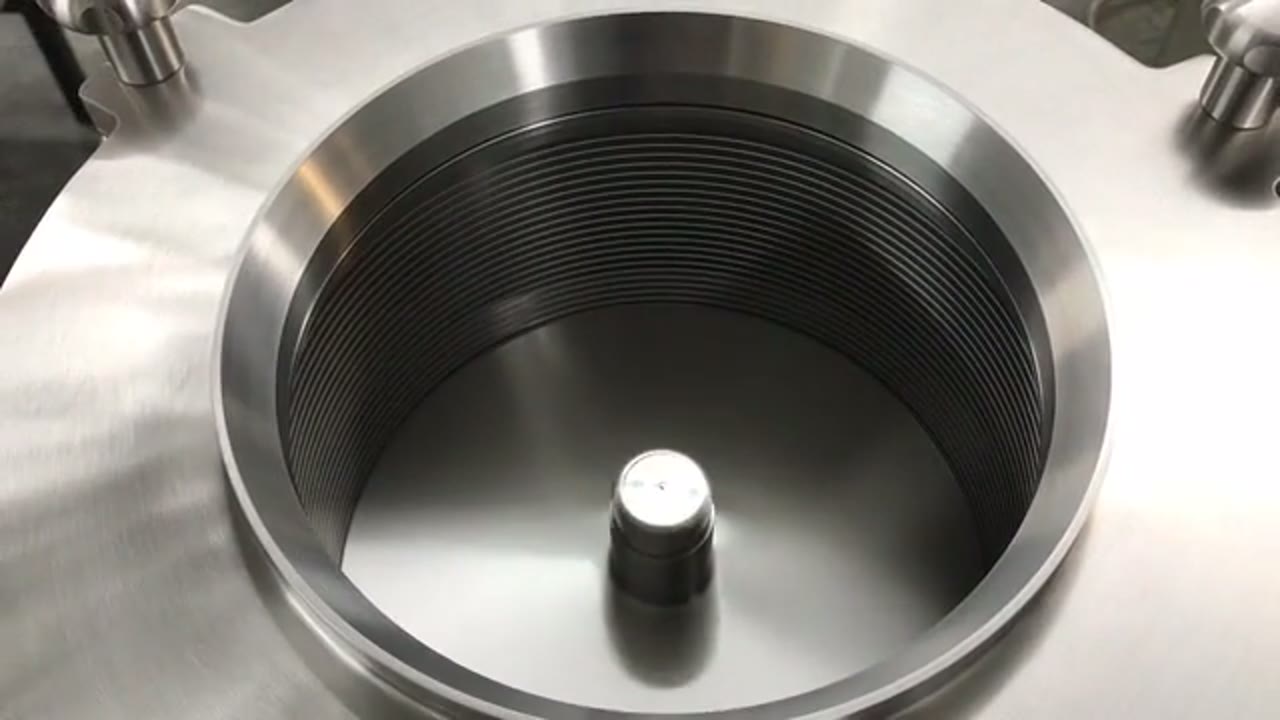
Hanningfield
Hanningfield Centrifugal Sifter (Kwik-Sift)
Hanningfield's Kwik-Sift video walks through centrifugal sifting — rotating assembly, cylindrical screen, and separate discharge paths for product and oversize.
Supplier discovery
Companies demonstrating Screening & Sieving Systems
Frequently asked questions
What is the difference between a gyratory and a vibrating screener?
Gyratory screeners move the mesh in a near-horizontal circular motion that keeps particles sliding across the screen — best for accurate fine separations. Vibrating screeners use higher-acceleration circular or linear motion; they are compact and robust and dominate check-screening and scalping.
When should a centrifugal sifter be used?
When screening must happen inline at high throughput — for example in or after a pneumatic conveying line, or as a hygienic control sieve before packing. A rotating paddle shaft throws product through a cylindrical mesh, handling large capacities in a closed, compact machine.
How is mesh blinding prevented?
With mechanical deblinding such as ball trays or sliders knocking the mesh from below, and with ultrasonic systems that vibrate the wire at high frequency. Ultrasonic deblinding keeps very fine meshes open for cohesive powders that would otherwise blind within minutes.
Why do plants use safety or check screens before packing?
As a final protection point: the screen removes oversize, agglomerates and foreign bodies, and its documented mesh-integrity checks provide records for quality audits in food, feed and pharmaceutical production.
Related content
Continue exploring
Move from this page to the companies, videos and technical topics that add useful context.