
Application
Powder Blending in Pharmaceutical Production
Answer in brief
In pharmaceutical production the blend is only as good as what reaches the press.
A blend that passes in the mixer can fail at the tablet if it segregates on the way, and more mixing is as likely to cause that as to cure it.
- Match particle size between active and excipient.
- Keep the transfer after the blender short and gentle.
- Sample the way the product is used, not the way the blender is convenient.
Reviewed October 21, 2026
The problem
Content uniformity is a release test, and it is taken at the tablet or the capsule, which is several transfers downstream of the blender. A fine active in a coarser excipient separates at every one of those transfers, and the result arrives as an out of specification result on a batch that was uniform when it left the mixer.
Over blending is the less obvious version of the same problem. A blend of unlike particles is not stable; given enough agitation it will order itself, and a cycle extended to fix a marginal result can produce a worse one. The blending time is therefore a window with a lower and an upper bound, and both have to be established.
Containment runs alongside. The active is frequently potent, so charging, discharging and sampling are all places where the operator meets the compound, and the arrangement that protects them often adds transfers and drops that work against the blend.
Then there is proof. A blend uniformity result is only as good as the sampling, and a thief sample taken from a static bed answers a different question from the one the press will ask.
In pharmaceutical production the blend has a numerical acceptance criterion, and the usual remedy for missing it makes the result worse.
Desired outcome
A blend that meets content uniformity at the point of compression, with the transfer route designed to preserve it rather than assessed afterwards.
A blending window, with a lower and an upper time bound, established by experiment and documented with the data behind it.
A sampling plan whose samples represent what the press receives, and a containment arrangement that does not add avoidable transfers.
In plastics compounding the ratio of particle sizes governs: a fine additive blended into coarse resin without a matched carrier separates again on the way to the extruder.
Process approach
Formulation and equipment are worked on together, because the cheapest fix for segregation is usually in the formulation. Bringing the particle size of the active closer to the excipient, or granulating rather than blending directly, removes the driving force instead of managing it.
Blender selection then follows the material. Tumble blenders suit free flowing systems and are gentle; convective mixers handle cohesive materials and deagglomerate; high shear is for granulation rather than for blending. Blend time is established experimentally, with samples through the cycle so both bounds of the window are visible.
After the blender the design task is restraint. Minimal drop heights, mass flow intermediate containers, short direct transfers to the press and no pneumatic leg if it can be avoided. An in bin blender that becomes the press feed container removes the transfer altogether, which is why it is popular.
Sampling is designed last and deliberately. Samples across the discharge over time, or stratified samples from the press feed, represent what the tablet sees; a thief in a static bed does not, and the difference has been the cause of more investigations than any blender.
- Particle size of active and excipient brought closer, or granulation used, before equipment is blamed.
- Blender type matched to the material: tumble for free flowing, convective for cohesive.
- Blend window established by sampling through the cycle, with both bounds documented.
- Transfers after the blender minimised, with mass flow containers and no unnecessary drops.
- In bin blending considered to remove the post blend transfer entirely.
- Sampling plan designed to represent the press feed, not the static bed.
Selection factors
- Content uniformity requirement and the sampling plan that will have to prove it.
- Particle size and density difference between active and excipients, which is the driving force for segregation.
- Transfer route from blender to press, counted in drops and metres.
- Containment band of the active, which decides charging, discharging and sampling arrangements.
- Cohesiveness of the formulation, which decides between tumble and convective mixing.
- Cleaning validation for the blender and every transfer item in the route.
Common failure modes
- Blend time extended to fix a marginal result, segregating a blend that was already uniform
- Uniformity proven at the blender and never at the press feed
- Thief samples from a static bed used to represent what the press receives
- Pneumatic transfer after the blender, re sorting the blend on the way to the press
- Containment arrangement adding transfers and drop heights that work against the blend
- Particle size mismatch treated as a blending problem rather than a formulation one
Partner with powderbulkvideos.com
Put a relevant technical solution in this decision path.
Connect your company and video evidence with clearly labelled visibility where engineers evaluate this material, application, industry or product.
Frequently asked questions
Why can more blending make uniformity worse?
Because a mixture of unlike particles is not a stable state. Given enough agitation it orders itself by size or density, so blend time has an upper bound as well as a lower one.
Where should blend uniformity be sampled?
Where the press takes material. Samples across the discharge over time, or stratified from the press feed, answer the question that content uniformity asks; a static bed thief sample does not.
What removes segregation rather than managing it?
Changing the driving force: bringing the active and excipient particle sizes closer together, or granulating so the components travel as one particle. Equipment changes manage the symptom.
Related content
Continue exploring
Move from this page to the companies, videos and technical topics that add useful context.
Companies

Videos
Gericke AG
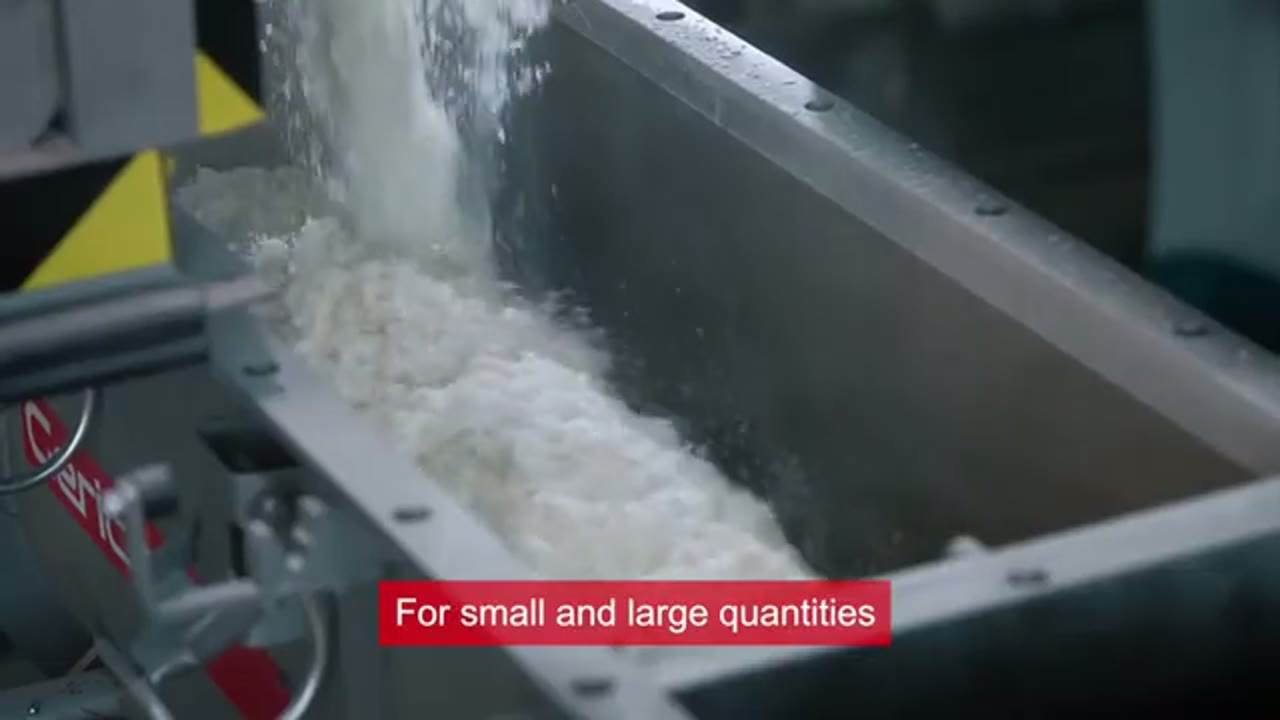
Continuous Mixer Gericke GCM
Gericke shows the GCM continuous mixer, which combines radial and axial mixing for throughputs that range from 10 l to 150,000 l/h.
Total reach: 4,638
Gericke AG
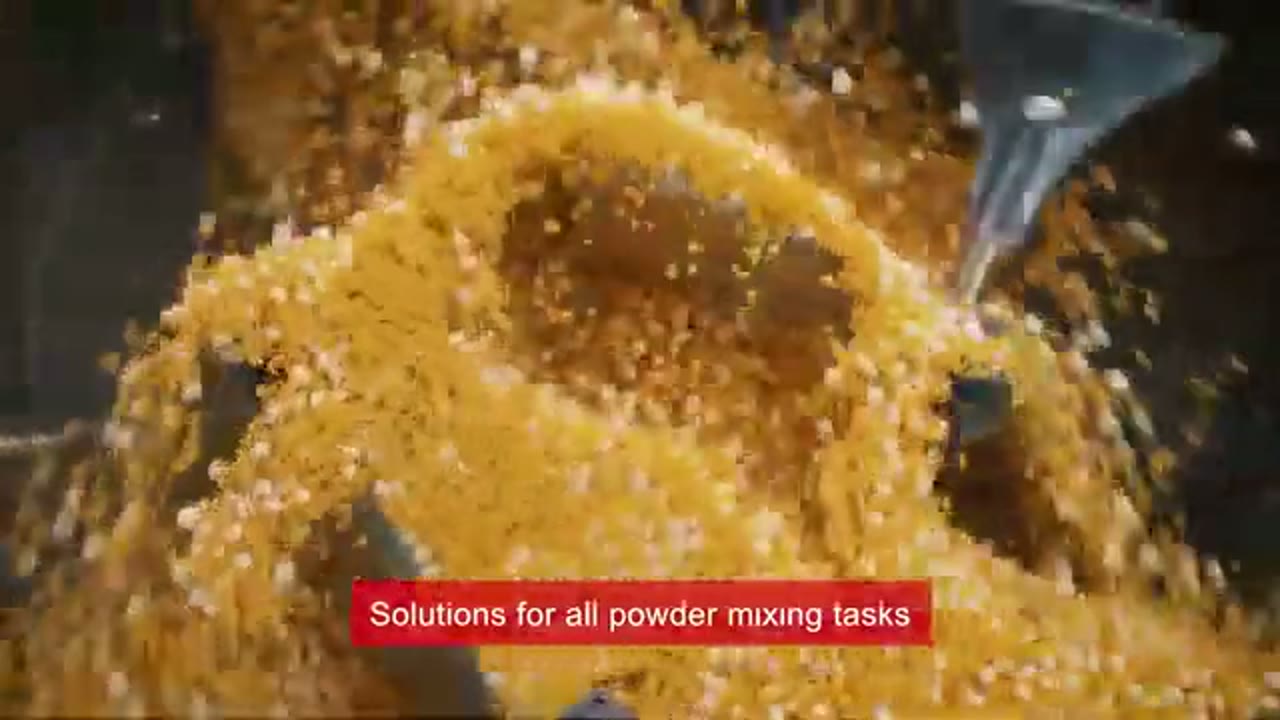
See Gericke's Leading Bulk Mixing Technology in Action
Gericke shows its bulk mixing portfolio in operation, from laboratory scale double shaft mixers to continuous mixers that cover inline mixing from 1 kg/h to more than 100,000 kg/h.
Total reach: 2,699
Glatt
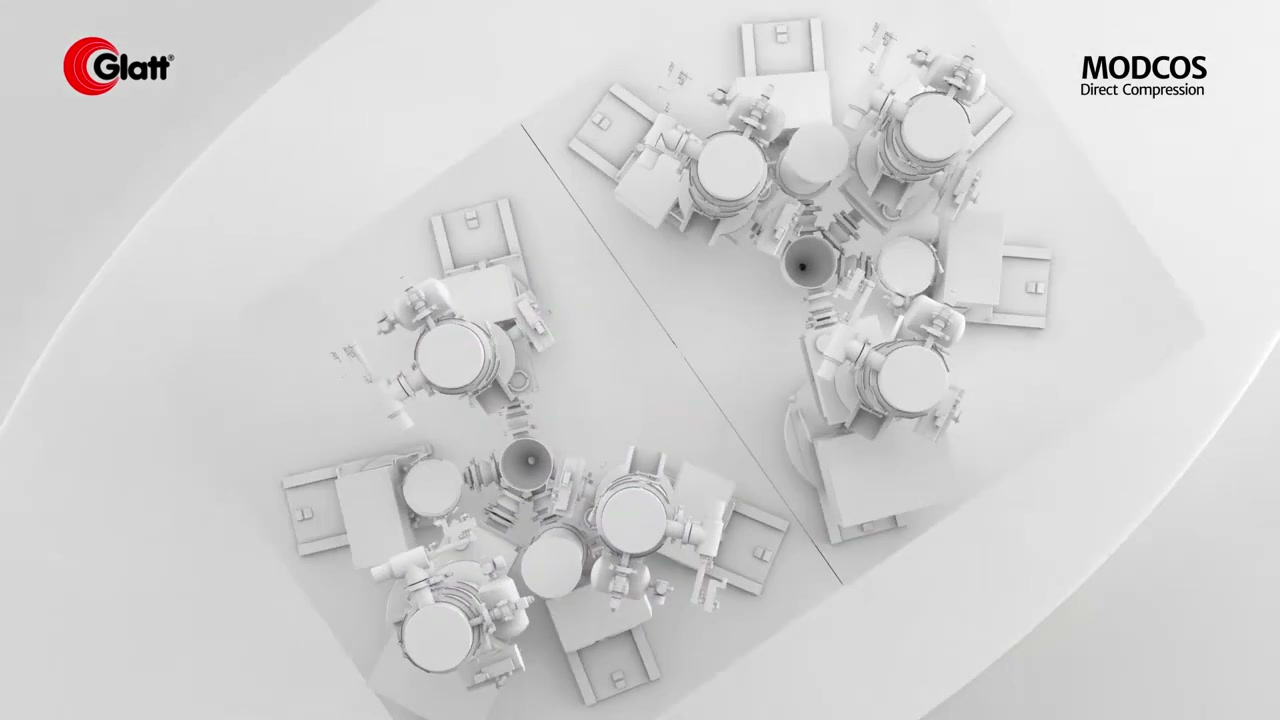
MODCOS Direct Compression
Glatt shows the MODCOS line for continuous direct compression, which can integrate up to three mixers and ten feeders on the way from powder to tablet.
Total reach: 2,669