
Material
Lactose
Answer in brief
Lactose is the workhorse excipient, and the grade on the label decides how the plant behaves.
Sieved crystalline, milled and spray-dried lactose have different flow, compaction and segregation behavior even though the chemistry is identical.
- Fix the grade before designing hoppers and feeders.
- Watch segregation between coarse excipient and fine active ingredient.
- Keep the powder dry, since moisture changes both flow and compaction.
Reviewed October 21, 2026 · Updated November 10, 2026
Handling challenges
Most oral solid dosage forms are mainly lactose, which makes it the material that decides how a blending and compression line behaves.
Grades are different materials
- Sieved crystalline grades flow well and compact poorly.
- Milled grades are fine, cohesive and improve content uniformity with potent actives.
- Spray-dried grades are designed for direct compression and flow like a granulate.
Hopper geometry, feeder type and blender choice all follow from this, so a grade change is a process change rather than a purchasing decision.
Segregation in blends
A coarse excipient with a fine active separates during transfer, and the result is content uniformity failure at the press.
Short transfers, minimal free fall, mass flow hoppers and particle size matching between excipient and active are the practical controls.
Sieving and lump control
Lactose arriving from storage carries agglomerates, and the sieve before the blender is both a quality step and a foreign body control.
Containment and cleaning
The excipient itself is benign, but it shares equipment with actives that are not.
Contained charging, documented cleaning validation and sampling that proves the result belong to the lactose line as much as to the active line.
Dust explosion
Lactose dust is combustible, and mills, sieves and collectors in a pharmaceutical plant need the same protection logic as in food production.
What to establish before buying equipment
- Grade and supplier, with flow properties measured on the delivered lot.
- Particle size relationship between excipient and active.
- Required blend uniformity and the sampling plan.
- Cleaning validation approach for shared equipment.
Storage and conditioning
Lactose is a pharmaceutical excipient, so storage is about preserving a specified material rather than just keeping it dry.
Grades differ widely: crystalline, milled and spray-dried lactose behave almost like different materials, and the grade is chosen for its compression or flow behaviour. Moisture changes both.
- Control humidity; lactose takes up water and the fine grades cake.
- Keep grades strictly separate, including in the equipment between campaigns.
- Protect agglomerated grades from mechanical handling that breaks them down.
What this means for equipment
Gentleness, cleanability and traceability set the equipment.
Spray-dried grades owe their flow to agglomerates that conveying can destroy, so velocity is a quality parameter. Vacuum transfer is the normal choice, both for containment and because it treats the material more gently than a long pressure line.
- Vacuum conveying at modest velocity.
- Cleaning validation designed in, including the receiver filter and discharge valve.
- Gravimetric dosing where the formulation tolerance demands it.
Safety and regulatory
Lactose dust is combustible, and in a pharmaceutical plant the controls are both safety and quality.
- Explosion protection on collectors and vessels, from measured values for the grade.
- Containment appropriate to what else is in the blend, not to the lactose itself.
- Cross-contamination control, which in practice is the dominant daily concern.
Lactose is also an allergen consideration where products are used by people with intolerance, which affects labelling and line segregation.
Material behavior
- Flowability
- Grade dependent, from free flowing to cohesive
- Abrasiveness
- Low
- Cohesiveness
- Low for coarse grades, high for milled grades
- Moisture behavior
- Hygroscopic at higher humidity; caking and hardness changes
- Contamination risk
- Cross-contamination between products and dairy allergen declaration
Partner with powderbulkvideos.com
Put a relevant technical solution in this decision path.
Connect your company and video evidence with clearly labelled visibility where engineers evaluate this material, application, industry or product.
Frequently asked questions
Do the different lactose grades need different handling?
Yes. Crystalline, milled and spray-dried grades differ in flow, compression and fragility enough to behave like separate materials in the same equipment.
Why does conveying velocity matter for lactose?
Because spray-dried grades owe their flow to agglomerates. High velocity breaks them, and the powder that arrives is not the powder that was specified.
What dominates the daily risk in a lactose line?
Cross-contamination between products, not the lactose itself. Cleaning validation of the receiver and discharge valve is where most of the effort goes.
Related content
Continue exploring
Move from this page to the companies, videos and technical topics that add useful context.
Companies

Videos
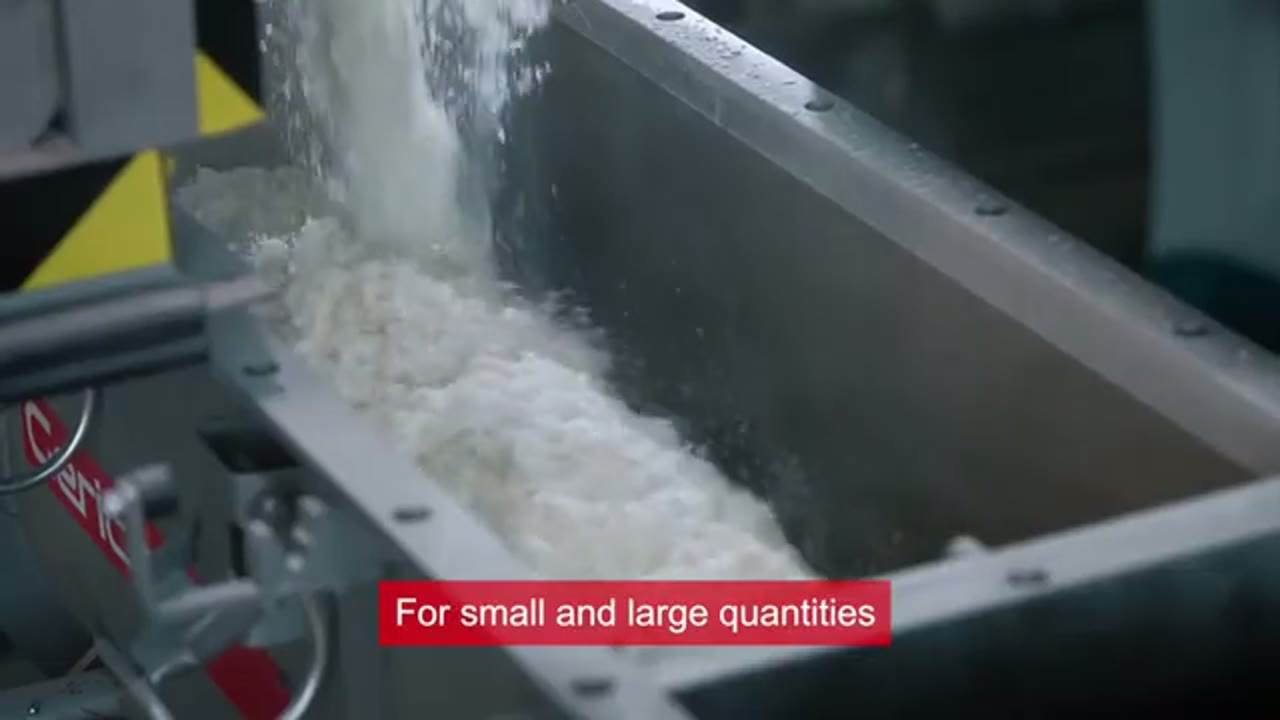
Gericke AG
Continuous Mixer Gericke GCM
Gericke shows the GCM continuous mixer, which combines radial and axial mixing for throughputs that range from 10 l to 150,000 l/h.
Total reach: 4,627
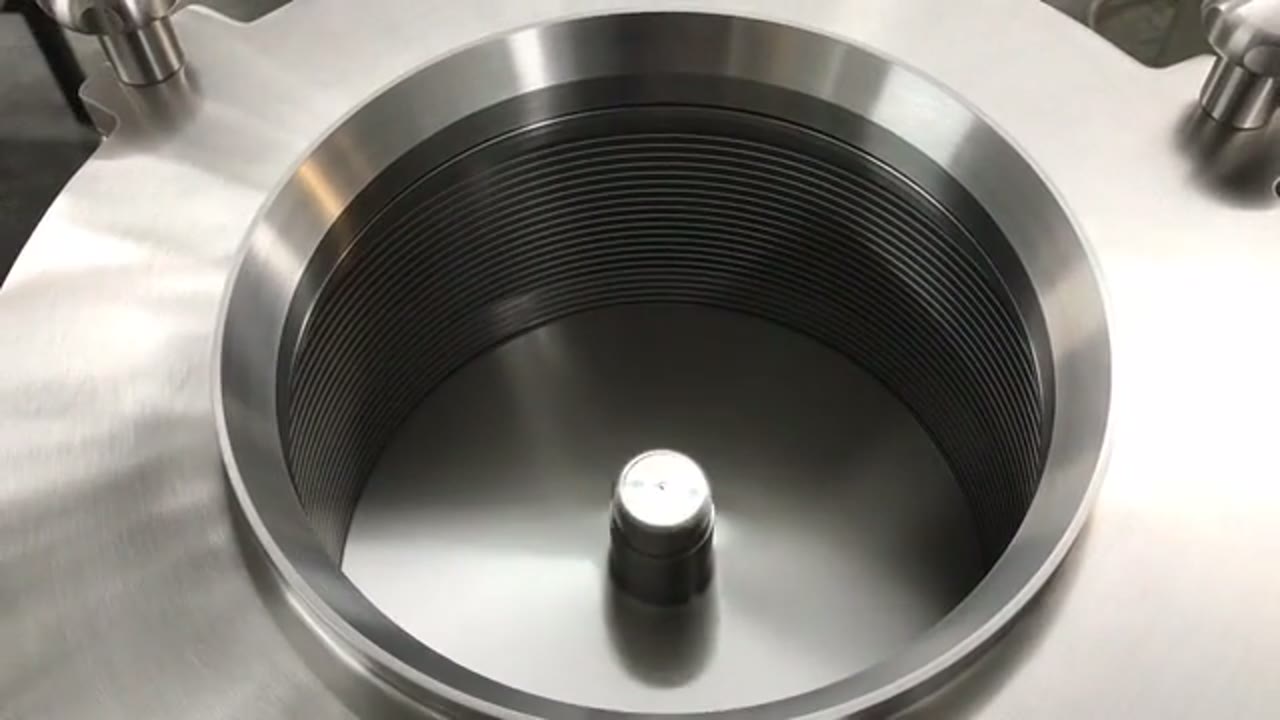
Hanningfield
Hanningfield Centrifugal Sifter (Kwik-Sift)
Hanningfield's Kwik-Sift video walks through centrifugal sifting — rotating assembly, cylindrical screen, and separate discharge paths for product and oversize.
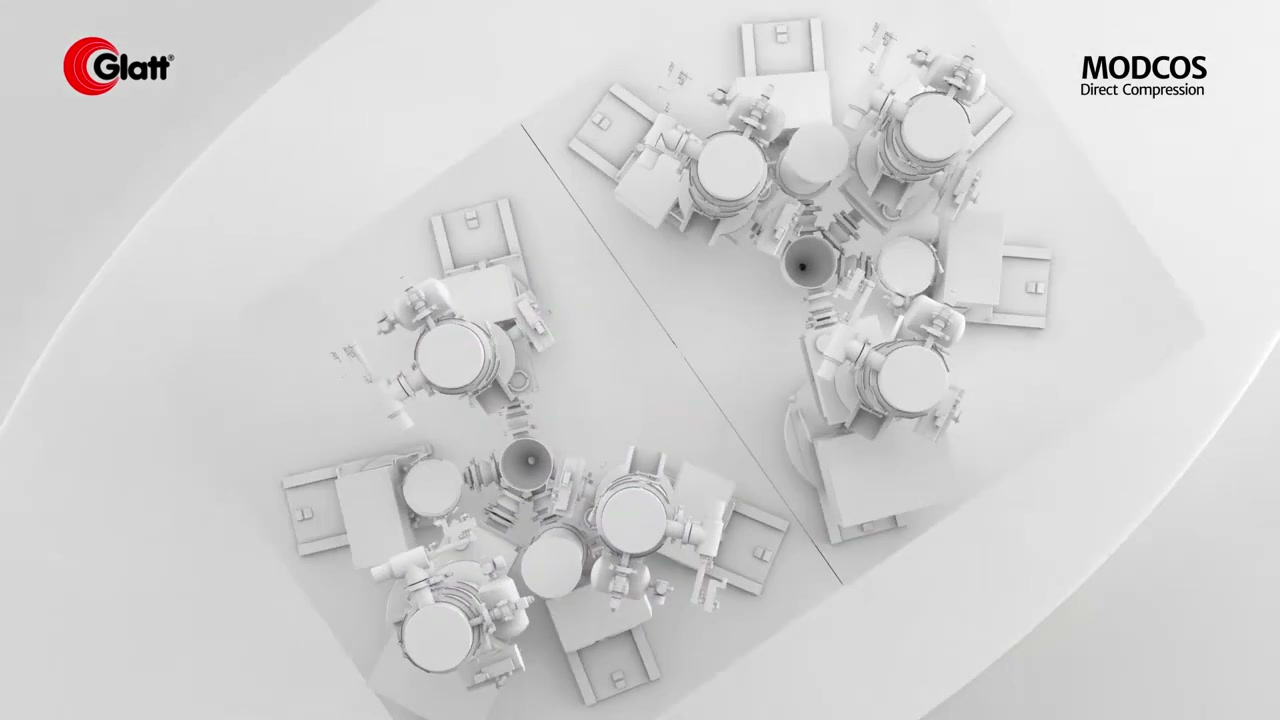
Glatt
MODCOS Direct Compression
Glatt shows the MODCOS line for continuous direct compression, which can integrate up to three mixers and ten feeders on the way from powder to tablet.
Total reach: 2,668
Technologies
- Explosion Protection
- Feeding & Dosing Control
- Feeding & Dosing Control
- High Containment Powder Handling
- Mixers & Blenders
- Mixers & Blenders for Powder and Bulk Solids
- Pharmaceutical Continuous Manufacturing
- Screening & Sieving Systems
- Screening & Sieving Systems for Powder and Bulk Solids
- Vacuum Conveying
- Vacuum Conveying Systems
Applications
- Automated Sack Emptying in Pharmaceutical Plants
- Bulk Bag Discharge in Pharmaceutical Production
- Explosion Isolation in Pharmaceuticals
- Explosion Protection for Pharmaceutical Production
- Gravimetric Feeding in Pharmaceutical Production
- Hygienic Powder Screening for Food and Pharma
- Hygienic Vacuum Conveying for Food and Pharma
- Level Measurement and Inventory Control in Pharmaceutical Plants
- Mechanical Conveying in Pharmaceutical Production
- Pneumatic Conveying in Pharmaceutical Production
- Powder Blending for Food and Pharma
- Powder Blending in Pharmaceutical Production
- Valve and Airlock Selection for Pharmaceutical Powder Handling