
Application
Hygienic Powder Screening for Food and Pharma
Answer in brief
A hygienic screener is defined by what happens between screenings: crevice-free product-contact surfaces, tool-free disassembly, documented materials and finishes, and dust-tight connections make the machine cleanable and auditable.
The screening duty itself — usually high-rate check screening through a centrifugal sifter or vibratory screen — is the easy part; keeping the screen from becoming its own contamination source is the design work.
Reviewed August 14, 2026 · Updated October 11, 2026
The problem
Desired outcome
Process approach
Selection factors
Common failure modes
- Cleaning takes so long that the plant quietly stretches the intervals.
- A broken mesh wire goes unnoticed and the safety screen stops screening.
- Gaskets and clamps hide crevices that hold product through every cleaning cycle.
- The oversize discharge is open, so the collected contamination re-enters the room.
- Screen blinding is fought with improvised deblinding instead of the right mesh and excitation.
- The screener is hygienic but its connections are not, so dust escapes at the flanges.
Partner with powderbulkvideos.com
Put a relevant technical solution in this decision path.
Connect your company and video evidence with clearly labelled visibility where engineers evaluate this material, application, industry or product.
Frequently asked questions
What is the difference between a sanitary and a standard industrial screener?
The separation physics are identical; the execution is not. Sanitary machines use polished crevice-free welds, bonded screen assemblies, quick-release clamps and documented surface finishes so they can be fully cleaned and audited — and they connect dust-tight instead of standing open.
How is mesh integrity verified in a safety screening duty?
Through scheduled inspection of the screen assembly and, in critical duties, downstream verification such as sampling or metal detection. A check screen only protects the product while the mesh is intact — treating breakage checks as optional defeats the purpose.
Centrifugal sifter or vibratory screen for food powders?
Centrifugal sifters win high-rate in-line check screening: compact, enclosed and fast. Vibratory screens win classification duties and multi-fraction separations. Many plants run both — the sifter as the safety gate, the vibratory machine where a real size cut is needed.
Where does the removed oversize go?
Into a contained, separate discharge — it is the collected contamination and the evidence. An open oversize bucket next to a sanitary screener undoes the containment the machine was bought for.
Related content
Continue exploring
Move from this page to the companies, videos and technical topics that add useful context.
Companies


Videos
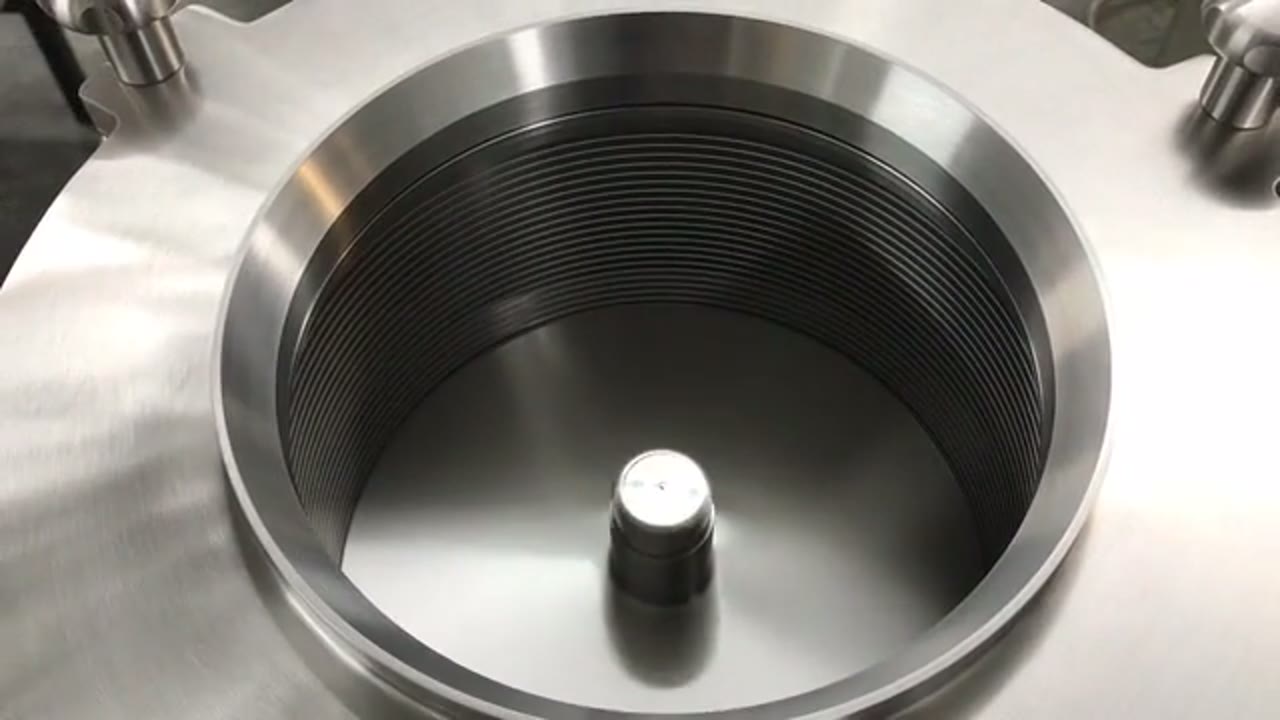
Hanningfield
Hanningfield Centrifugal Sifter (Kwik-Sift)
Hanningfield's Kwik-Sift video walks through centrifugal sifting — rotating assembly, cylindrical screen, and separate discharge paths for product and oversize.
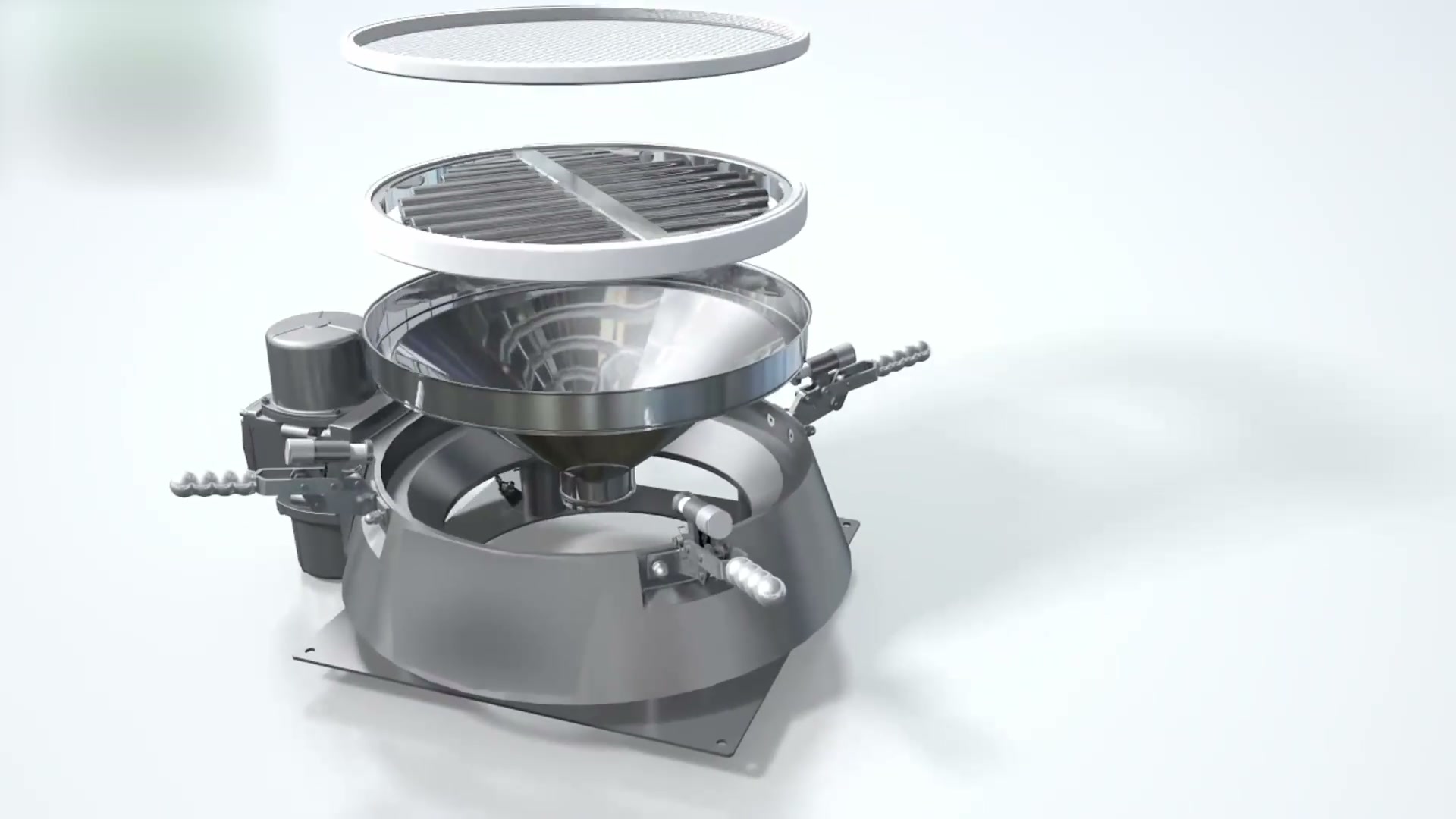
Hapman
Hapman Compact Sieve Animation
Hapman's animation shows a compact vibratory sieve mounted beneath a bulk bag unloader, screening powder before it enters the next process step. The sieve is a high-capacity, easy-clean option for restricted spaces.