
Material
Spices & Seasonings
Answer in brief
With spices the handling question is almost never throughput, it is what the last product left behind.
The powders are oily, intensely coloured and aromatic, so residue from one recipe is immediately detectable in the next.
- Design for cleaning first and for capacity second.
- Expect cohesive, bridging behavior from oily grinds.
- Keep temperature and exposure low, because aroma leaves with heat and air.
Reviewed October 21, 2026 · Updated November 10, 2026
Handling challenges
Seasoning plants run many small batches of expensive, strongly flavoured powders through shared equipment, which makes changeover the central engineering problem.
Cleaning and carryover
- Smooth, crevice-free internals with no horizontal ledges.
- Quick-release connections and removable blender internals.
- Dry cleaning methods validated by swabbing rather than by eye.
Paprika and turmeric make residue visible, which is useful; allergens such as mustard and celery do not, which is the real risk.
Flow behavior
Essential oils released during grinding make the powder cohesive and sticky on walls.
Small hoppers with steep walls, agitated discharge and short residence times work better than large silos that give the product time to consolidate.
Aroma protection
Volatile aroma compounds leave with heat, air movement and time.
Cool grinding, closed transfer and minimal holding between blending and packing preserve what the customer is paying for.
Blend uniformity
Seasoning blends contain components at very different dosages and particle sizes, so segregation after blending undoes the mix.
Blending close to the filler and gentle transfer afterwards protect the recipe.
Dust and explosion
Ground spice dust is combustible, and mills and collectors need assessment like any other food powder line.
What to establish before buying equipment
- Allergen matrix and the required changeover standard.
- Oil content of the hardest grade to handle.
- Batch size range, which drives blender and hopper sizing.
- Dust collection and protection for grinding.
Storage and conditioning
Spices are oily, aromatic and highly variable, and all three complicate storage.
Essential oils migrate, which makes blends sticky and lets aroma cross from one product to the next. Natural variation between harvests changes flow behaviour in the same silo with the same specification.
- Keep storage cool: warmth mobilises the oils and the stickiness follows.
- Segregate strongly aromatic products; carryover is a quality defect, not a nuisance.
- Expect batch-to-batch variation and design for the difficult end of it.
What this means for equipment
Stickiness and cleanability drive the design.
Oil-bearing powders coat walls and build up on ledges, so geometry matters more than capacity. Cleaning between products is frequent, and the time it takes decides how flexible the line really is.
- Smooth, ledge-free geometry with full access for dry cleaning.
- Short, simple transfer paths; every bend is a place to build up.
- Gravimetric dosing where small additions must hold tolerance.
Safety and regulatory
Many spice powders are combustible, and some are strongly irritant.
- Explosion protection from measured values for the actual product.
- Respiratory and eye protection where pungent powders are handled open.
- Allergen management, since several spices and carriers are declarable.
Microbiological control also matters: spices are a known source of contamination, which is why many are treated before use.
Material behavior
- Flowability
- Poor to moderate, oil dependent
- Abrasiveness
- Low
- Cohesiveness
- High for oily grinds
- Moisture behavior
- Hygroscopic; clumping and microbial risk when damp
- Contamination risk
- Allergen and colour carryover between recipes
Partner with powderbulkvideos.com
Put a relevant technical solution in this decision path.
Connect your company and video evidence with clearly labelled visibility where engineers evaluate this material, application, industry or product.
Frequently asked questions
Why do spice lines need such frequent cleaning?
Because oils migrate and carry aroma into the next product. Carryover is a quality defect that customers notice immediately, so changeover time is part of the design.
Does spice powder explode?
Many do. They are fine organic powders, and protection follows a test on the actual product rather than an assumption from the category.
Why does the same spice behave differently between deliveries?
Natural variation. Harvest, origin and oil content change the flow behaviour, so the design should cover the difficult end of the range.
Related content
Continue exploring
Move from this page to the companies, videos and technical topics that add useful context.
Companies

Videos

Gericke AG
See Gericke's Leading Bulk Mixing Technology in Action
Gericke shows its bulk mixing portfolio in operation, from laboratory scale double shaft mixers to continuous mixers that cover inline mixing from 1 kg/h to more than 100,000 kg/h.
Total reach: 2,693
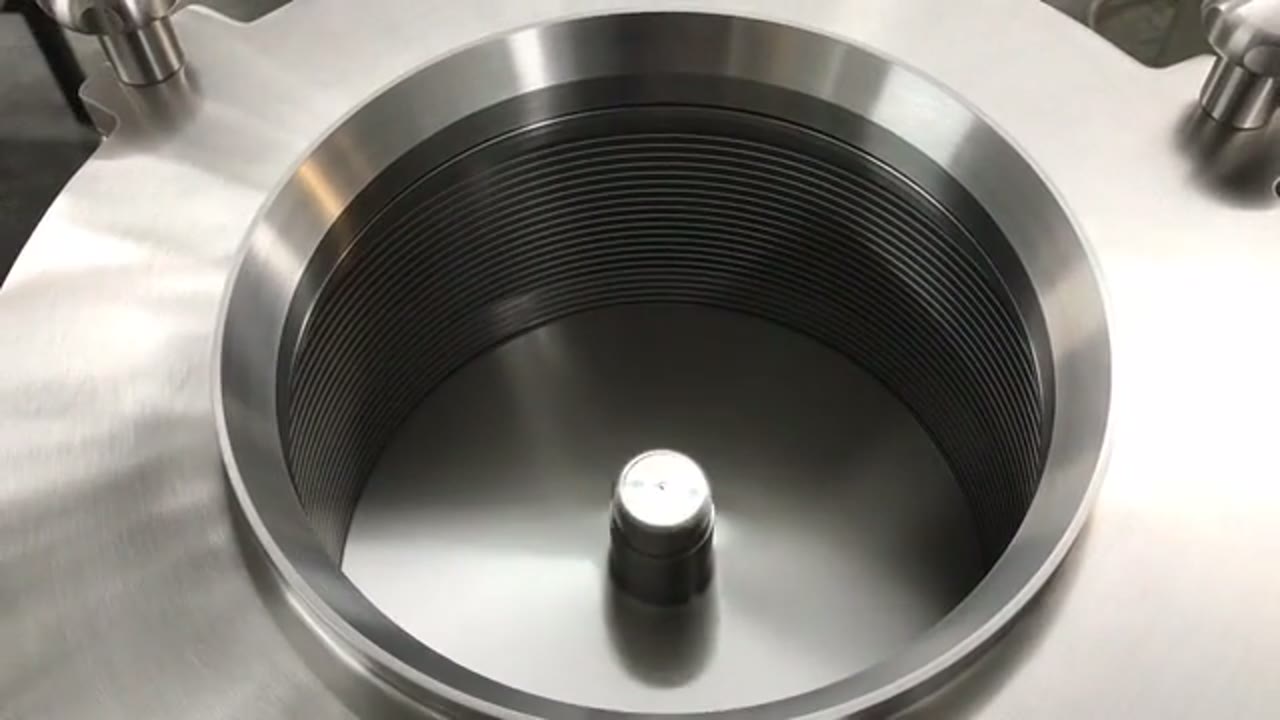
Hanningfield
Hanningfield Centrifugal Sifter (Kwik-Sift)
Hanningfield's Kwik-Sift video walks through centrifugal sifting — rotating assembly, cylindrical screen, and separate discharge paths for product and oversize.
Technologies
- Deagglomerators & Nibblers
- Dust Collection & Air Pollution Control
- Dust Collection & Air Pollution Control Technology Guide
- Explosion Protection
- Mixers & Blenders
- Mixers & Blenders for Powder and Bulk Solids
- Packaging & Bagging
- Screening & Sieving Systems
- Screening & Sieving Systems for Powder and Bulk Solids
- Vacuum Conveying
- Vacuum Conveying Systems