
Application
Powder Blending in Food Production
Answer in brief
In food production the blend has to survive the journey to the bag.
Spices, vitamins and colours are dosed at fractions of a percent, and every fall between mixer and filler sorts them out again. A blend that passes at the mixer discharge can fail at the packer without anybody touching it.
- Add the smallest components where they can actually be distributed.
- Shorten and soften the route to the filler.
- Clean the mixer to the allergen standard, not to the visual one.
Reviewed October 21, 2026
The problem
The hard part of a food blend is not the bulk; it is the minor ingredients. A vitamin premix at a tenth of a percent, a colour at a few hundred parts per million, a flavour carried on a fine powder: these have to be distributed evenly through tonnes of flour, sugar or starch, and they are the first things to separate again.
Segregation happens wherever the material moves. A free fall into a hopper sorts by particle size, a sloping surface sorts by density, and a funnel flow bin delivers the centre of the pile first and the wall material last. None of that is visible, which is why the problem is usually discovered in a finished product analysis rather than in the plant.
Shared mixers add the allergen question. Ribbon mixers, paddle mixers and their discharge arrangements hold residue in the shaft seals, under the ribbon and in the discharge valve, and a visual clean is not the same as an allergen clean.
And several food powders are fragile. Flakes, nuts, dried fruit and extruded pieces break under the same agitation that distributes the fines.
Desired outcome
A blend that meets its uniformity specification at the point of use, not at the mixer, with the transfer route designed to preserve it rather than tested afterwards to see whether it did.
A mixer and discharge arrangement that can be cleaned to the allergen standard in the available changeover time, with the method written and verified.
Fragile inclusions intact, which usually means a gentler mixer and a shorter mixing time than the uniformity question alone would suggest.
A pet food plant adds fat and liquid to the same vessel, which changes the mixing problem, and a regulated carryover limit decides how clean the discharge has to be.
Process approach
Blender type follows the recipe rather than the catalogue. Ribbon and paddle mixers cover general duty; where fragile inclusions have to stay whole, a gentler design or a lower fill level does more than a shorter cycle.
The biggest single improvement for minor ingredients is usually a pre blend. Mixing the vitamin or colour with a portion of the carrier before it enters the main mixer raises the inclusion rate of the step that has to achieve distribution, and that does more than extending the main mixing time ever does. Longer mixing can even undo a good blend, because a well mixed system of unlike particles will segregate given enough agitation.
After the mixer the work is about not undoing it. Drop heights are minimised, the holding hopper is designed for mass flow rather than funnel flow, and the route to the filler is made as short as the building allows. A long pneumatic transfer after a good blend is a reliable way to arrive with a bad one.
Sampling is designed to answer the right question: samples taken the way the product is used, across the discharge rather than from one point, with a plan that would detect segregation if it were happening.
- Minor ingredients pre blended with a carrier before entering the main mixer.
- Mixing time established by test, with over mixing recognised as a segregation risk.
- Drop heights minimised and the holding hopper designed for mass flow.
- Transfer route to the filler kept short, with gentle changes of direction.
- Sampling plan designed to detect segregation, taken across the discharge over time.
- Mixer, shaft seals and discharge valve named in the allergen cleaning plan.
Selection factors
- Smallest inclusion rate in the recipe and the uniformity the specification demands, which together decide whether a pre blend is needed.
- Particle size and density spread across the recipe, which is what drives segregation after the mixer.
- Fragility of inclusions such as flakes, nuts or dried fruit.
- Transfer route from mixer to filler, including drop heights and any pneumatic leg.
- Allergen matrix and the validated cleaning method for the mixer and its discharge.
- Dust explosion characteristics of the powders, including the sugar and starch dusts.
Common failure modes
- Minor ingredient added neat to a full mixer, so the distribution step starts from the worst possible condition
- Mixing time extended to fix a uniformity result, which can segregate a blend that was already good
- Blend verified at the mixer and never at the filler, so the segregation in between is invisible
- Funnel flow holding hopper after the mixer, delivering the centre of the pile first
- Pneumatic transfer added after the blender, re sorting the material on the way to the packer
- Mixer cleaned to a visual standard while the allergen plan assumes a validated one
Partner with powderbulkvideos.com
Put a relevant technical solution in this decision path.
Connect your company and video evidence with clearly labelled visibility where engineers evaluate this material, application, industry or product.
Frequently asked questions
Why does a good blend fail at the filler?
Because every movement after the mixer re sorts it. Free fall sorts by size, sloping surfaces sort by density, and a funnel flow hopper delivers the pile in the wrong order. The mixer was never the problem.
Does longer mixing improve uniformity?
Up to a point, then it can reverse. A system of unlike particles given enough agitation will segregate, so mixing time is established by test and the result is a window rather than a minimum.
What helps most with a minor ingredient at a tenth of a percent?
A pre blend with part of the carrier. It raises the inclusion rate of the step that actually has to distribute the material, and it does more than any change to the main mixing cycle.
Related content
Continue exploring
Move from this page to the companies, videos and technical topics that add useful context.
Companies

Videos
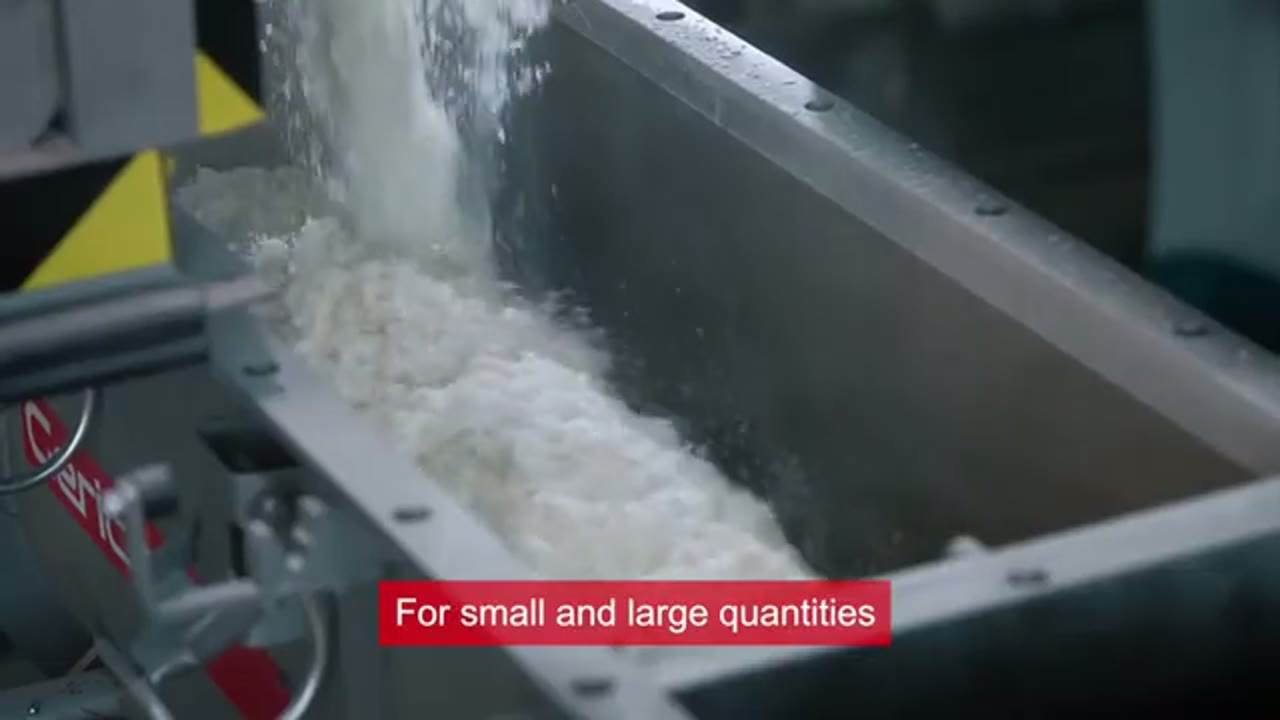
Gericke AG
Continuous Mixer Gericke GCM
Gericke shows the GCM continuous mixer, which combines radial and axial mixing for throughputs that range from 10 l to 150,000 l/h.
Total reach: 4,638

Gericke AG
Double Shaft Mixer GMS 5000 ECD Multiflux
Gericke presents the GMS 5000 Multiflux double-shaft mixer in a powder-mixing and hygienic-design context.
Total reach: 41,100
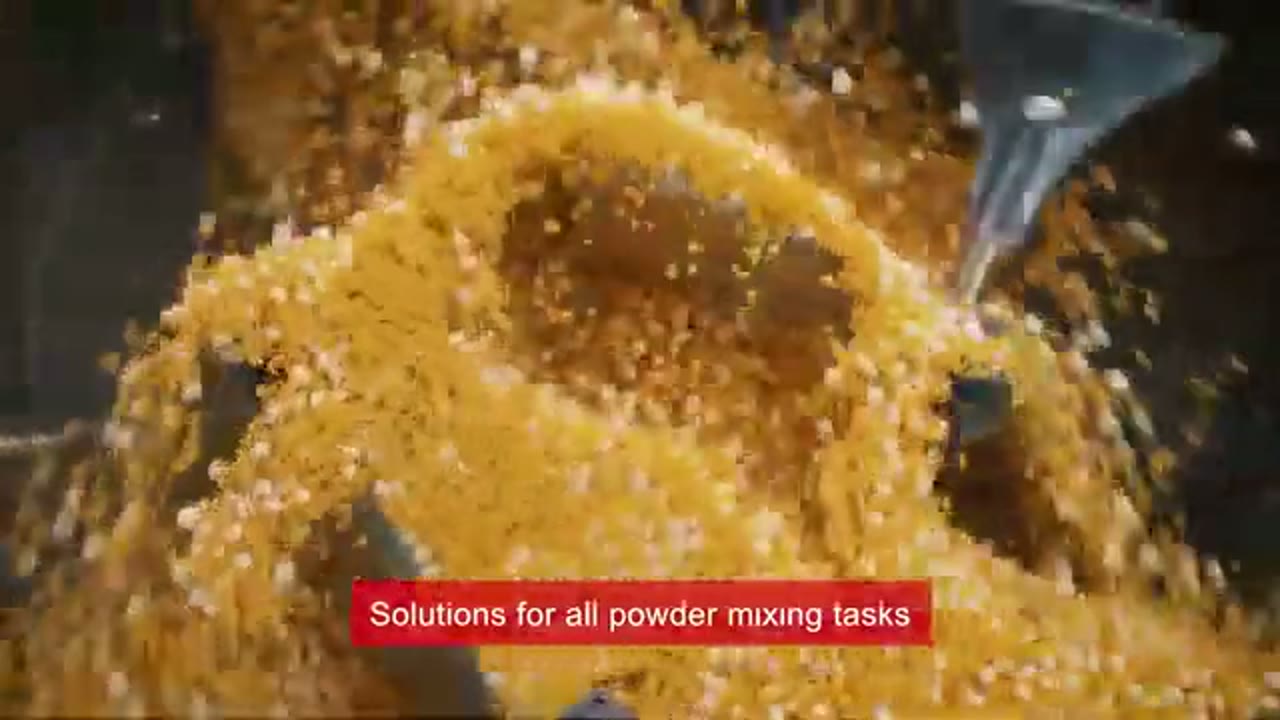
Gericke AG
See Gericke's Leading Bulk Mixing Technology in Action
Gericke shows its bulk mixing portfolio in operation, from laboratory scale double shaft mixers to continuous mixers that cover inline mixing from 1 kg/h to more than 100,000 kg/h.
Total reach: 2,699