
Independent industry shortlist for Feeding & Dosing Control
Top Feeding & Dosing System Suppliers (2026)
Answer in brief
Coperion and Gericke lead this 2026 comparison of feeding and dosing suppliers: both cover continuous loss-in-weight feeding from gram-per-hour rates to full production lines, with their own feeder controllers.
AZO follows for recipe-controlled batch weighing, from robotic micro-dosing of 100 g to multi-station screw dosing. Palamatic Process builds batch dosing stations around screw, twin-screw, vibrating, and spoon feeders, and GEA covers hygienic vibratory feeding for fragile dairy and food powders.
Which one fits depends on whether your duty is continuous or batch and on the rate, tolerance, and hygiene class you need.
By Editorial Team · Published July 17, 2026 · Updated October 9, 2026

How we selected these companies
ShowHide
We compared feeding and dosing suppliers on five technical areas that decide whether a feeder fits a duty.
- Feeder range (25%) looks at the principles a supplier builds, such as single-screw, twin-screw, vibratory, weigh-belt, and robotic or spoon micro-dosing, and at the feed-rate or batch-size span they cover, because the first question for any powder is whether a matching feeder exists at your rate.
- Weighing and accuracy technology (25%) covers load-cell design and resolution, stated dosing tolerances, and how the controller holds the rate during refill, when a loss-in-weight feeder cannot weigh and runs volumetrically.
- Controls and integration (20%) covers the feeder controller, the number of feeders or dosing stations it coordinates, recipe handling, and the connection to the plant control system.
- Certifications and hazardous-area options (15%) covers ATEX and NEC designs, hygienic standards such as EHEDG and USDA 3-A, contact materials, surface finish, and containment.
- Testing and service (15%) covers test centers where your material can be run on production-scale machines, laboratory analysis, and the material databases behind the design.
Range and weighing carry the most weight because they determine whether a feeder can hold the required rate with your material at all. Continuous feeders and batch dosing systems were rated on the same five areas, so read each entry against your own duty.
Feeder range 25%
Which feeding principles are offered and what feed-rate or batch-size span they cover.
Weighing and accuracy technology 25%
Load-cell design and resolution, stated dosing tolerances, and control behavior during refill.
Controls and integration 20%
Feeder controller, number of feeders it coordinates, recipe handling, and fieldbus or host-system connection.
Certifications and hazardous-area options 15%
ATEX and NEC designs, hygienic design standards, contact materials, surface finish, and containment.
Testing and service 15%
Test centers for trials with your material, laboratory analysis, and material databases behind the design.
Last reviewed October 7, 2026
Disclosure: Up to 40 percent of the places on this list can be booked. Booked and Featured entries are commercially supported, clearly labeled and carry no bought rank. Payment does not determine the editorial assessment or the ranked positions.
What buyers can learn from this list
Coperion, Gericke, AZO, Palamatic Process, and GEA cover feeding, dosing, and weighing from robotic micro-batching to continuous loss-in-weight lines. The order reflects feeder range, weighing technology, controls, hazardous-area and hygienic options, and test facilities. Treat it as a starting point for qualification, not a guarantee that the first name fits every recipe or process.
Feeding means different things in different plants. A feeder may control a continuous mass flow into an extruder, meter an ingredient into a batch, hold a ratio, discharge a hopper, or stabilize the inlet of another process. The comparison therefore starts with the control objective and the acceptable error over a meaningful time interval. A headline accuracy value without that context can't support a sound award.
Describe material behavior and process demand
Material data: provide bulk density range, particle size, cohesion, moisture sensitivity, aeration behavior, friability, abrasiveness, temperature, and hazard data. State whether the material compacts in storage, floods after agitation, builds up on surfaces, or separates during handling. These properties drive hopper design, agitation, screw geometry, refill behavior, weighing stability, and the feeder's practical operating range.
Process data: the data sheet should identify minimum, normal, and maximum rate, batch size, required turndown, run duration, refill method, upstream and downstream pressure, and available headroom. Define how performance will be judged during startup, stable operation, rate changes, refill, and shutdown. A good supplier explains which operating state governs selection instead of quoting only the easiest condition.
Volumetric, gravimetric, and batch choices
Volumetric feeding can be appropriate when material properties stay stable and the process tolerates the resulting variation. Gravimetric control can compensate for bulk density changes, but scale resolution, vibration, refill strategy, filtering, and control tuning still matter. Batch weighing raises its own questions: charge sequence, settling time, discharge completeness, and total cycle time. The shortlist covers suppliers with different emphasis across these approaches.
Ask every bidder to identify the measurement principle, control interval, calibration method, and expected response to a material change. For loss-in-weight control, clarify how refill is handled and how temporary volumetric operation affects the acceptance metric. For gain-in-weight or batching, define what is weighed, what is inferred, and how residual material is treated.
Mechanical fit and material contact
Screw, belt, rotary, vibratory, and other mechanisms create different shear, compression, leakage, and cleaning conditions, so feeder selection has to connect mechanical design with material behavior. Review hopper geometry, agitator action, clearances, seals, wear surfaces, and the risk of product damage. A broad portfolio only helps when the supplier can explain why one principle fits the duty better than the alternatives.
Hygienic service: for contamination-sensitive duties, require a defined cleaning concept. Access, tool requirements, removable components, surface finish, seals, drainability where relevant, and verification procedures should match the plant standard. Food or pharmaceutical suitability depends on the offered design: contact materials, surface finish, seals, and cleanability.
Controls, data, and integration
A feeder is part of a control system. Specify setpoint source, recipe management, interlocks, permissives, alarm behavior, signal interfaces, data recording, and ownership of tuning. For ratio control or continuous processes, ask how disturbances propagate and how the feeder recovers. Integration quality can matter as much as the mechanical feeder, because a stable device still performs poorly under unsuitable sequencing or refill logic.
Proposal review should expose package boundaries. Clarify who supplies the hopper, refill valve, load cells, platform, controller, variable speed drive, cabling, software, dust extraction, and downstream connection, and require drawings and interface descriptions early. Gaps between mechanical and controls suppliers are a common source of commissioning delay and disputed performance.
Safety and engineering limits
Combustible dust, hazardous areas, pressure boundaries, food contact, and pharmaceutical use each need their own check against the offered configuration. Provide current hazard and regulatory requirements, then require the bidder to map each one to the offered configuration. Review access to moving parts, stored energy, dust release, grounding, isolation, cleaning, and maintenance procedures under normal and abnormal conditions.
Claims need conditions: accuracy should state material, rate, time base, refill state, installation environment, and test method. Capacity should identify bulk density and feeder configuration. Wear life and cleaning time need a defined product and procedure. Anything a bidder cannot state with conditions stays an open qualification item.
Commercial and service comparison
Compare total installed and operating cost: support structure, refill equipment, controls, calibration tools, installation, commissioning, spares, wear parts, cleaning labor, validation, and production loss during changeover. A lower initial price may not stay the lower cost once the process needs frequent product changes or accuracy losses create expensive waste.
Ask where material trials can run, who interprets them, who attends commissioning, and how performance is demonstrated. Request references with similar material behavior and rate range, and confirm service and parts responsibility for your operating region. Service coverage is one selection criterion; the proposal defines what is committed for your plant.
Use a shared qualification protocol
Send every shortlisted supplier the same material and process data, the same scope matrix, and the same acceptance definitions. Invite justified alternatives, but require clearly stated deviations. Compare test results, engineering explanation, lifecycle cost, and support alongside price. The final choice may put a lower editorial candidate first for one plant, because a well tested application fit outweighs a broad portfolio.
Partner with powderbulkvideos.com
Show your equipment where buyers compare suppliers.
Booked places and Featured Listings are limited to 40 percent of a Top List, clearly labelled and separate from the editorial ranking.
Selected companies
-
1Best for: Continuous loss-in-weight feeding from 32 g/h microfeeding to multi-feeder extrusion lines
Coperion
Coperion
Coperion's K-Tron line covers single-screw, twin-screw, micro twin-screw, bulk solids pump, vibratory, weigh-belt, and liquid feeders in volumetric and gravimetric form.
- The KT20 twin-screw feeder spans 0.15 to 371 dm³/h depending on the screw set, the pharmaceutical QT35 reaches 2,012 dm³/h, the V300 vibratory feeder 8,500 dm³/h, and the MT12 and MT16 microfeeders go down to 32 g/h.
- SFT digital load cells resolve 1:8,000,000 in 20 ms.
- Each feeder carries its own KCM-III control module, and a K-Vision-III line controller runs up to 24 devices.
- Feeders are available for ATEX and NEC hazardous locations, pharmaceutical models have contact surfaces of 0.8 micron Ra, and the Niederlenz test center runs about 150 material trials a year.
View related CompanyTechnical score breakdown
- Feeder range
- 5/5 · Single-screw, twin-screw, micro twin-screw, bulk solids pump, vibratory, weigh-belt, and liquid feeders; KT20 from 0.15 to 371 dm³/h, QT35 to 2,012 dm³/h, V300 to 8,500 dm³/h, microfeeders from 32 g/h.
- Weighing and accuracy technology
- 5/5 · SFT digital load cells with 1:8,000,000 resolution in 20 ms and 450 weight samples per second; servo drive turndown of 1:1267; refill control from stored gravimetric performance.
- Controls and integration
- 5/5 · KCM-III module on each feeder with 5-inch display and built-in Ethernet; K-Vision-III runs up to 24 devices per line; Modbus, DeviceNet, and Profibus links; 21 CFR Part 11 options.
- Certifications and hazardous-area options
- 5/5 · ATEX 3D and NEC Class II, Division 2 options on the KT20; vibratory feeders for ATEX zone 21 inside and 22 outside; AISI 316L contact parts; 0.8 micron Ra finish and FDA-compliant seals on pharmaceutical feeders.
- Testing and service
- 4.5/5 · Niederlenz test center with about 150 trials a year and a material database of more than 15,000 entries; further test center in Sewell, New Jersey.
-
Best for: Wide rate span from 0.05 kg/h pharmaceutical feeding to 50,000 kg/h loss-in-weight lines
Gericke builds volumetric screw feeders in four series: FEEDOS S from 0.5 to 550 dm³/h, FEEDOS M from 20 to 3,600 dm³/h, GDU from 20 to 54,000 dm³/h, and the concentric GAC for heavy-duty powders from 3 to 37,000 dm³/h, plus vibro feeders.
- For loss-in-weight duty, the DIW-PE platform system covers 0.2 to 800 kg/h on an electromagnetic force compensation or strain gauge digital load cell, and the DIW-3E covers 2 to 50,000 kg/h on three weigh modules.
- Pharmaceutical feeders run from 0.05 to 500 kg/h, with up to seven on one Formulation Skid.
- One GUC-F controller runs up to four feeders.
- Test centers in seven countries check feeder accuracy to NAMUR NA 40.
View related CompanyTechnical score breakdown
- Feeder range
- 5/5 · FEEDOS, GDU, GAC, POWDOS, and vibro feeders from 0.5 to 72,000 dm³/h; loss-in-weight systems from 0.2 to 50,000 kg/h; pharmaceutical feeders from 0.05 to 500 kg/h.
- Weighing and accuracy technology
- 4/5 · Electromagnetic force compensation or strain gauge digital load cells, three-module weighing on larger units, tare-compensated hybrid weighing with spring-damper vibration filtering, and 17 million internal weight divisions in the controller.
- Controls and integration
- 4/5 · GUC-F runs up to four feeders in any combination with analog and digital load cells, TrendTec self-optimizing control including refill, operator log, OEE statistics, and fieldbus connection to the plant automation.
- Certifications and hazardous-area options
- 4.5/5 · ATEX certificate, ISO 9001 and ISO 14001, and a USDA certificate for RotaVal Ltd; hygienic twin screws polished to Ra 0.8 µm; wash-in-place feeders and containment up to OEB 5 on the Formulation Skid.
- Testing and service
- 5/5 · Test centers in Switzerland, France, England, the Netherlands, Brazil, the USA, and Singapore with production-scale machines, accuracy checks to NAMUR NA 40, and remote test monitoring by video.
-
3Best for: Recipe-controlled batch weighing, from robotic micro-dosing to multi-station screw dosing
AZO
AZO
AZO centers on batch dosing and weighing.
- The RoLog robot cell doses micro quantities from 100 g to 5 kg into target containers with a tolerance down to ±2 g.
- AZODOS screw dosing units come in sizes P30 to P140 with single or double screws and theoretical throughputs from 2 to 15,457 dm³/h; they run volumetrically, as a negative scale, or as a loss-in-weight feeder with a typical dosing accuracy of ±0.5 percent in continuous operation.
- One AZO CONT controller runs up to ten dosing stations and connects to the KASTOR batch process control system.
- COMPONENTER lines weigh about ten batches per hour.
- The Technology Centre in Osterburken runs more than 100 tests a year on over 250 raw materials.
View related CompanyTechnical score breakdown
- Feeder range
- 4.5/5 · RoLog robotic micro-dosing from 100 g to 5 kg, AZODOS screw dosing units P30 to P140 from 2 to 15,457 dm³/h, COMPONENTER batch lines at ten batches per hour, FLEXIDOS continuous dosing, and container-based systems.
- Weighing and accuracy technology
- 4.5/5 · AZODOS loss-in-weight dosing at typically ±0.5 percent in continuous operation, coarse and fine flow with a screw speed control range of 1:15, and RoLog dosing to ±2 g.
- Controls and integration
- 4.5/5 · AZO CONT runs up to ten dosing stations and four refill groups with up to 32 receivers, links to InTouch or WinCC visualization and the KASTOR batch control system with recipe management and batch tracing.
- Certifications and hazardous-area options
- 4/5 · ATEX and CE marking, EHEDG membership, ISO 9001, ISO 14001, and ISO 27001; AZODOS contact parts in 1.4301 or 1.4404 stainless steel with tool-free screw removal for cleaning.
- Testing and service
- 4.5/5 · Technology Centre in Osterburken with more than 100 tests a year on over 250 raw materials, a bulk materials laboratory, and a database of about 10,000 raw materials.
-
4Best for: Batch dosing stations with screw, twin-screw, vibrating, and spoon dosing on one recipe system
Palamatic Process
Palamatic Process
Palamatic Process builds dosing stations for batch plants.
- The D10 to D13 screw feeders reach 142, 523, 1,438, and 6,458 liters per hour, and the MD01 to MD03 microdosers reach 9, 88, and 782 dm³/h.
- The D14 twin-screw dispenser pairs a 120, 150, or 200 mm screw, up to 20,627 L/h, with a 30 mm fine-dosing screw that holds ±2 g.
- Vibrating feeders with 80 to 250 mm troughs dose up to 2 t/h, volumetrically or by loss in weight.
- The SpoonMatic weighs micro-ingredients into a bowl, and the DosingRobot automates twelve to thirty-six ingredients.
- Pal'Touch handles recipes and batch traceability.
- The test center has 35 machines in more than 300 configurations.
View related CompanyTechnical score breakdown
- Feeder range
- 4.5/5 · D10 to D13 screw feeders to 6,458 L/h, MD microdosers from 9 to 782 dm³/h, D14 twin-screw dispenser to 20,627 L/h, vibrating feeders to 2 t/h, SpoonMatic micro-dosing, and DosingRobot for 12 to 36 ingredients.
- Weighing and accuracy technology
- 3.5/5 · D14 coarse and fine screws with pneumatic shut-off holding ±2 g; optional three-load-cell weighing on screw feeders; loss-in-weight vibrating feeders; SpoonMatic with a single load cell on vibration isolators.
- Controls and integration
- 3.5/5 · Pal'Touch PLC platform with recipe creation and modification, batch traceability, and links to plant IT systems; touch-screen recipe setup on the SpoonMatic.
- Certifications and hazardous-area options
- 3/5 · D14 in 304L or 316L stainless steel; ECD hygienic screw feeder with mirror-polished finish and tool-free disassembly; in-house measurement of Kst, minimum ignition energy, and explosion limits for zoning.
- Testing and service
- 4.5/5 · Test centers in Brécé, France, and at Cintech, Quebec, with 35 industrial machines, more than 300 configurations, two test engineers, and a powder laboratory for particle size analysis.
-
5Best for: Hygienic vibratory feeding and distribution of fragile dairy and food powders
GEA
GEA
GEA's Scan-Vibro range is vibratory throughout: tray and tube feeders, circular distribution feeders, conveyors, and spiral elevators with no screws, bearings, or seals in the product zone.
- The loss-in-weight version weighs feeder, hopper, and material on load cells and doses from 0.5 to 500 kg/h, stand-alone or under EtherNet/IP control from the line SCADA.
- The circular distribution feeder splits one stream evenly to several outlets at up to 60,000 l/h and is available for ATEX zone 21/22 with 0.6 bar pressure shock resistance and polish grades from 1.3 to 0.2 µm.
- Spiral elevators lift up to 7,000 mm at up to 70,000 l/h.
- Hygienic versions follow EHEDG and USDA 3-A.
View related CompanyTechnical score breakdown
- Feeder range
- 3/5 · Vibratory equipment only: tray and tube feeders, circular distribution feeders to 60,000 l/h, conveyors up to 10 m per unit, and spiral elevators to 70,000 l/h; loss-in-weight dosing from 0.5 to 500 kg/h.
- Weighing and accuracy technology
- 2.5/5 · Loss-in-weight dosing with feeder, hopper, and material weighed continuously on load cells, for batch and continuous operation from 0.5 to 500 kg/h.
- Controls and integration
- 3/5 · HMI control panel on the loss-in-weight unit; stand-alone operation or EtherNet/IP control from the central SCADA; communication with a range of PLC systems.
- Certifications and hazardous-area options
- 4.5/5 · Circular distribution feeder for ATEX zone 21/22 with 0.6 bar pressure shock resistance; EHEDG, USDA 3-A, and NZFSA designs; fully welded stainless steel polished from 1.3 to 0.2 µm; CIP nozzles.
- Testing and service
- 3.5/5 · Søborg test center with a four-mode pneumatic conveying pilot plant, FT4 powder rheometer, and PowSIM sizing software; in-house pilot facilities for the circular distribution feeder.
-
Work with usAvailable
3 places on this Top List are open
Bookable places are limited, clearly labelled and separate from the editorial ranking above.
Frequently asked questions
Can a supplier buy a higher rank on this list?
No. The ranked positions follow the five technical criteria: feeder range, weighing and accuracy technology, controls and integration, certifications and hazardous-area options, and testing and service. Booked and Featured places are labeled as such and carry no rank.
How is the accuracy of a continuous feeder measured?
A common basis is NAMUR worksheet NA 40, Dosing Accuracy of Continuous Scales. It separates feeding consistency, the scatter of the actual rate around its own average, from feeding accuracy, the offset of that average from the setpoint, and calculates both from thirty measurements taken at one-minute intervals. Ask every bidder to state both values with material, rate, and refill state.
What happens to accuracy while a loss-in-weight feeder refills?
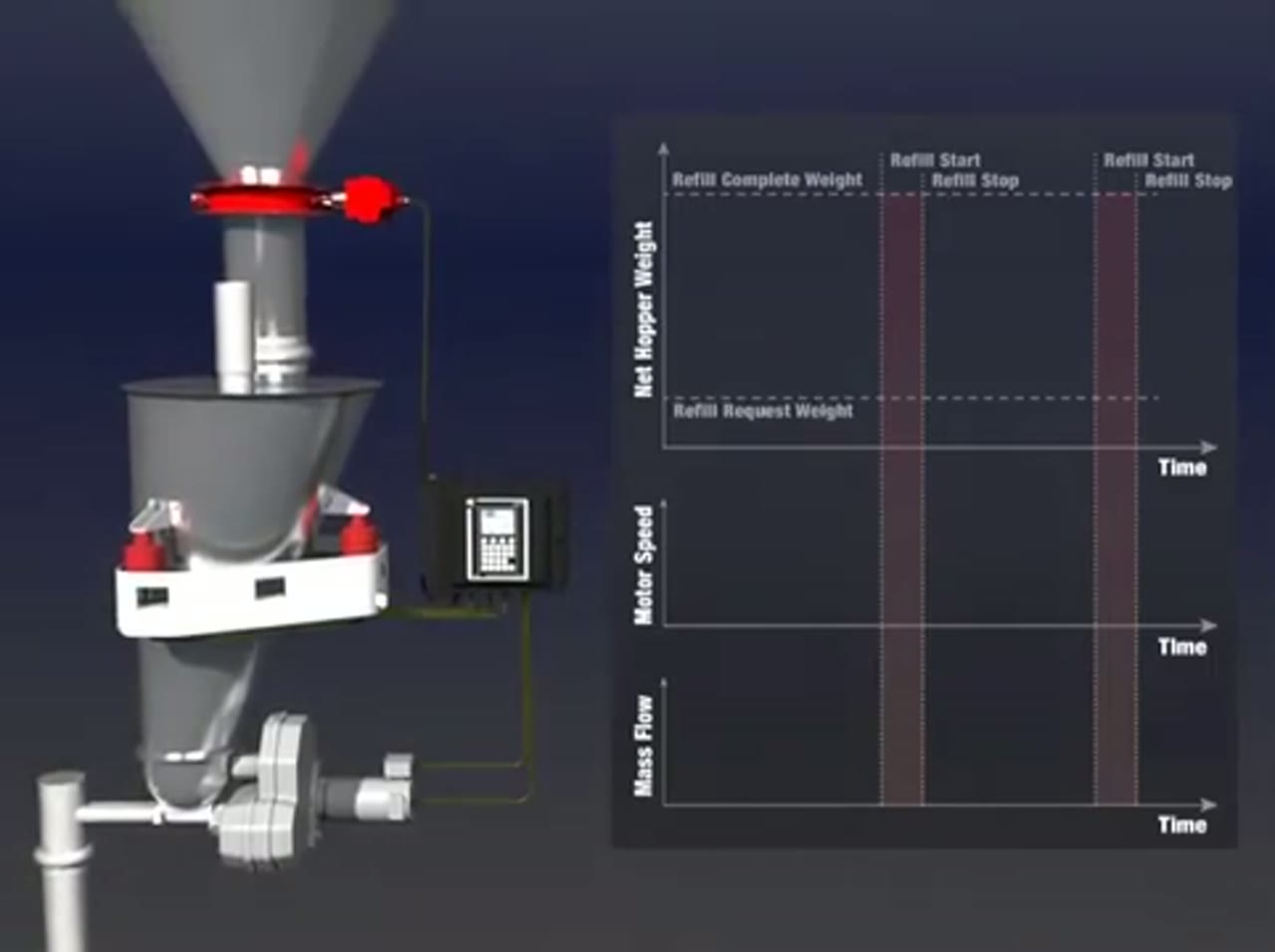
During refill the hopper weight rises, so the feeder cannot weigh the discharge and runs volumetrically. Controllers bridge this phase with screw-speed values stored from earlier gravimetric cycles. Compressible powders pack more densely under a fresh fill, so refill quantity, refill time, and hopper level matter most for these materials.
Does the first-ranked supplier fit every dosing duty?
No. Material behavior, turndown, refill state, and the required accuracy basis still need application-specific engineering. A supplier further down the list can be the better choice for one plant when a material trial shows a better fit for that powder and rate range, for example a batch weighing system instead of a continuous feeder.
When is gravimetric feeding worth it over volumetric?
Volumetric feeding works when material properties stay stable and the process tolerates the resulting variation. Gravimetric control compensates for bulk density changes, but scale resolution, vibration, refill strategy, and control tuning still decide the result.
Sources and further reading
- ATEX and explosive atmospheres, Health and Safety Executive
- Clearing the air, UK HSE
- Combustible Dust Safety and Health Topics, OSHA
- EHEDG Guideline Catalogue, EHEDG
- Improving Continuous Loss-in-weight Feeding Accuracy by a Novel Hopper Design (Journal of Pharmaceutical Innovation, 2024), University of Rhode Island DigitalCommons
- Improving Feeder Performance in Continuous Pharmaceutical Operations, Pharmaceutical Technology
- NA 040: Dosing Accuracy of Continuous Scales (current NE/NA list), NAMUR
- Palamatic Process will launch innovation center for powder processing in France, Chemical Engineering
- Predictive performance of loss-in-weight feeders for continuous powder-based manufacturing (Ph.D. dissertation, T. Li, 2020), Rutgers University
- Requirements for optimum design, process technology online
Related content
Continue exploring
Move from this page to the companies, videos and technical topics that add useful context.
Companies
Videos


Gericke AG
Gericke: GUC-F Feeding and Dosing Controller
This video presents the Gericke GUC-F Feeding and Dosing Controller, a multi-channel control system designed for precise feeding, dosing, and weighing tasks in powder and bulk solids processing. The controller supports demanding process requirements across a wide range of industries where accuracy, reproducibility, and process transparency matter.
Total reach: 3,523

AZO
AZO DOSITAINER with Discharge Base
AZO demonstrates a DOSITAINER with discharge base in an ingredient-handling and dosing context.
Coperion
Coperion Loss-in-Weight Feeder Animation
The Coperion K-Tron animation shows a controller observing the decrease in combined hopper, feeder and material weight, comparing the measured rate with the setpoint and adjusting feeder output.
Total reach: 42,978
Dinnissen
Feeder Valve
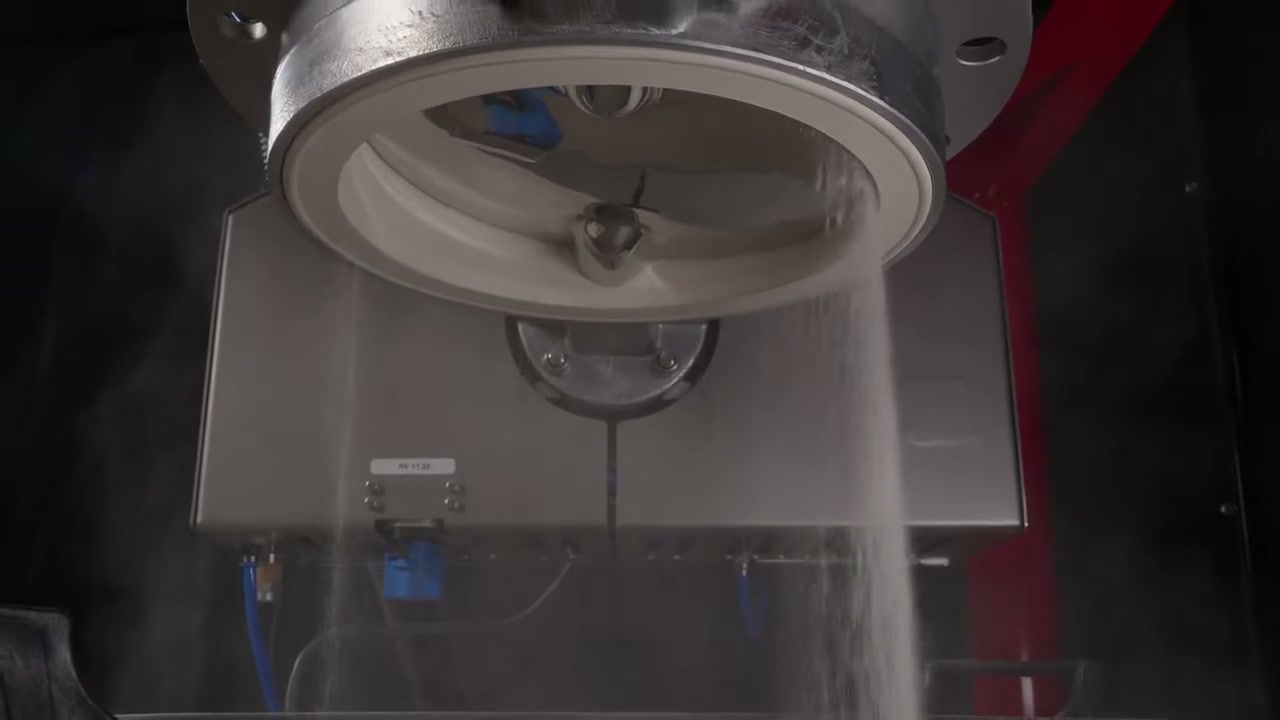
Dinnissen Process Technology shows a feeder valve developed for powder dosing at an accuracy that the older generation of equipment could not reach.
Brabender Technologie GmbH & Co. KG
Food feeding technology by Brabender Technologie
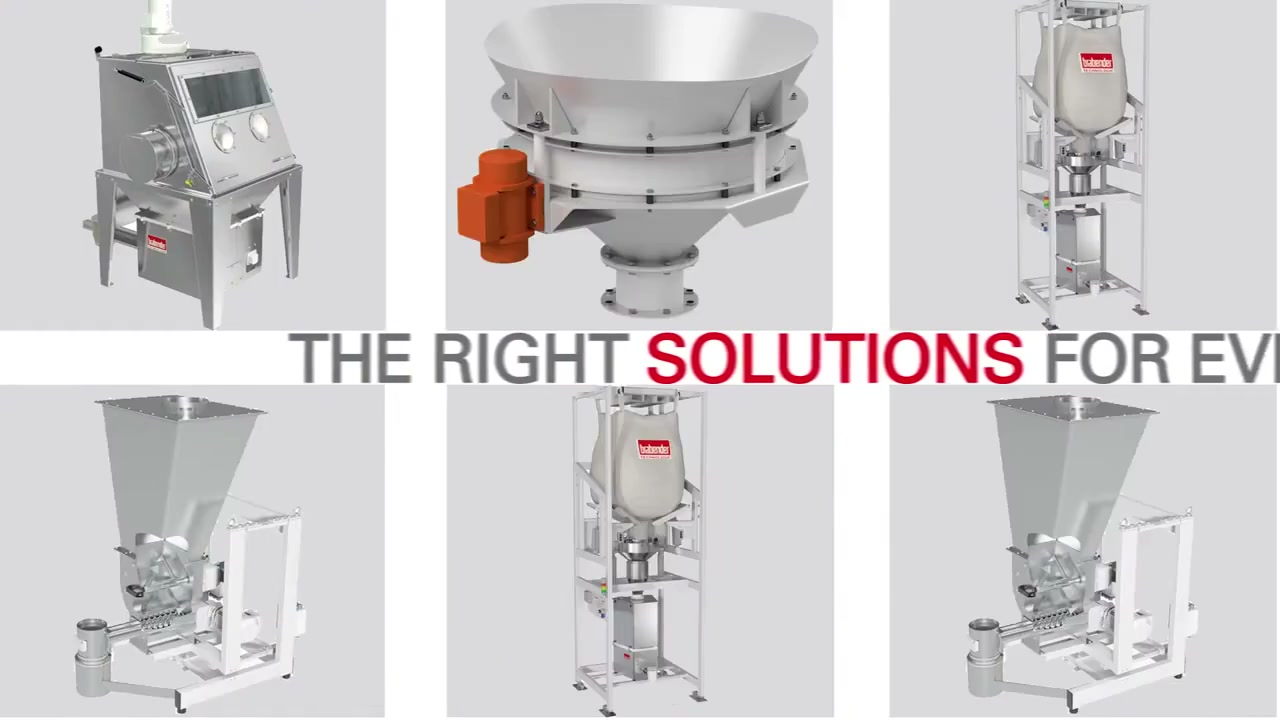
Brabender Technologie presents its gravimetric and volumetric feeding systems for the food industry, the equipment that meters an ingredient into a process at a controlled rate.
Total reach: 1,756

WAMGROUP
Tubular Screw Conveyors and Feeders
WAMGROUP presents enclosed tubular screw conveyors and feeders used to transfer or meter powders and bulk solids.