
Material
Bentonite
Answer in brief
Bentonite is a clay that was selected for its ability to swell and stick, and it brings both properties into your silo.
It arches over small outlets, coats walls and turns into an immovable gel wherever water reaches it.
- Size the outlet from measured flow properties, not from volume.
- Keep water away from the storage, including condensation.
- Plan for dust, because the dry powder is extremely fine.
Reviewed October 21, 2026 · Updated November 10, 2026
Handling challenges
Bentonite handling problems are usually silo problems, and silo problems with bentonite are usually sizing problems.
Flow and discharge
The clay has a high flow function value, which means it needs a large outlet and a well-designed hopper to move at all.
- Mass flow geometry with liners selected from measured wall friction.
- Bin activators or screw dischargers rather than vibration alone.
- Level monitoring that reveals a developing rathole before discharge stops.
Swelling
Water contact produces a gel that cannot be pumped, conveyed or dug out easily.
Sealed silo tops, dried venting air and prompt attention to roof leaks are cheap compared with emptying a gelled silo.
Dust
Dry bentonite powder is fine and persistent, and some grades contain crystalline silica.
Enclosed transfer, extraction at bag and big bag emptying and monitoring at operator positions are the controls.
Dosing
Drilling mud and foundry sand preparation need a defined addition rate from a cohesive powder, which points to loss-in-weight feeding with an agitated hopper.
What to establish before buying equipment
- Flow function and wall friction on the delivered grade.
- Moisture content on receipt and the storage humidity.
- Silica content and the applicable exposure limit.
- Required dosing accuracy and turndown.
Storage and conditioning
Bentonite gains strength while it sits, and it does so faster than most mineral powders.
The platelets consolidate under their own weight, and any moisture that reaches the surface of the bed starts the swelling that makes the product useful in the ground and unwelcome in a silo. A vessel that discharged on Friday can be solid on Monday.
- Size the outlet from a shear test that includes time consolidation, not from the fresh condition.
- Keep the vessel sealed against humid air; a vent filter is part of the design.
- Plan for discharge aids rather than adding them after the first blockage.
Where the silo is outdoors, the temperature swing between day and night drives moist air in and out through the vent, and the top of the bed is where the first crust forms.
What this means for equipment
Everything in a bentonite installation follows from cohesion.
The outlet is larger than the capacity suggests, the walls are steeper than they look necessary, and the discharge usually needs mechanical help: a live bottom, a vibrating discharger or an agitated outlet. A simple cone with a slide gate will work for a week and then stop.
For transfer, the powder is fine and dusty but not abrasive, so velocity is less critical than with mineral fillers. Vacuum conveying is often preferred because it keeps the dust in and tolerates a cohesive product better than a pressure line with a long run.
- Outlet dimensions from a measured flow function with time consolidation.
- A discharge aid specified with the vessel, not retrofitted.
- Closed transfer to keep a very fine dust out of the building.
Safety and regulatory
Bentonite is not combustible, and the hazards are respiratory and physical.
Many bentonite grades contain crystalline silica, which makes the respirable fraction a regulated exposure rather than a nuisance. Capture at the source and the handling of collected dust are the controls that matter, and filter changes are the highest exposure moment in the plant.
- Treat the respirable fraction as a regulated exposure where silica is present.
- Capture at bag tipping, bulk bag discharge and every transfer.
- Handle collected dust in closed containers rather than by sweeping.
The second hazard is the swelling itself. Spilled bentonite plus water makes a surface that is genuinely dangerous to walk on, and a drain that is genuinely difficult to clear.
Material behavior
- Flowability
- Poor, cohesive
- Abrasiveness
- Low to moderate
- Cohesiveness
- High; ratholes in funnel flow silos
- Moisture behavior
- Swells strongly with water and forms a gel
- Contamination risk
- Respirable dust including crystalline silica in some grades
Partner with powderbulkvideos.com
Put a relevant technical solution in this decision path.
Connect your company and video evidence with clearly labelled visibility where engineers evaluate this material, application, industry or product.
Frequently asked questions
Why does a bentonite silo block over a weekend?
Bentonite gains strength while it sits. The platelets consolidate under their own weight, and any moisture reaching the bed starts swelling. The outlet that worked on Friday can be too small by Monday.
How should the outlet be sized?
From a shear test that includes time consolidation, not from the fresh material. The difference between the two conditions is exactly the failure that catches people out.
Is bentonite dust a regulated exposure?
Where the grade contains crystalline silica, the respirable fraction is regulated rather than a nuisance dust. Capture at the source and closed handling of collected dust are the practical controls.
Related content
Continue exploring
Move from this page to the companies, videos and technical topics that add useful context.
Companies

Videos

Laidig Systems
Laidig Systems: Applications – Powder and Bulk Solids
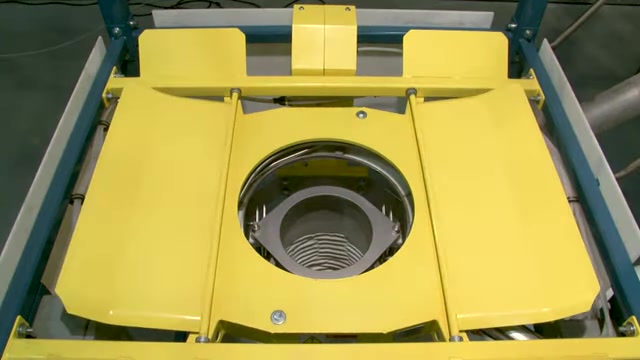
Laidig Systems designs and builds custom storage and reclaim systems that automate the unloading of dry bulk materials. The company focuses on materials with poor flow characteristics and delivers reclaimers for flat- and cone-bottom structures in industries such as food processing, biomass, power, cement, and mining.
Total reach: 24,494
Flexicon
Flexicon BULK-OUT Bulk Bag Dischargers
Flexicon presents its BULK-OUT bulk bag discharger range: forklift-loaded BFF frames, hoist-and-trolley BFC frames, split and half frames, and accessories for dust-free untying, retying and flow promotion.
Total reach: 73,082
Technologies
- Bulk Bag Unloading Systems
- Bulk Bag Unloading Systems: Selection and Design
- Dust Collection & Air Pollution Control
- Dust Collection & Air Pollution Control Technology Guide
- Feeding & Dosing Control
- Feeding & Dosing Control
- Industrial Feeders
- Pneumatic Conveying
- Pneumatic Conveying Technology Guide
- Silo Reclaim Systems
- Storage & Transportation
Applications
- Automated Sack Emptying in Mineral Processing
- Belt Conveying in Mining and Mineral Plants
- Bulk Bag Discharge in Mineral Processing
- Bulk Bag Unloading with Weighing and Feeding
- Chemical Powder Repackaging and Batching
- Dust Collection in Mineral Processing
- Shut-off and Isolation under Mineral Silos
- Valve and Airlock Selection for Mining and Mineral Plants