
Comparison
Screw Conveyor vs Pneumatic Conveying
Answer in brief
Distance and routing usually settle it before anything else.
A screw conveyor is efficient and simple over short, straight runs. Pneumatic conveying buys routing freedom and full enclosure at the cost of energy and particle degradation.
- Short, straight, high rate: screw.
- Around corners, between floors, to several destinations: pneumatic.
- Energy per tonne is several times higher for pneumatic transport, which matters when the line runs continuously.
By Editorial Team · Published October 21, 2026 · Updated October 21, 2026
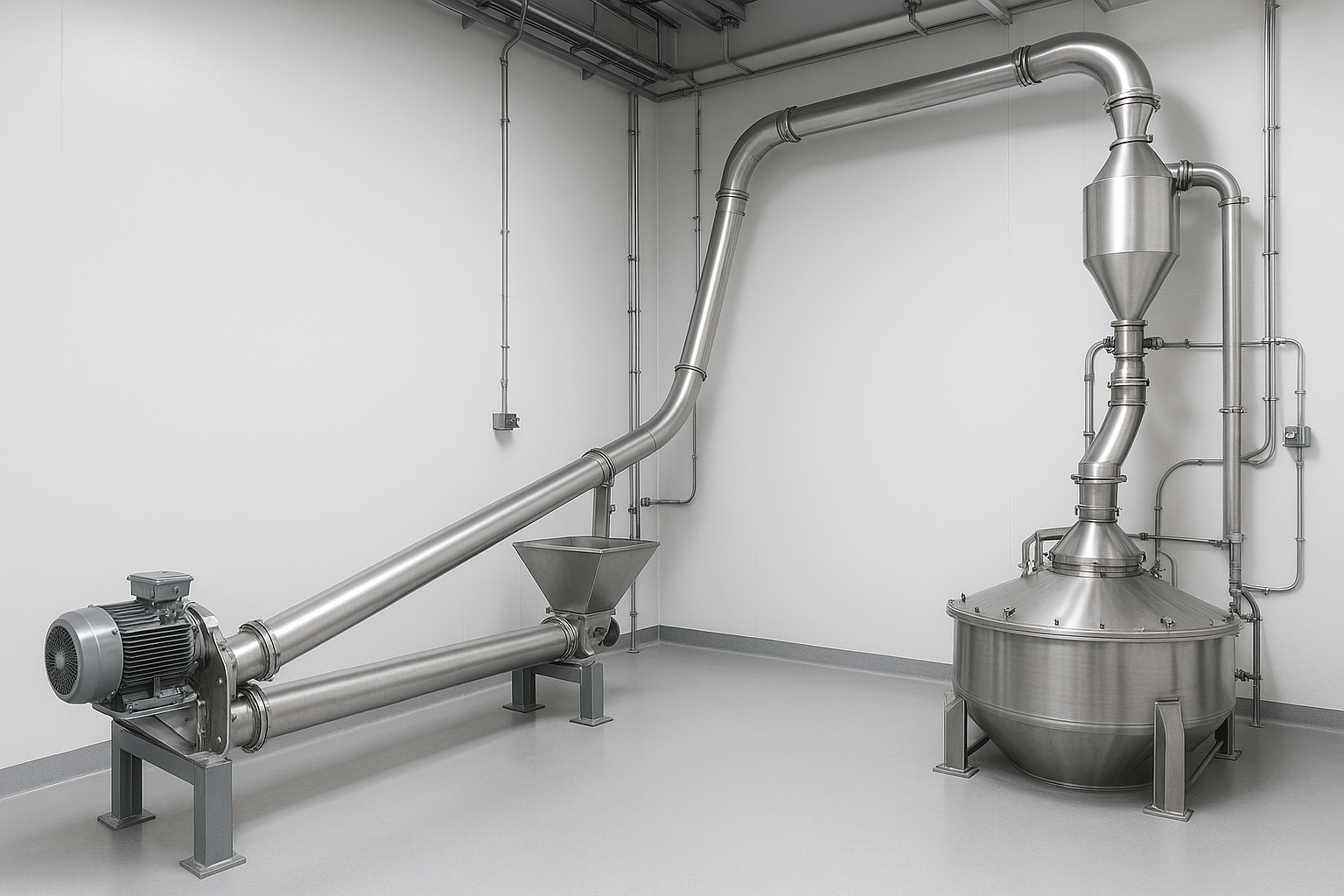
Sponsored visibility
Featured videos for this topic
Paid placements are clearly marked and remain separate from the editorial related-video selection.
What actually differs
A screw moves material by mechanical displacement, so the energy goes into turning the shaft against the material.
Pneumatic conveying moves material in an air stream, so the energy goes into compressing and moving air, most of which does no useful work on the product.
That difference explains both the cost and the flexibility: air can go around corners and up walls, a screw cannot.
Decision criteria
| Criterion | Screw conveyor | Pneumatic conveying |
|---|---|---|
| Typical distance | Up to tens of metres, straight | Tens to hundreds of metres, any route |
| Routing | Straight, limited incline | Free, bends and vertical runs |
| Energy per tonne | Low | Several times higher |
| Product degradation | Shear at the flights | Impact at bends, velocity dependent |
| Containment | Good with a tubular design | Full, closed pipe |
| Multiple destinations | Needs mechanical diverters | Straightforward with diverter valves |
Where the screw conveyor is the better choice
- Short transfers between adjacent equipment.
- Continuous duties where energy cost dominates.
- Cohesive materials that would not convey well in dilute phase.
Tubular screws give good dust containment, and flexible screw designs handle modest inclines and awkward geometry at low cost.
Partner with powderbulkvideos.com
Put your expertise beside the decisions engineers are making.
Connect a relevant company profile and technical video portfolio with clearly labelled visibility on this topic.
Where pneumatic conveying is the better choice
- Routes with bends, level changes or long distances.
- Transfers to several receiving points from one source.
- Materials and environments where full enclosure is required.
Within pneumatic systems the next decision is dilute against dense phase, which is where product degradation and energy are actually controlled.
Where neither fits
Neither is a feeder. Both can be fitted with variable speed and both will appear to control rate, but gravimetric feeding is a separate function with its own equipment.
Very abrasive materials punish both: the screw through flight and trough wear, the pneumatic line through bend erosion.
What to measure before deciding
- Actual route, including bends and level changes.
- Rate and whether it is continuous or intermittent.
- Material friability and the acceptable fines increase.
- Available compressed air or blower capacity, and the energy cost of it.
Frequently asked questions
Is pneumatic conveying always more expensive to run?
Per tonne moved, yes in most cases, because the air does most of the moving. The comparison changes when the alternative needs several mechanical conveyors, transfer points and structures.
Which option damages the product more?
It depends on the material. Friable granules suffer most from impact at pneumatic bends, while shear-sensitive and sticky products suffer more in a screw.
Can a screw conveyor run vertically?
Vertical screw designs exist, but capacity falls sharply with angle and the material has to be suitable. Above modest inclines, other principles are usually more economic.
Related content
Continue exploring
Move from this page to the companies, videos and technical topics that add useful context.
Companies
Videos

WAMGROUP
Tubular Screw Conveyors and Feeders
WAMGROUP presents enclosed tubular screw conveyors and feeders used to transfer or meter powders and bulk solids.
Powder Process-Solutions
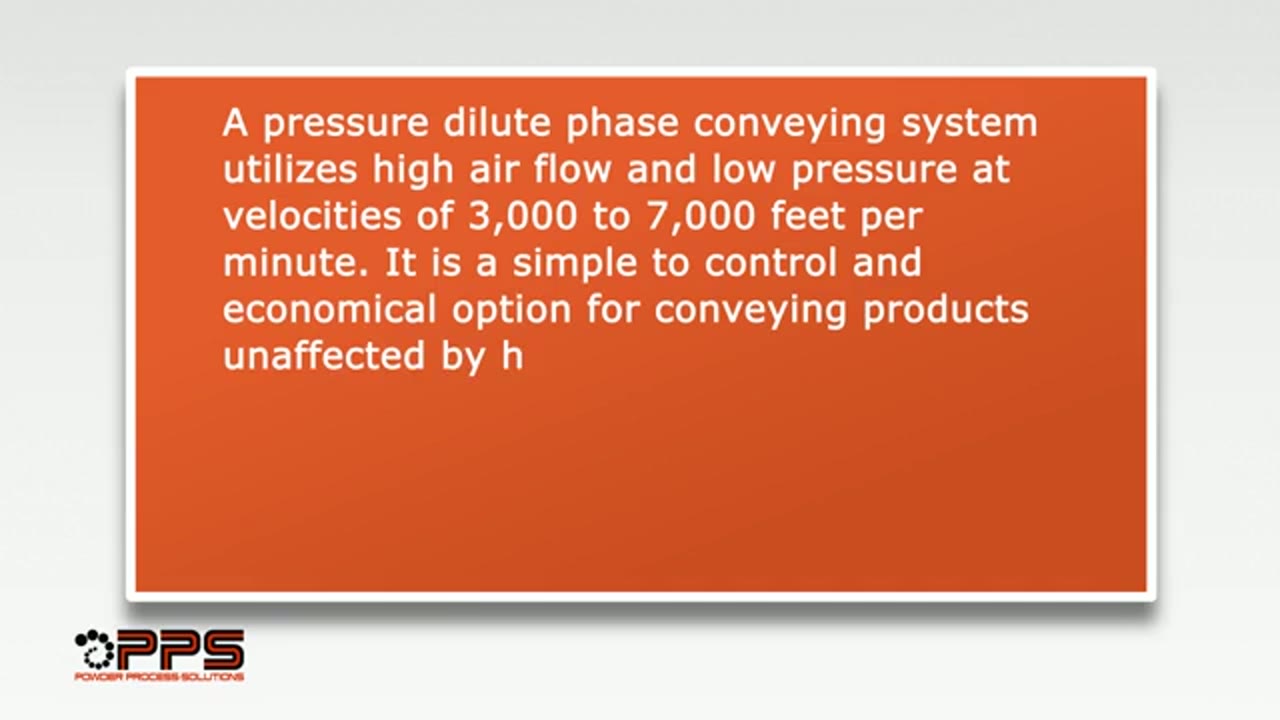
Pressure Dilute Phase
The Powder Process-Solutions animation shows a positive-pressure dilute-phase arrangement in which a gas stream pushes suspended material through the conveying line toward the receiver.
Total reach: 92,783


Hosokawa Solids Solutions GmbH
Hosokawa Solids Solutions: Solids Puls Pneu Conveying System
Hosokawa Solids presents the Solids Puls Pneu plug-conveying system with bypass, impulse-valve and relay-station components.
Total reach: 70,320


HS Umformtechnik GmbH
HS Umformtechnik Company Video
HS Umformtechnik presents large-radius pipe bends, pipe couplings and branch pipes for pneumatic conveying systems.
Total reach: 6,297

Qlar
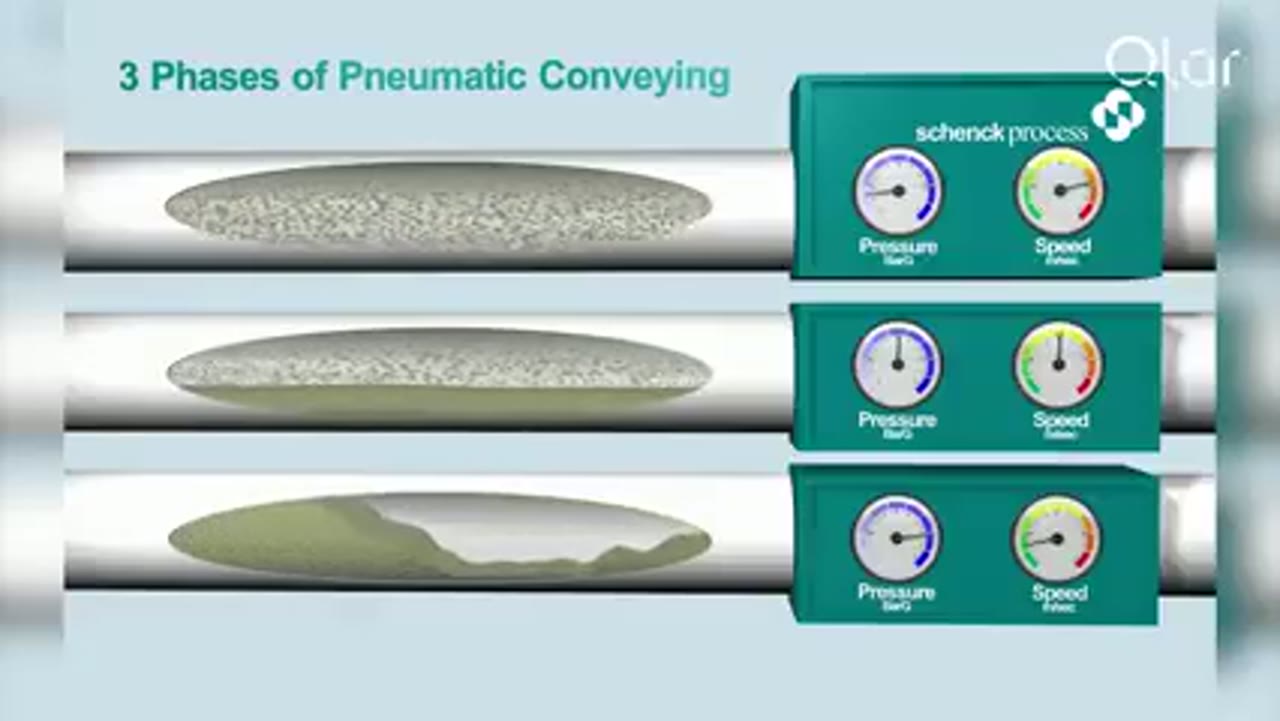
Pneumatic Conveying Explained: The 3 Key Phases of Dense Phase Conveying
Qlar explains the three phases of dense phase pneumatic conveying and where each one fits when powders, granules and bulk solids have to move without being damaged.


VAC-U-MAX
VAC-U-MAX: 10 Critical Design Factors to Consider When Designing Vacuum Conveying Systems
VAC-U-MAX presents ten design factors for vacuum conveying, including pickup, material behavior, route, receiver, filtration, discharge and controls.
Total reach: 11,016

VAC-U-MAX
VAC-U-MAX: Signature Series Packaged Vacuum Conveying Systems
With over 65 years of experience in pneumatic conveying and more than 10,000 powders and granular materials handled, VAC-U-MAX packages its Signature Series vacuum conveying systems as complete units: receiver, UL-listed controls, convey hose, filters, and vacuum producer.
Total reach: 10,678