
Independent industry shortlist for Dense Phase Conveying
Top Dense Phase Conveying System Suppliers (2026)
Answer in brief
Coperion, Gericke, GEA, and VAC-U-MAX make up this 2026 dense phase conveying shortlist.
Coperion builds pressure-vessel systems for 10 to 200 t/h over distances up to 1,000 meters and a continuous slug-flow system for pellets and granules. Gericke offers three pressure-vessel modes at 1 to 6 barg, with sender vessels from 20 to 5,200 liters.
GEA conveys in dense phase under pressure below 6 barg and under vacuum up to 99 percent. VAC-U-MAX conveys in dense phase under vacuum, moving friable products and blends in slow slugs.
Which system fits depends on the powder and the route, and a conveying test with representative material decides it.
By Editorial Team · Published July 17, 2026 · Updated October 8, 2026

How we selected these companies
ShowHide
We compared dense phase conveying suppliers on five technical areas that decide whether a system fits a powder and a route.
- Dense phase system range (25%) looks at which configurations a supplier builds, such as pressure-vessel systems, continuous rotary-valve systems, and dense phase vacuum, and at the pressure and gas velocity ranges they cover.
- Material testing and design basis (25%) covers test facilities where your material can be conveyed before purchase, the length of the test pipeline, the conveying modes available for trials, and the tools used for sizing.
- System integration and controls (20%) covers how the conveying cycle is controlled, how air is managed along the line, how the controller connects to the plant network, and how many lines or stations it runs.
- Materials and operating range (15%) covers conveying rates, distances, temperatures, and material forms.
- Commissioning and service (15%) covers start-up support, training, spare parts, and field service.
System range and material testing carry the most weight because dense phase behavior depends on the individual powder: a supplier needs both a matching configuration and the means to prove it on your material before the line is sized.
Dense phase system range 25%
Which dense phase configurations are built, such as pressure vessel, continuous rotary valve, and vacuum systems, and what pressure and gas velocity ranges they cover.
Material testing and design basis 25%
Test facilities for conveying trials with your material, test pipeline length, conveying modes available for trials, and sizing tools.
System integration and controls 20%
Control of the conveying cycle, air management along the line, fieldbus connection to the plant, and number of lines or stations per controller.
Materials and operating range 15%
Conveying rates, distances, temperatures, and material forms the systems handle.
Commissioning and service 15%
Start-up support, training, spare parts, maintenance agreements, and field service coverage.
Last reviewed October 7, 2026
Disclosure: Up to 40 percent of the places on this list can be booked. Booked and Featured entries are commercially supported, clearly labeled and carry no bought rank. Payment does not determine the editorial assessment or the ranked positions.
What the ranking means
Coperion, Gericke, GEA, and VAC-U-MAX are compared here for dense phase conveying duties. The order reflects dense phase system range, material testing, system integration, operating range, and commissioning support. The list is built for early qualification, when an engineering team needs a credible field of candidates before material testing and route-specific design begin.
Dense phase is not automatically the preferred method for every powder. The practical objective may be lower particle velocity, reduced degradation, controlled wear, lower segregation, or reliable transfer of a difficult material. Those outcomes depend on material behavior, conveying state, pipeline design, control strategy, and operating discipline. A company name or marketing category cannot settle those engineering questions.
Establish the design basis
A useful inquiry provides more than throughput and distance. It should include particle size distribution, bulk density, permeability, moisture, temperature, cohesion, friability, abrasiveness, electrostatic behavior, and any relevant hazard data. The route description should identify vertical lift, bends, destination pressure, available utilities, required turndown, batch size, start frequency, and the operating pattern expected across a normal production day.
The team should also state why dense phase is being considered. If the aim is gentle handling, the acceptance test needs a measurable product quality criterion. If the aim is wear reduction, the proposal needs a basis for velocity, bend selection, pipe life, and inspection. When the goal is energy reduction or capacity, the bidders need a common boundary so that blower, compressor, air treatment, and controls consumption can be compared fairly.
Testing and scale-up
Material testing: powder behavior cannot be inferred reliably from a trade name alone. Ask each supplier what quantity is required, which variables are measured, how the proposed conveying state is reproduced, and how the results are scaled to the plant route. A persuasive report connects test observations with line sizing, gas demand, vessel cycle, product condition, and the limits of the recommended operating envelope.
Testing also reveals whether the project should compare pressure vessel, vacuum, continuous, batch, or hybrid arrangements. The shortlist does not assume that every candidate offers the same architecture. Invite alternatives, but require each one to answer the same duty and acceptance criteria. That makes innovation visible without letting an attractive diagram escape technical comparison.
System boundaries and controls
Dense phase performance depends on the complete transfer path. Feed vessel design, air introduction, valves, pipeline, bends, receiving filter, venting, instrumentation, and sequence logic work as one system. Proposal reviews should identify who owns each interface and who guarantees the combined cycle. A supplier with broad integration scope can be valuable, but the final offer must still define included hardware, software, site services, and third-party dependencies.
Control philosophy: ask how the system starts with an empty or partially full line, how plugs are detected, how the line clears, how pressure and gas flow are monitored, and how recipes change between materials. Alarm handling and recovery can determine real availability. The promised nominal rate is less useful if operators cannot restore stable conveying after a routine interruption.
Safety and product integrity
Hazardous areas and combustible dust each need their own check against the offered configuration. The selected supplier must work from current material hazard data and applicable local requirements. The design review should cover ignition sources, grounding, pressure protection, isolation, venting or suppression where required, safe access, stored energy, and the consequences of a blocked or overfilled system. Certificates must match the offered components and region.
Product integrity claims also need proof. Gentle conveying should be tied to samples, test results, or an agreed inspection method. For food or pharmaceutical duties, confirm cleaning access, surface requirements, cross-contamination controls, drainability where relevant, and documentation. Dense phase operation by itself does not prove hygienic design or eliminate segregation.
Commercial comparison and lifecycle value
Compare proposals with one cost boundary. Include compressors or blowers, air treatment, vessels, filters, controls, structures, electrical work, installation, commissioning, testing, training, spares, and utility consumption. Record exclusions explicitly. A system with a lower equipment price can create a higher installed cost if the air plant, building work, or controls integration sits outside the quoted scope.
Lifecycle review should include wear parts, valve maintenance, filter service, line inspection, cleaning, software support, and access to application engineers. Ask for references with similar material behavior and route complexity, not only the same industry label. Service footprint matters most when it is tied to named responsibilities, response arrangements, and available parts for the intended operating region.
From shortlist to award
Use this list to select candidates for a common request for proposal, then let material tests and equivalent guarantees drive the award. Require each bidder to state assumptions, deviations, performance boundaries, and the test data behind the design. The final choice can differ from the editorial rank because project fit is more specific than a general technical comparison. That is a sign of disciplined engineering, not a weakness in the shortlist.
Before award, review the proposed operating envelope with production and maintenance teams. Confirm the material grades, route variants, rate changes, cleanout method, restart procedure, and capacity test. A clear guarantee should identify the measurement points, test duration, acceptable product condition, utility limits, and remedy if the system falls short. That discipline reduces the chance that different assumptions stay hidden until commissioning.
Keep the test report, final settings, and accepted material samples with the system record. These references help operators recognize drift and give future engineers a reliable basis when routes, recipes, or capacity requirements change.
Partner with powderbulkvideos.com
Show your equipment where buyers compare suppliers.
Booked places and Featured Listings are limited to 40 percent of a Top List, clearly labelled and separate from the editorial ranking.
Selected companies
-
1Best for: Long, high-rate pressure-vessel routes and continuous dense phase with a rotary valve
Coperion
Coperion
Coperion covers dense phase conveying with three equipment lines.
- Its pressure-vessel systems work above 1 bar(g) at low air volume, in purged and full-line operation, and the Dense Phase Pump handles 10 to 200 t/h over distances up to 1,000 meters at temperatures up to 480 °C.
- E-finity is a continuous dense phase system that moves pellets and granules as slugs and corrects airflow from pressure measurement, so it can feed other continuous processes.
- The LMR-X rotary valve is rated for 3.5 bar(g).
- Supplementary air injectors along the line split a long route into shorter sections.
- Conveying trials run on more than 2,000 meters of interchangeable test pipeline.
View related CompanyTechnical score breakdown
- Dense phase system range
- 5/5 · Pressure-vessel systems above 1 bar(g) in purged and full-line operation, the E-finity continuous system, the LMR-X rotary valve rated for 3.5 bar(g), and strand, slug, or fluidized conveying.
- Material testing and design basis
- 4.5/5 · Material Handling Test Center with more than 2,000 meters of interchangeable pipeline for dilute phase, dense phase, and hydraulic conveying trials on customer samples.
- System integration and controls
- 4.5/5 · E-finity corrects airflow from continuous pressure measurement, the LMR-X air control is driven by a 4 to 20 mA positioner, and system controls run on PLCs with remote monitoring.
- Materials and operating range
- 5/5 · 10 to 200 t/h over up to 1,000 meters at up to 480 °C, from fine powders such as fly ash to wet lump coal, plus pellets, pet food, cereals, and friable granules.
- Commissioning and service
- 4.5/5 · Start-up and preventive maintenance programs, 24-hour technical support from service engineers worldwide, spare parts desks for the Americas, EMEA, and Asia, and operator training.
-
Best for: Pressure-vessel conveying in three modes, from a 20-liter sender to 5,200 liters
Gericke builds three pressure-vessel dense phase systems.
- DenseFlow PHF moves material as a continuous layer at gas velocities of 15 to 25 m/s, PulseFlow PTA moves it as plugs at 4 to 12 m/s, and PulseLine PTA PL adds air injectors along the pipeline for longer routes.
- Conveying pressure runs from 1 to 6 barg, capacity reaches 150 m³/h, and distances reach 500 meters.
- Sender vessels come in carbon or stainless steel from 20 to 5,200 liters, built to PED, ASME, or GB 150.
- The GUC-C controller runs single and dual vessel conveying on up to four lines over EtherNet/IP or Profinet.
- Test centers convey material over more than 200 meters.
View related CompanyTechnical score breakdown
- Dense phase system range
- 4.5/5 · DenseFlow PHF at 15 to 25 m/s, PulseFlow PTA at 4 to 12 m/s, and PulseLine PTA PL with pipeline air injectors, at 1 to 6 barg with 20 to 5,200 liter vessels.
- Material testing and design basis
- 4.5/5 · Test centers in Switzerland, France, England, the Netherlands, Brazil, the USA, and Singapore, with pneumatic conveying over more than 200 meters and a powder rheometer.
- System integration and controls
- 5/5 · GUC-C controller for single and dual vessel conveying on up to four lines, standalone or over EtherNet/IP and Profinet, with alarm logging and remote diagnostics by web browser.
- Materials and operating range
- 4.5/5 · Up to 150 m³/h and 500 meters; DenseFlow PHF loads about 88 pounds of material per pound of air; abrasive NMC battery powder is conveyed as slow plugs over 50 meters.
- Commissioning and service
- 4.5/5 · Site supervision, sequential and product test runs at commissioning, operator training, maintenance agreements, emergency intervention, and local service and spare parts bases.
-
3Best for: Fragile and agglomerated food, dairy, and pharmaceutical powders in pressure or vacuum
GEA
GEA
GEA builds dense phase conveying in both pressure and vacuum.
- The pressure system pushes material from a single or twin pressure pot at less than 6 barg, with rates below 30 t/h and distances beyond 300 meters; air injectors, pulsed air injection, and stepped lines are options.
- The vacuum system uses pumps reaching 99 percent vacuum for rates below 20 t/h over up to 100 meters, and can be sealed, evacuated, and filled with inert gas for modified atmosphere packing.
- Both are available in stainless steel and in demountable, polished designs to USDA 3-A standards.
- The test center in Søborg, Denmark, runs all four pneumatic transport modes on one pilot plant.
View related CompanyTechnical score breakdown
- Dense phase system range
- 4.5/5 · Dense phase pressure from single or twin pressure pots at less than 6 barg, and dense phase vacuum with pumps reaching 99 percent vacuum, with air injectors and stepped lines as options.
- Material testing and design basis
- 4/5 · Pilot plant in Søborg, Denmark, conveys in dense and lean phase under pressure and vacuum, backed by an FT4 powder rheometer and PowSIM sizing software.
- System integration and controls
- 3/5 · Valves and sensors control air pressure, fluidization, and velocity through the cycle; inline sampling and metal detection can be built into the line.
- Materials and operating range
- 4.5/5 · Below 30 t/h beyond 300 meters in pressure and below 20 t/h up to 100 meters in vacuum, with polished, demountable designs to USDA 3-A standards.
- Commissioning and service
- 2.5/5 · Life-cycle service for plant and equipment with remote support and service agreements.
-
Best for: Dense phase vacuum conveying of friable products and powder blends
VAC-U-MAX builds vacuum conveying systems made up of a pick-up point, a vacuum receiver, a vacuum producer, and a UL certified control panel.
- In dense phase the material travels through the tubing in slugs at low speed, which suits delicate, friable products and powder blends; high vacuum pumps drive this mode, while positive displacement pumps serve dilute and semi-dense systems and venturi units run on compressed air with no moving parts.
- Vacuum receivers range from 0.25 to 500 cubic feet.
- The Signature Series packages in 316L stainless steel convey up to 1,500 or 3,500 lb/h.
- The test lab in Belleville, New Jersey, has tubing runs up to 400 feet, tubing up to 4 inches OD, and conveying rates from 10 to 25,000 lb/h.
View related CompanyTechnical score breakdown
- Dense phase system range
- 3/5 · Dense phase vacuum conveying in slugs at low speed, driven by high vacuum pumps; positive displacement pumps and venturi units cover dilute and semi-dense duties.
- Material testing and design basis
- 4/5 · Test lab in Belleville, New Jersey, with tubing runs up to 400 feet, tubing up to 4 inches OD, and conveying rates from 10 to 25,000 lb/h.
- System integration and controls
- 3/5 · Systems are supplied as pick-up point, vacuum receiver, vacuum producer, and UL certified control panel.
- Materials and operating range
- 3/5 · Vacuum receivers from 0.25 to 500 cubic feet; Signature Series packages in 316L stainless steel convey up to 1,500 or 3,500 lb/h.
- Commissioning and service
- 3/5 · Installation, startup, and operator training are offered with the systems.
-
Work with usAvailable
2 places on this Top List are open
Bookable places are limited, clearly labelled and separate from the editorial ranking above.


Frequently asked questions
Can a supplier buy a higher rank on this list?
No. The ranked positions follow the five technical criteria above. Booked and Featured places are labeled as such and carry no rank.
What does the dense phase score measure?
It rates dense phase system range, material testing and design basis, system integration and controls, materials and operating range, and commissioning and service, weighted 25, 25, 20, 15, and 15 percent.
When does a pressure-vessel system make more sense than dense phase vacuum?
Mostly when the route is long. Dense phase vacuum is limited by the energy a vacuum pump can deliver, which puts practical distances at roughly 60 to 100 meters. Pressure-vessel systems work at about 1 to 6 barg and reach several hundred meters, and the largest reach 1,000 meters. Vacuum keeps any leakage inward and is simpler for short up-and-in transfers of fragile or sticky material.
What do air injectors along the pipeline do?
Supplementary air injectors, also called bypass air, feed small amounts of air into the line at intervals. They break a long route into shorter sections, which lowers the resistance and the pressure needed to move the material and keeps velocity low. The resulting slug flow reduces contact between material and pipe wall, and with it abrasion, degradation, and segregation.
Does the first-ranked supplier fit every powder?
No. Dense phase behavior depends on permeability, air retention, particle size, and the route, so representative material testing and route-specific engineering remain necessary before any award.
Sources and further reading
- Clearing the air, UK HSE
- Combustible Dust Safety and Health Topics, OSHA
- Computational investigation of particle flow characteristics in pressurised dense phase pneumatic conveying systems, Powder Technology
- Dilute or Dense Phase Pneumatic Conveying? (Chemical Engineering Progress, November 2022), American Institute of Chemical Engineers (AIChE)
- Influence of particle attrition on erosive wear of bends in dilute phase pneumatic conveying, Wear
- Influence of particle size, density and concentration on bend erosive wear, Wear
- Inside the Bulk Solids Innovation Center: Full-Scale Test Lab, Powder & Bulk Solids
- Numerical predictions of particle degradation in industrial scale pneumatic conveyors, Powder Technology
- OSHA Technical Manual: Combustible Dusts, Occupational Safety and Health Administration
- Particle size distribution criterion for dense-phase potential, Powder Technology
- Safe handling of combustible dusts, Health and Safety Executive
- Specific energy consumption and particle attrition in pneumatic conveying, Powder Technology
Related content
Continue exploring
Move from this page to the companies, videos and technical topics that add useful context.
Companies


Videos

Hosokawa Solids Solutions GmbH
Hosokawa Solids Solutions: Solids Puls Pneu Conveying System
Hosokawa Solids presents the Solids Puls Pneu plug-conveying system with bypass, impulse-valve and relay-station components.
Total reach: 70,209
Qlar
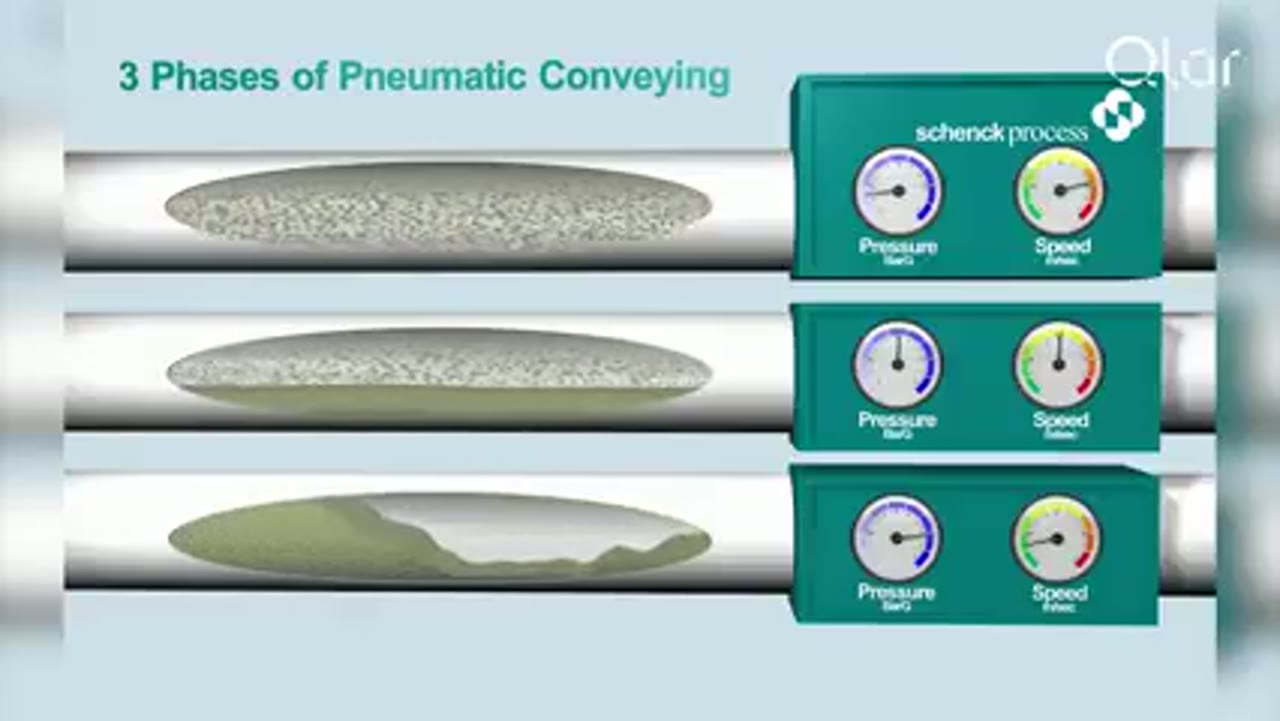
Pneumatic Conveying Explained: The 3 Key Phases of Dense Phase Conveying
Qlar explains the three phases of dense phase pneumatic conveying and where each one fits when powders, granules and bulk solids have to move without being damaged.
Magnum Systems
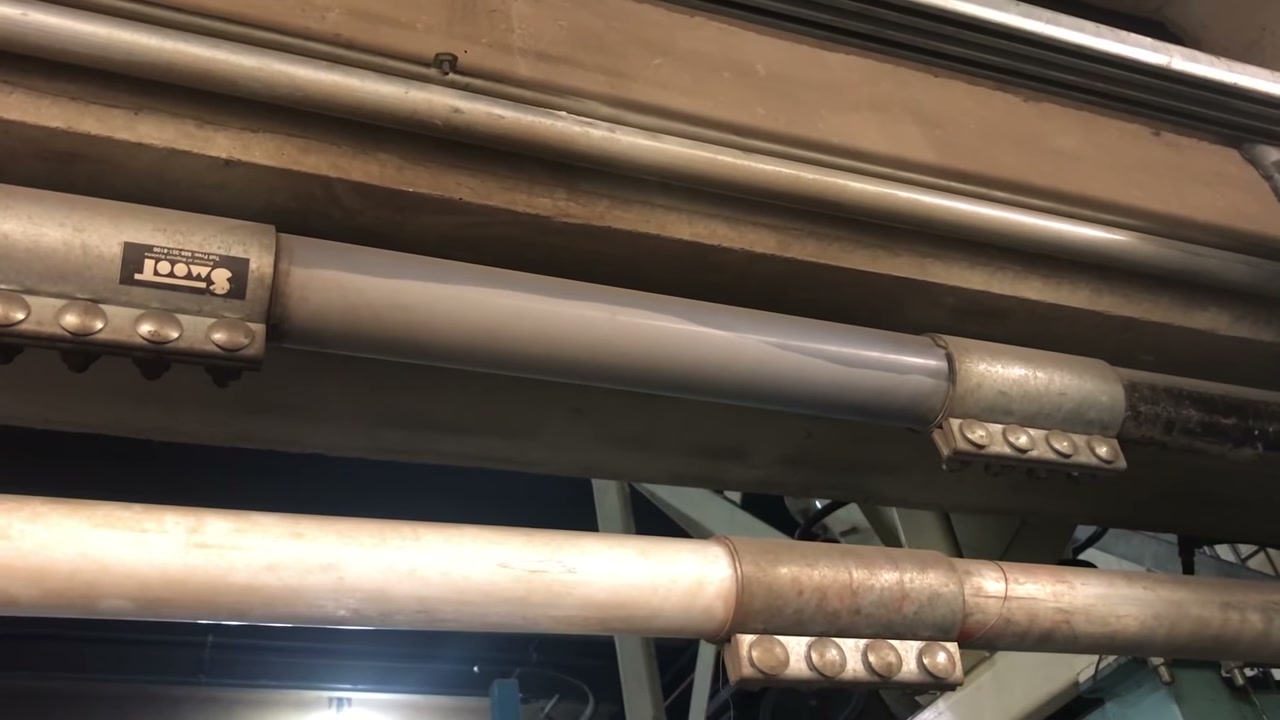
Dense Phase Conveying in the Test Laboratory
Magnum Systems shows dense phase pneumatic conveying running in its test laboratory in Kansas City.
Coperion
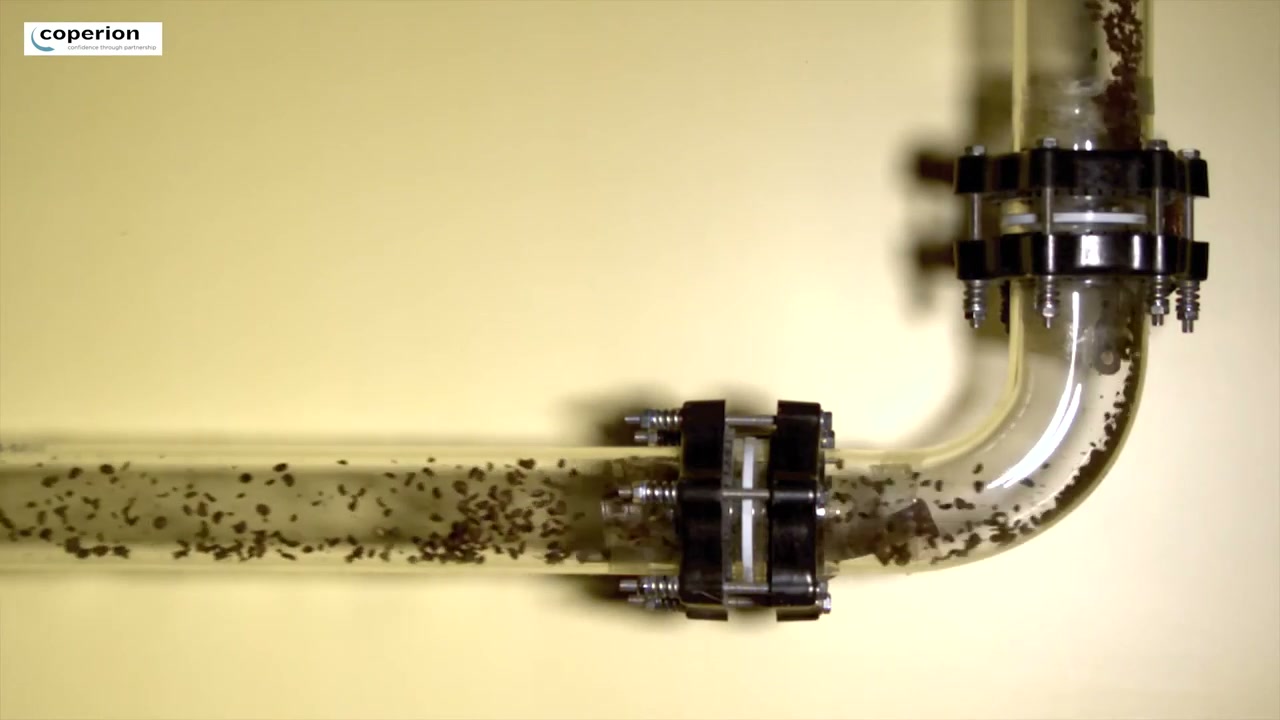
Dense Phase Conveying of Coffee Beans
Coperion shows dense phase conveying applied to coffee beans, where the point of the method is to move a fragile product without damaging it.
Total reach: 7,816
Magnum Systems
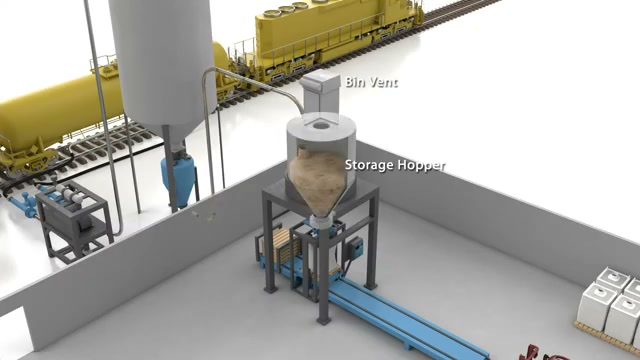
Dense Phase Conveying Process Flow Animation
Magnum Systems shows in a short animation how material travels through a dense phase line in slugs rather than as a continuous stream.
Total reach: 1,670

Coperion
E-finity Continuous Dense Phase Conveying
Coperion presents E-finity, a continuous dense phase conveying system for fragile granular and pelleted materials that monitors pressure and corrects the airflow during the run.
Total reach: 1,780