
Application
Dense Phase Conveying of Plastic Pellets
Answer in brief
With pellets, low velocity is the answer to angel hair.
Streamers are made by pellets sliding along a pipe wall fast enough to melt their own surface, so the fix is speed rather than pipe coatings or better filters.
- Set the velocity below the smearing threshold.
- Step the pipeline, because the end of the line is the fast part.
- Ground everything; charged pellets and polymer dust belong to the same system.
Reviewed October 21, 2026
The problem
Angel hair has one cause: a pellet in sliding contact with the pipe wall, moving fast enough that friction melts its surface and draws the melt into a thread. Everything else, bends, materials, coatings, changes how much of it happens, but velocity decides whether it happens at all.
Once formed, the threads behave badly. They collect at bends, at screens, at the throat of a dryer or an extruder, and they build into mats that block a line that was conveying perfectly a month earlier. Removing them means opening the line.
Dilute phase conveying is fast by definition, which is why plants that fight angel hair for years often fight it with the wrong variable. Dense phase moves the same tonnage with the pellets travelling as plugs at a fraction of the speed, and that is the difference.
Pellets also charge heavily. A conveying line is a very effective electrostatic generator, and the fines the line itself creates are explosible for most polymers, so the static and the dust belong to the same safety case.
In plastics processing the conveying line is also a surface treatment, and the treatment it applies is the one nobody wants.
Desired outcome
A line whose velocity stays below the smearing threshold from end to end, with the increase in velocity along the pipeline designed out rather than tolerated.
Plug flow established for the actual pellet shape and size, with the air injection arrangement that keeps plugs short enough to move.
A fully bonded and grounded system with measured continuity, and the polymer dust explosion case assessed on the fines the plant actually generates.
In a building materials plant the same line is designed from a pressure profile rather than from rate and distance alone.
Process approach
Pellets are highly permeable, which makes them well suited to plug flow but also means plugs can grow and stall. Air boosters or a bypass line along the pipeline keep the plugs short, and the arrangement is specified from a trial rather than from a rule of thumb, because pellet shape, from lentil to cylinder to irregular regrind, changes the behaviour considerably.
The velocity limit is then held along the whole line. Air expands as pressure falls, so a single diameter pipeline runs much faster at the receiving end, and that is exactly where plants find their streamers. A stepped pipeline is the normal solution.
Bends are chosen for smearing rather than for erosion. Long radius bends in a smooth bore keep the sliding contact gentle; blind tees are poor here because the pocket holds pellets that are then dragged out.
Grounding is designed as a system and tested, with every flange, liner, sight glass and flexible connection bonded, and the continuity measured at commissioning and periodically afterwards. The fines are tested for explosibility on plant material, not taken from the polymer grade.
- Velocity limit established from a trial on the actual pellet shape.
- Stepped pipeline so the limit holds at the receiving end.
- Air boosters or a bypass line to keep plugs short enough to move.
- Long radius smooth bends; blind tees avoided in pellet service.
- Full bonding and grounding, measured at commissioning and re measured.
- Explosibility of the fines measured on plant material.
Selection factors
- Pellet shape and size, which decide plug behaviour far more than the polymer type does.
- Smearing threshold velocity, established by trial for the specific material.
- Required rate and distance, which set the pressure and the velocity profile.
- Downstream sensitivity to streamers, which is what the whole design is buying.
- Static behaviour and the grounding concept for the complete system.
- Regrind content, since angular irregular material conveys differently from virgin pellets.
Common failure modes
- Angel hair treated as a filter or a screen problem rather than a velocity problem
- Single diameter pipeline, so the receiving end runs fast enough to smear
- Blind tee bends holding pellets that are then dragged out of the pocket
- Boosters placed by rule of thumb instead of from a trial, so plugs stall
- Sight glass or flexible connection left unbonded in a line generating explosible fines
- Regrind conveyed in a system designed and tested only on virgin pellets
Partner with powderbulkvideos.com
Put a relevant technical solution in this decision path.
Connect your company and video evidence with clearly labelled visibility where engineers evaluate this material, application, industry or product.
Frequently asked questions
What actually makes angel hair?
A pellet sliding along the pipe wall fast enough for friction to melt its surface. Velocity is the variable that decides whether it forms; everything else only changes how much.
Why do streamers appear at the end of a line?
Because that is the fast part. Air expands as pressure drops towards the receiver, so a constant diameter pipeline runs well above its design velocity at the far end.
Are boosters always needed for pellets?
Often, because pellets are permeable and plugs can grow until they stall. Where they are needed and how they are spaced comes from a trial, since pellet shape changes the behaviour a great deal.
Related content
Continue exploring
Move from this page to the companies, videos and technical topics that add useful context.
Companies

Videos
Qlar
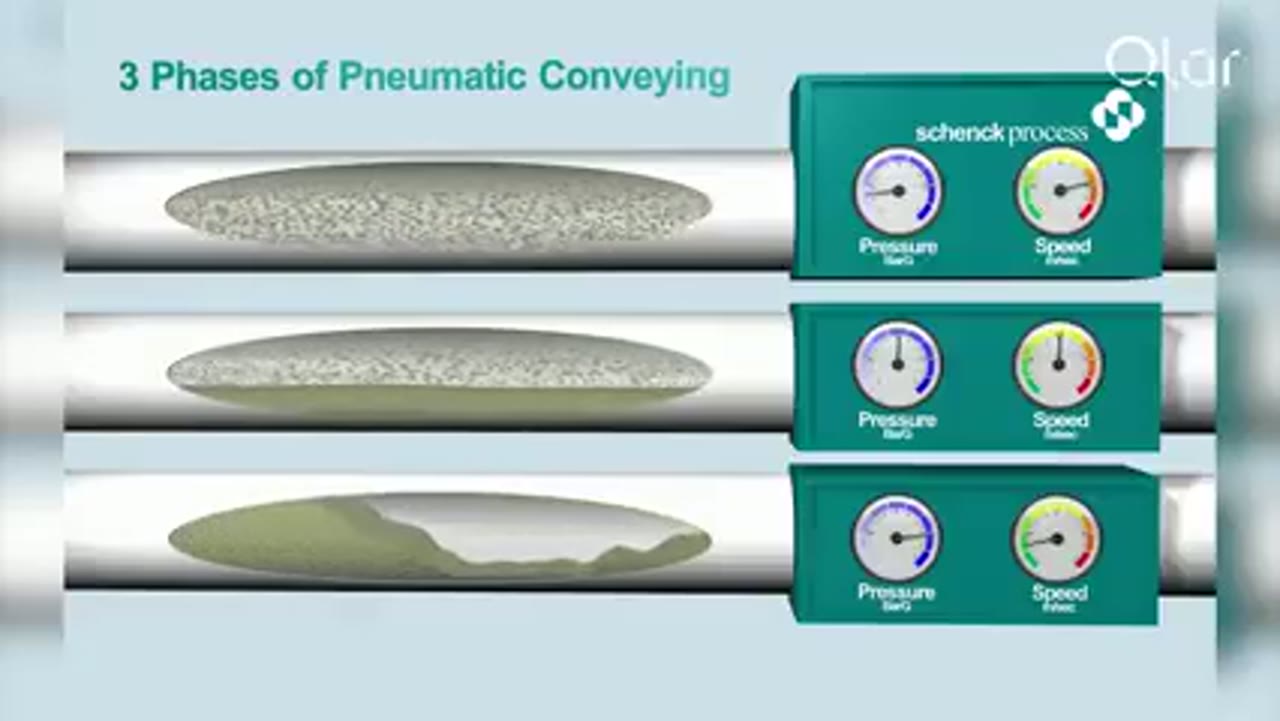
Pneumatic Conveying Explained: The 3 Key Phases of Dense Phase Conveying
Qlar explains the three phases of dense phase pneumatic conveying and where each one fits when powders, granules and bulk solids have to move without being damaged.
Magnum Systems
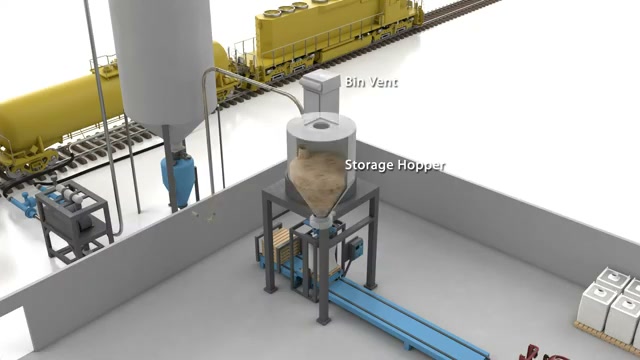
Dense Phase Conveying Process Flow Animation
Magnum Systems shows in a short animation how material travels through a dense phase line in slugs rather than as a continuous stream.
Total reach: 1,747

Coperion
E-finity Continuous Dense Phase Conveying
Coperion presents E-finity, a continuous dense phase conveying system for fragile granular and pelleted materials that monitors pressure and corrects the airflow during the run.
Total reach: 1,905