
FAQ
Pneumatic Conveying FAQ
Answer in brief
Most pneumatic conveying questions come back to the same starting point: representative material data and the complete duty. Capacity, pressure, conveying phase, energy, product damage, blockage, cleaning, and dust safety all depend on how the bulk solid, gas, feeder, pipeline, receiver, filter, and controls interact — no single component or pipe size answers them alone.
By Editorial Team · Published July 14, 2026 · Updated July 26, 2026
Engineering visual guide
How the system behaves
These conceptual diagrams connect the operating principle, equipment internals and engineering review points. They are explanatory and not fabrication drawings or a substitute for project-specific calculations.
Engineering infographic
System architecture and interfaces
Conceptual system architecture and interface map for Pneumatic Conveying; use it to structure an engineering review, not as a fabrication drawing or project-specific design.
Engineering infographic
Verification and acceptance checklist
Conceptual verification and acceptance checklist for Pneumatic Conveying; use it to structure an engineering review, not as a fabrication drawing or project-specific design.
Partner with powderbulkvideos.com
Put your expertise beside the decisions engineers are making.
Connect a relevant company profile and technical video portfolio with clearly labelled visibility on this topic.
Frequently asked questions
What belongs in a pneumatic conveying pressure budget
Every consumer between the air mover and the vent: friction in straight pipe and fittings, the energy to accelerate and lift the solids, losses at the feed interface, and the receiver with its filter. Evaluate the budget at minimum, normal, and maximum solids rate, since the split shifts as loading and gas density change.
When is a conveying trial more useful than another calculation
Use a representative trial when flow mode, attrition, erosion, filter behavior, or restart cannot be predicted confidently from material data and comparable validated duties.
Why can a system meet capacity but still fail acceptance
Throughput alone does not prove stable pressure, acceptable product condition, controlled dust, reliable discharge, cleanability, or safe recovery after an interruption.
Related content
Continue exploring
Move from this page to the companies, videos and technical topics that add useful context.
Companies


Videos

Hosokawa Solids Solutions GmbH
Hosokawa Solids Solutions: Solids Puls Pneu Conveying System
Hosokawa Solids presents the Solids Puls Pneu plug-conveying system with bypass, impulse-valve and relay-station components.
Total reach: 70,221

HS Umformtechnik GmbH
HS Umformtechnik Company Video
HS Umformtechnik presents large-radius pipe bends, pipe couplings and branch pipes for pneumatic conveying systems.
Total reach: 6,262
Qlar
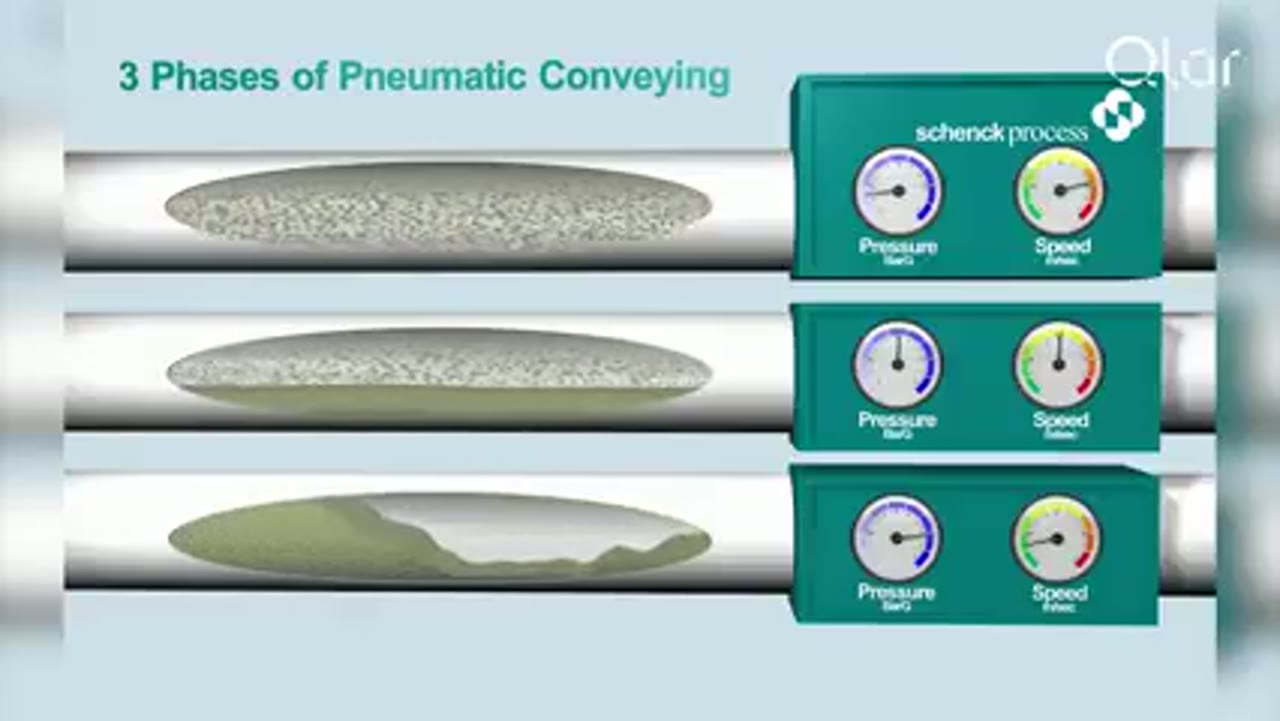
Pneumatic Conveying Explained: The 3 Key Phases of Dense Phase Conveying
Qlar explains the three phases of dense phase pneumatic conveying and where each one fits when powders, granules and bulk solids have to move without being damaged.

VAC-U-MAX
VAC-U-MAX: 10 Critical Design Factors to Consider When Designing Vacuum Conveying Systems
VAC-U-MAX presents ten design factors for vacuum conveying, including pickup, material behavior, route, receiver, filtration, discharge and controls.
Total reach: 10,990

VAC-U-MAX
VAC-U-MAX: Signature Series Packaged Vacuum Conveying Systems
With over 65 years of experience in pneumatic conveying and more than 10,000 powders and granular materials handled, VAC-U-MAX packages its Signature Series vacuum conveying systems as complete units: receiver, UL-listed controls, convey hose, filters, and vacuum producer.
Total reach: 10,588
Powder Process-Solutions
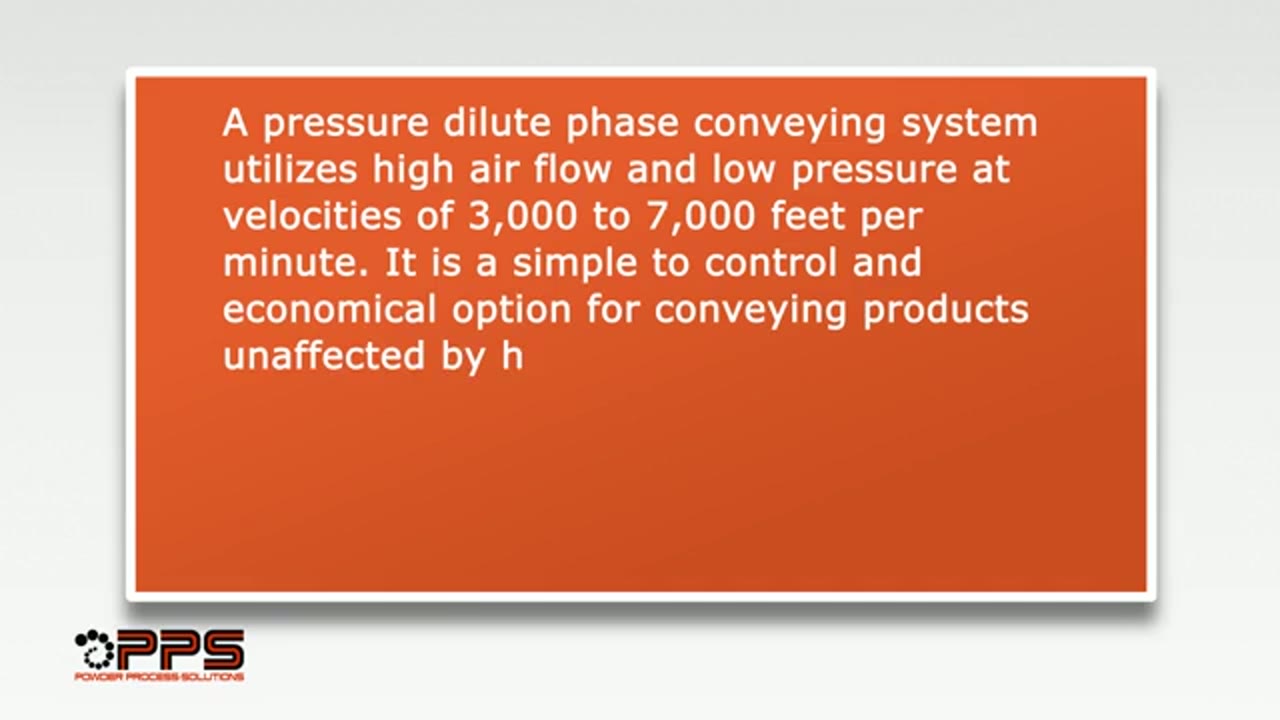
Pressure Dilute Phase
The Powder Process-Solutions animation shows a positive-pressure dilute-phase arrangement in which a gas stream pushes suspended material through the conveying line toward the receiver.
Total reach: 92,214