
Material
Carbon Black
Answer in brief
Carbon black makes every leak visible and permanent.
The primary particles are among the finest handled industrially, and the pelletised form that makes conveying possible breaks back down into that powder under mechanical stress.
- Contain absolutely, because cleaning is not a remedy here.
- Convey gently so that pellets stay pellets.
- Expect abrasive wear despite the softness of the material.
Reviewed October 21, 2026 · Updated November 10, 2026
Handling challenges
Carbon black is handled in pelletised form for one reason: the fluffy powder cannot be conveyed or dosed at industrial scale.
Protecting the pellet
Pellets break under impact and shear, and the dust released then behaves like the original powder.
- Dense phase conveying at low velocity rather than dilute phase.
- Few bends, generous radii and no sharp deflectors.
- Limited drop heights into silos and weigh hoppers.
Containment
Any release stains buildings, products and people, and the particles are small enough to stay airborne for long periods.
Contained big bag discharge, sealed conveying and well-maintained filters are the baseline, with pressure relief routed somewhere safe.
Dosing
Rubber compounding needs accurate carbon black addition, and a flooding or bridging feed destroys batch consistency.
Loss-in-weight feeding with a deaeration volume and a conditioned inlet copes with both states.
Exposure and classification
Inhalable carbon black dust carries occupational exposure limits and has been the subject of regulatory scrutiny.
The practical consequence is enclosure and extraction rather than reliance on personal protection.
What to establish before buying equipment
- Grade, pellet hardness and the acceptable fines increase.
- Bulk density aerated and settled.
- Dosing accuracy required at the mixer.
- Exposure limit and the containment verification method.
Storage and conditioning
Carbon black is the most awkward material in most plants that handle it, and storage is where it starts.
Pelletised grades flow reasonably. Fluffy grades have an extremely low bulk density, hold air for a long time and will not settle into a predictable bed. The same silo can hold very different masses depending on how it was filled.
- Measure the level and the mass separately; a level reading alone says little about the inventory.
- Expect long deaeration times, far longer than for mineral powders.
- Keep the silo sealed. Carbon black finds every gap, and what escapes is visible on every surface in the building.
What this means for equipment
Containment is the design driver, ahead of capacity.
The particles are fine enough to pass through ordinary seals and to stain anything they reach, so the line is built closed from intake to process. Vacuum conveying is preferred where the distance allows it, because a leak then draws in rather than out.
Pelletised grades degrade in transfer, so velocity has a quality cost as well as a wear cost: broken pellets become the fluffy fraction that caused the handling problem in the first place.
- Closed transfer with full-face seals rather than standard gaskets.
- Low velocity to protect the pellet structure.
- Filters sized for a very fine, light dust, with a cleaning mechanism that copes with it.
Safety and regulatory
Carbon black is combustible, and it is classified as a possible human carcinogen by inhalation in several jurisdictions.
Both facts point the same way: keep it contained and keep people out of the dust. Exposure limits for the respirable fraction are low, and the material is persistent on skin, clothing and surfaces.
- Closed handling as the primary control, extraction as the second.
- Dust explosion protection on collectors and silos, designed from a test on the grade in use.
- Procedures for cleaning and for personal protection; what settles is as much an exposure as what is airborne.
Stored carbon black can also smoulder internally, so a fire plan agreed with the supplier belongs in the design.
Material behavior
- Flowability
- Pellets free flowing, fluffy grade very poor
- Abrasiveness
- Moderate
- Cohesiveness
- Very high in powder form
- Moisture behavior
- Low uptake; moisture causes lumping of pellets
- Contamination risk
- Staining contamination of other products and inhalable dust exposure
Partner with powderbulkvideos.com
Put a relevant technical solution in this decision path.
Connect your company and video evidence with clearly labelled visibility where engineers evaluate this material, application, industry or product.
Frequently asked questions
Why is carbon black so hard to contain?
The particles are extremely fine and light, so they pass through ordinary seals and stay airborne for a long time. Standard gaskets and hoods that work for mineral powders leak visibly.
Does conveying damage carbon black pellets?
Yes. Pellets break into the fluffy fraction, which is the form that causes the handling problems. Velocity therefore costs quality as well as wear.
What exposure controls does carbon black need?
Closed handling first, extraction second. Exposure limits for the respirable fraction are low and the material is classified as a possible human carcinogen by inhalation in several jurisdictions.
Related content
Continue exploring
Move from this page to the companies, videos and technical topics that add useful context.
Companies
Videos

Coperion
E-finity Continuous Dense Phase Conveying
Coperion presents E-finity, a continuous dense phase conveying system for fragile granular and pelleted materials that monitors pressure and corrects the airflow during the run.
Total reach: 1,904
Palamatic Process
Palamatic Process: Emptying Big Bags of Sensitive Powders with OEB Containment
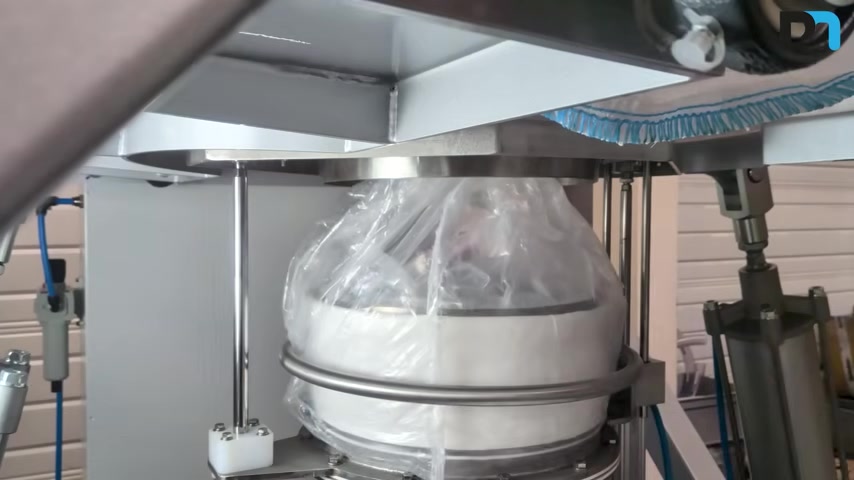
A Palamatic Process engineer explains the OEB big bag discharge station for toxic, CMR and ultra-fine powders, including the sleeve tie-off that keeps containment through a bag change.
Total reach: 18,757
Technologies
- Bulk Bag Unloading Systems
- Bulk Bag Unloading Systems: Selection and Design
- Dense Phase Conveying
- Dense Phase Conveying
- Dust Collection & Air Pollution Control
- Dust Collection & Air Pollution Control Technology Guide
- Explosion Protection
- Feeding & Dosing Control
- Feeding & Dosing Control
- Industrial Feeders
- Pneumatic Conveying
- Pneumatic Conveying Technology Guide