
Independent industry shortlist for Bulk Bag Unloading Systems
Top Bulk Bag Unloading System Suppliers (2026)
Answer in brief
Flexicon, Palamatic Process, and Gericke lead this 2026 shortlist of bulk bag unloading system suppliers, followed by VAC-U-MAX and Coperion. Flexicon seals the bag spout with a clamp ring on a telescoping tube that keeps the bag under tension as it empties.
Palamatic Process covers the widest containment range, from unlacing cabinets and glove boxes to automated stations. Gericke builds a modular station with a twin-ring docking seal for bags up to 2,500 kg. VAC-U-MAX and Coperion are strongest where the station feeds a vacuum conveying line or a gravimetric feeder.
The right choice depends on liner behavior, dust containment, discharge assistance, downstream transfer, and the operator work around each bag.
By Editorial Team · Published July 17, 2026 · Updated October 8, 2026

How we selected these companies
ShowHide
We compared bulk bag unloading suppliers on five technical areas that decide whether a station fits a duty.
Discharger design and flow assistance (25%) looks at the frame variants, at hoist or forklift loading, and at the devices that keep material moving, such as bag activators, massage paddles, vibrating tables, spout tensioning, and bag conditioners, because the first question for any powder is whether the bag empties completely without manual intervention.
Downstream transfer and weighing (25%) covers what the station can feed directly: vacuum and pressure conveying lines, screw conveyors, rotary valves, and feeders, and whether the frame can sit on load cells for loss-of-weight batching.
Dust containment and operator interface (20%) covers how the bag spout is connected and sealed, the extraction air flow, glove-box and higher containment versions, and the handling of partial and empty bags.
Bag range and construction options (15%) covers the bag dimensions and weights a station accepts, frame and contact materials, surface finishes, and hygienic or explosion-protected versions.
Test facilities and service (15%) covers test centers where your material can be run on full-size equipment, and commissioning, training, and spare-parts support.
Discharger design and downstream transfer carry the most weight because a station is judged first on how it handles the bag and the material, and then on how cleanly it connects to the next process step.
Discharger design and flow assistance 25%
Frame variants, hoist or forklift loading, and the devices that promote flow, such as bag activators, massage paddles, vibrating tables, spout tensioning, and bag conditioners.
Downstream transfer and weighing 25%
Which equipment the station feeds directly, from vacuum and pressure conveying lines to screw conveyors, rotary valves, and feeders, and whether it can batch by loss of weight on load cells.
Dust containment and operator interface 20%
How the bag spout is connected and sealed, how dust is extracted, how partial and empty bags are handled, and whether glove-box or higher containment versions exist.
Bag range and construction options 15%
Bag dimensions and weights the station accepts, frame and contact materials, surface finishes, and hygienic or explosion-protected versions.
Test facilities and service 15%
Test centers where your material can be run on full-size equipment before purchase, plus commissioning, training, and spare-parts support.
Last reviewed October 7, 2026
Disclosure: Up to 40 percent of the places on this list can be booked. Booked and Featured entries are commercially supported, clearly labeled and carry no bought rank. Payment does not determine the editorial assessment or the ranked positions.
What this shortlist answers
This shortlist points project teams to suppliers of bulk bag unloading stations and the controlled transfer of powders or granules into a downstream process. Flexicon, Palamatic Process, Gericke, VAC-U-MAX, and Coperion cover the range from manual stations with sealed spout docking to automated high-containment units and stations built into vacuum conveying lines. The order reflects discharger design, downstream transfer and weighing, dust containment, bag range and construction options, and test facilities and service.
Bulk bag unloading duties differ sharply. A free flowing polymer pellet, a cohesive food powder, and an abrasive mineral can require different support frames, agitation methods, discharge interfaces, containment measures, and downstream controls. The useful question is not who sits first, but which capability deserves a place in a structured request for proposal.
Define the unloading duty before comparing systems
Start with the bag: record filled mass, bag dimensions, loop arrangement, liner construction, outlet geometry, bulk density, flow behavior, moisture sensitivity, dustiness, segregation risk, and any tendency to bridge or compact during storage. These facts decide whether a simple gravity station will do or whether the duty needs massage paddles, tensioning, vibration, controlled access, or another assisted discharge approach.
The receiving process matters just as much as the frame. State whether material enters a hopper, feeder, pneumatic conveyor, mixer, mill, screen, or packaging line. Required rate, surge capacity, level control, isolation, weighing, and restart behavior define the real interface. A supplier that builds both the station and the downstream equipment can reduce interface risk, but confirm that benefit in drawings and responsibility schedules.
Containment and operator work
Bag connection and empty bag handling deserve explicit review because they drive exposure, housekeeping, and cycle time. The proposal should explain how the outlet is accessed, how dust is captured, how the liner is controlled, and how residual material is managed. Where a glove box, split connection, local extraction, or contained compaction step is required, the supplier should define the performance basis and the limits of its responsibility.
Lifting and access are plant design questions, not accessories picked at the end. Compare hoist or forklift loading, clear height, structural loads, safe access, bag support, suspended load controls, and the space needed for cleaning and maintenance. A compact station can still be awkward to run if the layout forces difficult connection work or blocks safe removal of an empty bag.
Material flow and downstream stability
Reliable emptying is more than a peak discharge rate. The system should feed the next process without uncontrolled surges, long interruptions, or excessive aeration. For difficult materials, ask how the supplier selects agitation intensity and how that action affects particle damage, segregation, liner movement, or equipment wear. A good answer connects material behavior with control philosophy instead of presenting one generic device as a universal fix.
Responsibility map: separate included equipment from assumptions about the downstream system. Clarify who owns the transition, hopper, feeder, filter, controls, instrumentation, dust connection, and support structure. Where several vendors share the package, define who verifies capacity and who resolves a flow problem at the interface. This map often matters more than a small difference in purchase price.
Safety and compliance boundaries
Powder hazards must be evaluated for the actual material and jurisdiction. Combustible dust suitability, hazardous area conformity, food contact suitability, pharmaceutical compliance, structural approval, and lifting certification each need their own check against the offered configuration. Provide current hazard data and require each bidder to identify the safeguards, standards, certificates, exclusions, and local approvals that apply to the offered configuration.
Containment language needs measurable meaning. Terms such as dust free or hygienic say little without a defined operating procedure, cleaning method, test basis, and acceptance criterion. The final design review should cover normal unloading, partial bags, damaged bags, blocked outlets, loss of extraction, power failure, maintenance access, and disposal of liners and empty bags.
Compare total cost and service on equal terms
Total cost includes more than the unloading frame. Compare civil and structural work, lifting equipment, extraction capacity, controls integration, validation, installation, commissioning, operator training, spare parts, consumables, cleaning labor, bag disposal, and the cost of production interruptions. A low equipment price can mislead when key interfaces or site services are excluded.
Test service coverage during the proposal stage. Ask who performs application engineering, where trials can run, who supports installation, what documentation is supplied, and how urgent parts are handled in the intended region. A bidder can strengthen its practical case by answering the same technical questionnaire clearly and accepting a common performance test.
How to use the ranking responsibly
The first position is not a promise of the best result in every plant. Start with the candidates whose equipment matches the required unloading mode, then issue one shared duty sheet and one shared scope matrix.
Require written deviations, and ask bidders to separate proven capability from optional development. A supplier lower in this editorial ranking may be the stronger project choice when its tested solution better fits the actual bag, powder, layout, and support needs.
Acceptance review: plan it before placing an order. A useful protocol records bag handling time, discharge continuity, residual material, visible dust, downstream stability, alarm response, and safe completion of the empty bag procedure. Agree which material and bag construction will be used, who supplies them, and what constitutes a pass. That turns a broad portfolio into a result operators and engineers can verify together.
Partner with powderbulkvideos.com
Show your equipment where buyers compare suppliers.
Booked places and Featured Listings are limited to 40 percent of a Top List, clearly labelled and separate from the editorial ranking.
Selected companies
-
1Best for: Sealed spout connection with automatic bag tensioning, feeding conveying lines or loss-of-weight batching
Flexicon
Flexicon
Flexicon builds BULK-OUT dischargers in three frame styles: BFC with a cantilevered I-beam, electric hoist, and trolley; BFF with a removable lifting frame for forklift loading; and BFH half frames, including low-profile versions that straddle blenders or feeders where headroom is short.
- A SPOUT-LOCK clamp ring sits on a pneumatically actuated TELE-TUBE telescoping tube, sealing the clean side of the bag spout to the clean side of the tube and pulling the bag down as it empties.
- FLOW-FLEXER activators raise and lower opposite bottom edges at timed intervals until the bag forms a steep V.
- Frames on load cells with PLC controls dispense by loss of weight.
- Construction is carbon steel or stainless steel finished to food, dairy, 3-A, USDA, or pharmaceutical standards.
View related CompanyTechnical score breakdown
- Discharger design and flow assistance
- 5/5 · BFC hoist-and-trolley, BFF forklift, and BFH half-frame and low-profile dischargers with FLOW-FLEXER activators, POP-TOP bag stretching, and integral BLOCK-BUSTER hydraulic conditioners for bags up to 4,000 lb.
- Downstream transfer and weighing
- 5/5 · Flood-feed pick-up adapters for vacuum lines, rotary airlock valves for pressure and vacuum systems, flexible screw conveyors, and load-cell frames with PLC controls; one batching line draws up to seven ingredients from bulk bags.
- Dust containment and operator interface
- 4.5/5 · SPOUT-LOCK clamp ring on a TELE-TUBE telescoping tube seals clean side to clean side, a POWER-CINCHER valve closes partial bags, and a BAG-VAC dust collector collapses empty bags before tie-off.
- Bag range and construction options
- 4.5/5 · Carbon steel or stainless steel finished to food, dairy, 3-A, USDA, or pharmaceutical standards, explosion-proof construction, and low-profile frames for restricted headroom.
- Test facilities and service
- 4/5 · Test labs with full-size models of all equipment check conveying capacity, flowability, and dust containment, and return test reports and video.
-
2Best for: Widest containment ladder, from unlacing cabinet and glove box to automated OEB3 to OEB4 stations
Palamatic Process
Palamatic Process
Palamatic Process grades its EasyFlow big-bag stations by connection type.
- The EF0 has an unlacing cabinet with a sealed door, the EF1 a double-casing telescopic tube that keeps the bag cuff under tension, and the EF2 a glove box for toxic products.
- The EF100-200 cuts and empties 20 to 40 bags per hour and compacts the empties, while the EF500 grips and cuts bags automatically at 1 to 25 per hour and is available for OEB3 to OEB4 containment.
- Stations take bags of 2 tons and up to 1,200 by 1,200 by 2,400 mm, loaded by electric hoist, forklift, or a low structure under an overhead crane.
- Frames come in painted, galvanized, or stainless steel.
- Installed lines include 30 tons per hour of acid and 22 bags per hour of cement.
View related CompanyTechnical score breakdown
- Discharger design and flow assistance
- 5/5 · EasyFlow stations from manual EF0 to automatic EF500, loaded by electric hoist, forklift, or low structure, with bag massage, vibrating hopper, automatic cutting, and the SmashR bag conditioner.
- Downstream transfer and weighing
- 4/5 · Stations feed storage, dosing, and mixer-transfer stages at up to 30 tons per hour, with optional load cells, lump breakers, and a suction-tube version with integrated weighing.
- Dust containment and operator interface
- 5/5 · Sealed unlacing cabinet, double-casing telescopic tube, glove box, and automated OEB3 to OEB4 stations, with dust extraction sized from 150 to 3,000 m³/h and empty-bag compaction.
- Bag range and construction options
- 4.5/5 · Bags of 2 tons up to 1,200 by 1,200 by 2,400 mm; painted, hot-dip galvanized, 304L, or 316L stainless steel with micro-blasted or electropolished finish; ATEX versions.
- Test facilities and service
- 4.5/5 · Test stations in Brécé, France, and at Cintech in Quebec with 35 industrial machines and more than 300 configurations, a powder laboratory, and machine commissioning.
-
Best for: Modular station with a twin-ring docking seal, hygienic execution, and bags up to 2,500 kg
Gericke's BBU Big Bag Unloader is assembled from standard modules.
- A 2,800 mm hoist beam carries a 1,000 or 2,000 kg hoist, or the beam mounts to the building.
- Below it, the bag sits on a resting table, a vibrating table for medium-flowing powders, or under massagers for poor-flowing powders, and a stretch unit tensions the outlet spout.
- The twin-ring docking station comes in sizes for outlet spouts of 250 to 500 mm, with adjustable cover pressure.
- Standard bags measure 900 by 900 by 1,500 mm and 1,000 kg; the maximum is 1,200 by 1,200 by 2,000 mm and 2,500 kg.
- Frames are stainless steel 304 or painted mild steel with 316 product contact, optionally polished below Ra 0.8 µm, and an ATEX zone 22 version is available.
View related CompanyTechnical score breakdown
- Discharger design and flow assistance
- 4/5 · Modular BBU with a 2,800 mm hoist beam and 1,000 or 2,000 kg hoist, resting table, vibrating table, under massagers for poor-flowing powders, and a stretch unit for the outlet spout.
- Downstream transfer and weighing
- 4.5/5 · Discharge into hoppers, reactors, vacuum conveying, lean-phase lines through a nibbler and rotary valve, dense-phase sending vessels, or an inclined screw, with load-cell weighing of the bag.
- Dust containment and operator interface
- 4.5/5 · Twin-ring docking station in sizes for 250 to 500 mm outlet spouts, adjustable cover pressure, back dedusting, a pneumatic flow choke for half-full bags, and bag vacuuming before removal.
- Bag range and construction options
- 5/5 · Bags up to 1,200 by 1,200 by 2,000 mm and 2,500 kg; stainless 304 or painted frames with 316 contact parts, finish below Ra 0.8 µm, hygienic execution, and ATEX zone 22.
- Test facilities and service
- 5/5 · Test centers in Switzerland, France, England, the Netherlands, Brazil, the USA, and Singapore, plus commissioning, on-site training, maintenance agreements, and spare parts from 12 countries.
-
Best for: Vacuum-conveying pick-up straight from the bag, with four-paddle massage and a loss-in-weight frame
VAC-U-MAX builds its bulk bag unloaders on heavy-duty welded tubular frames in three configurations: a basic unit where the plant provides lifting, a forklift-loaded lift frame with spring-loaded bag extension, and an upper frame with I-beam hoist engineered for a 4,000 lb (1,820 kg) lift and bags 36 to 72 inches tall.
- The Activator massages the bag bottom with four pneumatic paddles, alternating opposing pairs, and a level control below the bag starts and stops them.
- Material leaves through a vacuum pick-up adapter with no moving parts, a screw discharger, or a rotary airlock, or into feed bins of 2 to 50 cubic feet.
- A split loss-in-weight frame keeps the load cells off the floor.
- Options include an iris valve, a glove box, and a pulse-jet dust collector.
View related CompanyTechnical score breakdown
- Discharger design and flow assistance
- 4.5/5 · Welded tubular frames in basic, forklift-frame, and hoist versions, with four Activator paddles on all bottom sides under level control, lump breakers, and a low-profile X-frame that saves 12 inches of height.
- Downstream transfer and weighing
- 4.5/5 · Vacuum pick-up adapter, screw discharger for convey distances over 100 ft, rotary airlock, feed bins of 2 to 50 cubic feet, and a split loss-in-weight frame on load cells.
- Dust containment and operator interface
- 4/5 · Access door to untie the bag spout, iris valve, optional glove box, pneumatic partial-bag cutoff, and a pulse-jet dust collector that returns collected dust to the process.
- Bag range and construction options
- 4.5/5 · 4,000 lb (1,820 kg) hoist lift for bags 36 to 72 inches tall; 304 or 316 stainless steel, bead-blast or polished; USDA designs, clean-in-place adapters, and NEMA 7/9 control enclosures.
- Test facilities and service
- 4/5 · A 6,000-square-foot test lab in New Jersey, with support through installation, startup, and operator training.
-
5Best for: Bulk bag discharge feeding gravimetric feeders and vacuum conveying from one supplier
Coperion
Coperion
Coperion's SacMaster bulk bag discharge system has a modular frame that can be positioned to suit the process.
- Dual-pivot paddles press against the bag bottom to break bridges over the outlet and agitate the sides near the spout, which covers materials from free-flowing plastic granules to poorly flowing titanium dioxide or calcium carbonate.
- An optional iris valve seals the receptacle, and a partially emptied bag can stay in the station until it is needed again.
- The SacMaster connects to volumetric or gravimetric feeders.
- For vacuum conveying, P-Series feed bins of 50 or 150 liters sit under the bag station to buffer material during bag changes; a fluidized cone keeps the material moving into the line.
- The bins are 316L stainless steel, electropolished, with ATEX category 3D or 2GD versions.
View related CompanyTechnical score breakdown
- Discharger design and flow assistance
- 3.5/5 · SacMaster modular frame with dual-pivot paddles that press on the bag bottom and agitate the sides near the spout, loaded by hoist or forklift, with bag tensioning.
- Downstream transfer and weighing
- 4.5/5 · Connects to volumetric or gravimetric feeders; P-Series feed bins of 50 or 150 liters with fluidized cone buffer material for vacuum conveying; optional load cells for loss-in-weight batching.
- Dust containment and operator interface
- 3.5/5 · Optional iris valve seals the receptacle, dust containment units are available, and partially emptied bags can remain in the station.
- Bag range and construction options
- 3.5/5 · Bags up to 4,000 lb, explosion-proof and all-stainless versions; feed bins in electropolished 316L stainless steel with ATEX category 3D or 2GD.
- Test facilities and service
- 4.5/5 · Test centers for feeding, product handling, and conveying, from a few kg/h up to medium production scale; field service covers start-up supervision, performance testing, and site management.
-
Work with usAvailable
3 places on this Top List are open
Bookable places are limited, clearly labelled and separate from the editorial ranking above.


Frequently asked questions
Can a supplier buy a higher rank on this list?
No. The ranked positions follow the five technical criteria above. Booked and Featured places are labeled as such and carry no rank.
What does the bulk bag unloading score measure?
It rates discharger design and flow assistance, downstream transfer and weighing, dust containment and operator interface, bag range and construction options, and test facilities and service, weighted 25, 25, 20, 15, and 15 percent.
When does a bulk bag need assisted discharge instead of gravity alone?
A simple gravity station works for free-flowing material such as polymer pellets. Powders that bridge or compact during storage need help: a vibrating table for medium-flowing powders, massage paddles or bag activators that work the bottom edges for poor-flowing ones, and a hydraulic bag conditioner for material that has set solid. Tensioning the outlet spout as the bag empties removes folds where material would otherwise hang up.
How is dust contained when the bag spout is connected and untied?
Three connection types are common. An unlacing cabinet or access door encloses the spout while the operator unties it under extraction. A clamp ring or twin-ring docking station seals the spout to the inlet before it is opened, so material only touches the inside of the bag and the equipment. A glove box adds a physical barrier for toxic products. For partial bags, an iris valve, flow choke, or cinching valve closes the spout so it can be retied.
Does a bulk bag unloader need explosion protection?
That depends on the powder and the area classification. Combustible dusts call for equipment rated for the classified area and for control of static electricity. Bulk bags are classified as Type A, B, C, or D by their electrostatic properties, and the bag type has to match the powder and the area in which the bag is emptied.
Does the first-ranked supplier fit every bag and powder?
No. Bag construction, material flow behavior, containment, lifting arrangement, and downstream interfaces still require project-specific qualification, ideally with a trial on your own material.
Sources and further reading
- ATEX and explosive atmospheres, Health and Safety Executive
- Big Bag Discharge Station Features Dust-Free Docking Station, Powder & Bulk Solids
- Big Bag Discharge Station Meets ATEX Requirements as Explosion-Proof in Hazardous Locations, Food Industry Executive
- Bulk bag unloader (Schenck Process SacMaster), Processing Magazine
- Bulk-bag discharge system (SacMaster), Food Engineering
- Clearing the air, UK HSE
- Combustible Dust Safety and Health Topics, OSHA
- Coperion K-Tron's Feed Bin and Bag Dump Station, BulkInside
- FIBCs: Prevention of Dust Explosions in Storage & Handling, Powder & Bulk Solids
- How to Avoid Electrostatic Ignition During FIBC Operations, Powder & Bulk Solids
- Hygienic Big Bag Discharge Station Prevents Contamination, Food Industry Executive
- IEC 61340-4-4:2012+AMD1:2014, Electrostatics Part 4-4: Electrostatic classification of flexible intermediate bulk containers (FIBC), International Electrotechnical Commission (IEC)
- New dust-free docking station, Food Engineering
- VAC-U-MAX Bulk Bag Unloading Systems, Powder & Bulk Solids Directory
- VAC-U-MAX Revolutionizes Bulk Bag Unloading, Powder & Bulk Solids Directory
Related content
Continue exploring
Move from this page to the companies, videos and technical topics that add useful context.
Companies
Videos
Carolina Conveying
Carolina Conveying Bulk Bag Unloader: Clamping Down on Dust
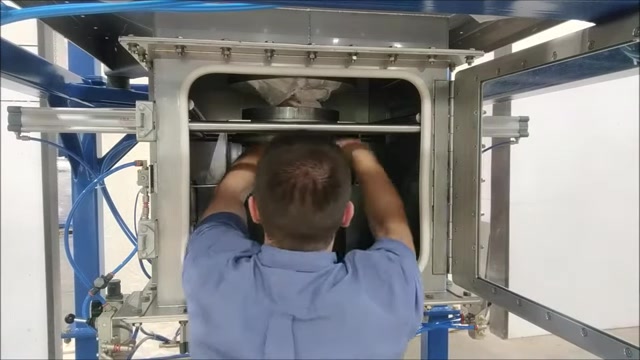
Carolina Conveying shows how its bulk bag discharge station contains dust: the spout is untied inside a sealed access module and clamped pneumatically to a feed tube.
Total reach: 17,752
Flexicon
Flexicon BULK-OUT Bulk Bag Dischargers
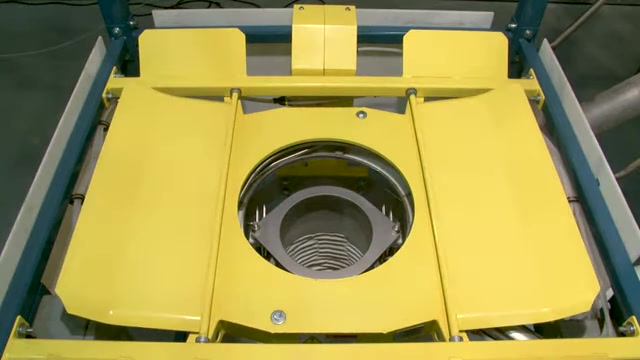
Flexicon presents its BULK-OUT bulk bag discharger range: forklift-loaded BFF frames, hoist-and-trolley BFC frames, split and half frames, and accessories for dust-free untying, retying and flow promotion.
Total reach: 71,815
Hapman
Hapman Bulk Bag Hoist Unloader with Dust Collection
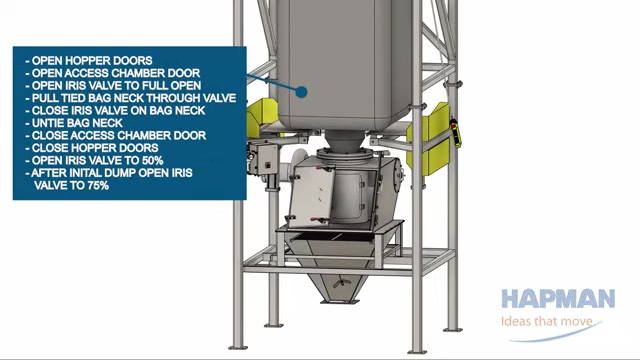
Hapman shows a hoist-loaded bulk bag unloader with a round access chamber and integrated dust collection for dust-free discharge.
Total reach: 2,813
Hapman
Hapman Compact Sieve Animation
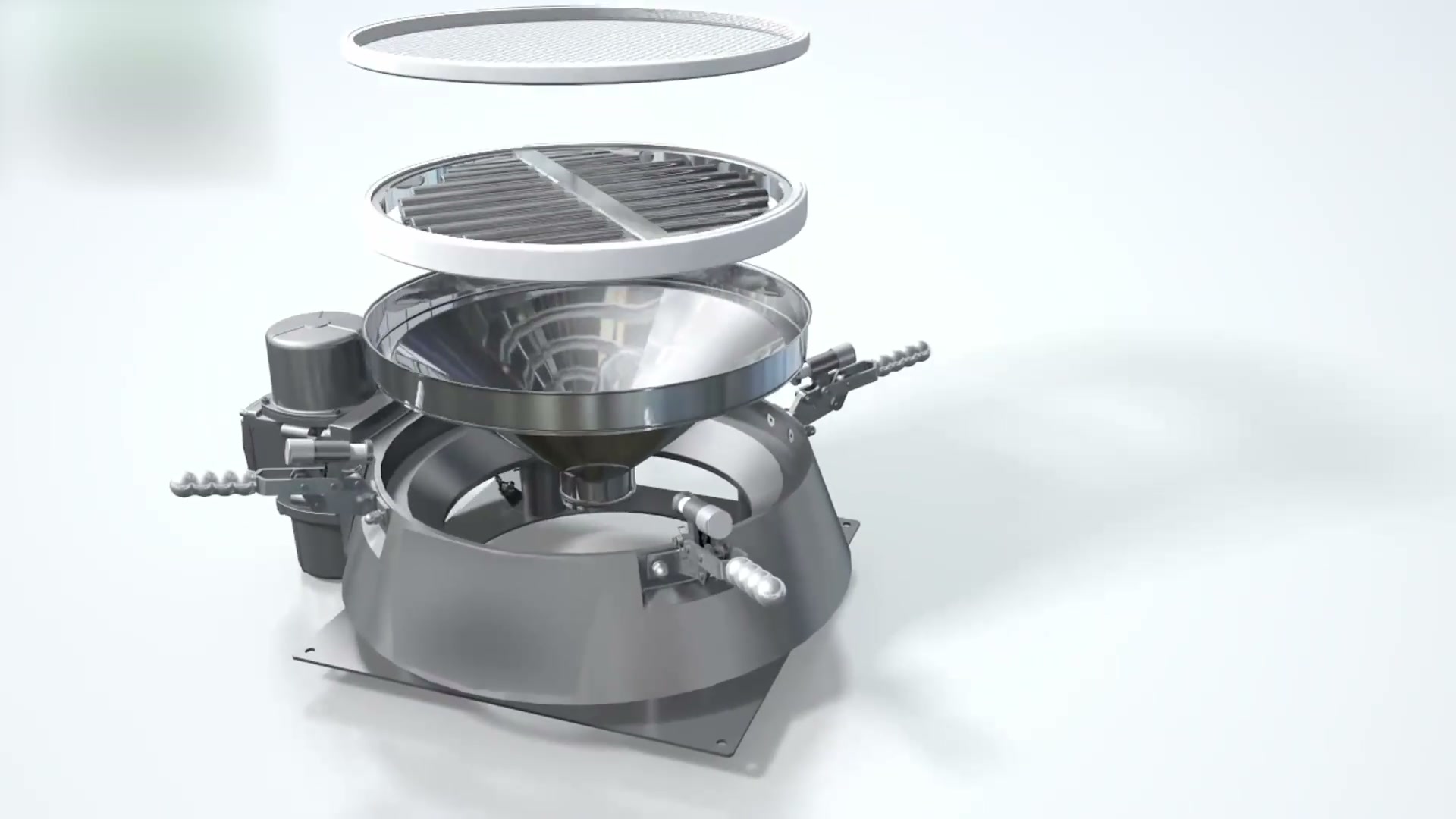
Hapman's animation shows a compact vibratory sieve mounted beneath a bulk bag unloader, screening powder before it enters the next process step. The sieve is a high-capacity, easy-clean option for restricted spaces.
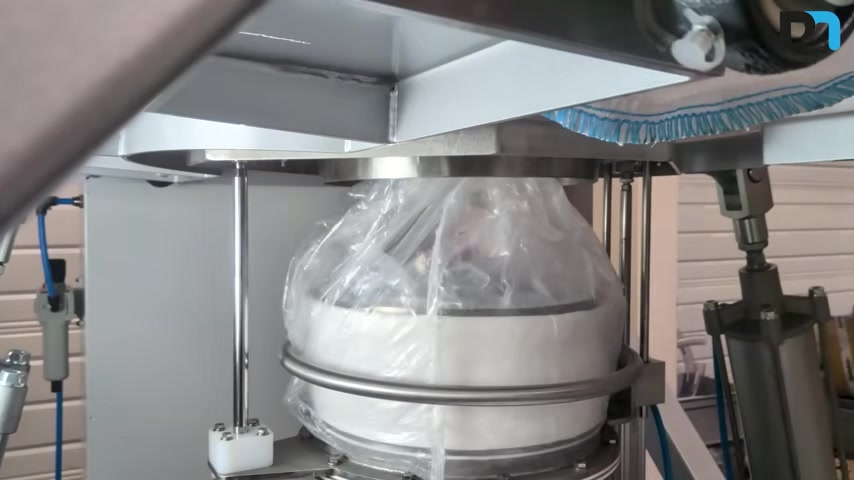
Palamatic Process
Palamatic Process: Emptying Big Bags of Sensitive Powders with OEB Containment
A Palamatic Process engineer explains the OEB big bag discharge station for toxic, CMR and ultra-fine powders, including the sleeve tie-off that keeps containment through a bag change.
Total reach: 18,610

F.lli Sacchi S.n.c.
Smart Pick – Fully Automated Bag Emptying and Processing of Complex Recipes
The video shows the F.lli Sacchi SmartPick robotic bag emptying system. A robot selects bags from pallet stations, presents them to a cutting and emptying station, and supports recipe controlled ingredient handling.
Total reach: 23,039

Vortex – Solids & Bulk Handling Components
Vortex®: Telescoping Loading Spout
Vortex presents a telescoping spout for guiding dry bulk material into a truck, railcar, vessel or stockpile. The video is useful for understanding the internal flow path and moving components. Pressure, leakage, wear, material compatibility and cleaning still require verification for the actual duty.
Total reach: 76,931