
Material
PVC Resin
Answer in brief
PVC resin is a porous powder that holds air, charges strongly and degrades if it gets hot in the wrong place.
The handling system has to deliver a consistent bulk density to the compounder without creating hot spots or static.
- Convey at low velocity to protect particle structure and avoid frictional heat.
- Ground everything, since PVC charges readily in dry transfer.
- Avoid dead zones where resin can sit warm and begin to degrade.
Reviewed October 21, 2026 · Updated November 10, 2026
Handling challenges
Compounding lines are judged by consistency, and PVC resin handling is where consistency is usually lost.
Bulk density and aeration
Resin arriving aerated from a conveying line meters differently than settled resin.
Deaeration volume above the feeder and loss-in-weight dosing give the compounder a stable feed rate.
Static
Dry PVC charges strongly, which causes clinging in silos, inaccurate weighing and a credible ignition source in a dust cloud.
- Bonded and grounded conveying lines, including flexible sections.
- Conductive hoses and filter media.
- Controlled velocity, since charge generation rises with it.
Thermal degradation
PVC releases hydrogen chloride when overheated, which corrodes equipment and spoils the product.
Frictional heating in a tight bend, a rubbing rotary valve or a stagnant pocket near a hot surface is enough to start it.
Dust and additives
Compounding adds stabilisers, fillers and pigments, several of which carry their own exposure limits.
Contained bag and big bag discharge with extraction protects the operators handling the additives rather than the resin itself.
What to establish before buying equipment
- Resin grade, porosity and settled bulk density.
- Conveying velocity and the static control measures.
- Additive list with exposure limits and dosing accuracy.
- Temperature exposure along the whole route.
Storage and conditioning
PVC resin is a porous powder that holds air and releases it slowly, which makes it behave unlike its bulk density suggests.
It aerates during pneumatic filling and then flows like a liquid for some time, and it carries a static charge readily, which makes it cling to walls and to itself.
- Allow deaeration time before any feeder takes material.
- Earth and bond everything; static is both a handling and an ignition concern.
- Keep it dry: absorbed moisture shows up later as processing defects.
What this means for equipment
Static and aeration drive the selection, abrasion does not.
The resin is soft, so wear is a minor issue, but the charge it builds makes transfer lines and silo walls hold a coating. Conductive or earthed components throughout are standard practice.
- Earthed, conductive hoses and components rather than plain plastic.
- Deaeration volume before feeders, and gravimetric dosing where the rate matters.
- Dry conveying air with a stated dew point.
Safety and regulatory
PVC dust is combustible, and the combustion products are the greater concern.
Burning PVC produces hydrogen chloride, which is corrosive and toxic, so a fire in a PVC plant is a different event from a fire in a polyolefin plant.
- Explosion protection designed from measured values for the grade.
- Static control as an ignition prevention measure.
- Fire response planned around corrosive combustion products.
Material behavior
- Flowability
- Moderate; aerates readily
- Abrasiveness
- Low
- Cohesiveness
- Low to moderate
- Moisture behavior
- Mildly hygroscopic; moisture affects compounding
- Contamination risk
- Degraded resin and contamination with other polymers show as defects
Partner with powderbulkvideos.com
Put a relevant technical solution in this decision path.
Connect your company and video evidence with clearly labelled visibility where engineers evaluate this material, application, industry or product.
Frequently asked questions
Why is static such a problem with PVC?
The resin charges readily during transfer, which makes it cling to walls and hoses and creates a credible ignition source. Conductive, earthed components are standard rather than optional.
Does PVC resin wear equipment?
Not significantly. It is soft, so unlike mineral powders the limiting factors are static, aeration and moisture rather than abrasion.
What makes a PVC fire different?
The combustion products. Burning PVC releases hydrogen chloride, which is corrosive and toxic, so the fire response has to be planned for that.
Related content
Continue exploring
Move from this page to the companies, videos and technical topics that add useful context.
Companies

Videos

Hosokawa Solids Solutions GmbH
Hosokawa Solids Solutions: Solids Puls Pneu Conveying System
Hosokawa Solids presents the Solids Puls Pneu plug-conveying system with bypass, impulse-valve and relay-station components.
Total reach: 70,548
Flexicon
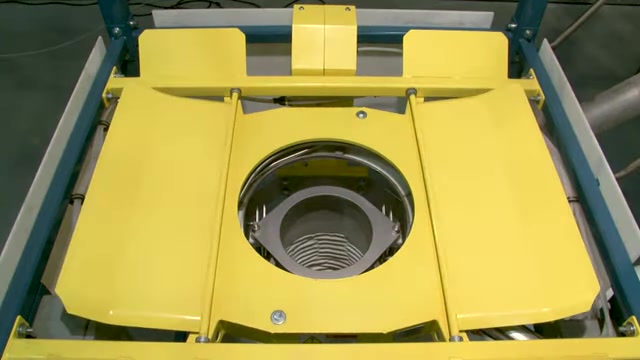
Flexicon BULK-OUT Bulk Bag Dischargers
Flexicon presents its BULK-OUT bulk bag discharger range: forklift-loaded BFF frames, hoist-and-trolley BFC frames, split and half frames, and accessories for dust-free untying, retying and flow promotion.
Total reach: 73,082
Technologies
- Bulk Bag Unloading Systems
- Bulk Bag Unloading Systems: Selection and Design
- Dense Phase Conveying
- Dense Phase Conveying
- Dust Collection & Air Pollution Control
- Dust Collection & Air Pollution Control Technology Guide
- Explosion Protection
- Feeding & Dosing Control
- Feeding & Dosing Control
- Industrial Feeders
- Pneumatic Conveying
- Pneumatic Conveying Technology Guide
Applications
- Bulk Bag Unloading with Weighing and Feeding
- Chemical Powder Repackaging and Batching
- Explosion Isolation in Petrochemicals
- Explosion Protection for Petrochemical Powder Handling
- Feeder Refill from Pneumatic Conveying
- Powder Blending in Plastics Compounding
- Valve and Airlock Selection for Plastics Processing