
Comparison
Volumetric Feeding vs Gravimetric Feeding
Answer in brief
Choose volumetric feeding when material condition is stable and verified output at a set speed meets your acceptance criteria — it meters by displacement over time and is the simpler system.
Choose gravimetric feeding when mass accuracy, changing bulk density or documented feed-rate verification justifies the added weighing, controls and commissioning work, because it corrects output from weight feedback. Loss-in-weight feeding is one gravimetric subtype, not a synonym for every gravimetric arrangement.
By Editorial Team · Published July 17, 2026 · Updated July 26, 2026

Sponsored visibility
Featured videos for this topic
Paid placements are clearly marked and remain separate from the editorial related-video selection.


Gericke AG
Gericke: GUC-F Feeding and Dosing Controller
This video presents the Gericke GUC-F Feeding and Dosing Controller, a multi-channel control system designed for precise feeding, dosing, and weighing tasks in powder and bulk solids processing. The controller supports demanding process requirements across a wide range of industries where accuracy, reproducibility, and process transparency matter.
Total reach: 3,519
This featured spot is open
Show your video here, in front of engineers who are researching this topic.
Volumetric and gravimetric feeders both meter bulk solids, but they observe different things. A volumetric feeder controls displacement or device speed and assumes that delivered volume stays a useful proxy for quantity.
A gravimetric feeder adds a weighing signal, so control can respond to measured mass change or mass flow. Neither principle comes with a universal accuracy value; performance depends on the material, the feeder, refill behavior, control interval and the acceptance test.
Operating principles
Volumetric arrangements relate screw speed, belt speed, pocket volume or another displacement measure to expected output. Calibration ties that setting to a tested material condition. If bulk density, fill efficiency or aeration changes, the same speed may deliver a different mass.
Gravimetric arrangements combine a feeding device with weighing and control. Loss-in-weight equipment tracks the mass reduction of a weighed hopper and feeder, while other gravimetric concepts may weigh conveyed material differently. Loss-in-weight is therefore one child of gravimetric feeding, not a synonym for it. Screw, belt and vibratory designs used in both camps are covered under industrial feeders.
Engineering visual guide
How the system behaves
These conceptual diagrams connect the operating principle, equipment internals and engineering review points. They are explanatory and not fabrication drawings or a substitute for project-specific calculations.
Engineering infographic
Side-by-side operating principles
Conceptual side-by-side operating schematic for Feeding & Dosing Control; use it to structure an engineering review, not as a fabrication drawing or project-specific design.
Decision matrix
| Decision factor | Volumetric feeding | Gravimetric feeding |
|---|---|---|
| Measured variable | Device displacement or speed | Mass change or mass flow |
| Material variation | Requires review when density or fill changes | Feedback may compensate within the validated control range |
| Refill | Calibration must cover refill effects | Refill strategy and filtering are part of control performance |
| Commissioning | Material-specific output calibration | Weighing, controls and material delivery verification |
| Best fit | Stable duties where verified volumetric performance meets acceptance | Duties needing measured mass control or traceable mass records |
Engineering infographic
Selection envelope
Conceptual selection envelope for Feeding & Dosing Control; use it to structure an engineering review, not as a fabrication drawing or project-specific design.
Define the material and duty
Record expected grades, bulk density range, particle distribution, cohesion, moisture, aeration, fragility, abrasion, electrostatic behavior and contamination constraints. Upstream size reduction and screening steps set several of these properties. Define minimum, normal and maximum rate, batch or continuous duty, turndown, refill pattern and downstream response. A comparison based only on nominal kilograms per hour omits the conditions that often dominate feeder behavior.
Where each fits: volumetric control is strongest where material delivery per revolution stays stable enough for the process objective and periodic calibration is practical. Gravimetric control adds feedback where density, filling or upstream conditions vary — but it cannot repair an arching hopper, a blocked screw or an unsuitable outlet. Both concepts need a reliable mechanical feed path.
For cohesive or compressible powder, trial the complete hopper and feeder over the expected level range and storage time. For fragile material, include particle damage in the trial. For mixtures or minor ingredients, judge the downstream quality consequence of short interruptions and pulsation, not just the controller display.
Accuracy and acceptance
Accuracy must state what is compared, over what interval and under which operating state. Instantaneous deviation, batch total, average rate and repeatability are different measures. A percentage without that basis is not a complete requirement.
Repeatability is not truth: a volumetric feeder can repeat speed and swept volume while delivered mass changes with bulk density or filling. A gravimetric feeder measures mass change yet can still be wrong when vibration, external load paths, refill forces or signal filtering distort the scale. Ask what is measured, what remains inferred and over which time interval the result is accepted.
Short-term accuracy matters when downstream hold-up is small; longer averaging can be sufficient for inventory transfer. Agree reference instruments, sampling, duration, start and stop rules, refill treatment and pass criteria before testing. A controller display is not independent proof unless its measurement chain and test method are part of the acceptance basis.
Partner with powderbulkvideos.com
Put your expertise beside the decisions engineers are making.
Connect a relevant company profile and technical video portfolio with clearly labelled visibility on this topic.
Refill and controls
Refill can disturb head load, material condition and weight signals. Volumetric systems need a calibration basis that includes credible bin conditions. Loss-in-weight systems temporarily gain material during refill, so the normal weight-loss calculation is interrupted or compensated; depending on design, control may switch to a modeled or volumetric mode until the signal settles.
Treat the refill device, refill quantity, timing and control strategy as part of the feeder rather than an upstream utility — including delivery by pneumatic conveying. Refill flow can disturb the feeder mechanically and change powder aeration. Measure performance before, during and after refill, and check how quickly the mass-flow estimate recovers and whether the downstream process tolerates the transient.
Signal filtering, control interval, feeder response and refill logic must be evaluated together; aggressive filtering can hide disturbance while slow response can miss process needs. A larger hopper reduces refill frequency but increases suspended mass and may worsen scale sensitivity or material consolidation.
Mechanical and process integration
Review inlet conditioning, agitation, screw or belt selection, discharge geometry, flexible connections, support structure, vibration, access and cleanout. Weighing systems need isolation from unintended loads and disturbances.
Both concepts require suitable containment and safeguards. Combustible dust, exposure, mechanical hazards and product-contact requirements need material- and site-specific assessment; explosion protection and dust collection are covered separately.
Commissioning, lifecycle and change control
Verify calibration and load paths before material testing. Run minimum, normal and maximum rate long enough to collect a meaningful reference mass, and include refill, a planned stop, restart and a credible disturbance. Record feeder command, measured weight or reference mass, hopper level, refill state and any downstream result used for acceptance.
Document the validated material and range, calibration method, allowable deviation, alarm response and re-verification interval. Compare ongoing calibration effort, load-cell checks, wear parts, cleaning, refill equipment, controls support, spares and diagnostic needs across the candidates.
Change control: after commissioning, changes in material, supplier, moisture, feeder geometry, speed range, refill method or software should trigger review against the approved baseline. A feeder that met one test condition is not automatically validated for a new formulation or rate range; changes to screw, agitator, hopper geometry, refill equipment or mounting can invalidate the result even when controller settings are unchanged.
Engineering infographic
Failure and safety comparison
Conceptual failure and safety comparison for Feeding & Dosing Control; use it to structure an engineering review, not as a fabrication drawing or project-specific design.
Procurement questions
Ask vendors to state the feeder principle, usable rate range, calibration procedure, refill behavior, signal treatment, mechanical configuration and test basis. Require a clear boundary for hopper, feeder, weighing hardware, flexible connections, controls, support structure and downstream interface.
Record which changes require recalibration and what diagnostic data operators can see. Compare the proposed maintenance and verification workload as well as initial hardware. A technically more complex feeder is justified only when its measured benefit addresses an explicit process or quality requirement.
Frequently asked questions
What is the main difference between volumetric and gravimetric feeding?
Volumetric control uses displacement or speed as the metering basis; gravimetric control uses a weighing signal to control measured mass delivery.
Is loss-in-weight feeding the same as gravimetric feeding?
No. Loss-in-weight is a gravimetric subtype; other gravimetric arrangements can measure mass in different ways.
Is gravimetric feeding always more accurate?
No universal answer holds. Accuracy depends on material, feeder design, weighing, refill behavior, controls and the stated test method.
When can volumetric feeding be appropriate?
When material condition is sufficiently stable and verified feeder performance meets the process acceptance criteria.
What should a feeder trial document?
Material condition, rate range, refill state, reference measurement, test interval, repeatability and the agreed pass criteria.
Related content
Continue exploring
Move from this page to the companies, videos and technical topics that add useful context.
Companies
Videos
Gericke AG
Gericke: GUC-F Feeding and Dosing Controller
This video presents the Gericke GUC-F Feeding and Dosing Controller, a multi-channel control system designed for precise feeding, dosing, and weighing tasks in powder and bulk solids processing. The controller supports demanding process requirements across a wide range of industries where accuracy, reproducibility, and process transparency matter.
Total reach: 3,519
Dinnissen
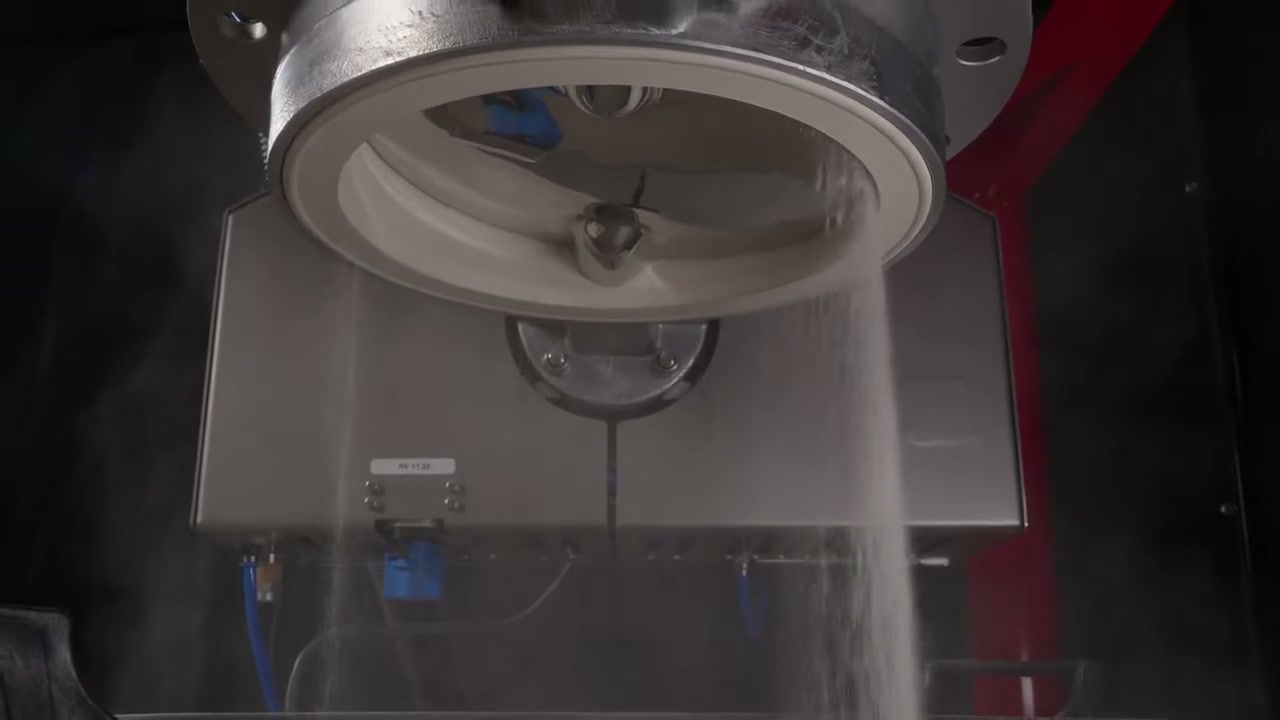
Feeder Valve
Dinnissen Process Technology shows a feeder valve developed for powder dosing at an accuracy that the older generation of equipment could not reach.
Brabender Technologie GmbH & Co. KG
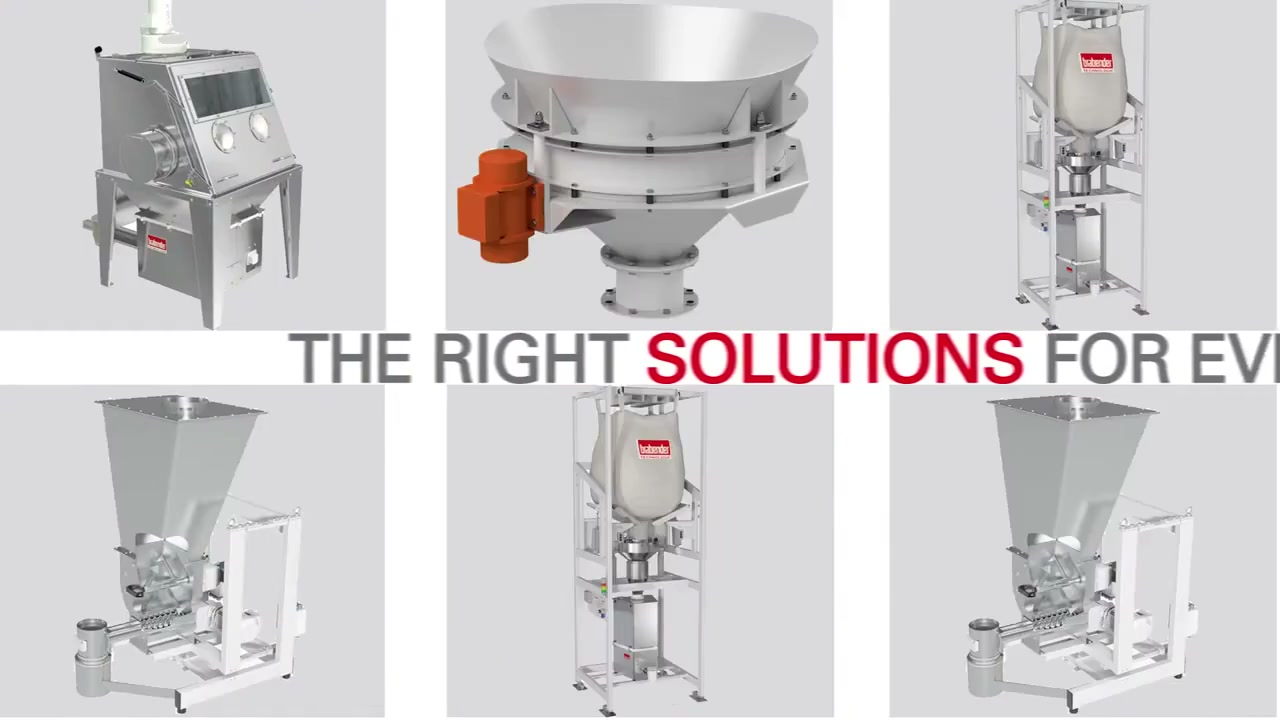
Food feeding technology by Brabender Technologie
Brabender Technologie presents its gravimetric and volumetric feeding systems for the food industry, the equipment that meters an ingredient into a process at a controlled rate.
Total reach: 1,747

AZO
AZO DOSITAINER with Discharge Base
AZO demonstrates a DOSITAINER with discharge base in an ingredient-handling and dosing context.
Coperion
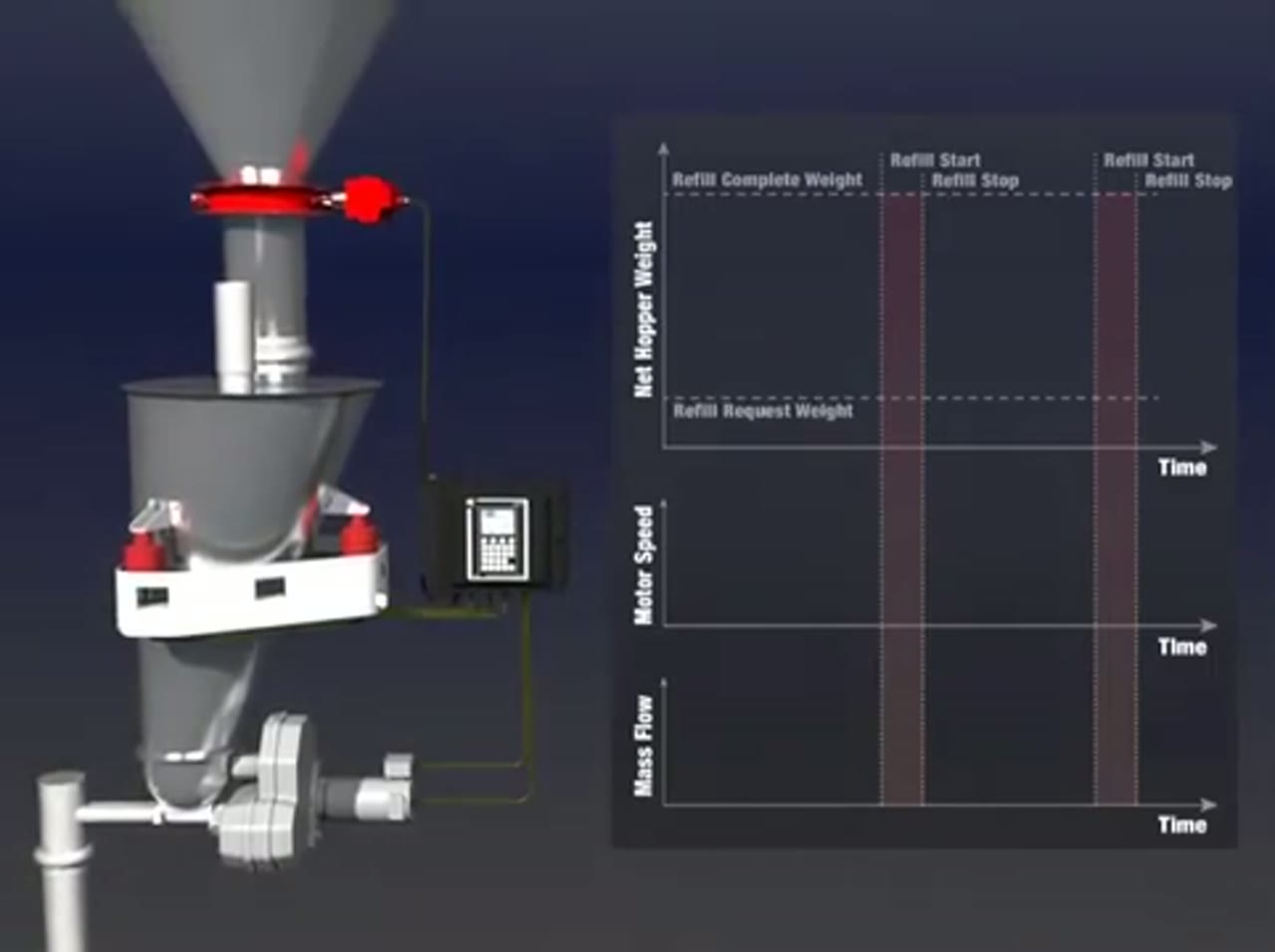
Coperion Loss-in-Weight Feeder Animation
The Coperion K-Tron animation shows a controller observing the decrease in combined hopper, feeder and material weight, comparing the measured rate with the setpoint and adjusting feeder output.
Total reach: 42,934

WAMGROUP
Tubular Screw Conveyors and Feeders
WAMGROUP presents enclosed tubular screw conveyors and feeders used to transfer or meter powders and bulk solids.