
Application
Gravimetric Feeding in Plastics Compounding
Answer in brief
In compounding the recipe is made by the feeders, and the extruder only mixes what they deliver.
A filler feeder that drifts by a few percent changes the mechanical properties of the product, and there is nothing downstream that corrects it.
- Size each feeder for its own ingredient, not to a common standard.
- Side feed fillers rather than dropping them into the throat.
- Sequence the refills; two at once blinds two recipes.
Reviewed October 21, 2026
The problem
A compounding line is a set of feeders discharging into one extruder, and the compound is whatever ratio they happened to deliver. There is no mixer downstream that can correct a feeder that drifted, and the result is a property variation rather than a visible fault.
The ingredients behave very differently. Light fillers such as talc and precipitated calcium carbonate aerate and change bulk density by a factor of two between fluffed and settled; glass fibre bridges and breaks; pellets flood through an open screw; masterbatch is dosed at a fraction of a percent. One feeder design cannot be good at all of them.
The feed point is its own problem. Dropping a light, aerated filler into the extruder throat brings air in with it, the screw cannot convey the mixture, and the result is surging at the die that gets blamed on the extruder rather than on the feeding.
And the extruder is a vibrating machine. Load cells next to it read that vibration as mass, which is why some plants filter the signal until the control response is too slow to matter.
Desired outcome
Each ingredient on a feeder sized and configured for that ingredient, with the accuracy stated at its actual rate and at a sample time relevant to the extruder.
Fillers introduced where the polymer is already molten, so entrained air leaves through the vent rather than destabilising the feed.
Refills sequenced so no two feeders are blind at the same moment, and a weighing installation that is mechanically isolated from the extruder.
In battery material production the wear resistant screw that solves the compounding problem creates the contamination one, measured in parts per million of iron.
Process approach
Feeder and discharge device are chosen per ingredient. Twin screws for fillers and fibres, where self wiping flights keep the feed factor stable; single screws for pellets, usually with a reduced pitch to stop flooding; vibratory trays for flake and for anything that breaks.
Side feeding is then specified wherever a light filler is involved. Introducing it downstream into the melt, through a side feeder, keeps the air out of the main throat and improves dispersion at the same time. Plants that fight surging for months frequently fix it by moving the feed point rather than by changing the feeder.
Refill is sequenced centrally. A shared vacuum conveying system that refills whichever feeder asks first will eventually refill two at once, and during a refill a feeder is running on its last feed factor. A controller that staggers refills, and a refill that takes a small fraction of the cycle, keep the gravimetric control meaningful.
Finally the mechanics of weighing are protected. The feeder stands on its own frame rather than on the extruder, the inlet and outlet connections are genuinely flexible and nothing crosses them, and any pressure difference at the outlet is vented so it is not read as mass.
- Discharge device chosen per ingredient: twin screw for fillers and fibre, single screw for pellets, tray for flake.
- Light fillers side fed into the melt rather than dropped into the throat.
- Refills sequenced so no two feeders are blind at the same time.
- Feeder frames mechanically isolated from the extruder, with flexible connections kept free.
- Outlet pressure difference vented so it does not appear as a weight signal.
- Accuracy specified at the real rate and at a sample time relevant to the die.
Selection factors
- Inclusion rate and tolerance for each ingredient separately, since masterbatch and filler have nothing in common.
- Bulk density range, aerated and settled, which is what the feed factor has to cope with.
- Fibre length or flake size, which decides whether a screw will convey it at all.
- Extruder feed point and whether side feeding is available or can be retrofitted.
- Refill method and timing, including whether the conveying system can sequence.
- Vibration environment and how the weighing is isolated from it.
Common failure modes
- Light filler dropped into the throat, entraining air and surging the die
- One feeder type bought for fillers, fibre, pellets and masterbatch alike
- Shared refill system refilling two feeders at once, blinding both
- Feeder mounted on the extruder frame, so the load cells read machine vibration
- Signal filtering increased until the control response is slower than the process
- Accuracy quoted over a long sample time while the product varies within seconds
Partner with powderbulkvideos.com
Put a relevant technical solution in this decision path.
Connect your company and video evidence with clearly labelled visibility where engineers evaluate this material, application, industry or product.
Frequently asked questions
Why side feed a filler?
Because a light aerated filler dropped into the throat brings air into the screw, which cannot convey the mixture steadily. Side feeding into the melt keeps the air out and improves dispersion at the same time.
What does refill do to feeder accuracy?
It blinds the controller, which then runs on its last feed factor. Short, infrequent, sequenced refills limit that; a shared conveying system that refills two feeders at once doubles the problem.
Why is load cell vibration such an issue here?
Because an extruder is a vibrating machine and a load cell reads force. Mounting the feeder on its own frame solves it; filtering the signal instead trades the error for a slow control response.
Related content
Continue exploring
Move from this page to the companies, videos and technical topics that add useful context.
Companies
Videos


Gericke AG
Gericke: GFS Formulation Skid and Tablet Press
This video presents the Gericke Formulation Skid (GFS) combined with a tablet press, showing how pharmaceutical formulations move from blending through downstream processing in one controlled, scalable setup. The system runs semi-continuously or fully continuously and targets development, scale-up, and technology transfer.
Total reach: 3,835

WAMGROUP
Tubular Screw Conveyors and Feeders
WAMGROUP presents enclosed tubular screw conveyors and feeders used to transfer or meter powders and bulk solids.
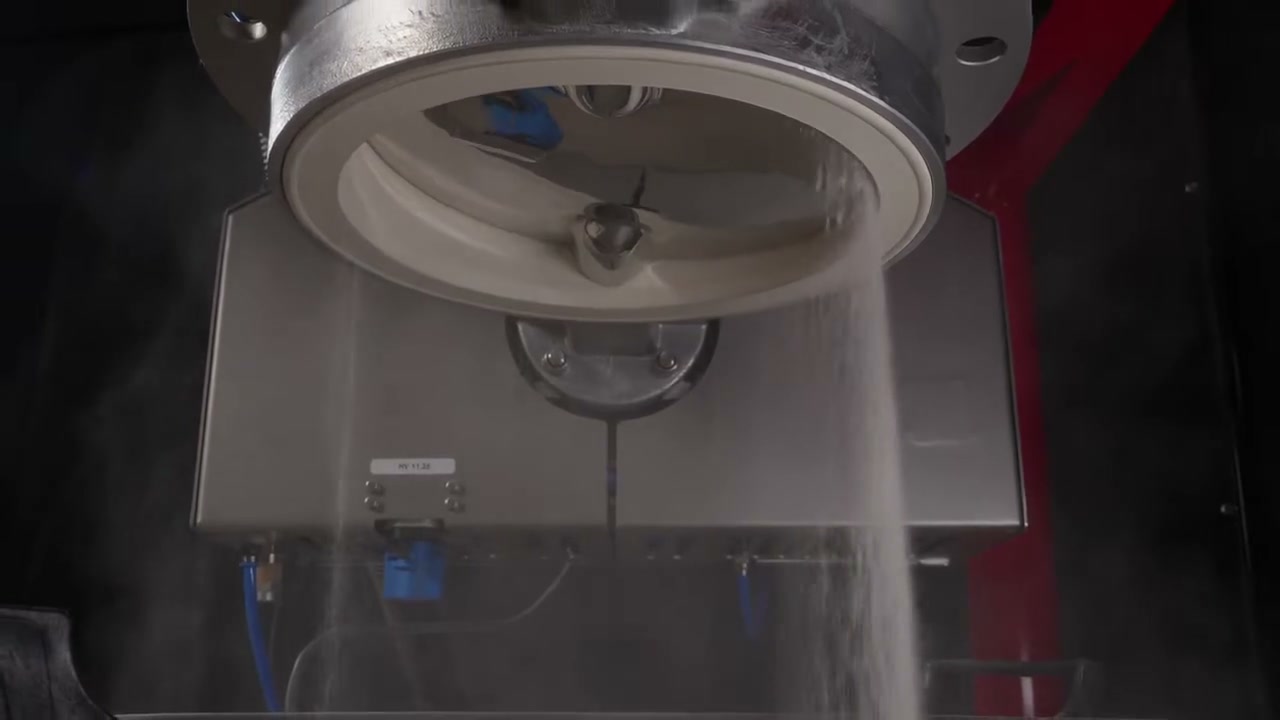
Dinnissen
Feeder Valve
Dinnissen Process Technology shows a feeder valve developed for powder dosing at an accuracy that the older generation of equipment could not reach.