
Application
Bulk Bag Discharge in Mineral Processing
Answer in brief
With mineral powders the bulk bag station is a respirable dust control point.
Silica-bearing powders have strict exposure limits, and the untying step is where the operator stands closest to the source.
- Enclose the untying and extract at the source.
- Expect bridging and specify agitation.
- Design the lifting for the real bag weight, which is often at the limit.
Reviewed October 21, 2026
The problem
Mineral powders are abrasive and often arrive in bags that have been stored outdoors, which combines wear with consolidation.
The dust is also frequently a regulated exposure, because many mineral products carry crystalline silica. That changes the station from a handling problem into a health control.
The mechanics of a bulk bag unloading system are the same in every industry. What changes here is that the fraction which matters cannot be seen.
Desired outcome
Complete discharge of a consolidated, abrasive powder with capture good enough to keep the respirable fraction out of the operator's breathing zone, and wear parts that can be changed without dismantling the station.
A lifting arrangement sized for the bag the plant actually receives. Mineral bags are frequently at or beyond the nominal rating because the powder is dense, and a frame or hoist chosen from the bag label rather than from a weighed bag is undersized from the first delivery.
Capture performance stated as a measured exposure figure for the operator, not as a description of the hood, because the respirable fraction that carries the health risk is invisible.
A pet food plant decides the same station on the recipe list and on carryover, because a frame designed around free-flowing meal meets a fat-coated premix.
Process approach
The bag is loaded by forklift or hoist and the spout sealed before opening.
Massaging is essential: mineral powders consolidate hard, and a stored bag will not empty on its own. The lower third of the bag does most of the resisting.
Below the spout, the hopper and its outlet are sized for the consolidated condition and lined where the product is abrasive. The metering device is chosen for wear life as much as for accuracy, and the wear parts are positioned so they can be replaced from outside.
Capture at the connection is sized for the opening and verified by measurement rather than by appearance: respirable dust is not visible.
Consolidation sets the whole design. A bag of fine mineral powder that has stood in a yard for weeks has gained real strength, and the lower third resists most because it carried the weight of everything above it. Massaging paddles or a vibrating frame are therefore part of the station rather than an option, and the hopper outlet below is sized for the consolidated condition rather than for flowing material.
Moisture then changes the behaviour completely. A bag stored outdoors through rain holds damp material at the liner wall and dry material in the core, which empties unevenly and bridges where the damp layer is. Where bags are stored outside, the design case is the damp one.
- Massaging as standard, not as an accessory.
- Lined contact surfaces and accessible wear parts.
- Capture verified by measurement, because the dangerous fraction is invisible.
- Hopper outlet sized for consolidated material, not for the flowing condition.
- Lifting arrangement sized from a weighed bag rather than from the label.
- Damp outdoor stored bags used as the design case where the yard has no cover.
Selection factors
- Silica content of the specific product, which sets the exposure control.
- Abrasiveness, which decides liners and wear part access.
- Consolidation after storage, which decides massaging and outlet size.
- Moisture, since damp mineral powder behaves completely differently from dry.
- Throughput, which decides whether a single station can serve the line at all.
- Actual bag weight, weighed, since dense mineral powders often exceed the nominal rating.
- Storage conditions before delivery, which decide the consolidation and the moisture case.
- Exposure verification method, since the control has to be demonstrated rather than described.
Common failure modes
- Capture judged by appearance, when the respirable fraction is invisible
- No massaging, so consolidated bags are opened and prodded by hand
- Unlined hopper on an abrasive product, replaced far sooner than planned
- Wear parts that need the station dismantled, so they run past their life
- Design based on dry material while bags are stored in an open yard
- Lifting frame or hoist sized from the bag label rather than from a weighed bag
- Hopper outlet sized for flowing material and bridged by consolidated powder
- Design based on a covered store while the bags stand in an open yard
Partner with powderbulkvideos.com
Put a relevant technical solution in this decision path.
Connect your company and video evidence with clearly labelled visibility where engineers evaluate this material, application, industry or product.
Frequently asked questions
Why is visual inspection not enough for dust capture?
Because the respirable fraction is invisible. A station that looks clean can still expose the operator, so capture performance is verified by measurement.
What makes mineral bags hard to empty?
Consolidation during storage. Fine mineral powders gain strength standing in the liner, and the lower third of the bag resists most. Massaging is what restores flow.
Where do the wear costs come from?
The hopper, the outlet and the metering device, all of them in the abrasive stream. Positioning the wear parts for access from outside is what keeps them replaced on time.
How heavy is a mineral bulk bag in practice?
Often more than the label suggests, because the powder is dense and fillers work to a volume. Weighing a delivered bag before sizing the frame and the hoist is the only reliable basis.
Related content
Continue exploring
Move from this page to the companies, videos and technical topics that add useful context.
Companies
Videos
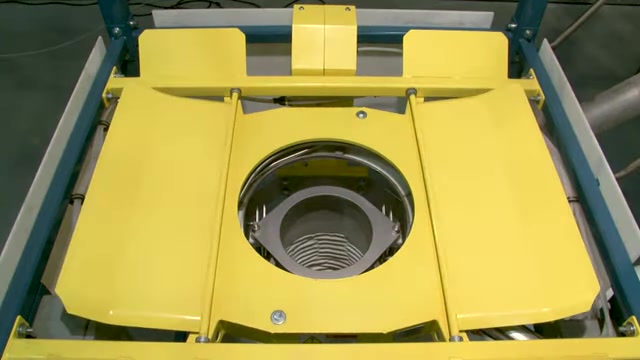
Flexicon
Flexicon BULK-OUT Bulk Bag Dischargers
Flexicon presents its BULK-OUT bulk bag discharger range: forklift-loaded BFF frames, hoist-and-trolley BFC frames, split and half frames, and accessories for dust-free untying, retying and flow promotion.
Total reach: 73,122
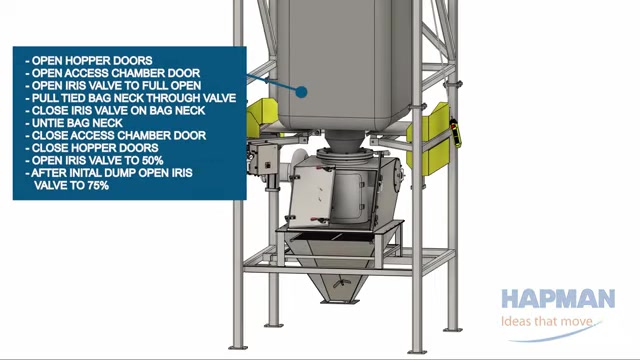
Hapman
Hapman Bulk Bag Hoist Unloader with Dust Collection
Hapman shows a hoist-loaded bulk bag unloader with a round access chamber and integrated dust collection for dust-free discharge.
Total reach: 2,978
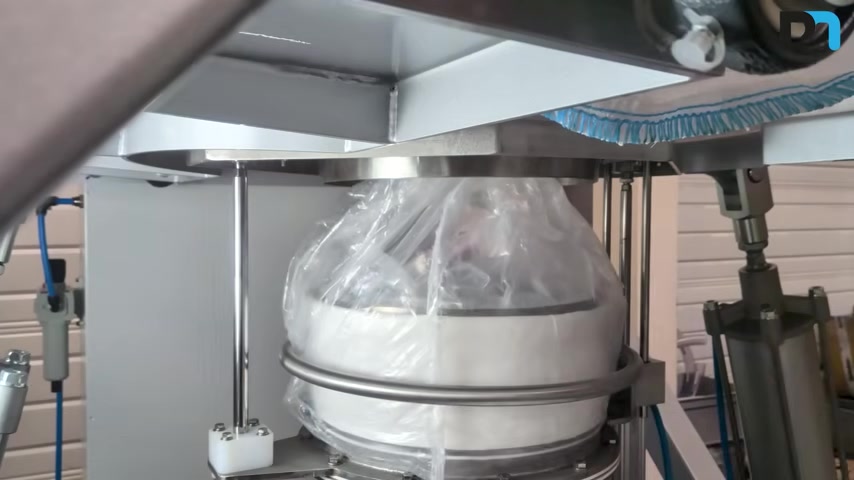
Palamatic Process
Palamatic Process: Emptying Big Bags of Sensitive Powders with OEB Containment
A Palamatic Process engineer explains the OEB big bag discharge station for toxic, CMR and ultra-fine powders, including the sleeve tie-off that keeps containment through a bag change.
Total reach: 18,760
Technologies
- Bulk Bag Unloading Systems
- Bulk Bag Unloading Systems: Selection and Design
- Dust Collection & Air Pollution Control
- Dust Collection & Air Pollution Control Technology Guide
- Feeding & Dosing Control
- Feeding & Dosing Control
- Screening & Sieving Systems
- Screening & Sieving Systems for Powder and Bulk Solids
- Vacuum Conveying
- Vacuum Conveying Systems