
Material
Soda Ash
Answer in brief
Soda ash is two materials sold under one name, and mixing them up explains most handling complaints.
Dense ash is granular and flows well; light ash is fine, dusty and cakes, and a silo built for one will not serve the other.
- Confirm the grade before sizing anything.
- Keep moisture out, because caking here is a hard, mechanical problem.
- Expect segregation when a blend of grain sizes is stored.
Reviewed October 21, 2026 · Updated November 10, 2026
Handling challenges
The first question in any soda ash project is which grade will actually arrive, because dense and light ash behave nothing alike.
Grade decides the design
- Dense ash: granular, higher bulk density, flows from a conventional silo, abrasive enough to wear bends.
- Light ash: fine, low density, dusty, cohesive and prone to flooding after pneumatic transfer.
Plants that receive both need a design that covers the harder case rather than an average.
Caking
Soda ash takes up moisture and forms hydrates, and the resulting cake is hard rather than merely sticky.
Sealed silos, dried venting air and short storage times are the practical defences; a bin activator does not break up a chemical cake.
Segregation and glass batch consistency
In glass production the batch recipe depends on consistent delivery from each silo.
Funnel flow in a silo holding a size blend delivers fines and coarse at different times, which shows up as batch variation downstream.
Wear and dust
Crystalline particles erode bends and valve seats at normal dilute phase velocities, and the alkaline dust irritates eyes and airways.
Lower velocity, protected impact points and extraction at transfer and loading address both at once.
What to establish before buying equipment
- Grade, bulk density and particle size on receipt.
- Ambient humidity exposure along the whole route.
- Flow properties after the longest realistic storage period.
- Dust control at the loading and bag emptying points.
Storage and conditioning
Soda ash comes in dense and light grades that behave like different materials.
The dense grade flows well. The light grade is bulky, dusty and aerates, and it takes up moisture readily, which leads to caking and, over time, to the formation of a crust on the bed.
- Seal the silo and condition the vent air; this prevents most of the trouble.
- Size for the grade you actually buy, not for the name on the specification.
- Expect consolidation in the light grade and allow for it at the outlet.
What this means for equipment
Grade decides the equipment.
Dense soda ash is straightforward. Light soda ash needs a deaeration volume, a generous outlet and dust control at every opening, and it is mildly abrasive enough to matter in a continuous line.
- Dry conveying air with a stated dew point.
- Deaeration before any feeder on the light grade.
- Corrosion-aware material choice where damp product can form a caustic solution.
Safety and regulatory
Soda ash is alkaline and the dust is irritating to eyes and airways.
- Capture at the source at bag tipping and transfer points.
- Eye protection where handled open.
- Closed handling of collected dust.
It is not combustible, so the controls are exposure and housekeeping rather than explosion protection.
Material behavior
- Flowability
- Dense grade free flowing, light grade poor
- Abrasiveness
- Moderate
- Cohesiveness
- Moderate to high after moisture pickup
- Moisture behavior
- Hygroscopic; forms hard cake with moisture
- Contamination risk
- Alkaline dust irritating to eyes and airways
Partner with powderbulkvideos.com
Put a relevant technical solution in this decision path.
Connect your company and video evidence with clearly labelled visibility where engineers evaluate this material, application, industry or product.
Frequently asked questions
Why do dense and light soda ash behave so differently?
Because the bulk density and particle structure differ widely. Light grade aerates, dusts and consolidates; dense grade largely does not. A design for one does not serve the other.
Does soda ash cake?
Yes, when it takes up moisture. A sealed silo with conditioned vent air is the effective control, and it costs less than the clean-out it prevents.
Is the dust hazardous?
It is alkaline and irritating to eyes and airways rather than toxic. Capture at the source and eye protection where it is handled open are the practical controls.
Related content
Continue exploring
Move from this page to the companies, videos and technical topics that add useful context.
Companies
Videos
Coperion
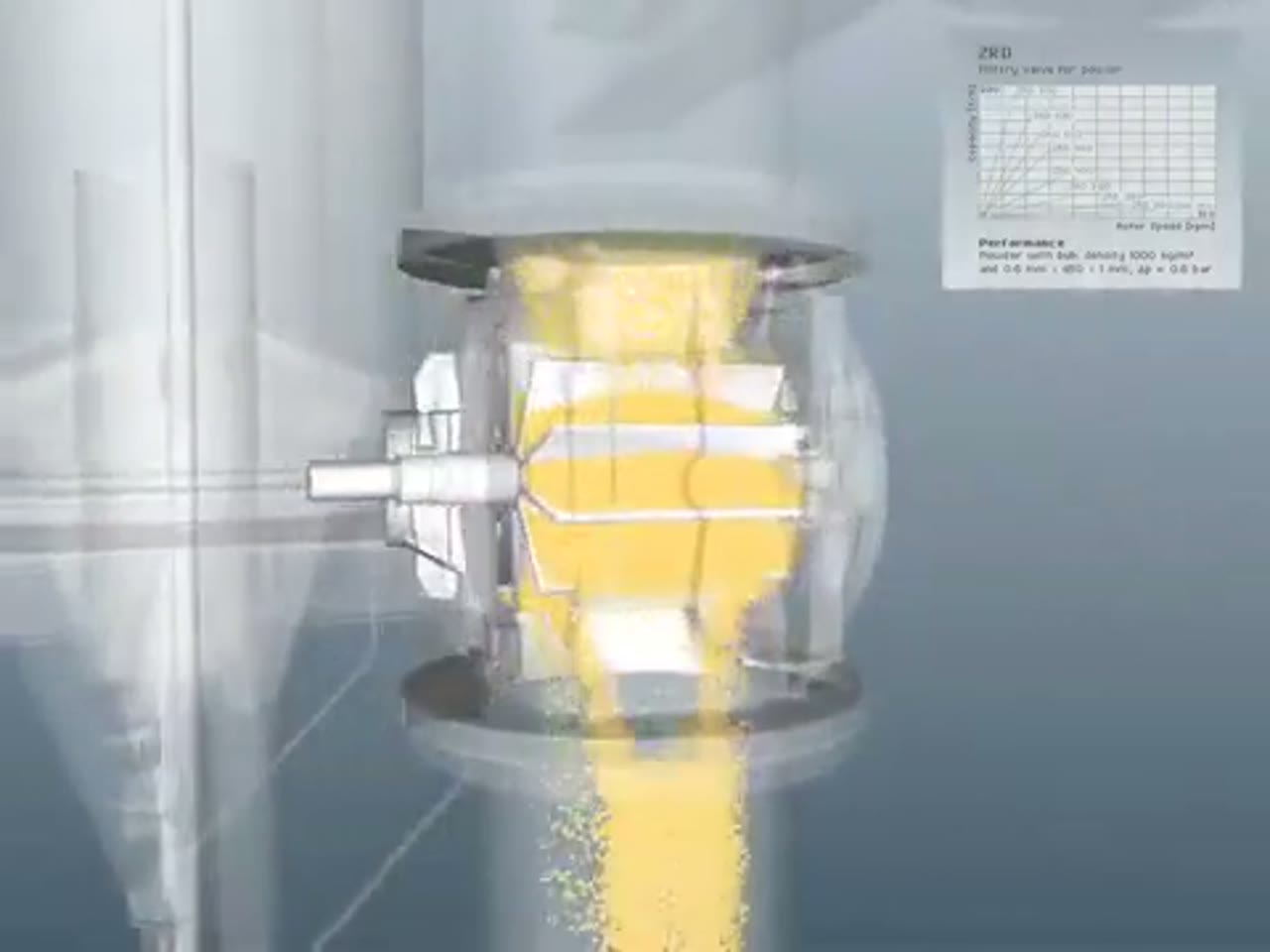
Coperion ZRD Rotary Valve for Powder Applications
Coperion presents the ZRD rotary valve and the design choices that adapt it to powder discharge, metering and pneumatic-conveying service.
Total reach: 10,522
Powder Process-Solutions
Pressure Dilute Phase
The Powder Process-Solutions animation shows a positive-pressure dilute-phase arrangement in which a gas stream pushes suspended material through the conveying line toward the receiver.
Total reach: 93,752
Technologies
- Bulk Loading & Unloading
- Dense Phase Conveying
- Dense Phase Conveying
- Dust Collection & Air Pollution Control
- Dust Collection & Air Pollution Control Technology Guide
- Feeding & Dosing Control
- Feeding & Dosing Control
- Pneumatic Conveying
- Pneumatic Conveying Technology Guide
- Rotary Valves
- Rotary Valves for Powder and Bulk Solids
- Storage & Transportation
Applications
- Automated Sack Emptying in Chemical Plants
- Bulk Bag Discharge in Chemical Batching
- Bulk Truck Loading
- Chemical Powder Repackaging and Batching
- Dense Phase Conveying in Chemical Production
- Explosion Isolation in Chemicals
- Explosion Protection for Chemical Plants
- Gravimetric Feeding in Chemical Processing
- Level Measurement and Inventory Control in Chemical Plants
- Mechanical Conveying in Chemical Plants
- Powder Blending in Chemical Production
- Routing Powder to Multiple Destinations in Chemicals
- Silo Isolation and Shut-off in Chemicals
- Valve and Airlock Selection for Chemical Powder Lines